TRENDING ON AMAZON
Anua Niacinamide 10 + TXA 4 Dark Spot Correcting Serum Review: Is It Worth It?
The viral K-beauty brightening serum with 10% niacinamide, 4% tranexamic acid and 2% arbutin — the specific dark-spot and glass-skin formula that broke Anua into the mainstream.
Quick answer: Yes, the Anua Niacinamide 10 + TXA 4 Serum is worth it — this is one of the K-beauty serums where the clinical formulation genuinely delivers what the marketing promises. Real 10% niacinamide + 4% tranexamic acid + 2% arbutin combination, specifically formulated for hyperpigmentation, melasma, dark spots and pore refinement, at ~$25 for 30ml (2-3 months of use). Multiple published clinical studies support the actives; tens of thousands of Amazon reviews at 4.7 stars support the real-world results. Skip if pregnant or breastfeeding (tranexamic acid safety data is limited for pregnancy), if you're already on prescription topical hydroquinone (redundant), or if you're not committed to daily SPF (TXA makes skin more sun-sensitive; without sunscreen the treatment undoes itself). For everyone else with hyperpigmentation, post-acne marks, melasma or dullness, this is the current-generation right pick — real actives, K-beauty pricing, and one of the highest-value clinical-grade brightening serums available in 2026.
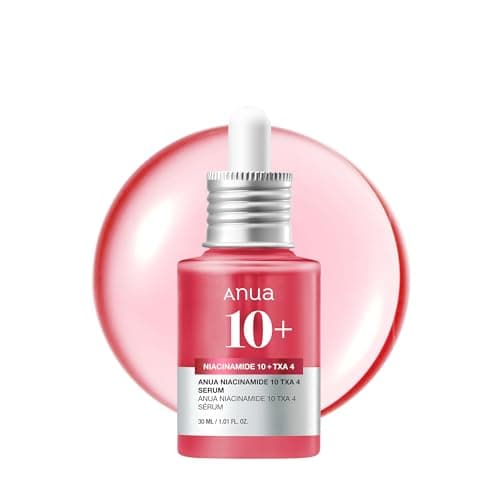
Product image from the Amazon listing.
Our verdict
Yes, the Anua Niacinamide 10 + TXA 4 Serum is worth it — this is one of the K-beauty serums where the clinical formulation genuinely delivers what the marketing promises. Real 10% niacinamide + 4% tranexamic acid + 2% arbutin combination, specifically formulated for hyperpigmentation, melasma, dark spots and pore refinement, at ~$25 for 30ml (2-3 months of use). Multiple published clinical studies support the actives; tens of thousands of Amazon reviews at 4.7 stars support the real-world results. Skip if pregnant or breastfeeding (tranexamic acid safety data is limited for pregnancy), if you're already on prescription topical hydroquinone (redundant), or if you're not committed to daily SPF (TXA makes skin more sun-sensitive; without sunscreen the treatment undoes itself). For everyone else with hyperpigmentation, post-acne marks, melasma or dullness, this is the current-generation right pick — real actives, K-beauty pricing, and one of the highest-value clinical-grade brightening serums available in 2026.
The short version
Anua's Niacinamide 10 + TXA 4 Serum is the K-beauty brightening serum that turned Anua from a niche Korean brand into a mainstream best-seller. The formulation is genuinely impressive: 10% niacinamide (the well-studied brightening and pore-refining active), 4% tranexamic acid (the specifically-anti-hyperpigmentation active dermatologists use in prescription depigmenting therapy), 2% arbutin (a gentler alternative to hydroquinone for melanin inhibition), plus hyaluronic acid and ceramides for hydration and barrier support. Together they target uneven tone, post-inflammatory hyperpigmentation from acne, melasma, dark spots, enlarged pores and general dullness. The lightweight, watery texture absorbs in seconds without residue and layers under any other skincare. Rated 4.7/5 across 600+ direct-brand reviews and tens of thousands of Amazon reviews. At around $25 for 30ml (2-3 months of daily use), it delivers clinical-formulation results at K-beauty pricing.
Pros & cons
Pros
- 10% niacinamide + 4% tranexamic acid + 2% arbutin — real evidence-based brightening actives
- Fragrance-free, gentle enough for sensitive skin
- Lightweight watery texture — absorbs in seconds
- Layers well under sunscreen, moisturizer or makeup
- Hydrating (hyaluronic acid + ceramides) — no dryness
- Under $25 for 30ml (2-3 months of daily use)
- Amazon best-seller with tens of thousands of reviews
Cons
- Results build over 4-12 weeks — not overnight
- Tranexamic acid absorbs UV — SPF is non-negotiable
- Watery texture takes practice to dispense from the dropper
Why people love it
Niacinamide 10% brightens and refines pores
Niacinamide (vitamin B3) is one of the most-studied skincare actives — at 10% concentration it visibly reduces hyperpigmentation, tightens the appearance of enlarged pores, reduces sebum production, and strengthens the skin barrier. Anua's 10% is at the upper end of the tolerable range, delivering results without the mild flushing that can occur at 15%+.
Tranexamic acid 4% targets hyperpigmentation specifically
Tranexamic acid (TXA) is a specific melanin-inhibitor originally used in dermatology for melasma treatment. It works by blocking the interaction between melanocytes and keratinocytes that drives pigment production — particularly effective for post-inflammatory hyperpigmentation from acne, sun spots and melasma. At 4% concentration this is the topical equivalent of what dermatology clinics prescribe.
2% arbutin + hyaluronic acid + ceramides finish the formula
Arbutin is a gentler alternative to hydroquinone that inhibits melanin production without the skin-thinning risks. Hyaluronic acid pulls water into the skin; ceramides support barrier repair. Together they hydrate and protect the barrier while the active ingredients work on tone.
Who it's for
- Anyone with hyperpigmentation, dark spots or acne scars
- Post-inflammatory hyperpigmentation from acne breakouts
- Uneven skin tone or dullness
- K-beauty routine builders wanting evidence-based actives at accessible prices
Why tranexamic acid is the specific active that separates Anua from generic niacinamide serums
Niacinamide is one of the most-studied skincare ingredients, and 10% niacinamide alone (like The Ordinary Niacinamide 10 + Zinc at $6) delivers real brightening and pore-refining benefits. What separates Anua's Niacinamide 10 + TXA 4 Serum is the specific addition of 4% tranexamic acid, which targets a completely different mechanism of hyperpigmentation. Tranexamic acid (TXA) is originally a prescription medication used medically to reduce bleeding — cardiologists and gynecologists have prescribed it for decades. Dermatologists observed a specific side benefit: patients on oral tranexamic acid for other medical reasons showed reduced melasma and hyperpigmentation. Investigating this led to topical TXA formulations, and multiple published clinical trials over the past 15 years have documented that topical tranexamic acid at 3-5% reduces melasma and post-inflammatory hyperpigmentation over 8-12 weeks of daily use.
The mechanism is specific: TXA blocks the interaction between melanocytes (the cells that produce melanin) and keratinocytes (the outer skin cells) that drives pigment production. Unlike hydroquinone (which chemically bleaches existing pigment but can cause paradoxical hyperpigmentation with long-term use), TXA gradually reduces melanin production without those side effects. Combined with niacinamide (which reduces melanin transfer between cells) and arbutin (a gentler tyrosinase inhibitor), Anua's formulation attacks hyperpigmentation via three complementary mechanisms simultaneously. This is why Anua's serum works meaningfully better than a pure niacinamide serum for anyone specifically dealing with dark spots, melasma, or post-acne marks — it's the specific TXA addition that makes the difference.
How to build a K-beauty routine around Anua Niacinamide 10 + TXA 4 Serum
K-beauty routines are famous for their many steps, but the effective ones follow a specific layering principle: thinnest to thickest, water-based before oil-based, actives before hydrators, hydrators before occlusives. A well-built AM K-beauty routine using Anua: gentle cleanser, hydrating toner ([Beauty of Joseon Ginseng Essence Water](https://www.amazon.com/s?k=beauty+of+joseon+ginseng+essence&tag=topcrate-20) or similar), Anua Niacinamide 10 + TXA 4 Serum (apply directly to clean skin — wait 2 minutes for absorption), moisturizer (Byoma Rich Cream or CeraVe Moisturizing Cream), mineral or fragrance-free SPF (La Roche-Posay Anthelios or Beauty of Joseon Relief Sun). PM routine: gentle cleanser (double-cleanse if wearing sunscreen or makeup — oil cleanser first, then water-based), toner, Anua Niacinamide serum, retinol/retinal if using (Meditherapy Retinal Skin Booster alternated nights), moisturizer.
The key: consistency for 12 weeks minimum before evaluating results. Take a before photo in consistent lighting, take another at 8 and 12 weeks. Real hyperpigmentation change takes that long. Common mistakes: (1) Skipping SPF while using TXA — tranexamic acid works by reducing new melanin production, but without sunscreen, UV exposure creates new pigmentation faster than TXA can reduce it. Non-negotiable. (2) Layering with too many actives at once (adding vitamin C morning + retinol + AHA + this serum) — over-stimulates the skin. Introduce one active at a time. (3) Expecting fast results — 4-week trials are pointless with this active. Give it 12 weeks. (4) Not reapplying sunscreen midday — TXA specifically makes skin more sun-sensitive. Reapply SPF every 2-3 hours outdoors.
Anua Niacinamide 10 + TXA 4 vs the alternatives for specific hyperpigmentation types
Different types of hyperpigmentation respond differently to different actives, and matching the product to the pigment type improves results. Melasma (hormone-driven pigmentation, often on cheeks, upper lip, forehead — worsens with sun and pregnancy): tranexamic acid is one of the most-studied actives, with better evidence than hydroquinone for long-term melasma management. Anua's 4% TXA is a legitimate first-line topical treatment. For refractory melasma, combine with prescription-strength tretinoin (0.05-0.1%) and consider dermatologist consultation for oral tranexamic acid. Post-inflammatory hyperpigmentation (dark spots left after acne breakouts, particularly common on medium-to-dark skin tones): niacinamide plus TXA is one of the most-effective combinations, and Anua's specific formulation was designed with this in mind. Give it 8-12 weeks of consistent use plus SPF.
Sun spots (age spots, lentigines — flat brown spots on face and hands from years of sun exposure): TXA plus niacinamide reduces new spots but existing sun spots respond less dramatically to topical treatment. For established sun spots, in-office treatment (IPL, chemical peel, laser resurfacing) is more effective than any topical serum. Anua as maintenance and prevention after in-office treatment is ideal. Freckles (genetic, mostly benign): don't treat — freckles are a normal skin variation and 'brightening' them isn't the right frame. If they've darkened significantly from sun exposure, TXA helps prevent further darkening. Uneven overall tone / dullness (not specific spots, just overall complexion looks tired): niacinamide is the primary active — TXA helps but isn't the star. Pair with regular exfoliation (AHA/BHA 2-3× per week) for compound tone improvement. For most K-beauty routine builders wanting to address 'general dullness plus a few dark spots,' Anua's formulation is exactly right — it treats what most people actually have.
See Anua Niacinamide Serum on Amazon
Check the latest price, photos and buyer reviews on Amazon.
Check Price on Amazon →Sold and shipped by AmazonFrequently asked questions
Is Anua Niacinamide 10 + TXA 4 Serum worth the hype?
Yes — this is one of the K-beauty serums where the formulation genuinely delivers what the marketing promises. The 10% niacinamide + 4% tranexamic acid + 2% arbutin combination is clinically well-designed for hyperpigmentation, pore refinement and uneven tone. Multiple published studies show topical tranexamic acid reduces melasma and post-inflammatory hyperpigmentation over 8-12 weeks of daily use; niacinamide at 5-10% is one of the most-studied brightening actives; arbutin is a proven gentler alternative to hydroquinone. Combined in a fragrance-free, barrier-supporting base at K-beauty pricing (~$25 for 30ml), it's exceptional value vs Western brightening serums (SkinCeuticals Discoloration Defense is $105 for the same 30ml). Give it 8-12 weeks of consistent daily use with SPF for real results. Skip if you're pregnant or breastfeeding (tranexamic acid is not tested for pregnancy safety) or if you're on prescription topical hydroquinone (redundant).
Anua Niacinamide 10 + TXA 4 vs [The Ordinary Niacinamide 10 + Zinc](/reviews/the-ordinary-niacinamide) vs SkinCeuticals Discoloration Defense: which brightening serum?
Three tiers with different priorities. The Ordinary Niacinamide 10 + Zinc (~$6): the cheapest — 10% niacinamide plus 1% zinc for oil control, no tranexamic acid or arbutin. Best for baseline niacinamide use, especially on oily skin, at drugstore pricing. Anua Niacinamide 10 + TXA 4 (~$25): the mid-tier K-beauty pick — 10% niacinamide plus 4% tranexamic acid plus 2% arbutin, specifically formulated for hyperpigmentation. Best for anyone with dark spots, melasma or post-acne marks. SkinCeuticals Discoloration Defense (~$105): the premium clinical-tier — 3% tranexamic acid + 5% niacinamide + 1% kojic acid, dermatologist-office-tier formulation. Best for someone with clinician-diagnosed melasma who wants the strongest OTC option. For most people with hyperpigmentation, Anua hits the sweet spot: real evidence-based actives, meaningful concentrations, K-beauty pricing. Only step up to SkinCeuticals if Anua isn't cutting it after 12+ weeks.
How long until I see results from the Anua Niacinamide serum?
Early tone-brightening and hydration benefits appear within 2-4 weeks — that's the niacinamide plus hydration base. Fine-line and glass-skin improvements show at 4-8 weeks. Real hyperpigmentation and dark spot reduction (the specific TXA benefit) takes 8-12 weeks of consistent daily use. Take a before photo in consistent lighting when you start; take another at 8 weeks; you'll see the change more clearly in comparison than in the mirror day-to-day. The specific expectation to manage: TXA doesn't 'erase' dark spots overnight or in 4 weeks — it slows melanin production so new pigmentation doesn't form and existing pigmentation gradually fades as skin turns over. This is a slow, cumulative process. Consistency for 12 weeks + daily SPF is the specific formula for real results.
Can I use Anua Niacinamide serum with retinol, vitamin C or other actives?
Yes, with layering rules. Morning routine: cleanser, vitamin C serum (if using — apply first because vitamin C works best on clean skin at low pH), Anua Niacinamide 10 + TXA 4 (apply after vitamin C absorbs, roughly 2-3 minutes), moisturizer, SPF. Evening routine: cleanser, retinol/retinal (if using — apply first because retinoids work overnight on cell turnover), Anua Niacinamide 10 + TXA 4 (apply after retinoid absorbs, roughly 3-5 minutes), moisturizer. This layering pattern lets each active work in its optimal window without interfering. Vitamin C in the morning provides antioxidant protection; retinol at night drives cell turnover; niacinamide at both times supports barrier and evens tone; tranexamic acid at both times reduces new pigment formation. Combined properly, these four actives give compound anti-aging and brightening benefits significantly greater than any one alone.
Is Anua Niacinamide 10 + TXA 4 Serum safe during pregnancy?
Not recommended. Tranexamic acid at oral doses is a prescription medication with known pregnancy safety data (it's actually used medically for postpartum hemorrhage), but topical TXA at 4% concentration hasn't been thoroughly studied for pregnancy or breastfeeding safety, and pregnancy hormones can affect skin unpredictably. Standard dermatology guidance: pause tranexamic acid products during pregnancy and breastfeeding, and resume after weaning. Niacinamide alone is considered pregnancy-safe, so during pregnancy switch to a pure niacinamide serum (like The Ordinary Niacinamide 10 + Zinc at $6) or a plain barrier moisturizer like Vanicream Daily Facial Moisturizer. Always confirm with your OB before starting or continuing any active skincare during pregnancy.
Anua vs Beauty of Joseon vs Medicube vs COSRX — which K-beauty brand is best?
Four excellent K-beauty brands with slightly different focuses. Anua is the newer viral brand — best-known for this Niacinamide 10 + TXA 4 Serum and the Heartleaf 77 Toner. Focus: brightening and hyperpigmentation. Beauty of Joseon is the traditional Korean-medicine-inspired brand — Relief Sun sunscreen, Glow Serum, Dynasty Cream. Focus: gentle hydration and ginseng-plus-modern-actives. Medicube is the dermatologist-founded clinical brand — Zero Pore Pad, PDRN Pink Peptide Serum. Focus: clinical-tier formulations for pore care and firming. COSRX is the OG K-beauty acne brand — Snail Mucin Essence, Salicylic Acid Blemish Ointment. Focus: acne treatment and hydration. For hyperpigmentation and brightening specifically, Anua wins. For gentle daily K-beauty basics, Beauty of Joseon. For clinical anti-aging actives, Medicube. For acne management, COSRX. Many K-beauty routines mix brands — Beauty of Joseon Relief Sun sunscreen, Anua Niacinamide serum, Medicube PDRN cream, COSRX Snail Essence is a common cross-brand stack.
As an Amazon Associate, TopCrate earns from qualifying purchases at no extra cost to you. Not recommended during pregnancy or breastfeeding due to limited safety data on topical tranexamic acid. Consult a dermatologist for chronic melasma, undiagnosed pigmentation changes, or if you're using prescription topical treatments. Product image, price, availability and ratings are shown on Amazon and are subject to change.
More reviews you might like
SKINCARE
Celimax Vita-A Retinal Shot Review: Best K-Beauty Retinal for Sensitive Skin?
SPORTS
Body Glide Original Review: The Anti-Chafe Balm That Actually Works
SKINCARE
Foreo Luna Mini 3 Review: Is the Silicone Cleansing Brush Worth It?
SKINCARE