TRENDING ON AMAZON
Vanicream Daily Facial Moisturizer with 5 Key Ceramides + Hyaluronic Acid Review: Is It Worth It?
The near-zero-irritant face cream dermatologists reach for when nothing else agrees with a patient's skin — fragrance-free, five ceramides plus hyaluronic acid, under $15 for 3oz.
Quick answer: Yes, Vanicream Daily Facial Moisturizer is worth it — this is the specific moisturizer dermatologists reach for when a patient reacts to everything else, and the near-zero-irritant formulation genuinely delivers what the label promises. Five key ceramides, hyaluronic acid, squalane, and a proudly short ingredient list with no fragrance, essential oils, dyes or lanolin. National Eczema Association-accepted, safe for pregnancy, and under $15 for a tube that lasts 2-3 months. Skip if you want anti-aging actives — this is a barrier-repair basic, not a retinol carrier. For sensitive, reactive, eczema-prone or post-procedure skin, and as a buffer moisturizer to layer over retinoids and acne treatments, it's one of the highest-value derm-approved buys in drugstore skincare.
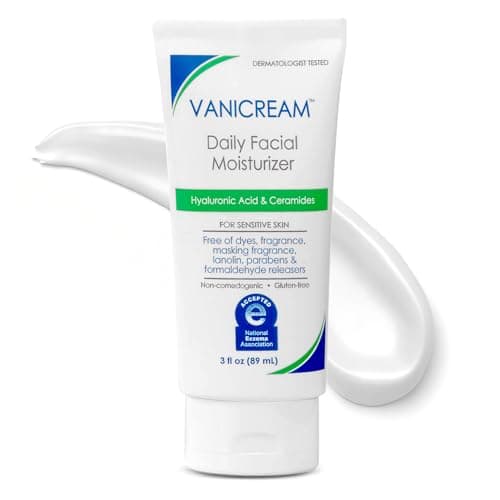
Product image from the Amazon listing.
Our verdict
Yes, Vanicream Daily Facial Moisturizer is worth it — this is the specific moisturizer dermatologists reach for when a patient reacts to everything else, and the near-zero-irritant formulation genuinely delivers what the label promises. Five key ceramides, hyaluronic acid, squalane, and a proudly short ingredient list with no fragrance, essential oils, dyes or lanolin. National Eczema Association-accepted, safe for pregnancy, and under $15 for a tube that lasts 2-3 months. Skip if you want anti-aging actives — this is a barrier-repair basic, not a retinol carrier. For sensitive, reactive, eczema-prone or post-procedure skin, and as a buffer moisturizer to layer over retinoids and acne treatments, it's one of the highest-value derm-approved buys in drugstore skincare.
The short version
Vanicream is the brand dermatologists quietly recommend when a patient shows up saying 'everything makes my face react.' The Daily Facial Moisturizer is their most-recommended face cream — a lightweight, fragrance-free formulation built on five key ceramides, hyaluronic acid and squalane, with a proudly short ingredient list stripped of the additives that trigger sensitive skin (fragrance, essential oils, dyes, parabens, lanolin, gluten, formaldehyde). It absorbs quickly without a greasy finish, layers cleanly under sunscreen and makeup, and it's the specific moisturizer the National Eczema Association gives its Seal of Acceptance to. Not a fancy anti-aging product — no retinol, no peptides, no viral acids — just the barrier-repair basics done right for skin that reacts to everything else. Under $15 for a 3oz tube that lasts most people 2-3 months.
Pros & cons
Pros
- Five key ceramides + hyaluronic acid — real barrier repair
- Fragrance-free, dye-free, no essential oils
- Lightweight lotion texture that layers under SPF and makeup
- National Eczema Association-accepted
- Non-comedogenic — safe for acne-prone skin
- Under $15 at most retailers
- Made in the USA by a family-owned dermatology company
Cons
- No anti-aging actives (no retinol, no peptides, no vitamin C)
- May feel too light for very dry skin — layer with a heavier cream at night
- 3oz tube runs out faster than a full-size cream
Why people love it
Five ceramides restore the skin barrier
Ceramides 1, 3, 6-II and two additional lipid analogs mirror the natural composition of a healthy skin barrier — Vanicream adds them back to skin that's had them stripped by harsh cleansers, over-exfoliation, or a compromised barrier.
Hyaluronic acid + squalane lock in hydration
HA pulls water into the outer skin layers; squalane (a stable, plant-derived lipid) seals it in without occlusive greasiness. The combination hydrates without any of the ingredients that typically trigger reactive skin.
Near-zero-irritant base formula
The whole formulation is engineered around what's NOT in it: no fragrance, no essential oils, no dyes, no parabens, no lanolin, no formaldehyde, no MI/MCI preservatives. This is why derms hand it to patients with contact allergies and unexplained skin reactions.
Who it's for
- Sensitive, reactive skin that flares from most moisturizers
- Eczema, rosacea and perioral dermatitis sufferers
- Anyone using prescription retinoids or acne actives who needs a barrier-friendly buffer
- Post-procedure skin (laser, chemical peel, microneedling recovery)
Why Vanicream is the specific moisturizer dermatologists reach for when nothing else works
Vanicream Daily Facial Moisturizer is a family-owned dermatology company's answer to a specific clinical problem: patients whose skin reacts to nearly every commercial moisturizer, and who can't figure out why. The clinical answer is contact allergens — a category that includes fragrance (the #1 cause of skin allergy in the US), preservatives like methylchloroisothiazolinone/methylisothiazolinone (MI/MCI), essential oils, dyes, lanolin, formaldehyde-releasing preservatives, and dozens of other ingredients that appear in nearly all mainstream skincare. For a patient who's already tried CeraVe, Cetaphil, Neutrogena and Aveeno and still reacts, the pattern is usually one of these hidden triggers. Vanicream was formulated specifically to remove them all.
This is why the National Eczema Association's Seal of Acceptance matters — it's not a marketing claim but a formal review process against published ingredient-safety criteria. The Daily Facial Moisturizer carries that seal because the formulation avoids the specific chemicals most likely to trigger eczema flares. Combined with five key ceramides (the same lipid family that makes CeraVe effective), hyaluronic acid and squalane, the formula delivers real barrier repair without adding new triggers. It's the specific product dermatology residents get taught to recommend to reactive-skin patients before ordering a formal patch test — because it's cheap enough to try, safe enough to test, and effective enough that most sensitive-skin patients feel meaningful relief within 7-14 days of daily use.
How to use Vanicream in a full sensitive-skin skincare routine
For sensitive or reactive skin, the routine is more important than the products. The core principle: minimize the number of steps, keep ingredient lists short, and never introduce more than one new product at a time so you can identify what caused any reaction. A well-built sensitive-skin routine using Vanicream: AM — gentle fragrance-free cleanser (Vanicream's own Gentle Facial Cleanser, CeraVe Hydrating, or Cetaphil Gentle Skin Cleanser), Vanicream Daily Facial Moisturizer, mineral or fragrance-free SPF (Vanicream Sunscreen Sport SPF 35, La Roche-Posay Anthelios, EltaMD UV Physical). PM — same cleanser, Vanicream Daily Facial Moisturizer, done. If you want to add an active (retinol, vitamin C, niacinamide), introduce one at a time and give it 2-3 weeks before adding another.
For flare management: when reactive skin breaks out in redness, itchiness or eczema patches, strip the routine to cleanser + Vanicream only for 5-7 days. This lets the barrier reset. When calm, gradually reintroduce actives. Keep a skincare journal noting what you applied and any reactions — most sensitive-skin patients discover their specific triggers this way (often fragrance in a product they didn't realize contained it). For chronic eczema or perioral dermatitis flares that don't respond to barrier repair alone, see a dermatologist — Vanicream supports management but doesn't replace prescription treatment (topical steroids, calcineurin inhibitors, oral antihistamines) for medical-grade skin conditions. For pregnancy or nursing, this exact routine is the standard derm-approved pregnancy skincare — none of the ingredients are contraindicated.
Vanicream vs CeraVe vs La Roche-Posay Toleriane: choosing between the derm-approved sensitive-skin brands
The three brands dominate the 'derm-approved sensitive-skin' category and each has a specific edge. CeraVe is the mainstream default — three ceramides plus niacinamide across most formulations, widest product range, cheapest at typical drugstore prices, works for most normal-to-sensitive skin. Best for the general 'my skin is fine but I want good ceramide skincare' buyer. La Roche-Posay Toleriane is the French pharmacy standard — thermal-spring-water-based formulations, extremely gentle, favored by European dermatologists for reactive skin. Best for redness-prone, rosacea or highly reactive skin. Vanicream is the strictest of the three — the shortest ingredient list, engineered specifically for contact-allergy patients, National Eczema Association-accepted. Best for eczema, chronic dermatitis, and 'my skin reacts to everything including CeraVe' skin.
Pricing runs Vanicream (~$14) ≈ CeraVe (~$16) < La Roche-Posay (~$25-30). For most people the answer is: try CeraVe first (widest availability, cheapest, works for most skin), move to Vanicream if CeraVe still causes reactions or you have documented eczema, and consider La Roche-Posay if you have rosacea or want the specific French-pharmacy formulation approach. All three are legitimate — the differences are meaningful for the reactive-skin edge cases but negligible for typical skin. Pair whichever you pick with a good fragrance-free sunscreen and a gentle cleanser and you have a complete evidence-based sensitive-skin routine for under $50.
See Vanicream Daily Facial Moisturizer on Amazon
Check the latest price, photos and buyer reviews on Amazon.
Check Price on Amazon →Sold and shipped by AmazonFrequently asked questions
Is Vanicream Daily Facial Moisturizer worth it in 2026?
Yes, and it's the specific pick for sensitive, reactive or barrier-compromised skin. The National Eczema Association Seal of Acceptance isn't a marketing claim — it means the product meets published criteria for ingredient safety and testing in eczema-prone skin. Combined with five key ceramides, hyaluronic acid and squalane in a fragrance-free base, this is the moisturizer dermatologists recommend when a patient's skin reacts to everything else on the drugstore shelf. Under $15 for a tube that lasts 2-3 months puts it in genuine drugstore-value territory. Skip if you're specifically looking for an anti-aging active (no retinol, peptides or vitamin C here — this is a pure barrier-repair basic). For sensitive skin, post-procedure skin, retinoid-buffering, or the specific 'my skin reacts to everything' problem, it's the smart-money buy.
Vanicream Daily Facial Moisturizer vs CeraVe Moisturizing Cream vs Cetaphil DailyAdvance: which sensitive-skin moisturizer should I buy?
Three strong sensitive-skin baselines with meaningful differences. Vanicream Daily Facial Moisturizer (~$14): the strictest ingredient list — no fragrance, no essential oils, no lanolin, engineered specifically for reactive skin. Best for anyone who's tried CeraVe or Cetaphil and still reacted. CeraVe Hydrating Cleanser and CeraVe Daily Moisturizing Lotion (~$16): three ceramides plus niacinamide, richer texture, works for most dry-and-normal skin. Best for the general 'I want a derm-approved cream' buyer with no reactive history. Cetaphil DailyAdvance (~$13): older formulation, fine but less refined than the other two on ceramide content. For truly reactive skin — the kind that flares from CeraVe's fragrance-free lotion or Cetaphil's preservative base — Vanicream wins. For everyone else, CeraVe and Vanicream are interchangeable at similar price points; pick whichever you like the texture of.
Can I use Vanicream Daily Facial Moisturizer with retinol, tretinoin or acne treatments?
Yes — this is one of its most common uses. Prescription retinoids (tretinoin, adapalene, tazarotene) and OTC retinols cause dryness and barrier disruption in most first-time users, and pairing them with a barrier-friendly moisturizer dramatically reduces the 'retinoid uglies' phase. The routine: apply retinoid to clean, dry skin, wait 5-10 minutes for absorption, then apply Vanicream on top as a buffer layer. For heavily-irritated skin, sandwich the retinoid — thin layer of Vanicream first, then retinoid, then Vanicream on top. Same approach works for benzoyl peroxide, salicylic acid and azelaic acid. Vanicream's near-zero-irritant profile means it won't add its own reaction on top of an already-stimulated barrier. This is the specific reason many dermatologists prescribe tretinoin AND Vanicream together — the moisturizer makes the retinoid tolerable long enough for the actual anti-aging benefit to show up.
Does Vanicream Daily Facial Moisturizer work for oily or acne-prone skin?
Yes for combination and acne-prone; less ideal for very oily skin that prefers a gel texture. The formulation is non-comedogenic (won't clog pores) and the lightweight lotion texture absorbs without a heavy or greasy finish, so it works well for oily-in-the-t-zone / dry-elsewhere combination skin. For very oily skin that finds any lotion too rich, look at gel-textured hydrators (Neutrogena Hydro Boost Gel-Cream, Belif Aqua Bomb) or a lightweight ceramide serum instead. For acne-prone skin using active treatments — benzoyl peroxide, salicylic acid, or the Beauty of Joseon eye serum retinal-adjacent products — Vanicream is exactly the buffer moisturizer to pair with them; the barrier support prevents the over-drying that makes acne treatments create more inflammation.
How long does one 3oz tube of Vanicream last?
For twice-daily face use, about 2-3 months per tube. If you also use it around the eye area or on the neck and chest, closer to 6-8 weeks. For most single users applying to face only, morning and evening, expect 60-75 days per tube. The 3oz size is smaller than most drugstore moisturizers, which some buyers find frustrating — Vanicream also sells a 12oz body-and-face pump tub of essentially the same formula (Vanicream Moisturizing Skin Cream) that's better value if you're using it heavily. For strictly face use, the 3oz tube is fine; for face plus body eczema management, upgrade to the tub.
Is Vanicream Daily Facial Moisturizer safe during pregnancy and breastfeeding?
Yes — this is one of the specific moisturizers dermatologists recommend during pregnancy for exactly this reason. No retinoids (which are contraindicated during pregnancy), no salicylic acid (which is limited during pregnancy), no essential oils (some of which are avoided), no hormone-disrupting ingredients. Just ceramides, hyaluronic acid, squalane and a minimal preservative system. Pregnancy hormones often trigger increased skin sensitivity, and switching to Vanicream from a more active-heavy routine reduces the reactivity many pregnant women experience. Same recommendation for breastfeeding. If you're building a pregnancy-safe skincare routine, pair Vanicream with a mineral SPF like La Roche-Posay Anthelios Mineral and a gentle cleanser like CeraVe Hydrating Cleanser for a full derm-approved pregnancy stack.
As an Amazon Associate, TopCrate earns from qualifying purchases at no extra cost to you. Vanicream is a cosmetic moisturizer, not a medical treatment; see a dermatologist for chronic eczema, dermatitis or unresolved skin reactions. Product image, price, availability and ratings are shown on Amazon and are subject to change.
More reviews you might like
SKINCARE
Celimax Vita-A Retinal Shot Review: Best K-Beauty Retinal for Sensitive Skin?
SPORTS
Body Glide Original Review: The Anti-Chafe Balm That Actually Works
SKINCARE
Foreo Luna Mini 3 Review: Is the Silicone Cleansing Brush Worth It?
SKINCARE