GOLF
Why Do Golf Tees Keep Breaking? (And How to Stop Losing a Bag Every Round)
Wood snaps at driver speeds not because it's cheap but because it's wood — the fix is a tee designed for the impact physics of a modern club, not a habit change that never sticks.
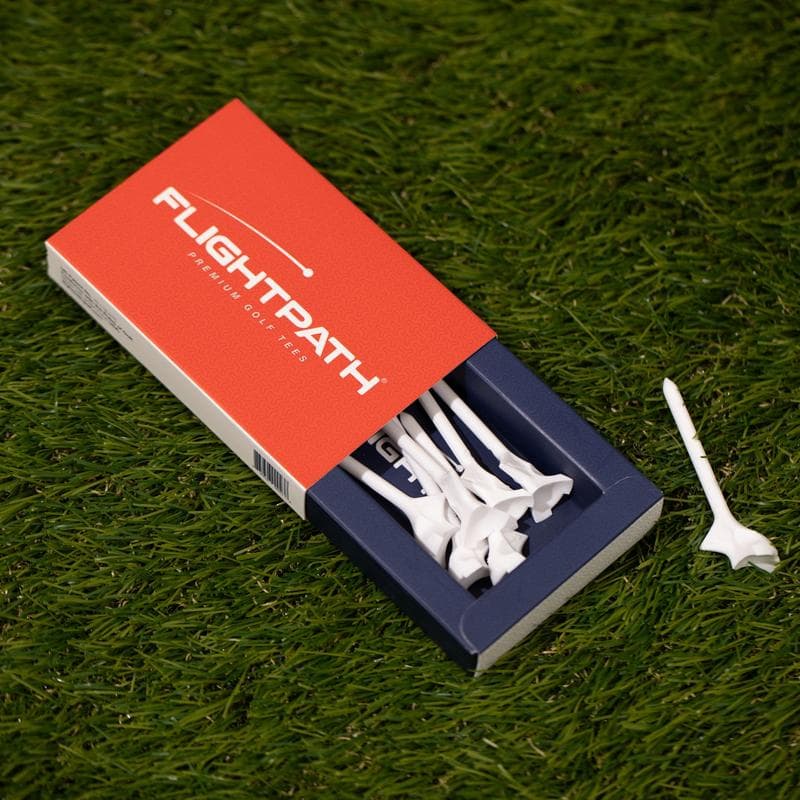
The classic evidence bag of a Saturday morning golfer contains a scorecard, a pencil stub, a couple of range-picked balls, and — invariably — a small heap of snapped wooden tees. Half a bag of tees goes down the drain in a single round, three or four per hole, mostly on the driving holes where you actually need the tee to survive. The reflex is to blame yourself: too steep on the swing, hitting down on the ball, unlucky ground. Some of that is true. The bigger reason is quieter and more structural — the game changed under the tee, and the tee didn't change with it.
Modern driver heads generate 100+ mph clubhead speeds for recreational golfers and 120+ mph for anyone remotely serious. That is genuinely more force at impact than the standard 2¾-inch wooden peg was engineered for, and the failure mode is exactly what physics predicts: the shaft snaps somewhere between the head and the ground, mid-swing. This guide walks through the four real reasons wooden tees fail, the swing tweaks that actually reduce breakage, the tee-material honest hierarchy (wood, bamboo, plastic, one-piece flex-molded), and the specific tee design that solves the problem the way you'd solve any other equipment problem — by upgrading the equipment.
Reason 1: The material can't take the modern impact
Wood is a genuinely poor engineering material for this specific application. It's brittle rather than ductile — meaning it doesn't bend under load, it fails suddenly — and its strength is directional (much stronger along the grain than across it). Every wooden tee snaps across the grain because that's the weak axis, which is why they almost always break in the same spot and produce two clean pieces. Wood also absorbs moisture from morning dew or humid air, which softens it further; a dry tee holds up longer than one you fished out of yesterday's wet grass. The tolerance for impact damage is not a design flaw so much as a material choice that was correct in 1922 when the wooden tee was patented and a hickory-shafted driver produced 75 mph swing speeds, and is progressively wronger every decade since.
The measurable comparison: at 110 mph clubhead speed the tee experiences roughly 8x the impact energy of a 55 mph swing from the same club. Wood tolerates the low-energy case fine and gives up on the high-energy case suddenly. Which is why a beginner with a slow swing might use one tee for a whole bucket at the range, and a fast-swinging amateur can go through six on the first tee alone. Blaming yourself for breaking tees is often just blaming yourself for swinging hard, which is what you're supposed to do on the driving holes.
Reason 2: The swing angle of attack — some of this is on you
There is one genuine swing fault that makes tee breakage dramatically worse, and it's worth fixing regardless: a steep downward angle of attack with the driver. A driver is designed to hit the ball on the upswing — the low point of your swing arc should be an inch or two before the ball, so the club is already ascending when it makes contact. This produces the launch conditions modern drivers are engineered for (high launch, low spin) and, incidentally, minimizes the tee's contact with the club head because the club is rising away from the ground at impact. A steep downward attack (the classic 'hit down on it' driver swing that came from irons habit) drives the club head into the tee itself, snapping it every time.
The two-minute diagnostic: after your next drive, look at the tee. If it's snapped clean in half or driven flat into the ground, you're hitting down on the ball — the tee is telling you what your swing coach can't see from the driving range mat. The fix is to feel like the ball is off your front heel (not your front foot) and to focus on the sensation of the club sweeping level or slightly ascending through the ball. Tee it up slightly higher (about half the ball above the top of the driver crown at address) — a higher tee physically forces a shallower attack. Fixing this doesn't just save tees; it adds real distance from better launch conditions. Which is the whole point of teeing the ball in the first place.
Reason 3: The tee is too tall for the club (or too short)
Tee height matters more than most amateurs realize. The USGA standard 2¾-inch (69mm) wooden tee was calibrated for driver heads of a different era — smaller (~300cc), shallower faces, sitting closer to the ground at address. Modern 460cc driver heads are physically deeper, and the sweet spot sits higher above the ground. To hit the sweet spot cleanly, the ball needs to be higher off the ground than a 2¾-inch tee pushed fully into the turf provides. Which means most golfers either push the tee less deep into the ground (leaving more tee exposed above the surface, which flexes and snaps under impact) or use a taller tee altogether.
The right target for driver tee height with a modern head is roughly half the ball above the top of the crown at address — that puts the equator of the ball above the driver's face and lets the club sweep through it on the upswing without contacting the tee at all. For a fairway wood or hybrid, a much shorter tee (¾ to 1½ inches, sometimes just pressed into the ground with the ball on top) is the right target; the sweet spot on those clubs sits much lower. Using a driver-height tee for a 3-wood is a classic breakage cause because the tee sticks up so far the head clips it every time. A range bag with three tee heights (2¾-inch for driver, 1½-inch for fairway woods, ½-inch peg for irons off the tee) covers the whole bag correctly and reduces breakage on the shorter clubs even if you stay in wood.
Reason 4: The tee material is a solved problem — you're just still using the wrong one
The tee industry has offered wood, plastic, bamboo, and specialized molded designs for two decades. Golfers keep buying wood because it's cheap and because the range gives them out for free. The honest comparison of the four categories: Wood is $3 for a bag of 100, biodegradable if you leave a broken one on the tee box, breaks constantly under a modern driver, and is the cheapest per-round only if you count the tee itself and ignore the time you spend teeing up new ones. Bamboo is roughly twice as strong per unit weight as pine, biodegradable, and costs marginally more; it's a mild upgrade if you're wedded to a wooden-tee aesthetic and want fewer breaks per round. Plastic ($5-8 for a bag of 50) survives much better but chunks eventually, isn't biodegradable, and can crack the driver's paint if it hits at a bad angle — small issue but real.
The purpose-built category is one-piece flex-molded tees — the tee is engineered so the crown that holds the ball flexes and returns rather than snapping, and the shaft is designed for the specific stress profile of a modern driver impact. FlightPath is the specific product in this category most reviewed and most sold: an angled winged crown that holds the ball on minimal contact points (which reduces spin at impact, a marginal-gains upgrade separate from the durability story) plus a shaft engineered for hundreds of driver impacts. The realistic durability math: an 8-pack of FlightPath golf tees genuinely replaces a season of wooden tees for a golfer playing 20-30 rounds a year. The category has always existed (Zero Friction, 4 Yards More, brush-tees); FlightPath's edge is the published robot-swing data plus a tournament-legal one-piece build, and the specific fact that the crown flexes without breaking rather than being a small cup on a flexible stem that eventually chunks off. The math is straightforward: at $2.50 per tee for one that lasts a season, versus 3 cents per tee for one that lasts one hole, the flex-molded tee wins on cost per round from the first month.
The 'losing them' problem — and why it's actually the main attrition mode
Here's the honest catch about durable tees: once they stop breaking, the way you lose them is by leaving them on the tee box. A wooden tee that snapped is a wooden tee you had to pick out of the grass anyway, so you noticed it and put it in your pocket (or left it). A flex-molded tee that survived the drive is a small object 10-20 feet ahead of where you were standing, and if you swung hard enough to launch it, you have to walk over and find it. Most golfers who buy premium tees lose more than they break within the first month.
The two habit changes that actually make the tee-per-round economics work: buy them in high-visibility colors so they're findable in the grass, and build a 'pick it up' reflex before you get back in the cart. The bright yellow and orange colorways exist for exactly this reason. The other honest option — for the golfer who won't build the pick-it-up habit — is to accept a slightly higher attrition rate but still net out ahead on cost, which the math supports comfortably even if you lose one per round. For an 8-pack at $19.99, losing eight over 8-10 rounds is still cheaper per round than the wooden tees you were snapping, plus you get the incremental spin and distance benefit while you have them. Either way, the switch pays off.
The other equipment upgrade that fixes tee breakage indirectly
Not everyone breaks tees because of the tee. Very slow-swing golfers with older, heavier drivers occasionally snap tees because the club is bottoming out too low and dragging through the tee even on a shallow swing. If your driver is more than 8-10 years old and you've been meaning to upgrade for other reasons, doing so often reduces tee breakage as a side effect: modern drivers are physically deeper and set up for a higher tee height, and their crown geometry glances off a tee that a flatter old driver would have snapped. Not a reason to buy a driver on its own, but a nice bonus if you were on the fence.
For golfers whose main golf-day pain isn't the tees but the walking, our guide to insoles for standing all day covers the specific problem of a slow round on hard walking paths — same $20 tier, same 'the equipment can be better than what you're using' logic that applies to tees. And for the pre-round warmup problem — grip pressure, forearm tension, the tightness that shows up on the first tee — how to relieve tension headaches without medication covers the neck-and-shoulder end of the same cluster.
Read our FlightPath golf tees review
The one-piece flex-molded tee designed for the impact profile of a modern driver — robot-tested for lower spin and higher ball speed, tournament-legal, and durable enough that an 8-pack genuinely replaces a season of snapped wooden tees.
Read our FlightPath golf tees reviewFrequently asked questions
Why do my golf tees keep breaking?
Four reasons, ranked by how much they contribute for most amateur golfers. First: the material — wood is brittle across its grain and modern drivers generate roughly 8x the impact energy of the swings wooden tees were engineered for. Second: swing attack angle — a steep downward hit drives the club head into the tee itself. Fix by teeing the ball higher and feeling the club sweep level or ascending through impact. Third: wrong tee height for your driver — modern 460cc heads need the ball about half above the crown at address, higher than a fully-inserted 2¾-inch wooden tee provides for many golfers. Fourth: the tee is a solved problem you haven't upgraded. Flex-molded one-piece tees like FlightPath golf tees are engineered for the impact profile of a modern driver and routinely survive an entire season.
How high should I tee up my driver?
About half the ball above the top of the driver crown at address. That puts the equator of the ball above the driver's face and lets the club sweep through on the upswing, which is what modern drivers are engineered for — high launch, low spin. It also physically discourages a steep downward attack because the ball is too high off the ground to hit down on. Fairway woods and hybrids need much shorter tees (¾ to 1½ inches), and irons off the tee need shorter still (½-inch peg or just teed in the ground). Using driver-height tees for shorter clubs is a classic tee-breakage cause because the tee sticks up so far the head clips it every time.
Do plastic golf tees last longer than wood?
Yes, meaningfully. Plastic tees survive several times the number of impacts before failing, and cost only a couple of dollars more per bag. The tradeoffs: they aren't biodegradable if you leave a broken one on the course, they can occasionally chip the driver's paint at a bad-angle contact, and they still eventually chunk off. Flex-molded one-piece tees are the next tier up — engineered to flex and return rather than crack, tournament-legal, and durable enough that an 8-pack lasts most golfers a full season of 20-30 rounds. The math on cost per round beats wood comfortably from the first month even if you lose one per round to leaving them on the tee box.
Are unbreakable golf tees legal for tournaments?
Some are, some aren't. The USGA rules limit tee length to 4 inches, prohibit designs that unduly influence ball movement, and restrict tees that indicate line of play in a non-conforming way. Zero Friction, 4 Yards More and FlightPath specifically design their tees to conform with the Rules of Golf and are legal in tournaments, club events and posted rounds. Some novelty tees (brush-tees with alignment lines, tees with complex ball-holding mechanisms) are not conforming and are practice-range use only. Check the manufacturer's specific claim — 'conforms with the Rules of Golf' or 'USGA legal' is the language you want to see. FlightPath states this explicitly, which is one reason it's the flex-molded tee most club players use.
How do FlightPath tees compare to Zero Friction and 4 Yards More?
The three products chase the same problem — reducing tee-ball contact at impact — with slightly different geometries. Zero Friction uses a three-prong crown design; 4 Yards More uses a small cup on a flexible plastic stem; FlightPath uses an angled winged crown with a built-in alignment arrow. All three are tournament-legal and all three are meaningfully more durable than wood. FlightPath's edge is threefold: published robot-swing data (they've measured the ball speed and spin gains against a wooden control, which the others reference less specifically); the flex-molded one-piece build that flexes without snapping (some 4YM shafts eventually crack at the base after enough impacts); and the alignment arrow that gives a consistent visual aim cue. Any of the three is a legitimate upgrade over wood. Read our full FlightPath golf tees review for the deeper comparison.
Does tee brand actually affect distance?
Marginally, yes, and the effect is measurable in robot testing even though it's usually within the swing variance of a human amateur. The mechanism: at impact, the tee is in contact with the ball for a fraction of a millisecond, and the friction and drag of that contact costs a small amount of spin and ball speed. Low-contact tees (angled winged crowns, three-prong grips, brush-style) reduce that contact and let the ball leave a little cleaner. FlightPath's published robot data shows measurably lower backspin, meaningfully lower side spin, and a small increase in ball speed versus a wooden control at the same clubhead speed. Practical translation: a few yards and tighter dispersion. Not a swing fix, and not visible from a single drive, but real and repeatable across a session.
What's the best tee height for a 3-wood or hybrid off the tee?
Much lower than a driver — typically ¾ to 1½ inches of tee showing above the ground, with the ball sitting so about a third of it is above the top of the club face at address. Some golfers just press the tee flush into the ground and set the ball on top of it. The reason: fairway woods and hybrids are designed to be hit off the ground with a shallow downward angle of attack, not swept off a high tee like a driver. Using a driver-height tee for a 3-wood is one of the classic causes of tee breakage on the par-3s and short par-4s where you're not hitting driver, because the tee sticks up so far the head clips it every swing. A range bag with three tee heights (driver, fairway-wood, iron) is the simple fix.
TopCrate is reader-supported. When you buy through links on our site we may earn an affiliate commission, at no extra cost to you. Content is for general information and isn't a substitute for professional advice.