BEAUTY 101
Silk Pillowcase Benefits: What Silk Actually Does for Hair and Skin (and the Claims to Ignore)
The friction physics are real, the wrinkle claims are stretched — here's what a silk pillowcase genuinely does for hair, skin, and sleep temperature, and how to buy one that isn't polyester in disguise.
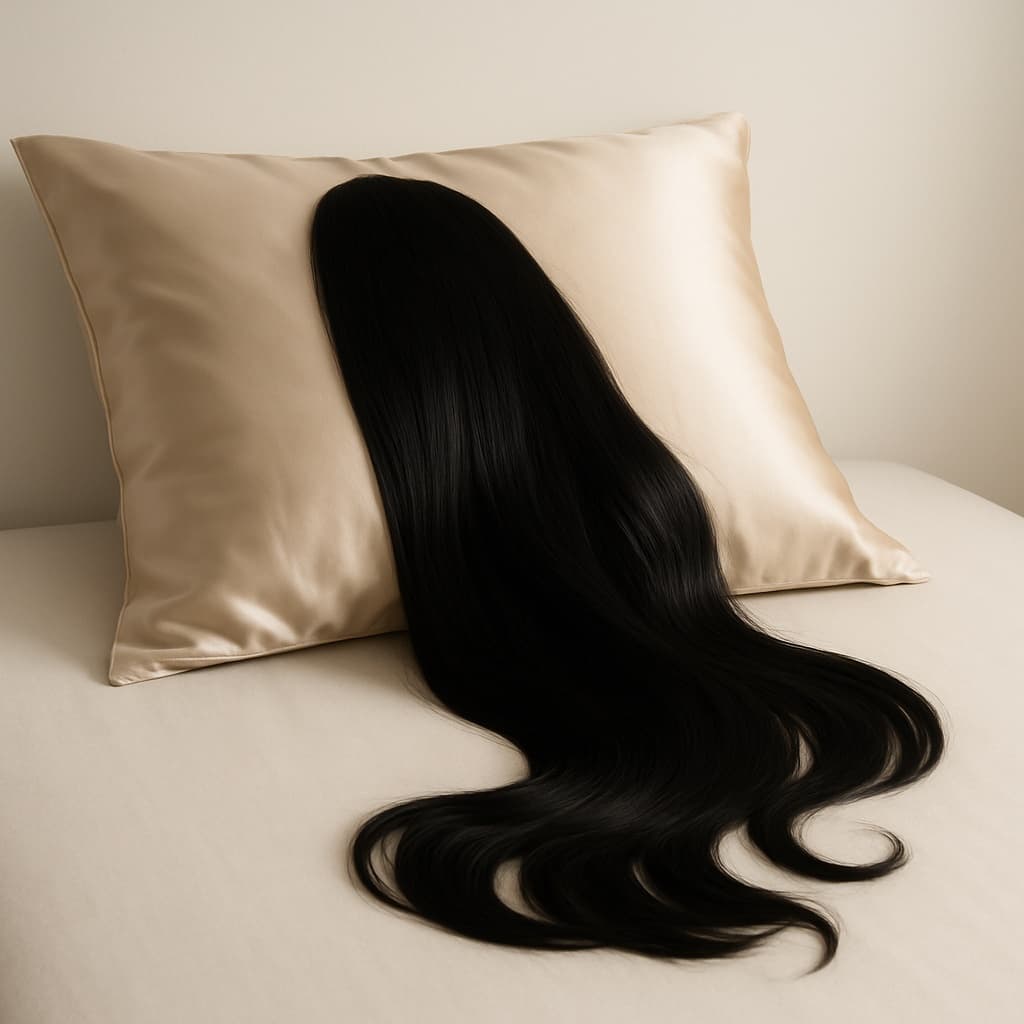
Silk pillowcases have the strangest résumé in beauty: recommended by hairstylists for decades, standard practice in the curly-hair world long before social media found them, and still marketed with claims that drift well past the evidence. The truth is more interesting than the hype — the real silk pillowcase benefits are physics, not magic, and they're the kind you can feel within a week.
This guide covers the friction mechanism that makes silk genuinely gentler on hair, the moisture argument nobody hypes but everybody benefits from, what silk does and doesn't do for skin, why curly hair and blowouts gain the most, who should skip silk entirely, and how to read a label so you buy actual silk instead of polyester wearing a nice product photo.
The Friction Mechanism: Why Silk Is Gentler Than Cotton
Every silk pillowcase benefit worth taking seriously starts from the same fact: silk is smooth at the microscopic level and cotton isn't. A cotton weave's surface bristles with short, grabby fibers, and over eight hours of sleep your hair drags across it thousands of times as you turn. Each pass catches and lifts the cuticle — the shingle-like outer layer of the hair shaft — which is what frizz literally is. Enough passes stress the shaft until it snaps, which is what breakage is. Bedhead isn't random; it's a friction map of your night.
Silk's long, smooth protein fibers give hair almost nothing to catch on, so it slides where cotton snags. That's the whole trick. Honest framing: this rests on well-understood mechanics plus decades of hairstylist consensus rather than a stack of formal clinical trials — pillowcase research is thin — but the physics isn't in dispute, and it's the best-evidenced reason to switch.
Silk Pillowcase for Hair: What Actually Improves
Ask what a silk pillowcase for hair actually delivers and the honest list is: less frizz, less overnight breakage, and mornings that need less repair. Because the damage silk prevents is mechanical, the difference shows fastest on the hair most vulnerable to mechanical stress — fine strands, color-treated or chemically processed hair, and anything already flirting with split ends. Most people who notice a change notice it within the first week or two, and what they're noticing is the absence of a nightly fight.
Be equally clear about what it won't do: silk doesn't repair existing damage, speed up growth, or thicken anything. Split ends stay split. Think of it as prevention infrastructure — the same logic as a heat protectant — not a treatment. If your hair troubles come from bleach, hot tools, or tight elastics, silk removes one source of stress while the others carry on undisturbed.
The Moisture Argument: Cotton Absorbs, Silk Mostly Doesn't
Cotton is absorbent — wonderful in a towel, quietly counterproductive in a pillowcase. Overnight, an absorbent case wicks moisture from your hair and skin along with whatever you paid to put there: leave-in conditioner, hair oil, night cream, the serum priced like jewelry. By morning, a share of your routine is in the fabric instead of on you.
Silk absorbs far less, so products stay where you applied them and hair holds more of its natural moisture through the night. That matters most for dry, curly, and textured hair, which loses moisture fastest, and for anyone running a multi-step evening skincare routine. It's the least-hyped silk pillowcase benefit and arguably the most practical: you're not buying a performance boost, you're plugging a leak.
Skin: Sleep Creases Are Real, the Wrinkle Claims Are Stretched
Side and stomach sleepers know the morning pillow lines. Those creases form when skin compresses and drags against fabric for hours, and silk's slicker surface lets your face slide rather than fold — so most people wake with fewer and fainter lines. That part is real. The extrapolation, that a silk pillowcase prevents wrinkles long-term, is marketing: sleep creases release on their own within minutes to hours, and no long-term study shows a pillowcase changing how skin ages. Buy silk for smoother mornings, not a facelift.
The acne logic is similar — plausible, modest, worth stating precisely. Any pillowcase collects sebum, product residue, and general face grime; an absorbent cotton case holds more of it against your skin, silk holds less, and silk's lower friction is gentler on skin that's already irritated. That makes it a reasonable supporting habit and nothing more — a silk pillowcase is not an acne treatment, and neither is any other fabric. Whichever case you sleep on, wash it about weekly; our guide on how to wash silk pillowcase covers doing that without wrecking the fibers. Persistent or painful breakouts are a dermatologist conversation, not a bedding decision.
Temperature, Curls, and Blowouts: Where Silk Earned Its Reputation
Silk is a thin natural protein fiber that stays close to skin temperature — noticeably cool when you first lie down, and less prone to the clammy warmth an absorbent case develops by 3 a.m. It regulates rather than refrigerates: a genuine comfort upgrade for warm sleepers, not a fix for true night sweats, which need actual cooling bedding.
Curly and textured hair is where silk built its reputation, and the credit predates every app. Silk and satin bonnets and pillowcases have been standard practice in Black haircare for generations, because coily hair is the most friction-vulnerable hair there is — every snag disrupts the curl pattern and snaps strands that took months to grow. The internet arrived late to settled wisdom. The same mechanics preserve a blowout: less overnight friction means the smooth finish survives the night, which is why stylists routinely tell clients to sleep on silk to stretch an expensive blowout an extra day or two.
Who Should Skip It — and How to Buy Real Silk
Skip silk if you're shopping for treatment results — it prevents friction damage and moisture loss, and that's the entire job description. Skip it if you love the crisp, cool hand of good cotton percale, because silk feels nothing like it. And skip it if you won't commit to the care: gentle cold wash in a mesh bag, no dryer, no bleach or softener. On a tight budget, polyester satin delivers the slip for a fraction of the price — friction protection without silk's moisture or temperature behavior — and our silk vs satin guide covers exactly when the cheap version is good enough.
If you're buying the real thing, three specs matter. First, fiber content: the label should say 100 percent mulberry silk — 'satin' names a weave, not a fiber, and most of the satin aisle is polyester. Mulberry is the cultivated long-fiber grade, smoother and stronger than wild silk. Second, momme, silk's density spec: 19 momme is the durability floor, 22 is the sweet spot, and a listing that won't state its momme or fiber content is answering your question by dodging it. Third, construction — a hidden zipper keeps a slippery case planted on the pillow. Our top pick is Blissy: 22-momme mulberry silk on both sides, machine-washable, and built to survive years of weekly laundry.
Read our Blissy silk pillowcase review
The 22-momme mulberry case that built the category — our full take on whether it earns its price.
Read our Blissy silk pillowcase reviewFrequently asked questions
Do silk pillowcases really make a difference for your hair?
Yes, for friction-related problems: frizz, overnight breakage, and bedhead are mechanical damage from hair dragging across cotton, and silk's smooth surface largely removes the drag. The effect is best documented as mechanism plus decades of hairstylist consensus rather than large clinical trials, and it prevents new damage — it doesn't repair old damage.
Do silk pillowcases prevent wrinkles?
They reduce morning sleep creases, which are real but temporary. There's no evidence a pillowcase prevents wrinkles long-term — that claim is marketing extrapolation. Sunscreen and retinoids have the receipts; bedding doesn't.
Can a silk pillowcase help with acne?
Modestly, as a supporting habit: silk absorbs less sebum and grime than cotton and creates less friction on irritated skin. It is not an acne treatment. Wash any pillowcase about weekly, and see a dermatologist for persistent breakouts.
What momme is best for a silk pillowcase?
19 momme is the minimum for a case that survives regular washing; 22 momme is the sweet spot of durability, opacity, and drape. Below 19, the fabric wears thin fast. A listing that hides its momme count is usually hiding the answer.
What's the difference between silk and satin pillowcases?
Silk is a fiber; satin is a weave, and most satin pillowcases are woven from polyester. Polyester satin gives you the slip — the friction benefit — at a much lower price, but none of silk's moisture behavior or temperature regulation.
How often should you wash a silk pillowcase?
About weekly, same as any pillowcase — it's holding a week of face against your skin every night. Machine wash cold on the gentle cycle in a mesh bag or hand wash, hang or lay flat to dry, and skip bleach and fabric softener.
TopCrate is reader-supported. When you buy through links on our site we may earn an affiliate commission, at no extra cost to you. Content is for general information and isn't a substitute for professional advice.