COMPARISON
Pulsetto vs Truvaga Plus: Neck-Worn Bilateral vs Handheld Cervical tVNS — Which Vagus Nerve Device Is Right for You? (2026)
Pulsetto and Truvaga Plus both stimulate the vagus nerve through the skin of the neck, but they take opposite delivery approaches for opposite users. One is a neck-worn wearable that runs bilateral 4-minute sessions hands-free; the other is a handheld one-sided device with 2-minute clinical-parameter sessions from the maker of an FDA-cleared prescription VNS. Here's how they compare on stimulation, session flow, price and guarantee — and which one actually fits how you'd use it.
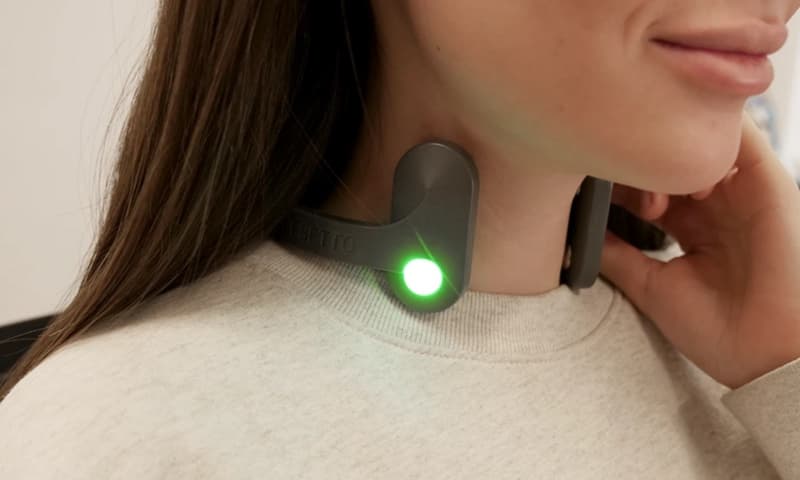
Pulsetto and Truvaga are the two most-searched consumer vagus-nerve stimulators, and they compete for the same buyer: someone chronically stressed, anxious or under-sleeping who's read enough about cervical tVNS (transcutaneous vagus nerve stimulation) to want to try the device version of the long-exhale response. What they aren't is the same product. Pulsetto is a soft, flexible neck-worn wearable from Pulsetto UAB that rests around the front of your neck and delivers bilateral (both-sides) cervical tVNS in guided 4-minute app sessions, sold direct at $269 per unit. Truvaga Plus is a handheld device from electroCore — the same medical-device company behind the FDA-cleared prescription gammaCore — that delivers unilateral (one-side) cervical tVNS in 2-minute sessions using the same 25 Hz clinical parameters as tVNS research, sold direct at $499.
So the right choice depends on how you'd actually use the device. If you want hands-free sessions you can run at your desk, in bed, or watching TV — sessions where you're not tied up holding a handset for two minutes — Pulsetto's neck-worn form factor is the honest pick, plus it's roughly half Truvaga Plus's price. If clinical-parameter stimulation from the makers of the only FDA-cleared prescription VNS matters to you, or if you'd rather not use conductive gel or deal with a Bluetooth pairing every session, Truvaga Plus is engineered for that experience. This guide covers who makes each one, how the two stimulation approaches actually differ, what a session looks like on each device, the price and 3-year cost math, and which one wins for stress, sleep and daily nervous-system regulation.
One quick note: neither Pulsetto nor Truvaga is FDA-cleared for a medical condition — both are marketed as general wellness devices under the wellness-device pathway rather than as medical treatments for anxiety, depression, PTSD or any diagnosis. Truvaga's parent electroCore does hold FDA clearance for gammaCore, a prescription VNS for migraine and cluster headache, but that clearance is for gammaCore specifically — not for the consumer Truvaga Plus. If a medical claim is what you're after, neither device is what you want. If drug-free nervous-system regulation is the goal, both are legitimate tools in the tVNS category. Our full Pulsetto review covers the Pulsetto experience in depth.
Pulsetto vs Truvaga Plus at a glance
What each one is: Pulsetto is a soft, horseshoe-shaped, neck-worn wearable that rests around the front of your neck with two electrode pads that sit over the vagus nerve's cervical path on both sides. It's app-controlled via Bluetooth, runs 4-minute session programs (stress, anxiety, sleep, burnout, pain) at ten intensity levels, and needs a dab of conductive gel on the skin per session. Truvaga Plus is a small handheld device you hold against one side of the neck at a time (typically the left, over the carotid area, as the app instructs), runs 2-minute sessions at 25 Hz — the same parameter set used in cervical-tVNS clinical research — and needs an electrode spray (rather than gel) for skin conductance.
Price: Pulsetto is $269 per unit on its own direct funnel; a bundle-tier promotion is sometimes offered on the checkout at a modest discount. Truvaga Plus is $499 per unit on Truvaga's own funnel; a two-pack household bundle occasionally sits at $895. Neither device requires an ongoing subscription — Pulsetto includes its core programs in the free app tier (a Pulsetto FIT subscription unlocks additional HRV features on some hardware bundles); Truvaga Plus is a one-time buy with a manufacturer-stated 30,000-session / 3-year designed lifespan.
Stimulation approach: The single most technical difference between the two is bilateral vs unilateral cervical tVNS. Pulsetto stimulates both sides of the neck simultaneously through its two-electrode neck-worn design. Truvaga Plus stimulates one side at a time — the app guides which side and for how long per session. In the peer-reviewed cervical-tVNS literature, both bilateral and unilateral protocols are used; there's no consensus that one is meaningfully more effective than the other, and both Pulsetto and Truvaga Plus cite that literature to justify their respective designs.
Session flow: Pulsetto's 4-minute sessions are hands-free — you gel the pads, put the unit around your neck, pick a program in the app, and let the session run while you sit or lie down and do something else (breathe, read, watch TV, wind down before bed). Truvaga Plus's 2-minute sessions are handheld — you spray the electrode, hold the device against the correct side of the neck for the two-minute program, then repeat if the app instructs a second side. Both fit into a daily routine; the physical experience is different.
Guarantee: Pulsetto ships with a 30-day money-back guarantee from delivery date on standard-price orders (fine-print details vary by promotion tier). Truvaga Plus ships with a 30-day satisfaction guarantee direct from electroCore. Both are non-invasive wellness devices with a small list of contraindications (implanted electronics like pacemakers, pregnancy, active seizure disorders, and certain vagus-adjacent conditions).
What Pulsetto actually is
Pulsetto is a soft, flexible, neck-worn tVNS device from Pulsetto UAB (a Lithuanian company distributing globally through its own direct funnel) engineered around one specific design idea: make cervical vagus-nerve stimulation something you can do hands-free while you're already sitting or lying down. The unit is a horseshoe shape that curves around the front of your neck with two small electrode pads that make contact with the skin over the vagus nerve's cervical path on both sides. A dab of the included conductive gel goes on the pads before each session; the unit connects to your phone over Bluetooth and runs one of five app-guided session programs — Stress, Anxiety, Sleep, Burnout, Pain — at ten intensity levels from 1 (barely-there tingle) to 10 (firm pulse).
The whole product is engineered around consistency of use. A 4-minute session is short enough that you'll actually run it twice a day — morning to set the nervous-system baseline for a stressful day, evening to help downshift before sleep — and the hands-free form factor means you can run the evening session in bed while your eyes are already off the phone. Most Pulsetto users describe a warm, loosening calm during the session, a slower pulse rate they can feel in their chest, and easier sleep when they use the evening programs consistently for a couple of weeks. Response varies — some users feel the downshift immediately, a minority feel little — and consistency matters more than intensity.
The trade-offs are worth naming plainly. The gel step is the most-cited friction point — you have to keep a tube of conductive gel on hand and dab both pads before every session, and the gel needs to be wiped off the skin after. The Bluetooth-and-app dependency means a session requires your phone in reach, and app updates or account issues can occasionally interrupt a routine. The neck-worn form factor is comfortable for most, but users with sensitive skin or particularly slender necks sometimes describe the pads shifting during longer wear. Our full Pulsetto review covers the daily-use experience in more depth.
What Truvaga Plus actually is
Truvaga Plus is a small handheld cervical tVNS device from electroCore, a New Jersey-based medical-device company that holds FDA clearance for a related prescription VNS called gammaCore (indicated for the acute treatment and prevention of migraine and cluster headache). Truvaga Plus is the consumer wellness-branded product from the same company — sold direct-to-consumer without a prescription — that uses the same underlying cervical tVNS mechanism, delivered through a small handheld device rather than a prescription unit or a wearable.
The design decisions worth understanding all trace back to the clinical-parameter positioning. Truvaga Plus runs 2-minute unilateral sessions at 25 Hz — the same session length and stimulation frequency used in a large body of cervical-tVNS clinical research — because those parameters are the ones the peer-reviewed literature supports. The Truvaga app guides which side of the neck to hold the device against, for how long, and how many sessions per day (typical protocol is 2-3 sessions daily, one to a few minutes apart). The device is designed for a 3-year service life and 30,000 sessions of use, which works out to about 27 sessions per day at maximum before the designed lifespan is reached — well above anyone's realistic daily protocol.
The trade-offs are the mirror image of Pulsetto's. Truvaga Plus is hands-on: you hold the device against your neck for the whole 2-minute session, so it's not a bedtime-in-the-dark or lying-flat-on-the-couch device — you're holding a small handset. The electrode-spray step replaces Pulsetto's gel step and is a bit lower-friction (spray on, hold up, put device against skin) but still requires an ongoing consumable. The price at $499 is roughly double Pulsetto's $269 sticker, and the value case rests on the clinical-parameter positioning and the parent company's medical-device pedigree rather than a hardware feature Pulsetto lacks.
Bilateral vs unilateral: how the two stimulation approaches differ
This is the piece of tVNS device selection where the marketing on both sides gets loudest, and where the honest answer is more measured than either brand's copy suggests. Both Pulsetto's bilateral design (stimulating both sides of the neck at once) and Truvaga Plus's unilateral design (stimulating one side at a time, with the app instructing which side and when) draw on published cervical-tVNS research. Neither protocol has been established in the peer-reviewed literature as meaningfully more effective than the other for the wellness-device outcomes both brands market — general stress relief, easier sleep onset, subjective calm.
What the bilateral approach gets you practically: one session covers both vagus branches at once, so a 4-minute Pulsetto session is a complete session by the time it ends. What the unilateral approach gets you: the ability to hit one side more intensely for a specific reason (some tVNS protocols in the research literature deliberately target one side for a specific outcome), and the option to run a second session on the opposite side if a protocol calls for it. Neither approach is what makes a wellness-device tVNS session "work" for a given user — that's mostly a function of consistency of use, correct electrode placement, and adequate stimulation intensity.
The honest framing: don't pick between Pulsetto and Truvaga Plus on bilateral vs unilateral. Pick on session-flow fit (hands-free wearable vs hands-on handheld), price (Pulsetto is roughly half), and brand pedigree (Truvaga Plus's parent company holds FDA clearance for a related prescription device; Pulsetto is a consumer wellness brand with no medical clearance). The stimulation-approach axis is real but not decisive for most buyers.
Session length, gel vs spray, and what the daily routine actually feels like
Pulsetto's 4-minute session with a gel step: unpack the unit, dab a small amount of conductive gel on each of the two electrode pads, put the horseshoe around your neck so both pads make skin contact, open the Pulsetto app on your phone, pick a program (Stress, Anxiety, Sleep, Burnout or Pain), set the intensity from 1 to 10, and let the session run. The device does the rest — a warm, loosening tingle that scales with the intensity setting, a session progress bar in the app, and an automatic end when the 4 minutes are up. Total time from opening the drawer to session-complete is typically 6-7 minutes.
Truvaga Plus's 2-minute session with a spray step: unpack the device, spray the two electrode contacts with the included electrode spray, open the Truvaga app, pick a session and side of the neck, hold the device against the correct side of the neck for the 2-minute duration, then repeat on the second side or wait until the next session as the protocol instructs. Total time from opening the drawer to a full session-set is typically 5-6 minutes — a bit shorter than Pulsetto's 4-minute program because the 2-minute sessions are the design point.
The practical difference in daily use is bigger than the minute count suggests. Pulsetto's session is hands-free the whole way through, so you can run it in bed with the lights off, while reading, or while doing something else entirely. Truvaga Plus's session is hands-on the whole way through, so it requires a stretch of time when you're intentionally sitting still and holding the device. Both approaches work; the fit-to-your-life question is whether you'd rather run a slightly longer hands-free session or a slightly shorter hands-on one. Also worth noting: Pulsetto's app-and-Bluetooth setup adds a small piece of tech friction to every session, while Truvaga Plus's simpler physical interface is faster to start once you've learned the placement.
Price, subscription and the 3-year math
Sticker prices don't tell the whole story here, because both devices are one-time purchases with real service lives and both use ongoing consumables. Real comparison requires factoring in the consumable cost (Pulsetto's conductive gel refills, Truvaga Plus's electrode spray refills) alongside the sticker.
Pulsetto over three years: $269 for the base device, plus roughly $30-$50/year in conductive gel refills if you run 2 sessions/day, for a total near $359-$419 over three years. No subscription is required for the core five programs. Pulsetto's optional FIT tier (an upsell that includes HRV tracking and additional session programs on the compatible hardware bundle) is available at an additional cost but isn't needed for the core stress/anxiety/sleep programs the base package includes.
Truvaga Plus over three years: $499 for the device, plus roughly $30-$50/year in electrode-spray refills at similar usage, for a total near $589-$649 over three years. Everything the app can do is included — no subscription tier gates the sessions. The manufacturer's designed lifespan of 3 years / 30,000 sessions covers a full three years of realistic daily use before the hardware itself is at end-of-life.
The break-even math doesn't move Pulsetto up or down against Truvaga Plus meaningfully — both are one-time hardware purchases with modest consumable costs, and the price gap is roughly $200 across three years of ownership. What matters is whether that $200 is worth the session-flow difference (hands-free wearable vs hands-on handheld) and the pedigree difference (consumer wellness brand vs consumer arm of a medical-device company with a related FDA clearance).
Guarantees, warranty and support
Pulsetto's stated policy is a 30-day money-back guarantee from delivery date on standard-price orders, with a limited manufacturer warranty against defects. The fine print on flash-sale and bundle-tier orders can be tighter, so read the specific return terms on the page you pay on before you buy. Support is a standard direct-to-consumer support desk — email and in-app support, useful for return authorizations and account questions.
Truvaga Plus's stated policy is a 30-day satisfaction guarantee direct from electroCore, plus a limited manufacturer warranty. Because Truvaga is the wellness arm of a medical-device company, the support layer is a bit more formal — a defined manufacturer-warranty process, and the ability to escalate a hardware issue through the same organization that ships the prescription gammaCore product. That's a real service-layer difference for buyers who care about the maker's institutional pedigree.
Both devices ship with electrode consumables in the box (Pulsetto includes a starter tube of conductive gel; Truvaga Plus includes a starter bottle of electrode spray), and refills are available direct on each brand's funnel. If a consumable step is a friction point that would keep you from consistent daily use, that's worth weighing at purchase time — both devices need the conductive medium every session, no exceptions.
Which one should you buy?
Choose Pulsetto if hands-free session flow matters to you — the specific value of being able to run an evening session in bed with your eyes closed, at your desk while working, or on the couch while doing something else. It's also the honest pick if the sticker price matters (Pulsetto is roughly half of Truvaga Plus at $269 vs $499), if you want longer 4-minute sessions with a chosen program mood (Stress, Anxiety, Sleep, Burnout or Pain), and if the app-and-Bluetooth dependency doesn't put you off. Our full Pulsetto review covers the pair in more depth.
Choose Truvaga Plus if the clinical-parameter positioning matters to you — the specific 25 Hz frequency and 2-minute session length that cervical-tVNS research uses, delivered by the consumer arm of the same medical-device company that holds FDA clearance for the prescription gammaCore. It's also the pick if you want a simpler physical interface (no gel step, no Bluetooth pairing every session), if you'd rather hold a small handheld device than wear something around your neck, and if the additional $230 across the sticker doesn't move you.
Choose neither if you're looking for a medical treatment rather than a wellness device — neither Pulsetto nor Truvaga Plus is FDA-cleared for anxiety, depression, PTSD or any medical condition, and buyers whose need is medical should speak to a clinician about prescription options (gammaCore for the specific indications it's cleared for, or other treatment paths for other conditions). Both wellness-device options are useful drug-free tools for the buyer whose ask is nervous-system regulation rather than a specific medical outcome.
Our verdict
For the biggest slice of consumer tVNS buyers — someone chronically stressed or under-sleeping who wants a drug-free, non-invasive way to hit the parasympathetic brake pedal on a real cadence — Pulsetto is our pick. The hands-free 4-minute session format fits real life better than a handheld device does for the evening-before-bed and lying-on-the-couch use cases that dominate consumer tVNS routines, and the $269 sticker plus modest gel-refill cost delivers the whole experience at roughly half of Truvaga Plus's total ownership cost.
For the buyer who specifically wants clinical-parameter stimulation from the consumer arm of a medical-device company with a related FDA-cleared prescription product, Truvaga Plus is the honest pick. The $499 sticker buys the 25 Hz / 2-minute session-parameter positioning, electroCore's institutional pedigree, and a simpler physical interface (no Bluetooth pairing every session, spray rather than gel). That's a legitimately different value proposition for a specific buyer, and it's not a knock on either brand that they don't compete on the same axis.
Whichever you pick, treat the first two to four weeks as the calibration window: twice-daily sessions at a tingle-not-bite intensity, at consistent times, before deciding whether the device is working for your nervous system. Response to cervical tVNS varies — most users feel a downshift quickly, a minority feel little — and the 30-day money-back guarantees on both brands exist precisely so an honest trial period doesn't cost you.
Read our full Pulsetto review
Our verdict on the $269 hands-free cervical tVNS wearable from Pulsetto UAB — what a 4-minute session feels like, how the daily routine actually fits into real life, and whether it's the right vagus-nerve tool for your specific stress or sleep problem.
Read our full Pulsetto review →Frequently asked questions
Is Pulsetto or Truvaga FDA-approved?
Neither is FDA-approved for a medical condition. Both are marketed as general wellness devices under the wellness-device pathway rather than as medical treatments for anxiety, depression, PTSD or any diagnosis. Truvaga's parent company electroCore does hold FDA clearance for gammaCore, a related prescription VNS device cleared for the acute treatment and prevention of migraine and cluster headache, but that clearance is specifically for gammaCore and not for the consumer Truvaga Plus. "FDA-registered" and "FDA-cleared" and "FDA-approved" mean different things — neither consumer device carries a medical-condition clearance.
Does Pulsetto really stimulate both sides of the neck?
Yes — Pulsetto's design places one electrode pad on each side of the front of the neck, so a session stimulates the vagus nerve's cervical path on both sides at once. Truvaga Plus takes the opposite approach: it stimulates one side at a time and the app instructs which side and for how long per session. Both bilateral and unilateral cervical tVNS protocols exist in the peer-reviewed literature; neither has been established in the research as meaningfully more effective than the other for the wellness-device outcomes both brands market.
How long are Truvaga Plus sessions vs Pulsetto?
Truvaga Plus runs 2-minute sessions at 25 Hz — the same session length and stimulation frequency used in cervical tVNS clinical research. The typical protocol is 2-3 sessions per day, spaced through the day. Pulsetto runs 4-minute sessions (one program per session — Stress, Anxiety, Sleep, Burnout or Pain), typically twice a day (morning and evening). The Truvaga session is shorter but hands-on the whole way; the Pulsetto session is longer but hands-free.
Does Pulsetto or Truvaga need a subscription?
Core session programs on both are subscription-free — buy the device once, use its included programs forever. Pulsetto offers an optional FIT tier (an upsell that unlocks additional HRV features and programs on the compatible bundle) at an extra cost, but the base package's five programs (Stress, Anxiety, Sleep, Burnout, Pain) don't require it. Truvaga Plus is a straight one-time buy with every session parameter included. Both do require ongoing consumables — Pulsetto's conductive gel refills and Truvaga Plus's electrode-spray refills — at roughly $30-$50/year at typical daily use.
Who shouldn't use Pulsetto or Truvaga?
Both devices carry the same core contraindications: don't use with a pacemaker, implanted defibrillator or other implanted electronics; don't use during pregnancy without medical clearance; don't use with an active seizure disorder or a diagnosed vagus-nerve condition without a clinician's approval. Buyers with any medical condition affecting the neck, throat or vagus nerve should speak to their doctor before starting either device. Neither is a substitute for evaluation of anxiety, depression, PTSD, insomnia or any condition — that's a case for a clinician.
Where should I buy Pulsetto safely?
Buy Pulsetto direct from Pulsetto's own funnel — the TopCrate affiliate link routes you there, the 30-day money-back guarantee applies on standard-price orders, and there's no counterfeit-drive risk. Marketplace listings for tVNS devices from unfamiliar third-party sellers at deep discounts are worth avoiding. Buy Truvaga Plus direct from Truvaga's own site (Truvaga.com) or through electroCore's authorized retail partners; the manufacturer warranty applies to the same-channel purchases and not to gray-market listings.
TopCrate is reader-supported. When you buy through links on our site we may earn an affiliate commission, at no extra cost to you. Content is for general information and isn't a substitute for professional advice.