EXPLAINER
Pulsetto and HRV: What It Measures, What It Doesn't (2026)
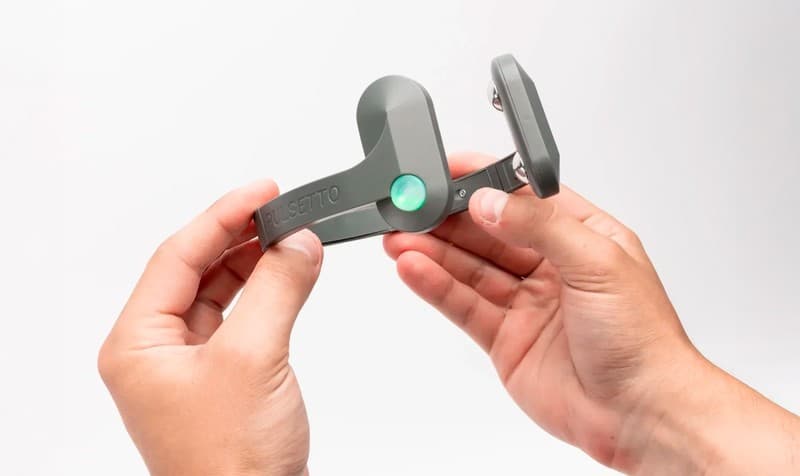
The Pulsetto device doesn't measure heart rate variability. The app can show HRV trends when you connect a wearable such as Apple Health, Oura or WHOOP, and that's a Premium feature. Here's what HRV is, what the research on vagus nerve stimulation and HRV says, and how to track it yourself.
Pulsetto does not measure HRV itself: the neck-worn device stimulates the vagus nerve, and the Pulsetto app shows heart rate variability only when you connect a wearable that measures it, such as Apple Health, Oura or WHOOP. The App Store listing puts HRV tracking and wearable integrations under the app's Premium tier, and the Pulsetto offer page we checked on November 13, 2026 doesn't mention HRV at all.
That's the short answer to the "Pulsetto HRV" question. The longer one is worth knowing if you track your HRV: what the number means, why a vagus nerve device is linked to it, what published research actually found, and how to run a simple before-and-after check with the wearable you already own.
Does Pulsetto measure HRV?
No, not on its own. Pulsetto is a stimulator: two electrodes rest on the front of your neck and deliver gentle electrical pulses during sessions of about four minutes. The offer page lists what's in the box (the stimulator, application gel, a charging cable and a user manual, plus free access to the Pulsetto app with five relief settings and a Sound Library). It doesn't list any heart rate or HRV sensor, and it doesn't mention HRV.
The newer Pulsetto Fit X does have one sensing feature: the app's October 2026 update notes say it saves the intensity that feels right to you and uses your skin response to match that feeling in future sessions. That's about matching intensity, not HRV. The offer page doesn't say which Pulsetto model ships, so don't count on Fit X features from that page.
We also looked for a feature that reads HRV through your phone's camera, which some other wellness apps offer. We didn't find one in Pulsetto's App Store listing or on pulsetto.tech, so as far as we could verify, the app doesn't do that.
What the Pulsetto app does with HRV
The Pulsetto app on the App Store, published by UAB Pulsetto, says you can connect your favorite wearable to see how your body responds to sessions through a personalized Stress Resilience score, HRV tracking, resting heart rate trends, sleep analytics and stress and recovery monitoring. Its Premium list includes advanced sleep, HRV, stress and recovery insights, and wearable integrations with Apple Health, Oura, WHOOP and others. A May 2026 update introduced the Stress Resilience score with sleep, HRV and stress trends in one place.
Two practical details. First, the listing still names Fitbit, but the latest update notes say Fitbit was removed from the wearables list because of Fitbit's updated policy, so Fitbit users shouldn't count on it. Second, these are Premium features. The App Store showed in-app purchases including $17.99 a month, $39.99 for three months and $99.99 for 12 months when we checked; pulsetto.tech listed Premium at $15 a month and showed it as out of stock. The core relief settings that come with the device don't need Premium.
Pulsetto's own app page lists Premium extras as additional stimulations, meditations, breathing exercises, affirmations, a "CNS tap test", insights and wearable connection, and says the app pairs with Apple Watch, Oura Ring and other smart devices. We couldn't confirm Garmin or Android Health Connect support from the pages we checked, so verify those in the app before you pay.
What HRV actually means
Heart rate variability is the small, constant change in the time between one heartbeat and the next. Even at a steady 60 beats a minute, the gaps aren't exactly one second each. Wearables estimate HRV from those beat-to-beat intervals, usually overnight or at rest, and report it in milliseconds.
Higher HRV is generally linked with the rest-and-digest side of the nervous system being more active, which is why recovery apps treat it as a readiness signal. But HRV is very personal. Your number depends on age, fitness, sleep, alcohol, illness, stress, time of day and even how you sit when you measure it, so comparing yours with someone else's tells you little. Your own trend over weeks is the useful part.
Devices also use different formulas. Many wearables report RMSSD, while Apple Health records a measure called SDNN. Numbers from two devices often don't match, so pick one and stick with it.
Why vagus nerve stimulation is linked to HRV
The vagus nerve carries much of the parasympathetic signal to the heart, and that signal is one of the main reasons your heart rate varies from beat to beat. That's why people who stimulate the vagus nerve, whether with slow breathing or a device, often want to see an HRV change.
Pulsetto's marketing leans into this. Its app page says Pulsetto is "scientifically proven to enhance your HRV." That's the brand's claim. The published research is more mixed, and it's worth knowing what it found before you expect a jump in your HRV score.
What the research on Pulsetto and HRV found
The closest study we found used Pulsetto itself. A 2024 master's thesis at TU Delft by F.A. van den Bogaert tested cervical stimulation with Pulsetto in 40 healthy volunteers, 30 stimulated and 10 given sham stimulation, for 10 minutes while recording an ECG. During stimulation, heart rate went down and HRV measures linked to the parasympathetic system (RMSSD, pNN50 and HF power) went up, with no change in the sham group. That's encouraging, but it's a student thesis rather than a peer-reviewed journal paper, the sham group was small, it measured changes during a 10-minute session rather than the app's four-minute ones, and it didn't test whether resting HRV changes over weeks.
The broader picture is less clear. A 2021 meta-analysis by Wolf and colleagues in the journal Psychophysiology pooled 16 sham-controlled studies of ear-based (auricular) vagus nerve stimulation in healthy people and found strong evidence that a single session did not change vagally mediated HRV compared with sham. That's a different stimulation site from Pulsetto's neck placement, so it doesn't settle the question for Pulsetto, but it's a good reason not to expect every session to move your numbers.
Our reading: there's early evidence that neck stimulation with Pulsetto can shift heart rhythm measures during a session, and no solid evidence yet that it raises your everyday HRV. Pulsetto is a wellness device for relaxation and stress support, not a medical device, and it's best judged by how you feel.
Wearables that measure HRV, and using them with Pulsetto
If you want numbers, you need a separate device. Apple Watch records HRV to Apple Health, Oura and WHOOP report it as part of their sleep and recovery scores, and many Garmin watches and chest straps measure it as well. Chest straps are usually the most precise for short readings; rings and watches are more convenient for overnight trends.
You can wear a watch, ring or strap while you use Pulsetto, since they sit in different places and the wearable only reads your pulse. Check both devices' manuals for any warnings, and follow Pulsetto's own safety advice: ask your doctor first if you have a pacemaker or other implanted electronics, are pregnant, or manage a heart condition.
How to run your own Pulsetto HRV check
Use the 30-day money-back window on the offer page as a test period. Record your baseline for a week before your first session, using the same wearable and the same overnight or morning reading each day. Then use Pulsetto on a steady schedule, such as one session in the morning and one before bed, for three weeks.
Compare weekly averages rather than single days, and keep notes on sleep, alcohol, training and illness, which can swing HRV more than anything else. If your HRV trend rises and you feel calmer, that's a good sign for you. If the numbers don't move but you sleep and feel better, that still counts. If neither changes, you have time to return it. Our full Pulsetto review covers the session settings and the bundle prices.
How this fits with the other Pulsetto questions
If you're still deciding on Pulsetto at all, start with our is Pulsetto legit guide, which covers who makes it, the checkout and the guarantee. If you're comparing devices, our Pulsetto vs Truvaga comparison looks at the handheld neck option, and Pulsetto vs Nurosym covers the ear-clip approach that most of the HRV research above studied.
On price: the offer page listed Pulsetto at $239 for one, $336 for two and $448 for three, with free shipping, a 30-day money-back guarantee and a 2-year warranty. TopCrate earns a commission if you buy through our Pulsetto links, which doesn't change what we've said about the research.
Read our full Pulsetto review
Our verdict on the four-minute neck-worn vagus nerve device: the app settings, bundle prices, guarantee and who it suits.
Read our full Pulsetto review →Frequently asked questions
Does Pulsetto measure HRV?
No. The Pulsetto device stimulates the vagus nerve and doesn't list any heart rate or HRV sensor. The Pulsetto app can show HRV trends when you connect a wearable such as Apple Health, Oura or WHOOP, and that's part of the paid Premium tier.
Does Pulsetto improve HRV?
Pulsetto says it does. A 2024 TU Delft master's thesis found HRV measures rose during 10-minute Pulsetto sessions in healthy volunteers compared with sham, but it wasn't a peer-reviewed journal study, and a 2021 meta-analysis of ear-based stimulation found no HRV change versus sham. Treat any change as a personal wellness signal, not a promise.
Which wearables work with the Pulsetto app?
The App Store listing names Apple Health, Oura and WHOOP, and Pulsetto's site mentions Apple Watch and Oura Ring. Fitbit was removed in a recent update. We couldn't confirm Garmin support, so check the app's wearable list before you subscribe.
Do I need Pulsetto Premium to track HRV?
Yes. HRV, sleep and recovery insights and wearable integrations are listed as Premium features. When we checked, App Store prices included $17.99 a month and $99.99 a year. The device's core relief settings work without Premium.
Can I wear my Apple Watch, Oura ring or WHOOP while using Pulsetto?
Yes, they sit in different places and the wearable just reads your pulse. Check both manuals for warnings, and ask your doctor before using Pulsetto if you have a pacemaker or other implanted electronics, are pregnant, or have a heart condition.
What is a good HRV score to see with Pulsetto?
There isn't one universal number. HRV varies widely with age, fitness, sleep and stress, and different wearables calculate it differently. Watch your own weekly average over a few weeks of Pulsetto use instead. Our Pulsetto review explains how to set up a fair trial.
TopCrate is reader-supported. When you buy through links on our site we may earn an affiliate commission, at no extra cost to you. Content is for general information and isn't a substitute for professional advice.