COMPARISON
Pulsetto vs Nurosym: Neck-Worn Cervical tVNS vs Ear-Clip Auricular — Which Vagus Nerve Device Is Right for You? (2026)
Pulsetto and Nurosym are the two most-searched consumer vagus-nerve stimulators that aren't Truvaga, and they take opposite anatomical approaches for opposite budgets. One is a $269 hands-free neck wearable with app-guided 4-minute sessions. The other is an $825-$900 ear-clip auricular device with the biggest peer-reviewed study portfolio in the consumer VNS category. Here's how they compare on stimulation site, session flow, price and evidence — and which one actually fits your use case.
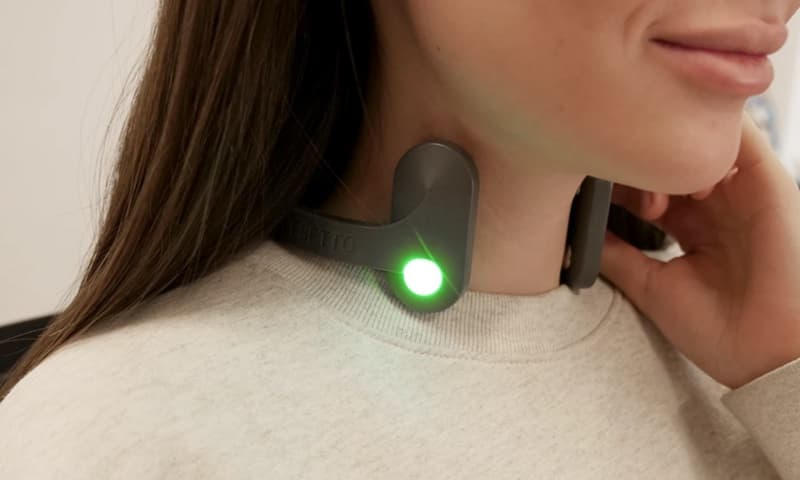
Pulsetto and Nurosym are the two most-searched consumer non-invasive vagus-nerve stimulators that aren't Truvaga, and they compete for the same buyer: someone chronically stressed, anxious or under-sleeping who's done enough reading on tVNS to want to try the device version of the long-exhale response but hasn't decided which anatomical approach to buy into. What they aren't is the same product. Pulsetto is a soft, flexible neck-worn wearable from Pulsetto UAB (Lithuania) that delivers cervical tVNS — stimulation to the vagus nerve's cervical path at the front of the neck — through two gel-contact electrodes in guided 4-minute app sessions at $269 per unit. Nurosym is an ear-clip auricular tVNS device from Parasym (UK, sold as Nuropod in the US) that clips to the tragus of a single ear and stimulates the auricular branch of the vagus nerve in standalone sessions, at roughly $825-$900 in the US.
So the right choice depends on which anatomical approach suits you and what you're paying for. If you want hands-free sessions you can run at your desk, in bed or on the couch — the specific value of lying down with eyes closed while a 4-minute program finishes — Pulsetto's neck-worn wearable is the honest pick, and it costs roughly a third of Nurosym's US sticker. If what you want is the most clinically studied consumer VNS device, with the CE medical-device certification in Europe, the FDA Non-Significant Risk Designation, the 50+ peer-reviewed study portfolio, and the ear-clip format that lets you read, work or watch TV with no gel step and no required app — Nurosym (Nuropod) is engineered for that experience. This guide covers who makes each one, how cervical and auricular tVNS differ, what a session actually looks like on each device, the three-year price math, and which one wins for stress, sleep and daily nervous-system regulation.
One important note before we start: neither Pulsetto nor Nurosym is FDA-cleared or FDA-approved for a medical condition. Both are marketed as general wellness devices rather than as medical treatments for anxiety, depression, PTSD or any diagnosis. Nurosym carries an FDA Non-Significant Risk Designation and a CE medical-device certification in Europe, which are regulatory classifications — not condition-specific clearances. If a medical claim is what you need, neither device is what you want, and the right call is a clinician. If drug-free nervous-system regulation is the goal, both are legitimate tools. Our full Pulsetto review covers the Pulsetto experience in depth.
Pulsetto vs Nurosym at a glance
What each one is: Pulsetto is a soft, horseshoe-shaped, neck-worn wearable from Pulsetto UAB that rests around the front of your neck with two electrode pads making contact over the vagus nerve's cervical path on both sides. It's app-controlled via Bluetooth, runs 4-minute programs (Stress, Anxiety, Sleep, Burnout, Pain) at ten intensity levels, and uses conductive gel on the pads each session. Nurosym (sold as Nuropod in the US) from Parasym is a small ear-clip device that clips to the tragus of a single ear and delivers transcutaneous auricular vagus nerve stimulation (taVNS) in standalone sessions, with intensity set on the device itself rather than via a phone app. The anatomical target is different: Pulsetto hits the vagus at the neck; Nurosym hits the auricular branch at the ear.
Price: Pulsetto is $269 per unit on its own direct funnel; Nurosym is around $825-$900 in the US (around €700 in Europe) direct from Parasym. Nurosym is roughly three times Pulsetto's US sticker, and the price gap is the single biggest fact driving the comparison. Neither device requires an ongoing subscription — Pulsetto includes its five core programs in the free app tier (an optional FIT subscription unlocks additional HRV features on the compatible bundle); Nurosym is a straight one-time hardware buy with no app layer to subscribe to.
Regulatory posture: Pulsetto is marketed as a general consumer wellness device with no US FDA clearance. Nurosym carries an FDA Non-Significant Risk Designation in the US (a regulatory classification, not a medical-condition clearance) and holds a CE medical-device certification in Europe. The study portfolio Nurosym cites — a frequently-mentioned 50+ peer-reviewed study count across institutions including Harvard, UCLA, Bart's NHS and the University of Chicago, with specific trials showing a measurable increase in vagus-nerve activity within minutes of use — is the biggest in the consumer VNS category. Pulsetto cites the broader cervical-tVNS research literature; it doesn't carry a device-specific peer-reviewed portfolio of comparable scale.
Session flow: Pulsetto's 4-minute neck-worn sessions are hands-free — gel the pads, place the unit around your neck, open the app, pick a program, let the session run while you do something else. Nurosym's ear-clip sessions are hands-free in a different way — clip to the tragus, set intensity on the device, carry on with reading, working or watching TV while the session runs. Neither device requires you to hold anything, which is a meaningful difference from Truvaga Plus's handheld format.
Guarantee and warranty: Pulsetto ships with a 30-day money-back guarantee from delivery on standard-price orders. Nurosym (Nuropod) ships with a 30-day return policy from the brand, plus a manufacturer warranty. Both are non-invasive wellness devices with a small list of contraindications (implanted electronics, pregnancy, active seizure disorders, and certain vagus-adjacent medical conditions).
Cervical vs auricular: how the two stimulation sites actually differ
This is the pivotal piece of this comparison, and it's the one most buyer-focused writeups cover badly. Pulsetto and Nurosym are not targeting the same anatomical point. Pulsetto delivers cervical tVNS — pulses through the skin of the front of the neck, where the vagus nerve runs near the carotid artery, with electrodes placed to stimulate both sides at once. Nurosym delivers auricular tVNS (sometimes written taVNS) — pulses through a clip on the tragus of the ear, where the auricular branch of the vagus runs very close to the skin surface and is reachable through a comparatively small, well-studied access point.
The practical implication of the anatomical difference: the auricular branch has, in the published research, the longer and more thoroughly characterized body of non-invasive stimulation evidence. The tragus-of-the-ear access point sits closer to the skin surface than the cervical path at the neck, and taVNS protocols have been used across more peer-reviewed trials across more institutions than cervical-tVNS protocols. That's the honest regulatory and research posture Nurosym cites, and it's a real difference, not just marketing.
What that doesn't mean: it does not mean the cervical approach doesn't work. Cervical tVNS has its own published research base (smaller than taVNS, but real), and the real-world consumer response curves on Pulsetto and Nurosym both include a majority of users describing a felt downshift during the session and sustained baseline-calm improvements over two to four weeks of consistent use. The honest framing: Nurosym's auricular approach has the stronger evidence pedigree for peer-reviewed research; Pulsetto's cervical approach has the better fit for buyers who want a hands-free neck-worn wearable at a wellness-device sticker. Pick the anatomical approach that fits your preference and budget; both are legitimate tools in the consumer VNS category.
What Pulsetto actually is
Pulsetto is a soft, flexible, neck-worn cervical tVNS device from Pulsetto UAB. The unit is a horseshoe shape that curves around the front of the neck with two small electrode pads making contact over the vagus nerve's cervical path on both sides. A dab of included conductive gel goes on each pad before every session; the unit connects to the Pulsetto app over Bluetooth and runs one of five programs — Stress, Anxiety, Sleep, Burnout, Pain — at ten intensity levels from 1 (barely-there tingle) to 10 (firm pulse).
The product is engineered around hands-free consistency. A 4-minute session is short enough that you'll actually run it twice a day — morning to set the nervous-system baseline for a stressful day, evening to help downshift before sleep — and the wearable form factor means you can run the evening session in bed with your phone already set aside. Most Pulsetto users describe a warm, loosening calm during the session, a slower pulse they can feel in their chest, and easier sleep when they use the evening programs consistently for a couple of weeks. Response varies — some feel the downshift immediately, a minority feel little — and consistency matters more than intensity. Our full Pulsetto review covers the daily-use experience in more depth.
The trade-offs are worth naming plainly. The gel step is the most-cited friction point: a tube of conductive gel on the counter, a dab on each pad before every session, a wipe-off after. The Bluetooth-and-app dependency means a session wants your phone in reach, and app updates or sync issues occasionally interrupt a routine. The neck-worn form is comfortable for most but can shift during longer wear on particularly slender necks. None of those are deal-breakers; they are the honest friction of the hands-free wearable approach.
What Nurosym actually is
Nurosym (sold as Nuropod in the US) is a small ear-clip taVNS device from Parasym, a UK-based wellness-device company. The device clips to the tragus of a single ear — the small cartilage flap at the front of the ear canal — where the auricular branch of the vagus nerve runs very close to the skin surface. Intensity is set on the device itself with a physical control, not through a phone app, and sessions typically run around 15-60 minutes depending on the user's chosen protocol. The device is a standalone unit with no required phone pairing.
The design decisions trace back to the research pedigree the brand positions on. taVNS is the most-studied non-invasive VNS protocol in the peer-reviewed literature, and Nurosym cites a 50+ peer-reviewed study portfolio across major institutions including Harvard, UCLA, Bart's NHS Trust and the University of Chicago, with specific trials reporting a measurable rise in vagus-nerve activity within minutes of use. The device holds a CE medical-device certification in Europe and an FDA Non-Significant Risk Designation in the US — regulatory classifications that reflect the research posture, though neither amounts to an FDA clearance for a medical condition.
The trade-offs are the mirror image of Pulsetto's. Nurosym is hands-off at a different anatomical point: you clip the device to one ear, set intensity, and go on with your day — reading, working, light exercise, watching TV — while the session runs. There's no gel step, no required app, no Bluetooth pairing. The sticker — around $825-$900 US, around €700 in Europe — is roughly three times Pulsetto's, and the value case rests on the research pedigree, the medical-device-grade regulatory certifications, and the ear-clip form factor rather than on a feature Pulsetto lacks.
Session flow: what the daily routine actually feels like
Pulsetto's 4-minute session with a gel step: unpack the unit, dab conductive gel on both electrode pads, put the horseshoe around your neck so both pads make skin contact, open the Pulsetto app, pick a program (Stress, Anxiety, Sleep, Burnout or Pain), set intensity 1-10, and let the session run. The device does the rest — a warm, scaling tingle, a progress bar in the app, an automatic end at the 4-minute mark. Total time from opening the drawer to session-complete is 6-7 minutes.
Nurosym's ear-clip session: unpack the device, clip to the tragus of one ear so the electrode makes contact with the ear cartilage, press the physical intensity control up until you feel a comfortable, below-painful tingle, and go on with whatever you were doing — reading, working, light household tasks, watching TV. Sessions run around 15-60 minutes in typical consumer protocols, and the end is user-controlled (unclip when you're done) rather than automatic at a set duration. Total active-attention time is minimal once the clip is placed and the intensity is set.
The practical difference in daily use is bigger than the minute count suggests. Pulsetto's session is short, bounded and in-ritual: it's a 4-minute pause in your day with a specific program (morning Stress, evening Sleep) and a visible end. Nurosym's session is longer and ambient: you clip it on while reading or working and run it as a background intervention, more like wearing a smartwatch than running a timed program. Both approaches have genuine fit — if a short, bounded ritual fits your habits better, Pulsetto's format wins; if a longer, ambient background session fits better, Nurosym's format wins.
Evidence and regulatory posture
This is where Nurosym genuinely wins, and the honest reporting on this page says so. The taVNS research base is the largest in the non-invasive VNS category, and Nurosym cites a 50+ peer-reviewed study portfolio across named institutions, with specific published trials reporting measurable increases in vagus-nerve activity within minutes of use. The CE medical-device certification in Europe is a real regulatory status that goes beyond general consumer wellness classification, and the FDA Non-Significant Risk Designation in the US is a specific regulatory classification used in the clinical-trial pathway. None of that amounts to FDA clearance for a medical condition, and Nurosym is careful not to claim that — but the pedigree the brand cites is real.
Pulsetto's regulatory and evidence posture is honestly different. The brand is a consumer wellness device without a comparable peer-reviewed study portfolio of its own; it cites the general cervical-tVNS literature rather than device-specific trials at major institutions. That's not a knock — most consumer VNS brands in the category have the same posture, and the cervical-tVNS literature itself is a legitimate research base — but it is a meaningful difference from Nurosym's specific posture. If peer-reviewed research pedigree is a decisive buying criterion for you, Nurosym is the honest pick.
What neither device is: an FDA-cleared or FDA-approved medical treatment for anxiety, depression, PTSD, insomnia or any diagnosis. Both are wellness devices under their respective regulatory classifications. If a medical claim is the ask, neither is the answer; the answer is a clinician, who can discuss prescription options including implanted VNS for the specific indications it's cleared for, or non-VNS treatment paths for other conditions. For drug-free nervous-system regulation as a wellness ask, both are legitimate tools at different price points and with different anatomical approaches.
Price, consumables and the 3-year math
Sticker prices tell most of the story here, because the 3-year math stays dominated by the initial hardware cost. Pulsetto's $269 plus roughly $30-$50/year in conductive gel refills at 2 sessions/day works out to around $359-$419 over three years. No subscription is required for the core five programs; an optional FIT tier adds HRV tracking and additional session programs on the compatible hardware bundle at an additional cost that doesn't change the core-program experience.
Nurosym over three years: around $825-$900 US for the device, no required app subscription, no required consumable at the scale of Pulsetto's gel (the device uses electrode contact at the tragus with no gel or spray step). Three-year total is close to the sticker price — roughly $825-$900 over three years, assuming the hardware's designed service life covers the period, which is Parasym's stated expectation.
The price gap is roughly $450-$500 across three years of ownership, and it's the single biggest fact in the comparison. What that gap buys you with Nurosym: the peer-reviewed research pedigree, the CE medical-device certification, the FDA Non-Significant Risk Designation, the no-gel-and-no-app session flow, and the ear-clip form factor. What that gap costs you if you buy Nurosym: the hands-free wearable format Pulsetto's neck-worn design offers, the app-guided program library, and the lower initial outlay. For a buyer whose use case is drug-free nervous-system regulation on a wellness-device budget, Pulsetto's math is better; for a buyer whose use case is specifically peer-reviewed-pedigree auricular tVNS at the top of the consumer category, Nurosym's math is defensible.
Which one should you buy?
Choose Pulsetto if hands-free session flow in a wearable format matters to you — the specific value of being able to run an evening session in bed with eyes closed, at your desk during a work block, or on the couch while reading. It's also the honest pick if the sticker price matters (Pulsetto is roughly a third of Nurosym at $269 vs $825-$900), if you want short bounded 4-minute programs with a chosen mood (Stress, Anxiety, Sleep, Burnout or Pain), and if the gel step and app dependency don't put you off. Our full Pulsetto review covers the daily use in depth.
Choose Nurosym (or Nuropod in the US) if the peer-reviewed research pedigree matters to you — the 50+ named-institution study portfolio, the CE medical-device certification in Europe, the FDA Non-Significant Risk Designation in the US — delivered by the ear-clip auricular tVNS format with no gel, no app and no Bluetooth pairing. It's also the pick if a longer, ambient session running quietly while you work or read fits your habits better than a 4-minute bounded ritual, and if the extra $450-$500 across three years doesn't move you against the research pedigree.
Choose neither if you're looking for an FDA-cleared medical treatment rather than a wellness device — neither Pulsetto nor Nurosym is FDA-cleared for anxiety, depression, PTSD, insomnia or any medical condition, and buyers whose need is medical should speak to a clinician about prescription options or non-VNS treatment paths. Both wellness devices are useful drug-free tools for the buyer whose ask is nervous-system regulation rather than a specific medical outcome. And if the handheld-cervical format with 2-minute clinical-parameter sessions fits your use case better than either of these, our Pulsetto vs Truvaga comparison covers that third option.
Our verdict
For the biggest slice of consumer VNS buyers — someone chronically stressed or under-sleeping who wants a drug-free, non-invasive way to hit the parasympathetic brake pedal on a real cadence — Pulsetto is our pick in this comparison. The hands-free 4-minute neck-worn session format fits real life for the lying-in-bed-with-eyes-closed and desk-break use cases that dominate consumer VNS routines, and the $269 sticker plus modest gel-refill cost delivers the whole experience at roughly a third of Nurosym's total ownership cost over three years.
For the buyer who specifically wants the peer-reviewed research pedigree, the medical-device-grade regulatory certifications and the ear-clip auricular approach — the most-studied anatomical access point in the non-invasive VNS literature — Nurosym (Nuropod in the US) is the honest pick. The $825-$900 sticker buys the 50+ peer-reviewed study portfolio, the CE medical-device certification, the FDA Non-Significant Risk Designation, and the no-gel-and-no-app session flow at the top of the consumer VNS category.
Whichever you pick, treat the first two to four weeks as the calibration window: consistent daily sessions at a tingle-not-bite intensity, before deciding whether the device is working for your nervous system. Response to any tVNS protocol varies — most users feel a downshift quickly, a minority feel little — and the 30-day return windows on both brands exist precisely so an honest trial doesn't cost you.
Read our full Pulsetto review
Our verdict on the $269 hands-free cervical tVNS wearable from Pulsetto UAB — the hands-free wearable alternative to Nurosym's $825-$900 ear-clip, what a 4-minute session actually feels like, and whether the lower-sticker neck-worn approach is the right drug-free nervous-system tool for your use case.
Read our full Pulsetto review →Frequently asked questions
Is Pulsetto or Nurosym FDA-approved?
Neither is FDA-approved or FDA-cleared for a medical condition. Both are marketed as general wellness devices rather than as medical treatments for anxiety, depression, PTSD or any diagnosis. Nurosym carries an FDA Non-Significant Risk Designation (a regulatory classification used in the clinical-trial pathway) and a CE medical-device certification in Europe, which is a legitimate pedigree beyond general consumer wellness classification but is not a medical-condition clearance. If you need an FDA-cleared medical treatment, neither device is the answer — speak to a clinician.
What's the real difference between cervical tVNS and auricular tVNS?
Anatomical access point. Pulsetto's cervical tVNS stimulates the vagus nerve at the front of the neck, where the nerve runs near the carotid artery, via two gel-contact electrodes stimulating both sides at once. Nurosym's auricular tVNS stimulates the auricular branch of the vagus nerve at the tragus of the ear, where the branch runs very close to the skin surface. The auricular branch has the larger and more thoroughly characterized peer-reviewed study base, which is why Nurosym cites a 50+ study portfolio and holds a CE medical-device certification. The cervical approach has its own real research base; it just isn't as large.
Why is Nurosym three times the price of Pulsetto?
The gap is roughly $600 US sticker-to-sticker — $269 Pulsetto vs around $825-$900 Nurosym. The price buys three things specifically: the peer-reviewed study pedigree (50+ studies at named institutions including Harvard, UCLA, Bart's NHS and the University of Chicago), the CE medical-device certification in Europe plus the FDA Non-Significant Risk Designation in the US, and the ear-clip format with no gel step and no required app. If those three are decisive for your buy, Nurosym's math is defensible. If what you want is drug-free cervical tVNS on a wellness-device budget, Pulsetto's math is better.
Do I need the Pulsetto app or the Nurosym app for sessions?
Pulsetto requires the Pulsetto app for sessions — the Bluetooth-connected app runs the programs, sets intensity and provides the session timer. Nurosym does not have a required app layer: intensity is set with a physical control on the device, and session timing is user-controlled rather than programmed. If a required phone app is a dealbreaker, Nurosym's app-free design is a meaningful advantage; if an app-guided program library is a feature you want, Pulsetto's five programs (Stress, Anxiety, Sleep, Burnout, Pain) are the honest selling point.
What about Truvaga Plus — how does it fit in?
Truvaga Plus is the third major consumer cervical-tVNS brand and often shows up alongside Pulsetto in search. It's a $499 handheld cervical device from electroCore (the consumer arm of the medical-device company that holds FDA clearance for the related prescription gammaCore) that delivers 2-minute unilateral sessions at 25 Hz clinical-research parameters. It's not a wearable like Pulsetto and not an ear-clip like Nurosym; it's a handheld you hold against the neck for the 2-minute session duration. Our Pulsetto vs Truvaga comparison lays out when Truvaga Plus wins and when Pulsetto does.
Who shouldn't use Pulsetto or Nurosym?
Both devices carry the same core contraindications: don't use with a pacemaker, implanted defibrillator or other implanted electronics; don't use during pregnancy without medical clearance; don't use with an active seizure disorder or a diagnosed vagus-adjacent medical condition without a clinician's approval. Buyers with any medical condition affecting the neck or ear anatomy should speak to their doctor before starting either device. Neither is a substitute for evaluation of anxiety, depression, PTSD, insomnia or any medical condition — that's a case for a clinician.
TopCrate is reader-supported. When you buy through links on our site we may earn an affiliate commission, at no extra cost to you. Content is for general information and isn't a substitute for professional advice.