BUYER'S GUIDE
Is Pulsetto Legit? An Honest Look at the $269 Neck-Worn Vagus Nerve Device (2026)
Pulsetto is a real cervical vagus-nerve stimulator from Pulsetto UAB, a Lithuanian company selling through its own direct funnel with a 30-day money-back guarantee. The hardware is a legitimate tVNS wellness device. The checkout upsells, the gel-step friction and the "wellness, not medicine" positioning are the pieces most "is Pulsetto legit" searches are really asking about. Here's what to check before you buy.
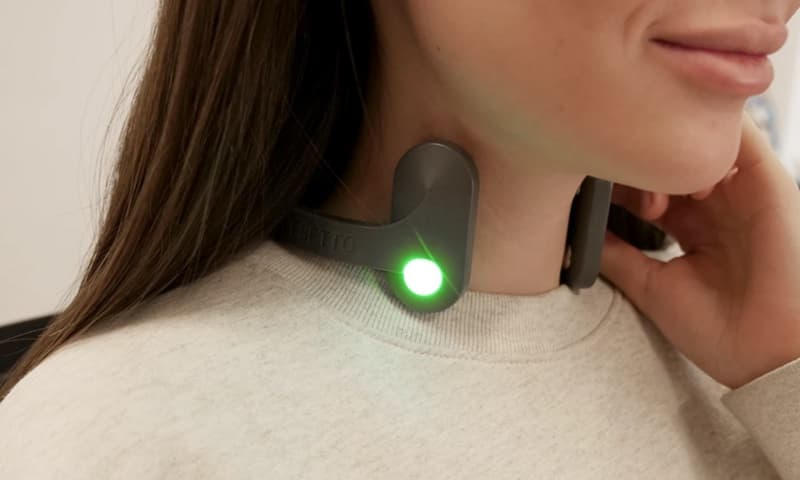
Pulsetto is legit in the sense that matters most to a buyer: it is a real, non-invasive cervical vagus-nerve stimulator made by Pulsetto UAB, a Lithuanian company that sells direct-to-consumer worldwide through its own funnel at $269 per device. The horseshoe-shaped unit you receive wraps around the front of your neck, delivers transcutaneous electrical pulses to the vagus nerve's cervical path through two gel-contact electrodes, and runs the five app-guided programs (Stress, Anxiety, Sleep, Burnout, Pain) exactly the way the brand's site describes. It is a wellness device, not a scam.
So the honest "is Pulsetto legit" question isn't whether the device exists — it does — but what to actually watch for at the checkout, how the 30-day money-back guarantee really works on standard-price orders versus flash-sale tiers, how the response curve to tVNS looks in real life (and why a minority of users feel little), and how Pulsetto UAB stacks up against the other consumer tVNS brands your search is probably also showing you. Pulsetto is a defensible drug-free nervous-system tool for the chronically stressed, anxious or under-sleeping buyer. It is not a treatment for anxiety or depression, and buyers whose need is medical should talk to a clinician.
One name-related note before we get into it: "Pulsetto" is sometimes confused in Bing's query blends with other consumer vagus-nerve stimulators — specifically Truvaga Plus (a handheld cervical tVNS device from electroCore) and Nurosym (an ear-clip auricular tVNS device from Parasym, sold as Nuropod in the US). Those are different products from different companies in the same wellness category. If you were searching for the ear-clip device, our Pulsetto vs Nurosym comparison lays out which is which. For the handheld, see our Pulsetto vs Truvaga explainer. And our full Pulsetto review covers the device itself in depth.
Who actually makes and sells Pulsetto
Pulsetto is designed and sold by Pulsetto UAB, a Lithuania-based company that ships its device globally through its own direct funnel. The brand publishes customer support contact details, a stated money-back guarantee, a shipping and returns policy, and a privacy and terms set on its own site — the paperwork a real consumer-electronics brand carries. The device is manufactured outside the US; the TopCrate affiliate link routes you to Pulsetto's own promotional store, not a third-party reseller.
The brand has been shipping this specific neck-worn tVNS wearable since 2022, has a working returns-and-support process, and sits inside the broader consumer vagus-nerve-stimulation category alongside Truvaga Plus (handheld cervical, from electroCore) and Nurosym / Nuropod (ear-clip auricular, from Parasym). None of those are prescription devices; all three are wellness-category products that use transcutaneous electrical nerve stimulation on different branches of the vagus to downshift the sympathetic nervous system.
A disclosure from us: TopCrate is a paid affiliate for Pulsetto and earns a commission when readers buy through our links. It doesn't change the verdict on this page, and it doesn't push Pulsetto up against its rivals when they genuinely win on an axis — our Pulsetto vs Truvaga and Pulsetto vs Nurosym comparisons keep both competitors in play for buyers who need what they do. We'd rather you buy the device that fits your use case than the one that pays us.
Is Pulsetto a scam? What "legit" means here
A scam takes your money and gives you either nothing or something wildly different from what was promised, with no way to get the money back. That isn't Pulsetto. The device arrives in a branded box with the horseshoe-shaped unit, a tube of conductive gel, a charging cable and a travel case. It pairs with the Pulsetto app over Bluetooth, runs the five session programs the site advertises, and delivers a scaling tingle-to-firm-pulse sensation across its ten intensity levels. The hardware does what the site says it does. There's a stated 30-day money-back window, and standard-price refunds do get processed within it.
Where Pulsetto earns legitimate skepticism is in two specific places. First, the checkout bundle tiers: Pulsetto's funnel offers a single-unit price around $269 and a multi-unit household bundle (two or three units) at a per-unit discount, with urgency banners, countdown timers and a shipping-protection add-on toggled on by default on some flows. None of that makes the device fake — it is standard direct-to-consumer e-commerce — but the cart needs a careful read rather than an autopilot click. Second, the response curve to transcutaneous vagus-nerve stimulation is real but variable. Most users feel a warm, loosening downshift during their first few sessions; a minority feel little even after two to four weeks of twice-daily consistent use. That isn't fraud, it's the honest biology of a wellness device targeting a mechanism that responds differently in different nervous systems.
Our full Pulsetto review scores it 9.8 out of 10 on the merit of what it actually is: a well-built hands-free cervical tVNS wearable with five legitimate programs and a 4-minute session format that fits real life. The checkout friction and the response-variability are the pieces that require attention, not reasons to skip the device.
What the device actually is and how it works
Pulsetto is a cervical tVNS (transcutaneous vagus nerve stimulation) device. The vagus is the main nerve of the parasympathetic nervous system — the rest-and-digest branch that chronic stress keeps switched off — and it runs from the brainstem down through the neck. Pulsetto's horseshoe-shaped wearable rests around the front of your neck with two electrode pads that make skin contact over the vagus nerve's cervical path on both sides (what the brand calls bilateral stimulation). The pulses are low-voltage, below the painful threshold, and scale with the ten-level intensity setting on the app.
A session: dab a small amount of conductive gel on each electrode pad, place the unit around your neck so both pads make skin contact, open the Pulsetto app on your phone, choose a program (Stress, Anxiety, Sleep, Burnout or Pain), set the intensity from 1 (barely-there) to 10 (firm pulse), and run the 4-minute program. The sensation is a warm tingle that scales with intensity — a few users describe a slight throat-closing feel at higher intensities, which is why the brand's protocol is to start low. The session ends automatically; wipe the gel off, clean the pads, and the device is ready for the next one.
What the device isn't: it's not a treatment for anxiety, depression, PTSD or insomnia; it's not FDA-cleared for any medical condition; it isn't a substitute for therapy, medication or evaluation by a clinician. It is a wellness-category drug-free tool for the chronically stressed, anxious or under-sleeping buyer whose need is nervous-system regulation rather than a specific medical outcome. That framing matters because it sets the right expectation for the response-curve question that dominates the honest skepticism on the brand.
What the price actually buys you
Pulsetto's direct-funnel price is $269 for a single device, with occasional bundle promotions at a modest per-unit discount for a two- or three-pack household order. There's no required subscription — the five core app programs (Stress, Anxiety, Sleep, Burnout, Pain) are included at the free tier. An optional Pulsetto FIT subscription unlocks additional HRV-tracking and session-library features on the compatible hardware bundle, but the base package's core programs don't need it.
The real ongoing cost is the conductive gel. A session uses a dab of gel on each electrode pad, and the included starter tube lasts roughly a few months at twice-daily use. Refill cost is roughly $30 to $50 per year at typical use, available direct on the Pulsetto funnel. Pads themselves are reusable — you clean them after each session — and the device is designed around a multi-year service life.
The honest value framing: Pulsetto is one of the two cheapest options in the consumer cervical-tVNS category. Truvaga Plus sits at $499 on the direct funnel; Nurosym / Nuropod sits around $825-$900 in the US (around €700 in Europe). If you want a cervical-tVNS device from the consumer arm of a company holding FDA clearance for a related prescription product, Truvaga Plus is the honest pick at roughly double. If you want the most clinically studied consumer VNS device with an auricular-ear electrode and a CE medical-device certification, Nurosym is the honest pick at three to four times Pulsetto's sticker. Pulsetto is the pick for the buyer who wants the hands-free wearable format and the lowest sticker in a non-scammy brand.
How the 30-day money-back guarantee really works
Pulsetto's headline policy is a 30-day money-back guarantee on standard-price orders, measured from delivery date, with the device returned in resellable condition using the brand's authorized return path. Within that window, standard-price refunds do get processed. The device qualifies for a refund if it's not for you, if the response curve didn't produce the results you'd hoped for, or if a hardware defect out-of-the-box prevented normal use.
The fine print is where the details matter. On flash-sale, limited-time or deep-discount promotional tiers, return terms can be tighter — some bundle promotions carry a shorter window, a photo-of-the-device requirement before return authorization is issued, or final-sale language on units sold at the deepest discount. Original shipping charges are typically non-refundable, and the buyer pays return shipping on any return. None of that is unusual for a direct-to-consumer wellness device, but it is meaningfully different from the "30 days, no questions asked" headline a casual reader will take away from the landing page.
Our recommended approach: before you click pay, read the specific return terms on the page you're actually paying on — not the general FAQ, but the fine print tied to the specific tier in your cart — and screenshot them. If the specific tier you're buying was tagged final-sale or has a shorter window, you know the trade-off you're accepting to get the price. If you're new to tVNS and want to see whether cervical stimulation moves the needle for your nervous system before committing to a multi-unit bundle, buy the single-unit tier at the higher per-unit price to preserve the full standard-price return window.
How to tell if Pulsetto will work for you
The response curve to transcutaneous vagus-nerve stimulation isn't uniform across users, and that's the single most important thing to understand before you buy. Most users describe a warm, loosening calm during their first 4-minute session — a slower pulse they can feel in their chest, longer natural exhales, a quieter mind. The bigger, more compounding benefits that build the brand's long-term case — easier sleep onset, steadier daytime baseline calm, less reactivity to normal stressors — typically develop over one to four weeks of consistent twice-daily use as the nervous system re-baselines. A minority of users feel little even with consistent use, which is why the money-back window matters and why the honest advice is to give it the full two weeks before deciding.
You're a strong candidate if you fit this pattern: chronically stressed with a day that never fully downshifts; anxious in a way that outruns breathing techniques and meditation apps; a poor sleeper whose brain won't switch off at night; or a biohacker who already tracks HRV and recovery and wants a direct nervous-system tool rather than another supplement. You're a weaker candidate if your core need is medical — a diagnosed anxiety or depressive disorder, PTSD, or clinical insomnia — because that's a case for a clinician, not a wellness device. And you're the wrong candidate entirely if you can't use electrical stimulation at the neck: do not use Pulsetto with a pacemaker, implanted defibrillator or other implanted electronics, during pregnancy, with an active seizure disorder, or with a diagnosed vagus-adjacent medical condition without a doctor's clearance.
A practical protocol for the first two weeks: twice-daily sessions, one in the morning and one in the evening before bed, at a tingle-not-bite intensity (usually levels 3 to 6 on the 10-level scale), with the Stress or Anxiety program by day and the Sleep program at night. Consistency beats intensity — a steady routine at a comfortable intensity produces better results than a sporadic routine at a maximum one.
Where the real complaint themes are
A careful read of Pulsetto's public complaint records — Trustpilot, Reddit threads in r/VagusNerve and r/Biohackers, and reviewer coverage on sites like Wareable and Cybernews — points at three themes with a couple of variations, and none of them is "the device doesn't exist." The most common theme is response variability: users who feel little after their first few sessions and don't commit to the full two-to-four-week calibration window before concluding tVNS doesn't work for them. The honest reply is that it works for the majority and doesn't for a real minority — the money-back window is designed for exactly that outcome.
The second theme is the gel step as a friction point. Users who want a fully frictionless wellness tool — spray it on, press it to the skin, done — find the gel step a mild annoyance that occasionally keeps the device sitting on the nightstand. Users who build it into a cleaning-and-storing ritual after the session rarely cite it as a problem. If a consumable-and-step-every-time flow would keep you from consistent use, that's worth weighing at purchase time.
The third theme is the Bluetooth-and-app dependency. The Pulsetto app runs the session programs; if the app has a sync issue, an update problem or an account question, a session can hit a bump. The brand's support desk resolves these, but the dependency is real and worth knowing about. If you want a device whose session doesn't depend on your phone being in reach, Truvaga Plus's handheld or Nurosym's standalone ear-clip are both less phone-dependent — at the price points described above.
Pulsetto vs the other consumer VNS brands you're probably also searching
Pulsetto isn't the only consumer vagus-nerve stimulator on the market, and comparison shopping is sensible before you spend. The two names Bing most often blends with Pulsetto in the stress-device cluster are Truvaga Plus and Nurosym (also sold as Nuropod in the US). All three are wellness devices — none is FDA-cleared for a medical condition — and they take different hardware approaches to the same underlying mechanism.
Truvaga Plus from electroCore: $499, handheld, 2-minute cervical tVNS sessions at 25 Hz (the clinical-research parameters), single-side-at-a-time, electrode spray rather than gel, no required app. The honest sell: cervical-tVNS from the consumer arm of a company that holds FDA clearance for the related prescription gammaCore (indicated for migraine and cluster headache; not Truvaga Plus itself). Our Pulsetto vs Truvaga comparison walks the trade-off at length.
Nurosym / Nuropod from Parasym: around $825-$900 US, ear-clip auricular tVNS (clipping to the tragus of a single ear rather than wrapping the neck), standalone device with no app required, holds a CE medical-device certification in Europe and an FDA Non-Significant Risk Designation in the US, backed by a frequently-cited 50+ peer-reviewed study portfolio. The honest sell: the most clinically studied consumer VNS device, at the highest price. Our Pulsetto vs Nurosym comparison lays out when the ear-clip format wins and when it doesn't.
Pulsetto's slot in that comparison: the hands-free wearable format at the lowest sticker, with a 4-minute session that fits real life (particularly the lying-in-bed-with-eyes-closed evening session), an app-guided program library, and the honest trade-offs of a gel step and a Bluetooth-app dependency. For the buyer whose use case is "drug-free nervous-system regulation on a sticker I can swallow," Pulsetto is the honest pick in the category.
How to buy Pulsetto safely
Buy from the brand's own store. The TopCrate affiliate link routes you to Pulsetto's own promotional funnel, where the stated money-back guarantee applies on standard-price tiers and the manufacturer warranty is honored. Unfamiliar third-party sellers on marketplaces occasionally list "Pulsetto" devices at deep discounts; those listings are outside the brand's return and warranty paths, and the fulfillment chain is harder to verify.
Read the checkout slowly. Confirm the device quantity and total on the cart page before you click pay — this is where the single-unit vs multi-unit confusion happens on bundle-tier flows. Uncheck any shipping-protection add-on or subscription toggle you didn't deliberately select. Screenshot the confirmation email so the tier, total and return terms are in one place if you need them later.
Note the return window on the delivery date rather than the order date — the guarantee clock starts when the device lands at your door. If you bought on a flash-sale or deep-discount tier, re-read the return fine print specific to that tier before you commit to the full two-week calibration window, so you have the full picture of your options.
Compare before you commit if the hands-free wearable isn't the right format for your use case. If you'd rather have a handheld with no app, read our Pulsetto vs Truvaga explainer; if the clinically-studied ear-clip format fits your need better, our Pulsetto vs Nurosym comparison covers that trade-off in depth.
Our verdict
Pulsetto is legit: a real cervical vagus-nerve stimulator from Pulsetto UAB, sold through a working checkout with a stated 30-day money-back guarantee on standard-price orders, that does exactly what the site describes over a two-to-four-week calibration window. The hardware is a defensible drug-free nervous-system tool for the chronically stressed, anxious or under-sleeping buyer; the five app-guided programs cover the realistic use cases; and the $269 sticker is the lowest in the consumer cervical-tVNS lane without feeling like a corner-cut product.
The things to be deliberate about are the usual direct-to-consumer e-commerce hygiene (confirm the cart tier, screenshot the return terms, buy from the brand funnel rather than a third-party seller) and the honest biology of a wellness device (give it the full two weeks of twice-daily consistent use at a tingle-not-bite intensity before deciding whether it's working for you). Handled that way, Pulsetto is a legitimate addition to a stress-and-sleep toolkit — not a medical treatment, not a scam, and not the only consumer VNS worth considering, but a strong value pick in a category where the alternatives cost twice to four times as much. Our full Pulsetto review covers the daily-use experience in more depth.
Read our full Pulsetto review
Our verdict on the $269 hands-free cervical tVNS wearable from Pulsetto UAB — what a 4-minute session actually feels like, how the daily routine fits into real life, and whether it's the right drug-free nervous-system tool for the specific stress or sleep problem you're trying to solve.
Read our full Pulsetto review →Frequently asked questions
Is Pulsetto a scam?
No. Pulsetto is a real cervical vagus-nerve stimulator from Pulsetto UAB, a Lithuanian company that has been shipping the device since 2022 through its own promotional funnel with a stated 30-day money-back guarantee on standard-price orders. The hardware does exactly what the site describes — bilateral tVNS pulses to the vagus nerve's cervical path through two gel-contact electrodes, controlled by the Pulsetto app at ten intensity levels across five session programs. The legitimate skepticism is about the response variability (most users feel the downshift, a minority don't) and the checkout bundle tiers, not about whether the product exists.
Is Pulsetto FDA-approved?
No. Pulsetto is marketed as a general wellness device, not an FDA-cleared or FDA-approved medical treatment for anxiety, depression, PTSD, insomnia or any medical condition. The same framing applies to the two most-compared consumer VNS brands: Truvaga Plus is also wellness-category (though its parent electroCore holds FDA clearance for the related prescription gammaCore, which is a different product), and Nurosym carries an FDA Non-Significant Risk Designation and a CE medical-device certification in Europe but is not FDA-cleared for a medical condition in the US. If a medical claim is what you need, none of the three is what you want — speak to a clinician.
Who makes Pulsetto?
Pulsetto UAB, a Lithuania-registered company that designs the device and sells it direct-to-consumer worldwide through its own funnel. The company has been shipping this specific horseshoe-shaped cervical tVNS wearable since 2022 and publishes customer support contact details, a money-back guarantee, and shipping-and-returns terms on its own site — the paperwork a real consumer electronics brand carries. Pulsetto UAB is a different company from Truvaga's parent electroCore (which is a US-based medical-device company) and from Nurosym's parent Parasym (which is a UK-based wellness-device company).
How is Pulsetto different from Truvaga and Nurosym?
They're the three most-searched consumer vagus-nerve stimulators and they take different hardware approaches. Pulsetto is a $269 hands-free neck-worn wearable with 4-minute app-guided sessions and bilateral electrodes. Truvaga Plus is a $499 handheld cervical device from electroCore with 2-minute unilateral sessions at 25 Hz. Nurosym (Nuropod in the US) is around $825-$900, an ear-clip auricular device from Parasym with 50+ peer-reviewed studies and a CE medical-device certification. Our Pulsetto vs Truvaga and Pulsetto vs Nurosym comparisons walk the trade-offs in detail.
What's the Pulsetto money-back guarantee, really?
The headline policy is 30 days from delivery date on standard-price orders, and standard-price refunds do get processed within that window. The fine print on flash-sale, deep-discount or bundle-tier promotional orders can be tighter — some tiers carry a shorter window, a photo-of-the-device requirement before return authorization, or final-sale language on the deepest-discount units. Original shipping is non-refundable and the buyer pays return shipping. Read the specific policy on the page you pay on and screenshot it before you click pay.
How long until Pulsetto actually works?
Set the timeline honestly: many users feel a warm, loosening downshift during their first 4-minute session — a slower pulse, longer exhales, quieter mind. The bigger, compounding benefits — easier sleep onset, steadier baseline calm during the day, less reactivity to normal stressors — typically build over one to four weeks of twice-daily consistent use as the nervous system re-baselines. A minority of users feel little even with consistent use, which is why the money-back window matters: run the device twice daily at a tingle-not-bite intensity for the full two weeks before deciding whether it's working for your nervous system.
TopCrate is reader-supported. When you buy through links on our site we may earn an affiliate commission, at no extra cost to you. Content is for general information and isn't a substitute for professional advice.