CLEANING 101
Laundry Stripping: The Exact Recipe, What That Gray Water Really Is, and When to Skip It
The bathtub soak that turns wash water into swamp, the 1:1:2 borax and washing soda recipe behind it, and the fabrics that should never go near the tub.
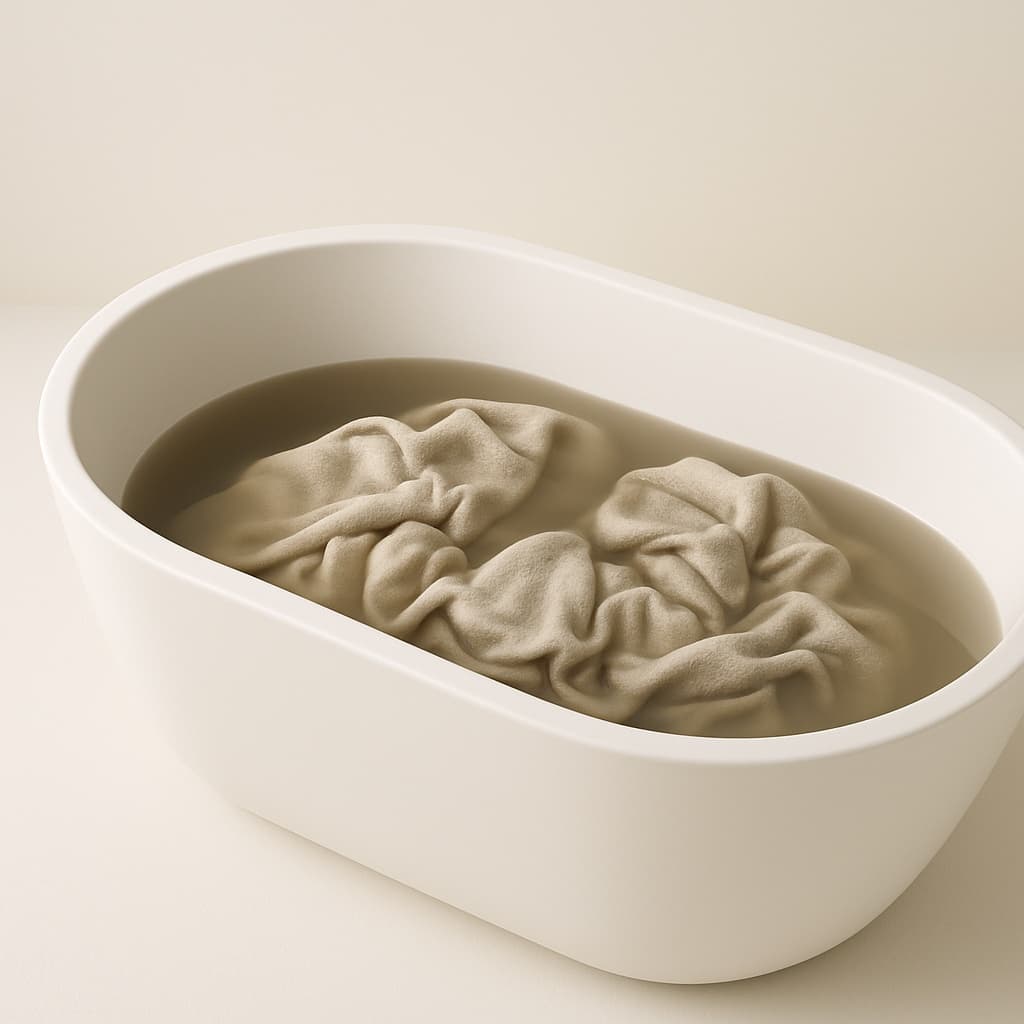
Laundry stripping went viral for one reason: you drop freshly washed, technically 'clean' towels into a tub of hot water and powder, come back four hours later, and the water looks like something dredged from a pond. It's half cleaning method, half horror show, and — with a couple of honest caveats — it genuinely works.
Here's the full picture: what stripping actually removes, what that murky water is really made of (spoiler: not all of it is filth), the standard bathtub recipe with exact amounts, which fabrics to strip and which to keep far away, why this is occasional maintenance rather than a weekly ritual, and how to need it less often in the first place.
What Laundry Stripping Actually Is
Stripping is a long, very hot soak in a mix of borax, washing soda, and detergent, designed to dissolve everything your regular wash cycles have left behind: detergent residue, fabric softener, hard-water minerals, and body oils. That buildup is real. Cold-water washes never get hot enough to dissolve accumulated oils, high-efficiency machines use too little water to rinse thoroughly, and years of slightly-overdosed detergent and softener coat fabric in a film that traps odor and kills towel absorbency.
Each ingredient has a job. Borax softens the water and boosts the alkalinity that helps break down oils. Washing soda (sodium carbonate) binds hard-water minerals and cuts grease. Detergent lifts and suspends the loosened gunk so it stays in the water instead of resettling on the fabric. Hot water and hours of contact time do the rest — it's less a wash than a slow-motion extraction.
About That Gray Water
The murky water is the whole spectacle, and it's genuinely satisfying — a visible receipt for every load your washer half-finished. Some of what you're looking at really is dissolved buildup: softener film, mineral scale, detergent scum, and body oil released from deep in the fibers.
But honesty requires a caveat: a meaningful share of that color is dye. Fabrics shed loose dye in hot alkaline water no matter how clean they are — strip a brand-new, never-worn set of navy sheets and the water will still turn ominous. So treat the swamp-water reveal as entertainment, not measurement. The real proof of a successful strip shows up afterward: towels that absorb instead of repelling water, and workout gear that no longer resurrects old odors the moment you sweat.
The Standard Laundry Stripping Recipe
The ratio to remember is 1:1:2 — one part borax, one part washing soda, two parts powdered laundry detergent. For a bathtub, that's 1/4 cup borax, 1/4 cup washing soda, and 1/2 cup detergent. Fill the tub half to three-quarters full with the hottest water your tap will produce (topping up with a kettle is fair play), stir the powders in until fully dissolved, then submerge your laundry. One important note: strip clean, freshly washed laundry — the method targets buildup, not dirt, and a soak is a bad way to wash actually-dirty clothes.
Soak for 4 to 5 hours, until the water has cooled, stirring and pushing everything back under roughly once an hour so the solution reaches every fiber. Then wring the items out, move them to the washing machine, and run a rinse-only cycle — no detergent, no softener — to flush out whatever the soak loosened. Dry as usual and enjoy towels that behave like towels again.
What to Strip — and What to Leave Alone
Strip the workhorses: towels, sheets, pillowcases, cotton basics, and activewear — the items that meet the most body oil and, in the case of towels, the most fabric softener. Activewear deserves a special mention because synthetic fibers cling to oils and softener like nothing else, which is why gym shirts develop that instant-stink-when-warm quality. Strip it, but sparingly — hot water is hard on elastane over time. And since you're doing pillowcases, note that the pillows under them collect the same oils; how to wash pillows is its own project, but it's the same war.
Keep out of the tub: wool, silk, lace, anything labeled delicate or cold-wash-only, embellished or structured pieces, and anything that isn't colorfast — hours in hot, high-pH water is a dye-bleeding festival, and reds and darks can tint everything sharing the tub. When in doubt, test: rub a damp white cloth on a hidden seam, and if color transfers, that item doesn't get stripped. Colorfast only is the rule, not a suggestion.
Occasional Maintenance, Not a Weekly Habit
Stripping is deliberately harsh — that's why it works. A multi-hour soak in hot, highly alkaline water stresses fibers, fades dyes, and ages elastic, so doing it often trades buildup for wear. Think of it like descaling a kettle: transformative occasionally, destructive constantly. Once or twice a year per item is plenty, or whenever towels stop absorbing and start smelling musty straight out of the dryer.
It's also not a substitute for fixing the underlying laundry habits. If your whites look dingy rather than coated, changing how you wash white clothes — proper sorting, hot water, right-sized detergent doses — will do more than any number of tub soaks. Stripping removes the evidence; your routine determines how fast it comes back.
How to Need Stripping Less Often
Prevention is boring and effective. Measure detergent instead of glugging — about two tablespoons for a high-efficiency machine — because overdose residue is the largest single ingredient in that gray water. Skip fabric softener on towels entirely: it works by coating fibers with a waxy film, which is precisely what ruins absorbency and feeds buildup. Half a cup of white vinegar in the rinse cycle, or wool dryer balls, softens towels without the coating.
Finally, remember that residue lives in the machine too, and a dirty washer re-deposits it onto every load. Our guide on how to clean a washing machine covers the monthly routine — the hot vinegar cycle, the gasket scrub, the filter — that keeps the drum from undoing your work. Clean machine, right dose, no softener on towels: follow those three and the bathtub can go back to being for baths.
Read our Bissell CrossWave review
We tested Bissell's vacuum-mop hybrid on the room that needs it most — the laundry room floor that catches every drip of the stripping tub shuttle.
Read our Bissell CrossWave reviewFrequently asked questions
Does laundry stripping actually work?
Yes — for its actual job, which is removing built-up detergent residue, fabric softener, minerals, and body oils from washable fabrics. Towels absorb better and activewear stops re-smelling. Just know that some of the dramatic gray water is loose dye, which sheds in hot water even from perfectly clean fabric.
How often should you strip laundry?
Once or twice a year per item at most, or when towels lose absorbency and hold a musty smell through the wash. The hot, high-pH soak is hard on fibers, elastic, and dyes, so treat it as occasional deep maintenance — not part of the regular rotation.
Can you strip laundry in a top-loading washer?
Yes. Fill the tub with the hottest water available using a deep-fill or soak setting, dissolve the borax, washing soda, and detergent, then pause the cycle and let everything soak 4 to 5 hours, agitating briefly each hour. Finish with a rinse cycle. Front-loaders can't hold a soak, so use a bathtub or large bin instead.
Should clothes be clean or dirty before stripping?
Clean and freshly washed. Stripping targets the residue left behind by past washes, not fresh dirt — soaking dirty laundry for hours just marinates it in its own soil. Wash first, then strip.
Can I strip laundry without borax?
Yes — washing soda and powdered detergent alone still work, since washing soda does the heavy lifting on minerals and grease; borax mainly boosts the water softening. A long hot soak in oxygen bleach (sodium percarbonate) is another gentler alternative that removes much of the same buildup.
Does laundry stripping ruin clothes?
Not when it's used correctly and occasionally on sturdy, colorfast items like cotton towels and sheets. It will damage the wrong fabrics: wool and silk don't survive hot alkaline soaks, non-colorfast dyes bleed, and frequent stripping ages elastic and fades colors on anything.
TopCrate is reader-supported. When you buy through links on our site we may earn an affiliate commission, at no extra cost to you. Content is for general information and isn't a substitute for professional advice.