CLEANING 101
How to Clean a Washing Machine: The Monthly Routine That Kills the Mildew Smell
Why your washer smells worse than your laundry, the vinegar-then-baking-soda cycle sequence, the gasket fold everyone skips, and the detergent mistake causing it all.
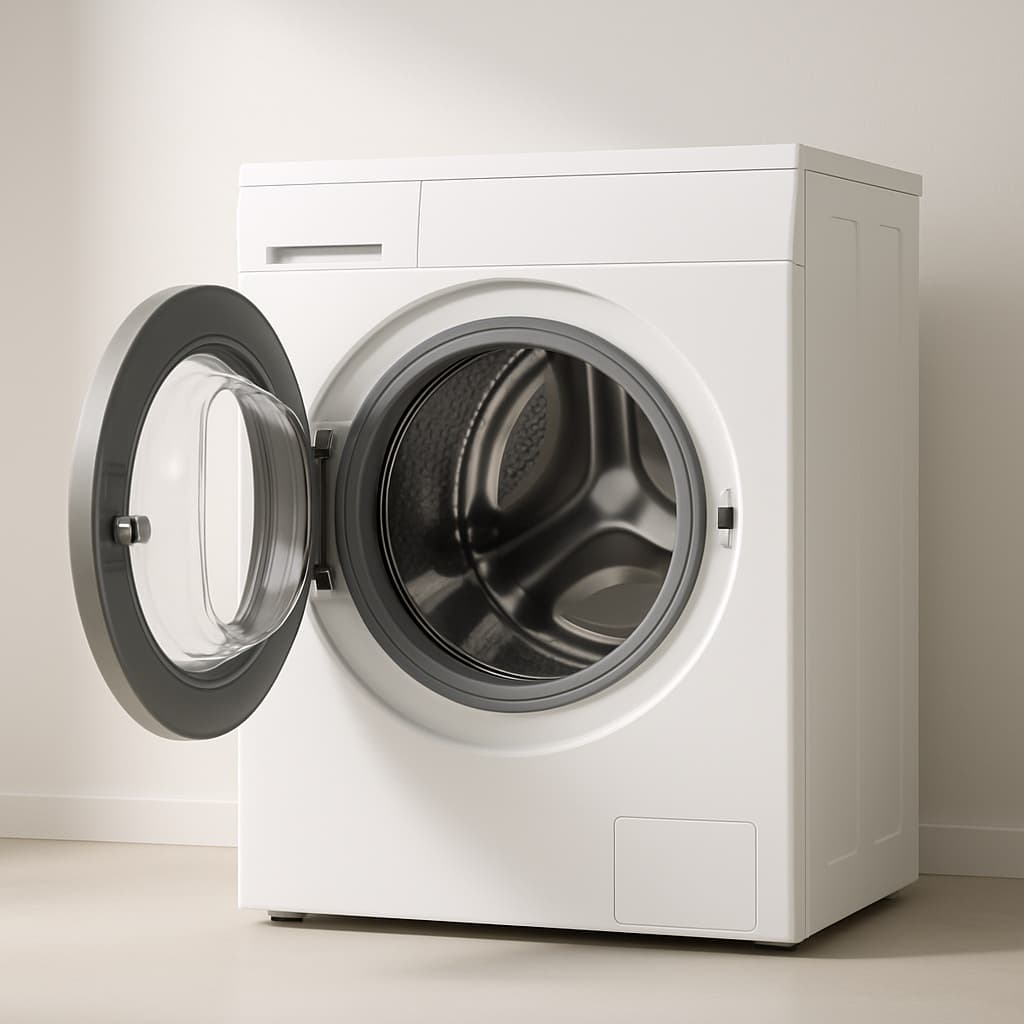
It's a special kind of betrayal: the machine whose entire job is making things smell clean starts making everything smell like a damp basement. If your towels come out musty or the drum greets you with a sour whiff when you open the door, your washer isn't broken — it's dirty. And no amount of extra detergent will fix it, because extra detergent is usually what caused it.
Here's the full routine: why washers get funky in the first place, what's different between front-loaders and top-loaders, the step-by-step monthly clean with exact amounts, how to deal with the gasket where the mildew actually lives, and the detergent-dosing fix that keeps it from coming back.
Why Washing Machines Get Funky in the First Place
Every load leaves something behind: undissolved detergent, fabric softener, body oils, and lint. That residue forms a thin film on the drum, hoses, and seals, and the film becomes a buffet for bacteria and mold — a living layer called biofilm. Add the warm, dark, permanently damp interior of a closed washer, and you've built a mildew greenhouse that reseeds every load of laundry you run through it.
Modern habits make it worse. Cold-water washes save energy but never get hot enough to dissolve residue or kill anything, and high-efficiency machines use so little water that soap scum doesn't fully rinse away. The result is a machine that needs deliberate cleaning — not because you did something wrong, but because the physics of low-water washing guarantee buildup.
Front-Load vs. Top-Load: What's Different
Front-loaders are the worst offenders, and the rubber door gasket is the reason. That thick folded seal traps a puddle of water, lint, and detergent after every load, and because the door shuts airtight, nothing ever dries out. If a front-loader smells, the gasket fold is almost always ground zero — it gets its own section below.
Top-loaders air out better through their looser lids, but they collect the same soap scum and hard-water film on the drum and under the agitator. Their advantage is the soak: because the tub fills from the top, you can pause a hot cycle mid-fill and let the cleaning solution sit for an hour before agitating, which front-loaders can't do. Many machines of both types now have a Tub Clean or Self Clean cycle — use it when you have it, since it runs hotter and longer than any normal setting.
Step-by-Step: How to Clean a Washing Machine
Step 1 — Run the vinegar (or tablet) cycle. With the drum completely empty, set the hottest, largest, longest cycle your machine offers — or the Tub Clean cycle if it has one. Pour 2 cups of white vinegar into the drum (or the detergent dispenser) and start it. Top-loader bonus move: pause after the tub fills and let it soak for an hour. Prefer a purpose-made washer cleaner tablet like Affresh? Drop one in the empty drum and run the same hot cycle instead — one or the other, not both.
Step 2 — Run the baking soda cycle. Sprinkle 1/2 cup of baking soda directly into the empty drum and run a second hot cycle. The vinegar pass dissolves mineral film and detergent scum; the baking soda pass scrubs and deodorizes what's left. (Run them as separate cycles — the same pantry duo that gets coffee stains out of carpet does nothing useful if you dump both in at once and let them neutralize each other.)
Step 3 — Scrub the door gasket fold (details below). Step 4 — Pull the detergent drawer out completely — most have a release tab — soak it in hot water for 15 minutes, and scrub off the crusted detergent and the mold hiding in the fabric-softener well before sliding it back. Step 5 — Empty the drain pump filter: on most front-loaders it's behind a small panel at the bottom front. Lay down a towel and a shallow pan, unscrew the cap slowly (a cup or two of water will come out), and clear the lint, coins, and gunk. Step 6 — Wipe down the drum and door, and leave the door open to dry.
The Door Gasket: Where the Mildew Actually Lives
On a front-loader, peel back the rubber gasket fold and take a look — most people find a gray sludge of lint, hair, and mildew, and occasionally a long-lost sock. Spray the fold with a 50/50 mix of white vinegar and water and scrub the whole channel with a cloth or an old toothbrush, working your way around the full circle of the seal. Dry it with a clean towel when you're done.
For established black mold spots, vinegar may not be enough: wipe the fold with a cloth dampened in diluted chlorine bleach instead, then rinse and dry. One hard rule — never use bleach and vinegar in the same cleaning session. The combination releases chlorine gas, and no gasket is worth that. Pick one, finish, and rinse thoroughly before ever switching.
Too Much Detergent Is the Real Culprit
Here's the uncomfortable truth behind most smelly washers: overdosing. Detergent caps are marketing devices, and the top line is far more than a normal load needs. For a high-efficiency machine, about two tablespoons of powder — or as little as two teaspoons of a concentrated liquid — is plenty for a regular load. Every bit beyond that doesn't rinse away; it settles into the machine as the scum that feeds the biofilm you just spent an hour scrubbing out.
Excess suds also cushion clothes from rubbing against each other, which is part of how washing actually works, so overdosed laundry frequently comes out less clean and holding trapped odors. Ease off the fabric softener too — it's one of the stickiest residues in the machine. If you cut your dose and your clothes look exactly as clean, congratulations: you've been paying detergent companies to make your washer smell.
The Monthly Routine That Keeps It Clean
Deep clean once a month: the two hot cycles, the gasket, the drawer, and a filter check every two or three months. Between cleanings, the habits matter more than the chemistry — move wet laundry out promptly instead of letting it marinate, wipe the gasket dry after the last load of the day, and always leave the door or lid ajar so the drum can dry out. An open door is the single cheapest mildew prevention that exists.
While a cleaning cycle runs, the laundry room floor is an easy bonus target — it collects lint, detergent drips, and dryer fluff faster than almost any room in the house, and something like a Bissell CrossWave vacuums and mops it in one pass while you wait. Twenty minutes of mostly-passive effort a month, and every towel comes out smelling like it's supposed to.
Read our Bissell CrossWave review
We tested Bissell's vacuum-mop hybrid to see if one machine can really handle lint-covered laundry room floors and everything else.
Read our Bissell CrossWave reviewFrequently asked questions
Can I use vinegar and baking soda together in my washing machine?
Use them in sequence, not together. Run one hot cycle with 2 cups of white vinegar, then a second hot cycle with 1/2 cup of baking soda. Mixed in the same cycle, the acid and base largely neutralize each other into salty water and fizz — satisfying to watch, useless for cleaning.
How often should you clean your washing machine?
Run a full cleaning cycle once a month, wipe the door gasket dry after your last load of the day, and check the drain pump filter every two to three months. If you wash mostly in cold water or do heavy loads daily, lean toward the more frequent end.
Is vinegar bad for washing machines?
An occasional 2-cup dose in a monthly cleaning cycle is generally fine. The caution is constant use — regularly running vinegar through the machine or using it in every load can degrade rubber seals and hoses over time, and some manufacturers void gasket complaints over it. If your manual says no, use a washer cleaner tablet like Affresh instead; it's the manufacturer-approved route.
Why does my front-load washer smell like mildew?
Almost always the door gasket: the folded rubber seal traps water, lint, and detergent residue after every load, and the airtight door keeps it permanently damp — perfect mold conditions. Scrub inside the fold, dry it after use, and leave the door open between loads.
Can I clean my washing machine with bleach?
Yes — an empty hot cycle with 1/2 cup of chlorine bleach in the dispenser is effective against mold, and it's the right call for a badly mildewed machine. Run a rinse cycle afterward before washing clothes, and never combine bleach with vinegar in the same session — the mixture releases toxic chlorine gas.
How do I clean my washing machine's filter?
On most front-loaders, open the small access panel at the bottom front of the machine. Put down a towel and a shallow pan, slowly unscrew the filter cap to let the trapped water drain, then pull out the lint, hair, and debris and rinse the filter before screwing it back in. Many top-loaders instead have a lint trap on the agitator or rim — check your manual.
TopCrate is reader-supported. When you buy through links on our site we may earn an affiliate commission, at no extra cost to you. Content is for general information and isn't a substitute for professional advice.