CLEANING 101
How to Remove Coffee Stains From Carpet: Fresh Spills, Dried Stains, and Lattes
The blot-don't-rub rule, the exact dish soap and vinegar ratio that lifts coffee out of carpet fibers, and what to do when the stain has cream, sugar, or a three-day head start.
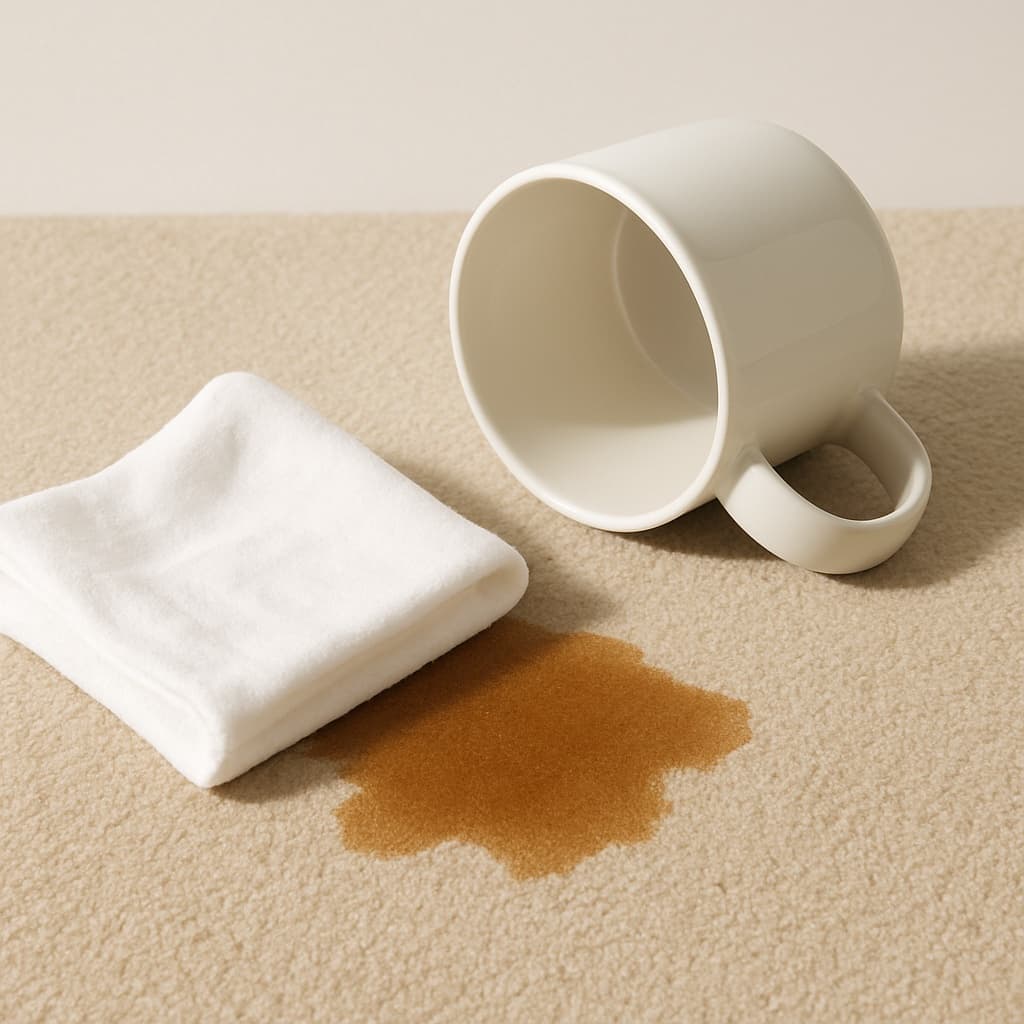
A tipped mug on carpet feels like a disaster, but coffee is one of the more beatable stains in the house — if you move fast and resist the urge to scrub. The fix costs about thirty cents in dish soap and white vinegar, and the entire job takes ten minutes. The catch is that technique matters more than product: the same spill that wipes out in one pass when you blot correctly becomes a permanent brown shadow when you grind it into the fibers with a rag.
This guide covers the whole playbook: the first-minute triage, the exact cleaning solution ratio, a step-by-step for fresh spills, the extra moves for dried and set-in stains, why coffee with cream or sugar needs a different cleaner entirely, and when a portable spot cleaner stops being a luxury and starts paying rent.
Act Fast and Blot — Never Rub
The moment coffee hits carpet, the clock starts. Fresh coffee sits on and between the fibers; coffee that has had time to soak bonds its tannins — the same plant compounds that stain teeth and teacups — to the fiber itself. Grab a clean white cloth or a stack of paper towels and press down firmly on the spill. Lift, move to a dry section of cloth, press again. Keep going until the cloth comes up nearly dry.
Two rules while you blot. First, never rub or scrub: rubbing pushes coffee deeper into the pile and pad, spreads the edge of the stain outward, and frays the fibers so the spot looks worn even after it's clean. Second, use white cloths or plain paper towels only — dyes and printed patterns can transfer onto damp carpet and trade one stain for another. Work from the outer edge of the spill toward the center so you're shrinking the stain, not expanding it.
The Dish Soap and White Vinegar Solution (Exact Ratio)
The standard homemade coffee stain remover is one tablespoon of liquid dish soap, one tablespoon of white vinegar, and two cups of warm water, stirred together in a bowl or spray bottle. Each ingredient has a job: the vinegar's mild acidity breaks down the tannins that give coffee its staining power, the dish soap cuts through coffee's oils, and the warm water carries both into the fibers and dilutes the stain.
Use a plain, clear dish soap — skip anything with moisturizers, bleach, or heavy dyes. And resist the temptation to double the soap. More suds does not mean more clean; it means sticky residue left in the carpet that attracts dirt for months afterward, which is how a coffee stain turns into a permanently grubby patch. The rinse step below exists specifically to prevent that.
Step-by-Step: How to Get a Fresh Coffee Stain Out of Carpet
Step 1 — Blot up as much coffee as possible with a dry white cloth, pressing firmly and working from the edges inward. Step 2 — Mix the solution: 1 tablespoon dish soap + 1 tablespoon white vinegar + 2 cups warm water. Step 3 — Dip a clean cloth in the solution and dab it onto the stain, again working edges-to-center. Don't pour the solution directly onto the carpet — you'll soak the pad underneath, and a soggy pad is how you get mildew and stains that wick back up later.
Step 4 — Let the solution sit on the stain for about five minutes, then blot with a dry cloth to lift the loosened coffee. Repeat the dab-wait-blot cycle until the stain stops transferring to your cloth. Step 5 — Rinse: dab the area with a cloth dipped in plain cold water to flush out soap residue, then blot dry. Step 6 — Lay a dry towel over the damp spot, weight it with something heavy, and leave it a few hours. Once dry, vacuum to lift the pile. If a faint ring reappears the next day, that's residue wicking up from below — repeat the rinse and blot, and it goes for good.
How to Remove Dried and Set-In Coffee Stains From Carpet
An old coffee stain isn't hopeless; it's just lazier about leaving. The trick is rehydration. Dab the dried stain with warm water and let it sit for five to ten minutes to soften the bonded tannins, then run the same dish soap and vinegar routine as above. Expect to repeat the cycle several times — old stains come out in installments, fading a shade with each pass, and patience beats aggression every time.
If a stubborn shadow remains after the stain has mostly lifted, make a paste of baking soda and a little water, work it gently into the spot, let it dry completely, and vacuum it up. Baking soda pulls residual discoloration and odor out of the fibers as it dries. It's a finisher, not a first move — it won't dissolve a fresh puddle of coffee, but it's excellent at erasing the last ten percent of a stain the liquid solution loosened.
Coffee With Cream or Sugar Needs an Enzyme Cleaner
A latte spill is really three stains in a trench coat: tannins from the coffee, proteins and fat from the milk, and a sticky sugar film that glues dirt to the carpet — which is why milky-coffee stains often look fine after cleaning, then mysteriously darken over the following weeks as the sugary residue collects grime. Vinegar and dish soap handle the tannins but leave the protein and sugar behind.
For these spills, use cold water only for the initial blot and rinse — heat cooks milk proteins into the fibers the way it cooks an egg, setting the stain almost permanently. Then apply an enzyme-based cleaner (the same type sold as a pet stain remover), which digests proteins and sugars at the molecular level. Let it dwell for 10 to 15 minutes per the label, blot it out, and rinse with cold water. It also kills the sour-milk smell that a soap-only cleanup leaves behind.
Spot Cleaners, Wool Carpet, and the Fine Print
Blotting with cloths works, but it has a ceiling: you can only pull out what a towel can absorb. A portable spot cleaner like the Bissell Little Green sprays cleaning solution into the carpet and immediately vacuums it back out, flushing the stain from the pile and the pad instead of just the surface. If your household produces regular spills — kids, pets, a daily commute mug — it earns its keep fast, and it's the difference between a stain that's gone and a stain that's merely hiding.
Two cautions before any of the above. On wool carpet, go gentle: use cool water, as little moisture as possible, and skip strong alkaline cleaners, hydrogen peroxide, and oxygen bleach, all of which can damage or yellow wool fibers. And on any carpet, test your solution first on a hidden spot — inside a closet, under a couch — and wait a few minutes to check for color bleed. Finally, if the casualty is a machine-washable area rug, skip the carpet chemistry entirely and run it through the laundry. Just clean your washing machine first if it's been a while — a funky washer will happily trade your coffee stain for a mildew smell.
Read our Bissell Little Green review
We tested the cult-favorite portable spot cleaner on coffee, pet messes, and mystery stains to see if it earns the counter space.
Read our Bissell Little Green reviewFrequently asked questions
Does vinegar remove coffee stains from carpet?
Yes. White vinegar's mild acidity breaks down the tannins that make coffee stain. Mix 1 tablespoon white vinegar with 1 tablespoon dish soap and 2 cups warm water, dab it on with a cloth, let it sit five minutes, and blot. Rinse with cold water afterward so no residue is left behind.
How do you get old coffee stains out of carpet?
Rehydrate the stain first: dab it with warm water and wait five to ten minutes to soften the dried tannins. Then treat it with the dish soap, vinegar, and warm water solution, repeating the dab-and-blot cycle several times. Old stains fade in stages — expect multiple passes, and finish with a baking soda paste if a shadow remains.
Does baking soda remove coffee stains from carpet?
As a finisher, yes. A paste of baking soda and water, left to dry and then vacuumed, lifts residual discoloration and odor after the main stain has been treated. It won't do much against a fresh puddle on its own — use the dish soap and vinegar solution first.
Are coffee stains on carpet permanent?
Rarely, if you treat them. Fresh spills almost always come out completely; dried stains usually surrender after a few rounds of rewetting and treatment. The exceptions are stains that were set with heat (like a steam cleaner used before the stain was removed) and heavily sugared drinks left untreated for months.
Why does my coffee stain keep coming back?
That's wicking: coffee or soap residue that soaked into the pad below rises back up the fibers as the carpet dries. Rinse the area with cold water, blot thoroughly, and leave a weighted dry towel on the spot overnight to absorb what surfaces. If it's a milky or sugary drink, an enzyme cleaner removes the sticky residue causing it.
Can I use hydrogen peroxide on coffee stains?
On light-colored synthetic carpet, 3% hydrogen peroxide can work as a last resort for a stubborn stain — but always test a hidden spot first, and never use it on wool or dark carpet, where it can bleach or yellow the fibers.
TopCrate is reader-supported. When you buy through links on our site we may earn an affiliate commission, at no extra cost to you. Content is for general information and isn't a substitute for professional advice.