CLEANING 101
How to Clean a Shower Head: The Vinegar Bag Trick, the Deep Soak, and the Screen Everyone Misses
A dollar's worth of white vinegar fixes most sad shower sprays — here's the bag method, the finish warning nobody mentions, and the hidden filter screen that's often the real clog.
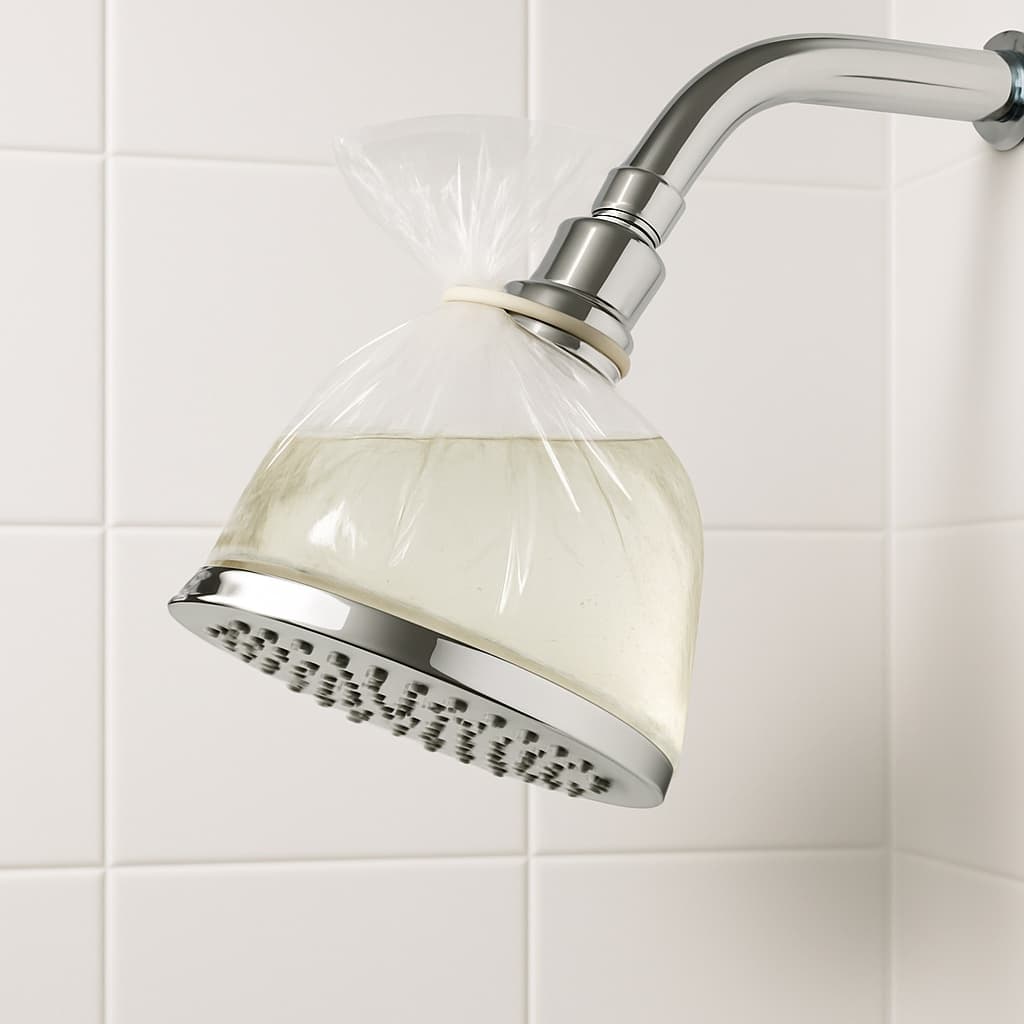
If half your shower's nozzles spray sideways and the other half have quietly given up, you don't need a new shower head — you need a plastic bag, a rubber band, and the white vinegar already in your pantry. Mineral buildup chokes a shower head so gradually that most people don't notice until the spray is more mist than pressure, and the fix costs about a dollar.
This guide covers why shower heads clog in the first place, the no-tools vinegar bag method (including the soak-time warning that saves your finish), the remove-and-soak deep clean, the nozzle-scrubbing tricks, the hidden filter screen that's often the real culprit, how often to do all of it — and the honest sign that your water, not your shower head, is the actual problem.
Why shower heads clog: limescale, soap scum, and biofilm
Hard water carries dissolved calcium and magnesium, and every shower leaves a trace of it behind as droplets dry on the head. Those traces layer into limescale — the white, chalky crust that narrows nozzle openings until the spray turns thin, crooked, or quits entirely. Soap scum bonds to that scale and speeds the whole process up. The same mineral load is behind hard water hair, water-spotted glassware, and crusty faucets — the shower head just shows it first, because it has dozens of tiny holes to choke instead of one big one.
The other resident is biofilm. A shower head's rubbery nozzles stay wet and warm between showers, which is exactly the environment microbes like, and the result is that slick dark film you sometimes see around the openings. It wipes and scrubs off easily enough — but it's a good reason to clean the head on a schedule rather than whenever the spray finally embarrasses you.
The vinegar bag method: clean a shower head without removing it
Vinegar is mildly acidic, and limescale dissolves in acid — that's the entire trick. Step 1 — Fill a sturdy plastic bag with a 1:1 mix of white vinegar and warm water, enough to fully submerge the face of the head. Step 2 — Slip the bag up over the shower head so every nozzle is under the liquid. Step 3 — Secure it to the shower arm with a rubber band or zip tie. Step 4 — Let it soak for 1 to 4 hours, depending on how crusty things have gotten. Step 5 — Remove the bag, run hot water through the head for a minute to flush loosened scale, and wipe the face clean.
Now the warning most guides skip: soak time depends on your finish. Standard chrome and plastic heads shrug off a long soak. Brass, nickel, brushed, and oil-rubbed finishes do not — vinegar etches and dulls that plating with prolonged contact, so cap those at 30 minutes, and dilute rather than going full strength. The classic 'leave it overnight' advice is how people trade a clogged shower head for a blotchy one. Nobody needs overnight; the scale that survives four hours gets handled by the scrub step below.
The deep clean: remove the shower head and soak it properly
For a head that's years overdue, take it off the wall. Unscrew it counterclockwise from the shower arm — hand pressure usually does it, and if not, use an adjustable wrench with a cloth wrapped around the connector so you don't chew up the finish. Submerge the whole head in a bowl of the same 1:1 vinegar-and-water mix, with the same time limits: hours for chrome, 30 minutes max for delicate finishes.
Reinstalling is where people create a brand-new problem, so do it right: peel off the old thread seal, wrap the shower arm threads with two or three clockwise wraps of fresh Teflon tape, then screw the head on hand-tight plus a gentle quarter turn. If it drips at the connection when you test it, don't crank harder — unscrew it and redo the tape.
Scrub the nozzles — and check the filter screen everyone misses
After any soak, scrub the face of the head with an old toothbrush to knock off softened scale, and clear stubborn individual holes with a toothpick. If your head has flexible silicone nozzles — most modern ones do — rub your thumb firmly across them and flex each nozzle side to side. The rubber bends, the brittle scale doesn't, so it cracks and pops right off. That massage trick is also your best between-cleanings maintenance move.
Then check the part almost nobody knows exists: the filter screen. Inside the connector where the head meets the shower arm sits a small mesh screen that catches sediment from your pipes, and it is very often the real clog — plenty of 'broken' shower heads are just a screen packed with grit. With the head off, pull the screen out with tweezers or needle-nose pliers, rinse it under the tap, brush off any debris, and seat it back in place before you reinstall.
How often to clean a shower head — and the one safety rule
Monthly, give the head a quick wipe and a nozzle flex while you're already in the shower — it takes thirty seconds and keeps scale from ever getting established. Quarterly, do a proper vinegar soak; if you're in a hard-water area, treat that quarterly soak as a floor, not a ceiling, and add the deep remove-and-soak once or twice a year.
One non-negotiable safety rule: never mix vinegar with bleach, and never soak a head in vinegar right after hitting the surrounding tile with a bleach-based mold spray. The combination releases chlorine gas, which is genuinely dangerous in an enclosed bathroom. If both products have a job to do, use them on different days and rinse thoroughly in between.
When cleaning isn't enough: breaking the re-clogging cycle
If your freshly cleaned shower head is choked again within a few weeks, stop blaming the head. That's your water talking — a heavy mineral and sediment load will re-crust any head you screw onto the arm, forever, and no amount of vinegar changes what's coming through the pipe. At that point the smarter move is a head built for the fight: the Drivse IonDrops pairs narrowed pressure-boosting nozzles with an inline cartridge that trims some chlorine and sediment before the water reaches the spray face — a light-duty filter, not a water softener, but enough to slow the re-crusting cycle while noticeably hardening the spray.
And if the spray is still weak even when the head is spotless, the head was never the whole story. Our full guide on how to increase water pressure in shower setups walks the remaining suspects in order — flow restrictors, half-closed valves, the house pressure regulator, and the cases that genuinely need a plumber.
Read our Drivse IonDrops review
The pressure-boosting head with a light inline filter that slows the re-clogging cycle — our full verdict.
Read our Drivse IonDrops reviewFrequently asked questions
What is the best way to clean a shower head without removing it?
The vinegar bag method: fill a plastic bag with a 1:1 mix of white vinegar and warm water, secure it over the head with a rubber band so the nozzles are submerged, and leave it 1 to 4 hours for chrome or plastic. Flush with hot water, then scrub the nozzles with an old toothbrush.
How long should I soak a shower head in vinegar?
1 to 4 hours for standard chrome or plastic heads. For brass, nickel, brushed, or oil-rubbed finishes, cap it at 30 minutes with a diluted mix — vinegar etches those finishes with prolonged contact. Overnight soaking is never necessary and is how delicate finishes get ruined.
Can vinegar damage a shower head?
It can damage the finish. Chrome and plastic tolerate long soaks fine, but extended vinegar exposure dulls and etches brass, nickel, and brushed or oil-rubbed coatings. Keep those finishes to 30 minutes, dilute the vinegar 1:1 with water, and rinse thoroughly afterward.
Why does my shower head keep clogging up again?
Hard water. A heavy mineral and sediment load re-crusts a clean head within weeks, and cleaning only treats the symptom. A head with an inline sediment-and-chlorine cartridge — the Drivse IonDrops is our tested pick — slows the cycle, and a whole-house softener is the full fix.
Do I need to take the shower head off to clean it?
Not for routine cleaning — the bag soak and a toothbrush handle that in place. Remove it once or twice a year for a full soak and to rinse the small mesh filter screen inside the connector, which catches pipe sediment and is often the real clog. Re-wrap the threads with fresh Teflon tape when you reinstall.
What is the black stuff on my shower head?
Almost always biofilm — a harmless-looking microbial film that grows in the wet rubber nozzles between showers — sometimes mixed with mildew. It scrubs off with a toothbrush and a vinegar soak. Just never combine that vinegar step with bleach-based cleaners; the mix releases dangerous chlorine gas.
TopCrate is reader-supported. When you buy through links on our site we may earn an affiliate commission, at no extra cost to you. Content is for general information and isn't a substitute for professional advice.