BATHROOM 101
How to Increase Water Pressure in the Shower: Every Fix, in the Order a Plumber Would Try Them
From the clogged head to the flow restrictor question to the house pressure regulator — a diagnosis-first walkthrough of every weak-shower fix, including the only one renters are allowed to make.
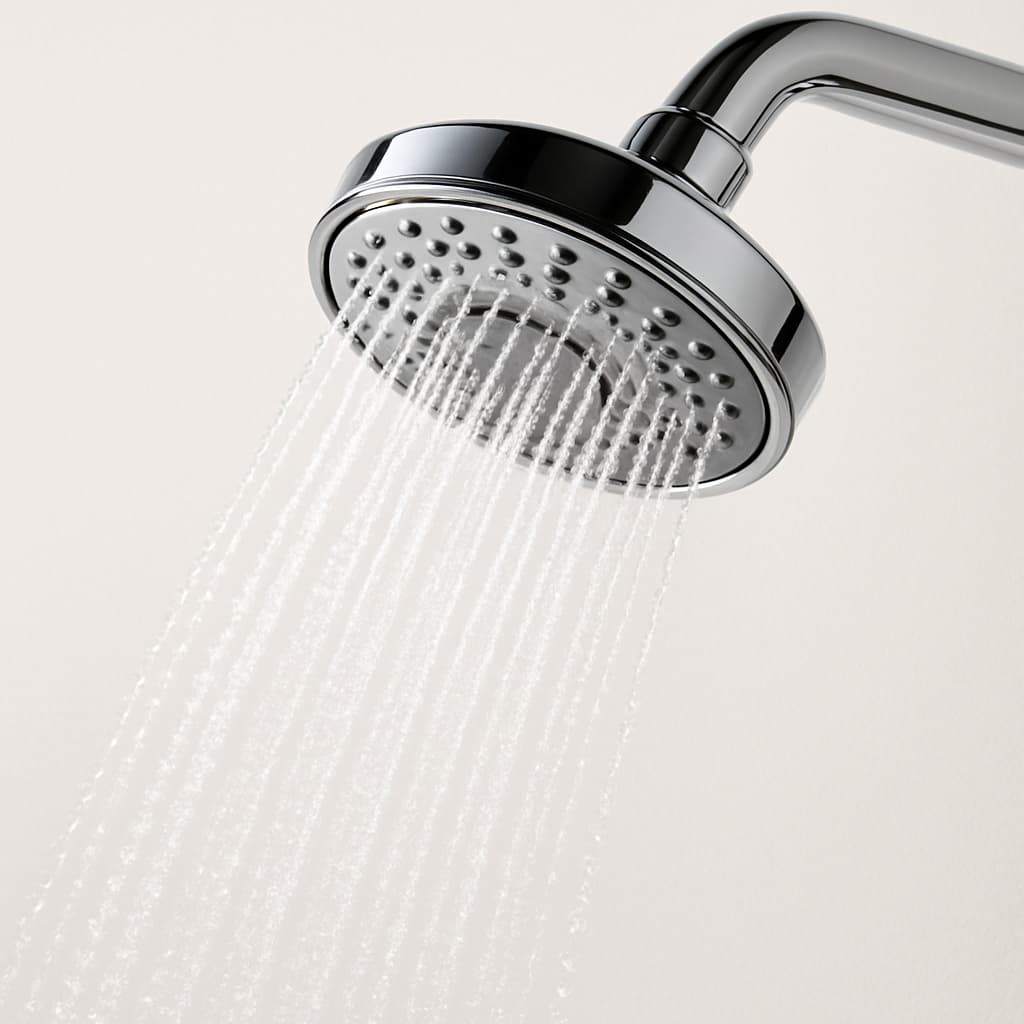
Weak shower pressure is one of those problems people live with for years — rinsing shampoo in slow motion, doing a slow rotation under a reluctant drizzle — when the fix is usually free and takes twenty minutes. The trick is testing causes in the right order, because 'my shower is weak' has about seven possible explanations and only a couple of them mean calling a plumber.
This guide starts with the two-minute diagnosis — is it the shower or the whole house — then works through every fix in order of likelihood: the clogged head, the flow restrictor question everyone asks, the valves and the pressure regulator, the water-heater case, and the head upgrade that's the one fix renters are actually allowed to make.
First, diagnose: weak shower or weak house?
Before touching anything, run the other taps — bathroom sink, kitchen, an outdoor spigot. If everything in the house is weak, your problem lives upstream: the pressure regulator, a partially closed main shut-off, or aging pipes. If it's only the shower, the culprit is almost certainly the head or the valve behind it, which is much better news.
Two more clues sharpen the diagnosis. If only the hot water is weak, skip ahead to the water heater section. And note whether the drop was gradual or sudden: gradual means buildup, which you can fix yourself, while sudden means something changed — a failing regulator, a leak, or municipal work — and deserves more urgency.
Fix the clogged shower head — it's usually this
The most common cause of a weak shower is the least glamorous: mineral scale choking the nozzles. Here's the thirty-second test — unscrew the head from the shower arm and briefly run the shower with the bare pipe. If water surges out of the arm, your plumbing is fine and the head is the bottleneck. Our full guide on how to clean a shower head covers the vinegar bag method, the deep soak, the finish warnings, and the connector filter screen that's often the real clog.
A vinegar soak and a toothbrush restore most heads completely. If yours comes back to life and then re-clogs within weeks, that's a hard-water problem rather than a shower head problem — hold that thought for the upgrade section below.
The flow restrictor: what it is, and the honest answer
Inside your shower head's inlet sits a small plastic disk called a flow restrictor. It's there because a federal standard dating to the 1992 Energy Policy Act caps shower heads at 2.5 gallons per minute, and some states cap them lower still. The restrictor is how every head sold in America meets the rule. It limits flow, not pressure — but with fewer gallons pushing through the nozzles, the spray can feel softer, which is why 'remove the flow restrictor' is one of the most-searched shower fixes on the internet.
Here's the honest answer. Prying it out usually does make the spray heavier — and it also raises your water and water-heating bills every day thereafter, and may put you on the wrong side of local water-conservation codes, which is worth checking before you reach for the pliers. The less-discussed truth is that a well-engineered low-flow head delivers a genuinely strong shower at 2.5 GPM, because spray force is a nozzle-design problem, not a gallons problem. If your head only feels good gutted, the head was badly designed to begin with.
Check the valves, the pressure regulator, and the pipes
Half-closed valves cause a surprising share of whole-house weakness. Find your main shut-off valve and make sure it's fully open — these get partially closed during plumbing work and never reopened all the way. Inside the shower itself, a worn pressure-balancing valve (the mechanism behind your temperature handle that prevents scalding when a toilet flushes) can throttle flow as its cartridge ages; a replacement cartridge is a manageable DIY job on many models, or a quick visit for a plumber.
If the whole house runs weak with every valve open, look at the pressure regulator — the bell-shaped fitting where the main line enters the house. Typical residential pressure runs 40 to 60 psi, and most regulators adjust with a screw on top. Failing regulators are a classic cause of house-wide or suddenly erratic pressure. Adjust conservatively if you're comfortable, but know that cranking pressure too high strains every pipe, joint, and appliance you own — when in doubt, this is a plumber call, and it's a cheap one. The last suspect is the pipes themselves: homes with old galvanized steel plumbing lose pressure over decades as the pipes corrode and narrow from the inside. That one is plumber territory, full stop.
Only the hot water weak? Look at the water heater
When cold pressure is strong but hot showers dribble, the shower head is innocent. Sediment settles in a water heater tank over the years, and enough of it will restrict flow at the outlet; a partially closed valve on the heater's lines produces the same symptom. First check that both heater valves are fully open — it takes ten seconds.
If the valves are open, the tank likely needs a flush, which manufacturers recommend roughly annually and almost nobody does. Flushing a healthy tank is a doable afternoon DIY with a garden hose; flushing an old, neglected tank can dislodge enough sediment to cause leaks, so if your heater is past its prime, let a plumber make the call.
Upgrade the head: the fix renters are actually allowed to make
If your plumbing checks out and you simply want a harder-hitting shower, upgrade the head itself. Pressure-boosting shower heads are real, and the physics is simple: narrower nozzle openings accelerate the water, so the same incoming pressure leaves the head as a faster, more forceful spray. No head can conjure psi your pipes don't deliver — but the felt difference between a lazy wide-nozzle head and a well-designed accelerating one is substantial. The Drivse IonDrops is our tested pick in this category: laser-cut narrowed nozzles that turn a limp trickle into a forceful spray, a tool-free one-minute install, and an inline cartridge that trims some chlorine and sediment along the way — a genuine pressure booster with a light-duty filter, which is exactly how our review frames it.
This is also the renter's answer. You can't touch the regulator, repipe the walls, or flush a landlord's water heater — but swapping a shower head is a two-minute, fully reversible job. Keep the old head in a drawer and reinstall it at move-out. And know when to stop DIY-ing entirely: whole-house pressure drops, a sudden unexplained change, banging or hammering pipes, or any suspicion of a leak are all reasons to call a plumber this week, not to buy a new shower head.
Read our Drivse IonDrops review
A real pressure boost from laser-cut nozzles, a light chlorine filter, and a one-minute install — our full verdict on the upgrade pick.
Read our Drivse IonDrops reviewFrequently asked questions
Why is my shower water pressure suddenly low?
Sudden drops are different from gradual ones. Check other taps first: if the whole house dropped, suspect the pressure regulator, a partially closed main valve, a leak, or municipal work. If it's just the shower, a clogged head or a failing pressure-balancing valve cartridge is the likely cause.
How can I make my shower head stronger?
In order: clean the scale out of it (the most common fix), make sure the shower valve is fully open, then upgrade to a pressure-boosting head, which uses narrower nozzles to accelerate the spray. If every fixture in the house is weak, the problem is upstream at the regulator or pipes.
Is it OK to remove the flow restrictor from a shower head?
Federal law requires manufacturers to sell heads capped at 2.5 gallons per minute, and removing the restrictor may conflict with local water-conservation codes — check yours first. It also raises water and heating bills. A well-designed low-flow head delivers a strong spray without surgery, which is the better fix.
What is normal water pressure for a house?
Roughly 40 to 60 psi. Below 40 feels weak at the fixtures; sustained pressure above 80 psi stresses pipes, joints, and appliance valves. The pressure regulator where the main line enters the house is adjustable, but have a plumber handle it if you're unsure.
Why is only my hot water pressure low in the shower?
That points at the water heater, not the shower. Sediment builds up in the tank and restricts flow, or a valve on the heater's lines is partially closed. Open the valves fully, and if that isn't it, the tank needs a flush — a plumber job if the heater is old.
Do pressure-boosting shower heads actually work?
Yes, within honest limits. They narrow the nozzle openings so the same incoming pressure exits as a faster, harder-hitting spray. They can't create pressure your plumbing doesn't supply — so fix clogs and valve issues first — but on ordinary household pressure the difference is immediately noticeable.
TopCrate is reader-supported. When you buy through links on our site we may earn an affiliate commission, at no extra cost to you. Content is for general information and isn't a substitute for professional advice.