HAIR 101
Hard Water Hair: Signs, Fixes, and Whether a Shower Filter Actually Helps
Why your hair went dull and your skin feels tight, the monthly shampoo that dissolves mineral buildup, and the honest answer on what a shower filter can and can't do.
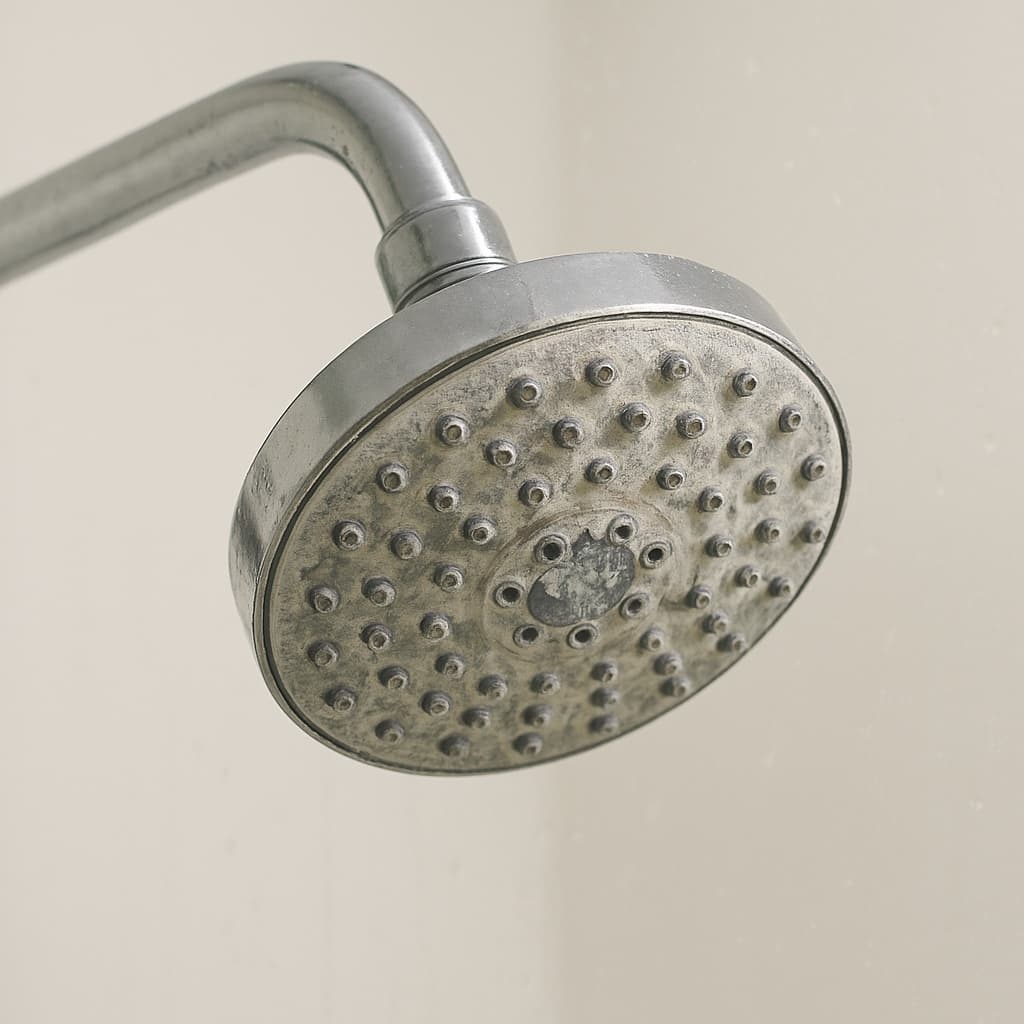
If your hair has slowly gone dull, tangly, and weirdly stiff no matter how many products you rotate through, the problem may not be on the shelf — it may be in the pipes. Hard water leaves a microscopic film of dissolved minerals on every strand, and it builds the same way limescale builds on a kettle: invisibly at first, then unmistakably.
This guide covers what hard water actually is, what it does to hair and skin, the two-minute check that tells you whether you have it, and the fixes ranked honestly — from a monthly chelating shampoo to a filtered shower head to the whole-house softener that is the only true cure.
What Is Hard Water, Exactly?
Hard water is water carrying dissolved calcium and magnesium, picked up as groundwater moves through mineral-rich rock like limestone and chalk. The more minerals dissolved, the harder the water: the USGS classifies anything under 60 milligrams per liter of calcium carbonate as soft, 61 to 120 as moderately hard, 121 to 180 as hard, and above 180 as very hard.
It's not a rare problem. The USGS publishes a national water hardness map, and the short version is that genuinely soft tap water is the exception in the US, not the rule — a nearly unbroken band of hard-to-very-hard water runs from the Dakotas down through Texas, and most households live with at least some hardness. It's harmless to drink. Your hair, your skin, and your glass shower door are where it collects its rent.
What Hard Water Does to Your Hair
Every wash in hard water deposits a trace of mineral film on the hair shaft, and unlike product buildup, regular shampoo doesn't remove it — minerals bond to hair, they don't just sit on it. Over months the film stacks up: hair looks dull because light scatters off a rough mineral coating instead of a smooth cuticle, tangles more because roughened strands snag each other, and feels coated even straight out of the shower.
The minerals also sabotage the wash itself. Calcium and magnesium react with the cleansers in shampoo and soap, which is why nothing seems to lather in a hard-water shower — part of your shampoo is being spent neutralizing minerals instead of cleaning hair. Color-treated hair takes it hardest: mineral buildup roughens the cuticle and can leave color fading faster and pulling brassy. And on fine hair, the added mineral weight stiffens strands and drags them flat, which is why hard-water hair so often reads as limp and crunchy at the same time.
Hard Water and Skin: Tightness, Dryness, and Eczema-Prone Types
The same chemistry follows you out of the shower. When soap meets hard water, the reaction produces soap scum — the filmy residue you can see on the shower door is also being left, in smaller amounts, on your skin. That residue plus the minerals themselves can leave skin feeling tight, dry, and squeaky after washing, and it partially undoes the moisturizer you apply afterward.
For sensitive types the stakes are higher. Researchers have found associations between hard-water areas and higher rates of eczema in children, and dermatologists commonly note that hard water can aggravate eczema-prone or already-dry skin. To be clear about what that means: hard water doesn't cause skin disease, but if your skin barrier is already struggling, mineral-heavy water and soap scum are not helping it recover. Persistent irritation is a dermatologist conversation, not a plumbing one.
How to Tell If You Have Hard Water
Your bathroom has probably already told you. White or greenish crust on the shower head nozzles is limescale — mineral deposits left by evaporating hard water. Cloudy spots on glasses and shower doors, towels that dry stiff and scratchy, soap that won't lather, and a white ring in the kettle all point the same direction. Our guide on how to clean a shower head will get the crust off, but be honest with yourself: it grew there for a reason, and it will grow back until you deal with the water.
For an actual number, hardness test strips cost a few dollars online — dip one in tap water and read the color scale against the USGS ranges above. If you're on municipal water, your utility's annual water quality report often lists hardness too. Knowing your number matters because the fix scales with the problem: moderately hard water needs a shampoo tweak, very hard water justifies real hardware.
The First Fix: Chelating Shampoo, Then a Deep Conditioner
The cheapest meaningful fix is a chelating shampoo about once a month. Chelating agents — look for EDTA, citric acid, or phytic acid on the label — bind to the minerals bonded to your hair and rinse them away, which is something a regular clarifying shampoo only partially does: clarifying formulas strip product buildup, while chelating formulas are built to grab metals and minerals. One wash won't undo a year of buildup, but within a few uses hair gets its light back. Don't overdo it — chelating is stripping by design, and weekly use trades mineral damage for dryness damage.
Because chelating leaves hair squeaky and thirsty, follow it with a proper deep conditioner the same wash. That also treats the symptoms while you work on the cause: a rich conditioner smooths the roughened cuticle so hair detangles and shines even before the mineral problem is fully solved. It doesn't need to be expensive — our Aussie 3 Minute Miracle review covers a drugstore deep conditioner that's been doing exactly this job for decades.
Do Shower Filters Work? The Honest Answer — and the Full Fix
Honestly: yes at what they're built for, no at what the marketing implies. A good filtered shower head is genuinely effective at reducing chlorine — which is itself drying to hair and skin — and at catching sediment, rust, and some dissolved metals before they hit your head. What an inline filter cannot meaningfully do is soften water. Calcium and magnesium are dissolved in the water itself, and removing them requires ion exchange — a salt-based process that swaps hardness minerals for sodium — which physically cannot happen in a cartridge the size of a soda can with water blasting through it.
So frame it correctly and a filtered head is still an easy win for chlorine and sediment — just read reviews with the softening claims filtered out. Our tested pick in the category is the Drivse IonDrops: its inline cartridge trims some chlorine and sediment, and its narrowed nozzles genuinely boost spray pressure, though our review is blunt that the filtration is light-duty and no shower head will turn Phoenix water into rainwater. Anyone promising that is selling you a story.
The full fix is a whole-house ion-exchange water softener, and it works — hair, skin, laundry, appliances, all of it. The catch is cost: expect an installed price that runs well into four figures, plus ongoing bags of salt, which is why it makes most sense for homeowners in genuinely hard-water zones. The realistic routine for everyone else: chelating shampoo monthly, deep conditioner after, a filtered shower head for the chlorine and sediment, and test strips so you know exactly what you're dealing with.
Read our Drivse IonDrops review
The pressure-boosting filtered head we tested — honest about what its light chlorine filter can and can't do for your hair.
Read our Drivse IonDrops reviewFrequently asked questions
Do shower filters work?
Yes, for chlorine and sediment — a quality filtered shower head reduces both, which is genuinely better for hair and skin. No, for softening: removing dissolved calcium and magnesium requires a salt-based ion-exchange system, not an inline cartridge. Buy one for the chlorine, not for a softness miracle.
What does hard water do to your hair?
Dissolved calcium and magnesium bond to the hair shaft, building a mineral film that regular shampoo doesn't remove. The result is dullness, tangling, stiffness, faster color fading, and shampoo that barely lathers because it's busy reacting with minerals instead of cleaning.
Does hard water cause hair loss?
There's no solid evidence hard water damages follicles or causes true hair loss. What it does cause is breakage — mineral-coated hair is rougher and more brittle, so strands snap mid-shaft, which can make hair look thinner. Fix the buildup and the breakage improves.
How do I know if I have hard water?
Check for white crust on the shower head, cloudy spots on glass, stiff towels, and soap that won't lather. For a real number, a cheap test strip gives you a reading in seconds — above about 120 mg/L of calcium carbonate counts as hard by USGS standards.
Is hard water bad for your skin?
It leaves soap scum residue on skin and can cause dryness and post-shower tightness, and it can aggravate skin that's already eczema-prone. It doesn't cause skin disease — but if your skin barrier is struggling, softer or filtered water removes one aggravating factor.
What shampoo removes hard water buildup?
A chelating shampoo — look for EDTA, citric acid, or phytic acid on the ingredient list. Use it about monthly, since it's stripping by design, and follow with a deep conditioner. A standard clarifying shampoo helps with product buildup but only partially removes minerals.
TopCrate is reader-supported. When you buy through links on our site we may earn an affiliate commission, at no extra cost to you. Content is for general information and isn't a substitute for professional advice.