HOME SAFETY 101
Carbon Monoxide Detector Placement: The Real Rules, the Height Myth, and the Spots to Avoid
Where to place carbon monoxide detectors is governed by a few clear rules from the CPSC and NFPA — and the most common question, how high on the wall, turns out to be the one that matters least.
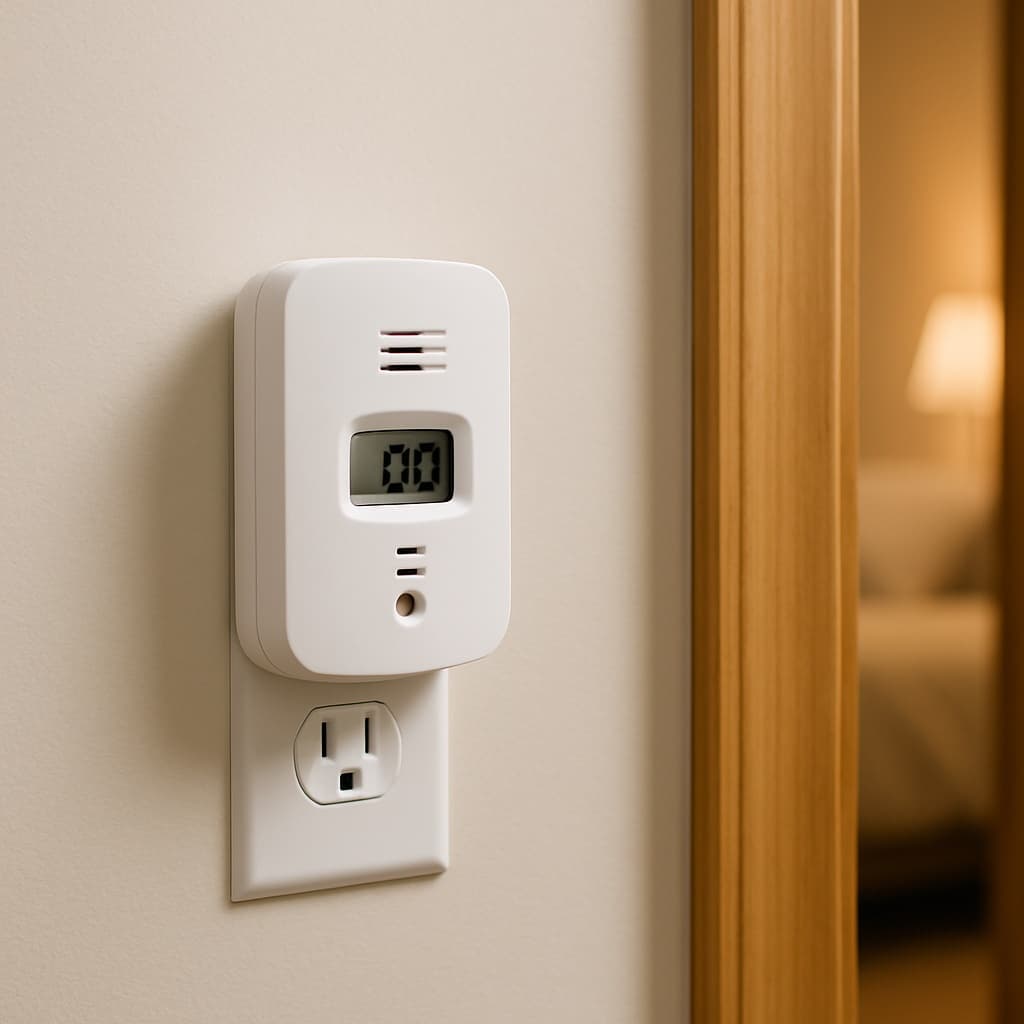
Most people buy a carbon monoxide detector, stand in the hallway holding it, and freeze on the same question: high or low? It's the wrong question — and the fact that everyone asks it is a clue to how much smoke-alarm logic gets wrongly applied to CO. The rules that actually matter are about which rooms and floors get an alarm, and which spots near appliances, bathrooms, and garages will either blind a detector or make it cry wolf.
This guide covers the core placement rules from the U.S. Consumer Product Safety Commission and the National Fire Protection Association, why mounting height barely matters for CO (unlike smoke), the specific places not to install one, the attached-garage question, what to know about combo smoke/CO units and plug-in supplements, and the protocol for the moment an alarm actually sounds.
What Carbon Monoxide Is — and Why an Alarm Is Non-Negotiable
Carbon monoxide is a gas you cannot see, smell, or taste, produced whenever fuel burns incompletely — and nearly every home has fuel burning somewhere: a furnace, a gas water heater, a gas stove or oven, a fireplace, a generator, a charcoal grill, a car in the garage. When a vent clogs, a heat exchanger cracks, or an engine runs in an enclosed space, CO builds up in air that looks and smells completely normal. Early poisoning feels like the flu without the fever — headache, dizziness, nausea, fatigue — and if it happens while you're asleep, there may be no symptoms at all, which is exactly why it's called the invisible killer.
There is no human sense that detects it and no home remedy that filters it; an alarm is the only warning you get. Two rules sit above all placement advice: never run a generator, grill, or any gasoline engine inside a home, garage, basement, or other enclosed space — even with doors and windows open — and never let a car idle in an attached garage. CPSC guidance is blunt on this point because generator misuse during power outages is one of the deadliest recurring CO scenarios in the country.
The Core Placement Rules: Every Level, Outside Every Sleeping Area
The baseline from CPSC and NFPA guidance is simple: install a CO alarm on every level of the home, including the basement, and outside each separate sleeping area — the hallway near the bedrooms — so an alarm can wake you through a closed door. Sleeping is when CO is most dangerous, so bedroom coverage is the heart of the whole system. Many state and local codes go further and require an alarm inside each bedroom as well; your local code is the final authority, and when in doubt, more coverage is never the wrong answer.
Interconnection is the upgrade worth having: CPSC recommends interconnected alarms — hardwired or wireless — because when one sounds, they all sound, and a basement furnace problem gets announced in the upstairs bedroom where it can actually wake someone. If your alarms are standalone battery or plug-in units, that's still real protection; just make sure the one outside the bedrooms is loud enough to hear with the door shut, and test it from behind that door once to confirm.
The Height Myth: No, CO Alarms Don't Need to Be on the Ceiling
Here's the misconception this entire article exists to fix: carbon monoxide does not rise like smoke, and it does not pool at the floor like propane. CO has almost exactly the same density as air, so it mixes evenly throughout a room rather than layering at the top or bottom. That's why NFPA 72 — the standard governing these alarms — permits mounting on the wall, on the ceiling, or wherever the manufacturer's instructions specify, with no general height requirement. The plug-in unit sitting in a wall outlet fifteen inches off the floor and the hardwired unit on the ceiling are both doing their job.
The ceiling-only instinct comes from smoke alarms, where hot smoke genuinely does rise and placement height is critical. For CO, follow the instructions that came with your specific unit — that's the placement it was tested and certified to — and stop agonizing. Outlet height, shelf height, eye level on the wall, ceiling: all work. What actually degrades a CO alarm's performance isn't height, it's the airflow and location problems covered next.
Where Not to Place a Carbon Monoxide Detector
Keep alarms a healthy distance from the fuel-burning appliances themselves — manufacturer instructions commonly specify around 15 feet from a furnace, water heater, or stove (Kidde, for example, says at least 15 feet). Too close and the small, harmless puff of CO many appliances emit at startup triggers nuisance alarms, and a detector that cries wolf gets unplugged. CPSC likewise advises against installing alarms in kitchens or directly above fuel-burning appliances. Skip bathrooms and other humid spots too — steam is hard on sensors — and skip dead-air zones like the apex of a cathedral ceiling or the corner where walls meet, where air circulates poorly.
Also avoid anywhere the alarm can't sample the room's actual air: behind curtains or furniture, in direct sunlight, or right next to a window, door, ceiling fan, or heating and air vent, where moving or incoming air dilutes readings and delays a warning. The pattern behind every rule is the same — a CO alarm needs to breathe the same settled air you do. Put it where the air is representative of the room, keep it unobstructed, and it will do the rest.
The Garage Question — and Combo Smoke/CO Units
If you have an attached garage, the instinct is to put an alarm inside it, next to the car. Don't — normal engine exhaust during starting and parking will trigger it constantly, and a constantly-triggering alarm teaches everyone to ignore alarms. The right move is an alarm just inside the house near the door to the garage, plus one near any bedrooms that sit above or beside it. That placement catches the dangerous scenario — CO seeping from the garage into living space — without alarming every time you leave for work.
One nuance that trips people up: combination smoke/CO units follow smoke placement rules, not CO rules. Smoke rises, so a combo unit goes on the ceiling or high on the wall per its instructions — the CO sensor works fine up there, but a smoke sensor at outlet height would be badly compromised. Plug-in dual-sensor units like the Hero Dual Threat Detector, which watches for both CO and combustible gas like natural gas or propane, are a different tool: gas detection is genuinely useful near kitchens and utility rooms, and it's a smart supplement to your code-required, certified CO alarms — never a replacement for them. Think of it the way you'd think of keeping a Cobra fire blanket by the stove: an added layer for a specific risk zone, on top of the alarms code requires.
Maintenance, Expiration, and What to Do When the Alarm Sounds
A CO alarm is a sensor with a shelf life, not a permanent fixture. Test every alarm monthly with the test button, replace batteries on the schedule the manufacturer specifies (or when the low-battery chirp starts), and know that the entire unit expires — typically after five to ten years depending on the model. Check the manufacture or replace-by date printed on the back of yours today; alarms made since 2009 also give an end-of-life chirp or error code when the sensor is done. An expired alarm on the wall is worse than none, because it looks like protection.
When a CO alarm sounds: get everyone outside to fresh air immediately, call 911 from outside, do a head count, and do not go back in until emergency responders say it's safe — CPSC's guidance is explicit that you should not try to find the source first. If anyone has headache, dizziness, or nausea, say so to the dispatcher; those are CO symptoms. And if a combustible-gas alarm sounds instead, leave without flipping any switches on or off — a spark can ignite a gas leak — and call your gas utility from outside. Alarms only buy you the warning; the leaving is your job.
Read our Hero Dual Threat Detector review
The plug-in unit that watches for both CO and combustible gas — reviewed honestly as a supplement to your code-required alarms.
Read our Hero Dual Threat Detector reviewFrequently asked questions
Where should carbon monoxide detectors be placed in a house?
Per CPSC and NFPA guidance: on every level of the home, including the basement, and outside each sleeping area, close enough to wake you through a closed bedroom door. Many local codes also require one inside each bedroom — local code is the final authority. Keep them roughly 15 feet from fuel-burning appliances and out of bathrooms, dead-air corners, and the path of vents and windows.
Should a carbon monoxide detector be high or low on the wall?
Either works. Carbon monoxide has nearly the same density as air and mixes evenly through a room, so unlike smoke alarms, CO alarms have no required mounting height — NFPA 72 allows wall, ceiling, or any placement the manufacturer's instructions specify. A plug-in unit at outlet height is just as valid as a ceiling-mounted one. The exception: combination smoke/CO units follow smoke rules and belong on or near the ceiling.
What do I do when the carbon monoxide alarm goes off?
Get everyone to fresh air immediately — outside is best — call 911 from outside, and do a head count. Do not re-enter until emergency responders tell you it's safe, and don't waste time hunting for the source first. Mention any headache, dizziness, or nausea to the dispatcher; those are symptoms of CO poisoning.
Should I put a carbon monoxide detector in my garage?
No — ordinary exhaust from starting and parking the car will set it off constantly, which trains everyone to ignore alarms. Instead, place an alarm inside the house near the door to an attached garage, and make sure any bedrooms above or beside the garage are covered. And never let a car idle in the garage, even with the door open.
Do I need a carbon monoxide detector if everything in my home is electric?
You still should have one. CO can come from an attached garage, a fireplace, a portable generator run too close to the house, or a neighboring unit in multi-family buildings — and many jurisdictions require alarms regardless of fuel type. Check your local code, but the cost is small and the failure mode is not.
How long do carbon monoxide detectors last?
The whole unit typically expires after five to ten years depending on the model — not just the batteries. Check the manufacture or replace-by date on the back; units made since 2009 give an end-of-life chirp or error code when the sensor is spent. Test monthly, replace batteries per the manufacturer's schedule, and replace the entire alarm on time.
TopCrate is reader-supported. When you buy through links on our site we may earn an affiliate commission, at no extra cost to you. Content is for general information and isn't a substitute for professional advice.