SKINCARE INGREDIENTS
Bakuchiol vs Retinol: Which Anti-Ageing Ingredient Actually Fits Your Skin?
Retinol has forty years of clinical receipts and a reputation for peeling; bakuchiol is the plant-based dupe that skips the sting but carries a much thinner evidence base — here's the honest comparison for choosing between them.
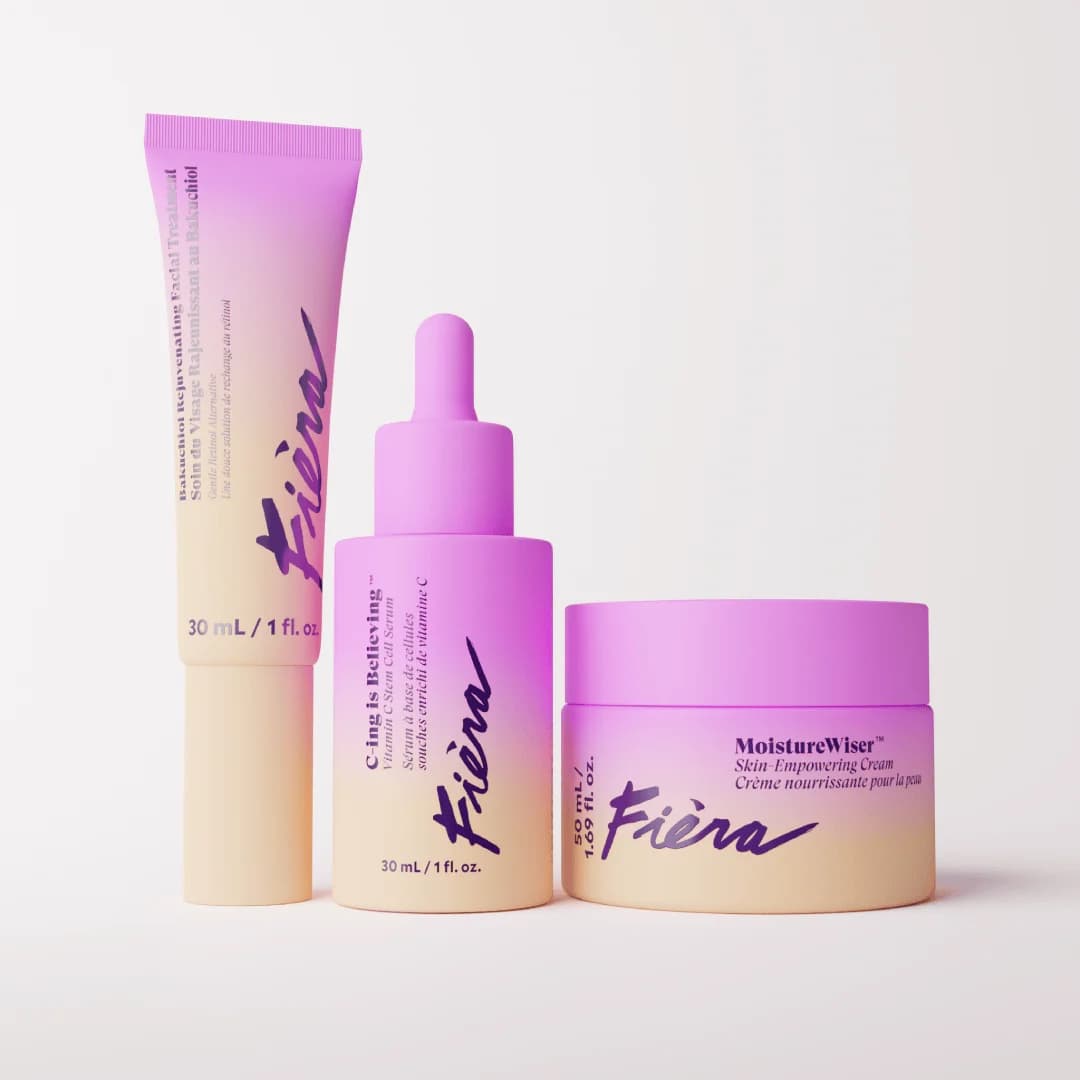
Retinol is the ingredient dermatologists have argued for since the 1980s — the most-studied topical for the signs of ageing, with clinical data behind almost every claim on the box. Bakuchiol is the plant-derived challenger that turned up in serious skincare formulas around 2018 and got trendy fast, marketed as 'natural retinol' for people whose skin couldn't tolerate the real thing. The temptation is to treat them as interchangeable, and the temptation is wrong.
This guide unpicks what each ingredient actually is, what the studies actually show (spoiler: bakuchiol's evidence is thinner than the marketing implies), which one fits which skin type, and — the question that trips up most buyers — whether you can layer them together for a compound effect or whether that's the classic recipe for a wrecked barrier. Written for people picking a serum, not a research paper.
What each ingredient actually is (and why the mechanism matters)
Retinol is a vitamin A derivative. Applied to skin, it's converted in two enzymatic steps into retinoic acid — the biologically active form that binds to retinoic acid receptors in skin cells and, over weeks, speeds cellular turnover, thickens the deeper epidermis, boosts collagen synthesis, and evens pigment. It's a receptor-level intervention with decades of published clinical evidence behind it, and the standard prescription-strength cousin (tretinoin) is retinoic acid itself, skipping the two conversion steps. This is why retinol works — and why it makes new users peel, flake, and go red for the first few weeks while the skin adapts to the accelerated turnover.
Bakuchiol is a meroterpene extracted from the seeds and leaves of the Psoralea corylifolia plant, used for centuries in Ayurvedic and Chinese medicine. It looks nothing like retinol chemically, but a 2014 in-vitro study showed it up-regulated many of the same genes retinoic acid triggers — collagen types I, III and IV, plus antioxidant pathways. In plain language: it appears to nudge some of the same skin machinery retinoids do, without the receptor binding and without triggering the classic irritation. Whether it does so as strongly is the entire debate.
The evidence: what the studies actually say (and what they don't)
Retinol's clinical evidence stack is enormous — hundreds of randomized trials over four decades. The specific consumer effects it demonstrably delivers: reduced appearance of fine lines and wrinkles, more even skin tone, softer texture, smaller-looking pores, and (at prescription tretinoin strengths) genuine reduction in actinic damage. It's the only cosmetic anti-ageing ingredient the American Academy of Dermatology explicitly endorses as effective.
Bakuchiol's evidence is much thinner and much newer. The most-cited comparison is a 2018 British Journal of Dermatology study by Dhaliwal et al. — 44 women applied either 0.5% bakuchiol twice daily or 0.5% retinol once daily for 12 weeks. Both groups showed significant improvement in wrinkles and hyperpigmentation with no statistical difference between them, and the bakuchiol group reported dramatically less scaling and stinging. That's a single small study, and the retinol dose was on the lower end. A 2019 Chinese study on 50 subjects and a handful of open-label trials since have echoed the general finding — bakuchiol produces measurable but modest improvements in the look of ageing with excellent tolerability. What we don't have is anything remotely approaching retinol's evidence depth: no long-term data, no prescription-strength comparator trials, no independent-of-industry meta-analyses. It works; it probably doesn't work as strongly.
Who should pick which — a practical decision tree
Pick retinol (or better, prescription tretinoin) if: your skin has historically tolerated actives, you want the strongest-evidence anti-ageing intervention, you're willing to endure a 4-8 week adjustment period of mild peeling, and you're prepared to be religious about SPF (a non-negotiable — retinoids make skin much more sun-sensitive). Our how to use retinol guide covers the ramp-up schedule that avoids the barrier-wreck most beginners self-inflict. This is the right pick for most people who can tolerate it.
Pick bakuchiol if: retinol has genuinely failed you (persistent irritation past the adjustment window, or your skin is chronically reactive), you're pregnant or breastfeeding (retinoids are contraindicated; bakuchiol has no such warning, though check with your OB), you have rosacea or eczema that retinol flares, or you specifically want a plant-based routine and are prepared to accept slower, gentler results. The three-piece Fiera Skin Renewal System is a solid mature-skin route: its bakuchiol treatment sits between a vitamin C serum and a peptide moisturizer, which is exactly the layered gentle-actives approach that suits reactive over-40 skin. Skip both entirely for actual skin conditions — melasma, cystic acne, real photoageing damage belong with a dermatologist, not a serum.
Can you use them together — and how to layer without wrecking your barrier
Yes, they can coexist in a routine, but not stacked on the same skin at the same time. The 2018 Dhaliwal study showed both worked independently; nobody has shown that layering them produces additive benefit, and stacking two anti-ageing actives multiplies irritation risk on skin that's already thin from either one. The safe pattern that dermatologists sometimes recommend for reactive skin: retinol on Monday, Wednesday and Friday nights; bakuchiol on Tuesday and Thursday nights; a hydrating recovery night on the weekend. This gives skin more days at some anti-ageing signal without doubling the daily irritation load.
The layering rules that apply to both: neither goes on with acids (AHAs, BHAs, glycolic peels) in the same session — pick one active per night. Both play well with hydrators — a hyaluronic acid serum before, a ceramide moisturizer after, and a peptide product like the ones in our peptide serum round-up on the alternate mornings. Both demand daily SPF, no exceptions. And if your skin is stinging, peeling, or looking angry, that's a signal to back off — not to push through. The right frequency is the highest frequency your skin tolerates without visible distress, which is different for every face.
Concentrations and forms worth knowing about
Retinol comes in a wide range: 0.01% to about 1% in over-the-counter serums, with 0.3% and 0.5% being the sensible starting points for most adults and 1% reserved for people who've already worked up. The industry has also moved toward encapsulated retinol and slow-release delivery systems designed to reduce irritation while preserving efficacy — worth paying more for if your skin is on the reactive side. Retinal (retinaldehyde) is one enzymatic step closer to retinoic acid than retinol, so it works faster and stronger at the same percentage; a 0.05% retinal is roughly equivalent to a 0.5% retinol. Prescription tretinoin (Retin-A, generic tretinoin cream) is retinoic acid itself, dispensed by a dermatologist and roughly 20× stronger than an equivalent-percentage retinol.
Bakuchiol concentrations in serious formulas cluster at 0.5% to 1% — this is the range the studies used and where most efficacy data lives. Anything below 0.25% is likely a marketing sprinkle; anything above 2% enters territory nobody has meaningfully studied. Check the ingredient list order (bakuchiol should sit above the preservatives) and prefer products in opaque or airless packaging (the ingredient degrades with light and air exposure, same as retinol). And ignore any product that claims 'bakuchiol works exactly like retinol without any of the downsides' — the honest brands acknowledge it's a gentler, thinner-evidence alternative, and those are the ones worth trusting.
The rest of the routine matters more than which one you picked
Both retinol and bakuchiol are single ingredients in what should be a full routine. The infrastructure they sit on is what decides how well they work: a gentle, non-stripping cleanser (avoid foaming sulfates if you're using actives); a moisturizer with ceramides and/or a peptide complex (which is where the Fiera Skin Renewal System's MoistureWiser cream fits, or the equivalent CeraVe/La Roche-Posay drugstore version at half the price); daily broad-spectrum SPF 30+ (SPF 50 for anyone using actives, no exceptions); a vitamin C serum in the morning for the antioxidant and pigment-fading complement; and — the most under-appreciated factor — enough sleep and enough water to actually let skin repair overnight.
The corollary: someone using bakuchiol correctly, with SPF, hydration, sleep and a good moisturizer, will get better visible results than someone using prescription tretinoin without those things. The active ingredient is the easy part to shop for; the routine around it is the part that actually shows on your face. If you're between the two, the honest answer for most people is: start with a well-formulated 0.3% or 0.5% retinol, treat your skin gently while it adapts, and only switch to bakuchiol if retinol genuinely doesn't work for you after 8-12 patient weeks. It's the older, better-evidenced ingredient — and pick a rebuild routine, not just a product swap, if that gentler route is the one your skin needs. If you want a single morning serum that pairs vitamin C with hyaluronic acid and peptides, our Total Package Serum review looks at one popular all-in-one option and what it realistically does.
Read our Fiera Skin Renewal System review
The three-piece bakuchiol-plus-vitamin-C-plus-peptide routine built for mature, reactive skin — a coherent gentle-actives set that's easier than assembling four separate products yourself.
Read our Fiera Skin Renewal System reviewFrequently asked questions
Which is better for anti-ageing: bakuchiol or retinol?
Retinol, by the evidence. It has hundreds of clinical trials over four decades showing meaningful reduction in fine lines, hyperpigmentation, and rough texture, and it's the only anti-ageing topical the American Academy of Dermatology explicitly endorses. Bakuchiol has one well-cited 12-week study (Dhaliwal 2018) showing comparable results to a low-dose retinol with much less irritation, plus a handful of smaller trials since. That's a genuinely promising signal, but it's not the same evidence base. For most people whose skin tolerates it, retinol is the stronger, better-proven choice. Bakuchiol is the right pick if retinol has actually failed you.
Is bakuchiol as effective as retinol?
It's less effective, though the gap may be smaller than skeptics assume. The head-to-head study compared 0.5% bakuchiol twice daily against 0.5% retinol once daily and found no statistical difference in wrinkle or pigmentation improvement at 12 weeks. But 0.5% retinol is a modest dose, the study was small (44 women), and nobody has run bakuchiol against prescription tretinoin — which is roughly 20× stronger than an equivalent retinol. The honest read: bakuchiol delivers real but modest anti-ageing benefits with very little irritation, retinol delivers stronger benefits with an adjustment period, and prescription retinoids deliver the strongest results but require a dermatologist visit.
Can I use bakuchiol and retinol together?
In the same routine, yes; on the same skin in the same night, don't. There's no evidence layering them produces additive benefit, and stacking two anti-ageing actives multiplies irritation risk. The pattern dermatologists sometimes suggest for reactive skin is alternating nights: retinol Monday/Wednesday/Friday, bakuchiol Tuesday/Thursday, hydration recovery on the weekend. This gives skin more days at some anti-ageing signal without doubling the daily irritation load. Both demand daily SPF, no exceptions.
Is bakuchiol safe during pregnancy?
Retinoids (retinol, tretinoin, adapalene) are contraindicated during pregnancy and breastfeeding — that's the standard obstetric advice, based on the risk of oral retinoid analogs and out of prudence for the topical versions. Bakuchiol has no such warning in the mainstream skincare literature and is often marketed to pregnant users specifically for that reason. That said, 'no warning' isn't the same as 'proven safe' — there's very little pregnancy-specific research on bakuchiol either — so run any active you're planning to use past your OB or midwife before starting.
How long until I see results from bakuchiol vs retinol?
Both are patience projects. Retinol typically shows softer texture within 4-6 weeks, fine-line and pigment improvements at 8-12 weeks, and the fullest results at 6+ months of consistent use. Bakuchiol runs on a similar timeline in the study data — visible improvement at 12 weeks — though the magnitude of change tends to be smaller. Whichever you pick, the biggest mistake is judging after two weeks (too early to see anything but irritation from retinol) or three days (which is asking for magic). Consistency and daily SPF matter more than which ingredient you chose.
Does bakuchiol cause purging like retinol does?
Rarely. Retinol purging — a temporary flare of breakouts in the first 2-4 weeks as accelerated turnover pushes existing clogs to the surface — is a known side effect specifically because retinol speeds cell turnover. Bakuchiol acts more gently and does not typically produce this purge. That gentleness is also why bakuchiol is a poor choice for active acne: the accelerated turnover retinoids provide is part of what clears comedones, and bakuchiol simply doesn't do that as forcefully.
Can I use vitamin C with bakuchiol or retinol?
Yes, and the classic split is vitamin C in the morning (antioxidant protection against daytime UV and pollution damage, plus its own pigment-fading effect) and retinol or bakuchiol at night. They don't need to be applied together, and layering them in the same session isn't necessary. The three-piece Fiera Skin Renewal System uses exactly this pattern — a stable vitamin C derivative serum in the morning, bakuchiol treatment at night, peptide moisturizer sealing both — which is a sensible way to run a full anti-ageing routine without the irritation of stacking multiple actives at once.
TopCrate is reader-supported. When you buy through links on our site we may earn an affiliate commission, at no extra cost to you. Content is for general information and isn't a substitute for professional advice.