SKINCARE 101
Peptide Serums: What Peptides Do for Skin, What the Evidence Supports, and How to Pick One
Peptides are the rare trendy skincare ingredient with plausible science behind it — here's the honest version of what a peptide serum can and can't do for the look of your skin.
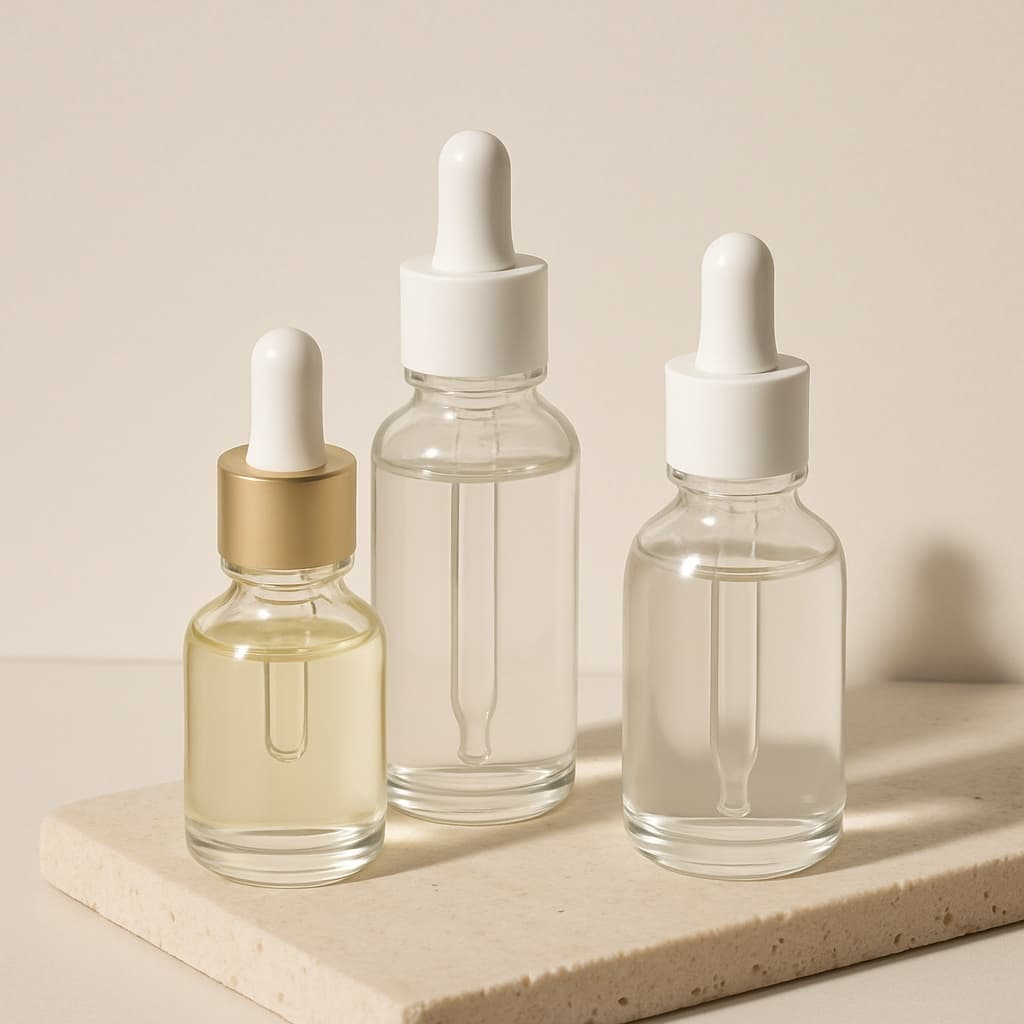
Peptides are having their moment: they headline serums, moisturizers, and eye creams at every price point, marketed as the gentle answer to fine lines and firmness. Unusually for a skincare trend, there's real science underneath — but there's also a gap between what the ads promise and what the studies show, and knowing where that gap sits is the difference between buying a useful serum and buying expensive hope.
This guide covers what peptides for skin actually are, the honest story of how they're supposed to work, the main peptide families in plain English, what the evidence genuinely supports, how peptides compare with retinol, how to choose a peptide serum worth its price, and how to use one — including the realistic timeline for seeing anything in the mirror.
What Peptides for Skin Actually Are
Peptides are short chains of amino acids — fragments of proteins. Skin's structural proteins, like collagen and elastin, are long chains built from those same amino acids; a peptide is a snippet of that chain, small enough that some versions can interact with the skin's upper layers when applied in a cream or serum. In skincare, they're used as what formulators call signal ingredients: their job isn't to fill or coat, but to carry a message.
The mechanism story goes like this. When collagen in skin naturally breaks down, some of the fragments it leaves behind act as signals — messengers that nudge skin toward repair mode. Cosmetic peptides are designed to mimic those messengers, delivering the same nudge without waiting for damage to send it. It's a plausible, well-reasoned idea, and it's why dermatologists take peptides more seriously than most trendy ingredients. But plausible mechanism and proven result are two different things, and the evidence — covered below — is appearance-level: improvements in how skin looks, not documented rebuilding of its structure.
The Main Peptide Families, in Plain English
Signal peptides are the biggest family and the ones with the most study behind them. The best known is Matrixyl 3000, a blend of two peptides designed to mimic collagen's repair messengers; it's the workhorse in a huge share of peptide serums, and the ingredient most brands mean when the label just says peptides. Next are the neurotransmitter-affecting peptides, led by Argireline — designed to soften the look of expression lines by calming the skin-muscle messaging that creases them, which is why it gets marketed with Botox comparisons it can't fully earn.
Carrier peptides, mainly copper peptides, ferry trace minerals into skin, where those minerals support the enzymes skin uses for its own upkeep — copper peptides have a long history in skin research, though most of it is about wound care rather than wrinkles. Finally, enzyme-inhibiting peptides aim to slow the enzymes that break collagen down — playing defense rather than offense. You don't need to memorize any of this; you just need to recognize the names, because a label that tells you which peptide it uses is being more honest than one that doesn't.
What the Evidence Actually Supports
Here's the honest summary. Studies on topical peptides consistently show modest improvements in the look of fine lines, firmness, and hydration over several weeks to a few months of daily use. Those results are real, and they repeat across different peptides and different trials. But two caveats matter. First, most of those trials were run or funded by the companies that make the peptides, with the small independent studies generally showing gentler versions of the same story. Second, the improvements are measured in appearance — smoother-looking, firmer-feeling skin — not in verified structural change underneath.
So the plain-English verdict: peptides are a supporting act, not a headliner. They belong in the tier of ingredients that genuinely improve how skin looks with consistent use — alongside niacinamide and good humectants — a tier below sunscreen and retinoids, which carry decades of stronger evidence. A peptide serum is a reasonable thing to buy and a useless thing to expect miracles from. And if you're chasing a persistent skin concern — texture that changes fast, redness that won't settle, anything beyond ordinary aging — that's a dermatologist conversation, not a serum decision.
Peptides vs Retinol: Not Actually a Rivalry
If you're choosing one anti-aging ingredient on evidence alone, retinol wins — retinoids have decades of research behind their effect on the look of texture and fine lines, far deeper than anything in the peptide file. But retinol charges a toll: an adjustment period of dryness and flaking, increased sun sensitivity, and a slow ramp-up that trips up plenty of beginners. Peptides charge none of it. No purge, no sun sensitivity, no irritation ramp — a peptide serum feels like a moisturizer from day one, which is exactly why it's the right pick for sensitive skin, for retinol quitters, and for anyone whose skin barrier is already having a hard year.
The smarter framing is pairing, not rivalry. Peptides layer happily with retinol — many people use a peptide serum in the morning and retinol at night, or layer the two together in the evening, using the peptide serum's hydration to soften retinol's rough edges. If your skin tolerates retinol, use retinol and treat peptides as the gentle assist. If it doesn't, peptides are the best-supported plan B that won't fight you.
How to Choose a Peptide Serum
Rule one: look for named peptides on the label. A serum that tells you it contains Matrixyl 3000, Argireline, or copper peptides is naming ingredients with actual studies attached; a label that says only peptide complex is telling you nothing, and often contains a token dose. Rule two: check the packaging — peptides are relatively delicate molecules, so an airless pump or opaque bottle beats an open jar that exposes the formula to air and light every day. Rule three: decide between a single-peptide budget serum, which does one job at a fair price, and a multi-peptide blend that stacks families for broader coverage.
If you want the multi-peptide route, our reviewed pick is the Total Package Serum, which stacks Matrixyl 3000, Matrixyl Synthe-6, and Argireline with vitamin C and hyaluronic acid — signal peptides, an expression-line peptide, and hydration in one pump, reviewed on this site with its marketing claims sorted from its real merits. If you'd rather get peptides in cream form — particularly for drier, mature skin that wants moisture and peptides in a single step — the Fiera MoistureWiser is the peptide-moisturizer version of the same idea, built for exactly that skin.
How to Use a Peptide Serum (and When to Expect Results)
Usage is refreshingly simple, which is half the appeal. Morning, night, or both: apply to clean skin before moisturizer, then carry on with the rest of your routine. Peptides layer with nearly everything — niacinamide, hyaluronic acid, vitamin C serums, retinol, sunscreen — with one caution worth knowing: strong direct acids at very low pH, like a potent glycolic treatment, may destabilize some peptides when layered in the same session. The easy fix is separation — keep your strong-acid nights and your peptide applications apart, and there's nothing to worry about.
The realistic timeline: hydration benefits show up within days, because most peptide serums are also good humectant formulas. Changes in the look of fine lines and firmness take longer — think four to twelve weeks of daily use before an honest mirror assessment, which matches how the studies were run. And like every cosmetic ingredient, the effect is rent, not purchase: skin drifts back toward baseline when you stop. Judge a peptide serum at the eight-week mark, keep it if you can see the difference, and let sunscreen and consistency do the heavy lifting they always do.
Read our Total Package Serum review
The multi-peptide blend that stacks Matrixyl 3000, Matrixyl Synthe-6, and Argireline — reviewed with the marketing sorted from the merits.
Read our Total Package Serum reviewFrequently asked questions
Do peptide serums actually work?
Modestly, yes. Studies show improvements in the look of fine lines, firmness, and hydration over several weeks of daily use — but most of those trials were supplier-funded, independent studies are small, and the effects are appearance-level and gradual. Peptides are a legitimate supporting ingredient, not a headline act; expect subtle smoothing, not transformation.
What do peptides do for your skin?
Peptides are short chains of amino acids — protein fragments — used as signal ingredients. Skin's own collagen fragments act as repair messengers when they break down, and cosmetic peptides are designed to mimic those messengers. In practice, that translates to a gradual improvement in how smooth, firm, and hydrated skin looks with consistent use.
Can you use peptides with retinol?
Yes — it's one of the best pairings in skincare. Peptides don't interfere with retinol, and their hydrating, gentle character helps offset retinol's dryness. Use the peptide serum in the morning and retinol at night, or layer the serum first on retinol evenings. The only layering caution for peptides is strong low-pH acids like potent glycolic treatments, not retinol.
Which peptide is best for fine lines?
Signal peptides have the most research — Matrixyl 3000 is the best-studied name and shows up in trials with modest improvements in the look of fine lines over weeks. Argireline targets expression lines specifically. Multi-peptide serums stack both families; just make sure the label names its peptides rather than hiding behind a vague peptide complex.
How long does it take for a peptide serum to work?
Hydration improvements show within days, since most peptide serums double as good humectant formulas. Changes in the look of fine lines and firmness take four to twelve weeks of consistent daily use — the timescale the studies themselves used. Judge the bottle honestly at eight weeks, and know the effect fades if you stop.
Do you apply peptide serum before or after moisturizer?
Before. Apply it to clean skin — after cleansing and any watery toner, before your moisturizer and sunscreen. Serums are lighter than creams, and the general layering rule is thinnest to thickest. Morning, night, or both all work; peptides don't cause sun sensitivity, so timing is preference rather than rule.
TopCrate is reader-supported. When you buy through links on our site we may earn an affiliate commission, at no extra cost to you. Content is for general information and isn't a substitute for professional advice.