TRENDING ON AMAZON
TruSkin Vitamin C Facial Serum Review: Is It Worth It?
The affordable vitamin C + hyaluronic acid + vitamin E serum that brightens, evens tone, and reduces dark spots — for under $25 vs the $180 luxury versions.
Quick answer: TruSkin is the vitamin C serum that got millions of people into skincare — affordable, gentle enough for most skin, and effective enough to justify the daily habit. It's not the fastest or strongest formula on the market, but for the price, it's the smart entry point that actually delivers results.
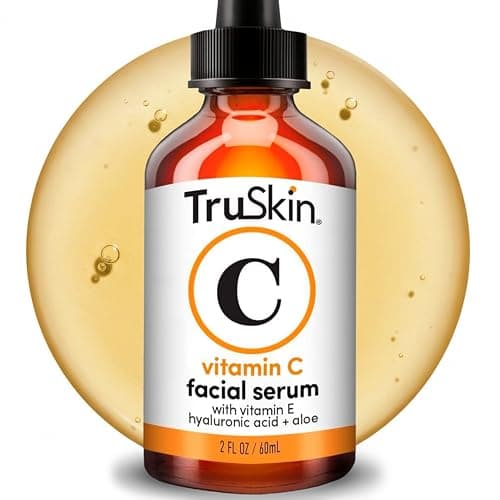
Product image from the Amazon listing.
Our verdict
TruSkin is the vitamin C serum that got millions of people into skincare — affordable, gentle enough for most skin, and effective enough to justify the daily habit. It's not the fastest or strongest formula on the market, but for the price, it's the smart entry point that actually delivers results.
The short version
TruSkin's Vitamin C Serum is Amazon's best-selling vitamin C for a reason: it combines 20% vitamin C (as sodium ascorbyl phosphate, a stable derivative) with hyaluronic acid and vitamin E in an amber dropper bottle — the same core formula as $180 luxury serums at a fraction of the price. For brightening dull skin, fading post-acne dark spots, and evening out skin tone, this is the gateway vitamin C that turned millions of people into serum users. It's not the strongest formulation available, but it's the most accessible one that actually delivers visible results.
Pros & cons
Pros
- 20% vitamin C at a fraction of luxury pricing
- Combines vitamin C + hyaluronic acid + vitamin E
- Suitable for most skin types (sensitive included)
- Amber glass bottle protects from light degradation
- Works for post-acne dark spots and dullness
- Amazon's best-selling vitamin C serum
Cons
- Uses stabilized vitamin C form (gentler but slower than L-ascorbic acid)
- Some batches oxidize faster than others
- Not for very oily/acne-prone skin without patch test
Why people love it
Vitamin C brightens and fades spots
Sodium ascorbyl phosphate (a stable vitamin C derivative) inhibits melanin production and lifts dullness over 4-8 weeks of daily use.
Hyaluronic acid plumps and hydrates
Draws water into the skin surface, giving an immediately smoother, plumper appearance while the vitamin C does its longer-term work.
Vitamin E protects and enhances
Antioxidant vitamin E stabilizes the vitamin C, protects skin from environmental damage, and works synergistically to reduce dark spots faster.
Who it's for
- Anyone with post-acne dark spots or sun spots
- People wanting brighter, more even skin tone
- Vitamin C beginners on a budget
- Sensitive skin that can't tolerate L-ascorbic acid
How TruSkin actually compares to SkinCeuticals, Drunk Elephant C-Firma, and The Ordinary
The vitamin C serum market spans from The Ordinary's $9 formulas to SkinCeuticals CE Ferulic at $180+. TruSkin sits in the sweet spot — Amazon's best-seller, around $22, using 20% sodium ascorbyl phosphate (SAP) with hyaluronic acid and vitamin E. Against SkinCeuticals CE Ferulic (the gold standard, using 15% L-ascorbic acid + ferulic + vitamin E), TruSkin's SAP formula is gentler and more stable but slower — you'll see visible brightening in weeks rather than a couple of weeks, and the depth of color-correction over months is roughly 70-80% of SkinCeuticals' results.
Against Drunk Elephant C-Firma Fresh ($80, uses 15% L-ascorbic acid + ferulic + vitamin E), TruSkin is chemically similar in intent but again uses the milder SAP form — Drunk Elephant is closer to SkinCeuticals in potency and price. Against The Ordinary's various vitamin C options ($9-15), TruSkin is more expensive but includes more supporting ingredients (hyaluronic acid, vitamin E, botanical extracts) in a more elegant single-bottle format — The Ordinary requires you to layer multiple products yourself. For the pure vitamin-C-brightening effect at a reasonable price with a decent user experience, TruSkin is the most sensible pick.
Sodium ascorbyl phosphate vs L-ascorbic acid: which vitamin C form is right for you?
Vitamin C in skincare comes in several forms, and they're not all equivalent. L-ascorbic acid (LAA) is the pure, active form that's been most studied — it's the fastest and most potent, but it's also unstable (oxidizes within weeks of opening), acidic (pH 2.5-3.5 causes tingling and irritation for many people), and expensive to formulate. Sodium ascorbyl phosphate (SAP) is a salt form that's more stable, has a gentler near-neutral pH, and converts to L-ascorbic acid in the skin after application — but conversion is inefficient (roughly 30-50%), so a 20% SAP serum delivers less active vitamin C than a 15% LAA serum.
For your skin, the choice comes down to sensitivity and tolerance. If you can handle actives without irritation, an L-ascorbic acid serum (SkinCeuticals, Drunk Elephant, or a middle-tier like Timeless C+E) gets you faster, deeper results. If your skin is sensitive, reactive, or has been irritated by acids before, an SAP-based serum like TruSkin is far more forgiving with meaningful (if slower) benefits. Beginners should start with SAP — you can always graduate to L-ascorbic acid later once you know your skin tolerates vitamin C.
How to actually see results from vitamin C (and the common mistakes that waste your serum)
Vitamin C works, but four common mistakes cause many people to declare it 'didn't do anything.' First: not using sunscreen. Vitamin C's benefits are undermined and its degradation accelerated by unprotected sun exposure — always follow with SPF 30+ in the morning. Second: skipping days. Vitamin C requires consistent daily use for 6-8 weeks before results appear; using it three times a week isn't enough to build up the protective and brightening effect in the skin. Third: using an oxidized bottle. If the serum has turned dark orange or brown, it has lost potency — always check the color before applying, and toss anything past 6 months.
Fourth: expecting overnight miracles. Vitamin C is a slow, cumulative treatment — you're building up protective and corrective effects over weeks and months. Compare skin at week 0 and week 8, not week 1 vs week 2. Take a photo in consistent lighting when you start, and take another 8 weeks in — the difference is usually clearer in photos than in the mirror. And pair vitamin C with the other proven basics: daily sunscreen, gentle cleanser, moisturizer, retinol at night. Vitamin C alone won't fix skin, but as part of an actual routine, it delivers.
See TruSkin Vitamin C Serum on Amazon
Check the latest price, photos and buyer reviews on Amazon.
Check Price on Amazon →Sold and shipped by AmazonFrequently asked questions
Does TruSkin Vitamin C serum actually work? What can I expect?
Yes — expect visible results in 4-8 weeks of daily use. The 20% concentration of sodium ascorbyl phosphate (SAP) is meaningfully brightening for most people. Realistic outcomes: dullness fades within 2-3 weeks, post-acne dark spots visibly lighten in 6-8 weeks, and skin tone evens out over 2-3 months. It won't fade deep melasma or old sun damage completely, and it doesn't work as fast as prescription hydroquinone. But for gradual, sustainable improvement in tone and brightness, it delivers what it claims.
TruSkin vs SkinCeuticals CE Ferulic (which costs 8× more): what's the actual difference?
SkinCeuticals CE Ferulic uses 15% L-ascorbic acid (the strongest, fastest-acting form of vitamin C) plus ferulic acid — clinically it outperforms sodium ascorbyl phosphate on speed and depth of results, but L-ascorbic acid is also much more irritating for sensitive skin and oxidizes fast once opened. TruSkin uses the gentler SAP form, which is more forgiving, more stable, and cheaper — the trade-off is slower results. For most people not doing color-critical dermatology work, the difference is: SkinCeuticals gets you 30% better results in 30% of the time at 800% of the price. TruSkin is the reasonable choice for 90% of people.
Why is it in an amber bottle with a dropper?
Amber glass blocks UV light, which is the primary cause of vitamin C oxidation and degradation. Vitamin C that has oxidized turns brownish-orange and loses potency (it can also stain skin temporarily). The amber bottle plus dropper minimizes light exposure and air contact, which extends the serum's effective shelf life. Store it in a cool, dark drawer — not on a sunny bathroom counter — and use within 3-6 months of opening for best results. If your serum has turned dark orange or brown, it has oxidized; toss it and buy fresh.
How do I use it in a routine? AM or PM?
AM is standard — vitamin C provides antioxidant protection against sun and pollution damage during the day, so morning use amplifies its benefits. Routine: cleanse → tone (optional) → TruSkin Vitamin C serum (3-4 drops, patted into skin) → moisturizer → sunscreen (crucial — vitamin C makes sunscreen more effective). If your skin can't tolerate vitamin C at all times, use it every other morning while building tolerance. Skip on days you're using strong exfoliants (glycolic, salicylic) or retinol, since layering can irritate.
Can I use it with retinol, niacinamide, and other actives?
Yes with some rules. Vitamin C + niacinamide (10%) is safe and effective together in modern formulations (the old 'they cancel out' myth has been debunked). Vitamin C in the morning + retinol at night is the ideal pairing — they work synergistically over 24 hours. Vitamin C + AHA/BHA exfoliants: alternate them rather than layering, since both are acidic and can over-irritate skin. If you're a skincare beginner, start with just vitamin C in the morning and moisturizer + sunscreen — add other actives one at a time over months.
My serum arrived slightly yellow. Is that normal?
Yellow-tinted vitamin C is normal and unoxidized — the vitamin C molecule has a naturally pale yellow color. What you don't want to see: dark orange, brown, or coffee-colored serum, which indicates oxidation and loss of potency. If your serum arrives dark orange or brown, contact Amazon for a replacement (TruSkin has a manufacturer return guarantee). If it's a light lemon-yellow color, it's fresh and ready to use.
As an Amazon Associate, TopCrate earns from qualifying purchases at no extra cost to you. TruSkin is a cosmetic serum, not a medical treatment. Patch-test before full-face use, and see a dermatologist for persistent skin issues. Product image, price, availability and ratings are shown on Amazon and are subject to change.