TRENDING ON AMAZON
Nutrafol Women Hair Growth Supplement Review: Is It Worth It?
The physician-formulated hair-thinning supplement — saw palmetto, ashwagandha, marine collagen — with clinical studies behind it.
Quick answer: For women with mild-to-moderate hair thinning — postpartum shedding, stress-related loss, perimenopause thinning, or early androgenetic changes — Nutrafol is the physician-formulated supplement with actual clinical studies behind it and consistent real-world results. It's expensive and slow, but it works for the right person.
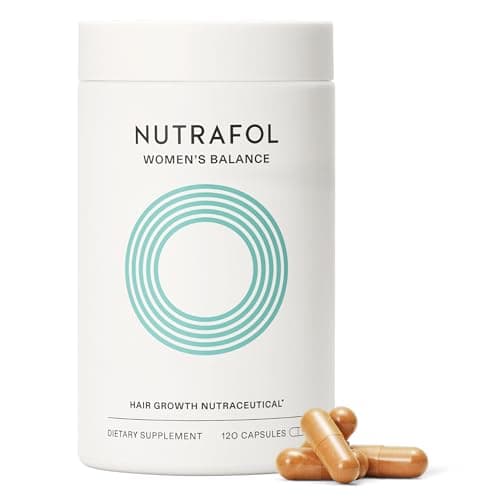
Product image from the Amazon listing.
Our verdict
For women with mild-to-moderate hair thinning — postpartum shedding, stress-related loss, perimenopause thinning, or early androgenetic changes — Nutrafol is the physician-formulated supplement with actual clinical studies behind it and consistent real-world results. It's expensive and slow, but it works for the right person.
The short version
Nutrafol Women is a physician-formulated hair-growth supplement blending clinically-studied botanicals (saw palmetto, ashwagandha, curcumin, marine collagen, tocotrienols) plus vitamins and minerals — targeting the root causes of hair thinning: hormonal shifts, stress cortisol, inflammation, and nutrient gaps. It's not a topical treatment (like Rogaine) and doesn't work overnight — expect 3-6 months of daily use before seeing measurable improvement. But for women dealing with postpartum shedding, perimenopause hair thinning, or stress-related hair loss, this is the supplement dermatologists most commonly recommend as a first-line internal intervention.
Pros & cons
Pros
- Physician-formulated with clinical studies
- Targets hormonal, stress, and nutritional causes
- Includes ashwagandha for cortisol regulation
- Includes marine collagen for hair protein synthesis
- No prescription needed
- Sold and recommended by dermatologists
Cons
- Expensive (~$88/month, subscription cheaper)
- Takes 3-6 months to see visible results
- 4 capsules per day (some find it a lot)
Why people love it
Multi-targeted botanical blend
Combines saw palmetto (DHT reduction), ashwagandha (cortisol regulation), curcumin (inflammation reduction), and marine collagen (hair protein) to address multiple root causes of thinning.
Daily 4-capsule regimen
Four capsules taken once daily with food. Consistency matters more than dosage — missing days sets you back weeks.
90-day minimum evaluation
Hair grows about half an inch per month, so improvements from any hair supplement take 3-6 months to be visible. Nutrafol's clinical studies were 6-month trials.
Who it's for
- Women experiencing hair thinning or shedding
- Postpartum hair loss
- Perimenopause and menopause hair changes
- Stress-related hair loss
Why women's hair loss is different (and why Nutrafol targets it specifically)
Women's hair loss has different biological drivers than men's, and the two conditions require different treatment approaches. Male pattern hair loss is primarily androgenetic — driven by DHT (dihydrotestosterone) shrinking hair follicles at the crown and hairline. Women can have DHT-driven hair loss too, but they're much more likely to also experience: hormonal thinning during pregnancy, postpartum, and menopause; stress-driven telogen effluvium (where hair enters resting phase due to elevated cortisol); nutritional-deficiency thinning (iron, vitamin D, biotin, protein); autoimmune thinning (alopecia areata); and thyroid-related hair loss. Traditional hair-loss treatments (Propecia, minoxidil) target only the androgenetic cause, which is why they work well for men but only sometimes for women.
Nutrafol was designed specifically around this multi-cause reality — the formula targets several drivers simultaneously. Saw palmetto reduces DHT (addressing androgenetic cause). Ashwagandha reduces cortisol (addressing stress cause). Curcumin reduces inflammation (addressing autoimmune and inflammatory causes). Marine collagen provides amino acids for hair protein synthesis (addressing nutritional cause). Vitamins and minerals fill nutritional gaps. This 'shotgun' approach is why Nutrafol works for a wider range of women than any single-target treatment, and it's also why results take longer — you're supporting multiple slow biological processes at once.
Nutrafol vs Viviscal vs generic biotin: what's actually different?
Nutrafol (~$88/month) is the premium physician-formulated option with clinical studies specifically on the finished product. Viviscal (~$50/month) is a marine-protein-based supplement that also has clinical studies, but the formula is simpler — mostly focused on providing amino acids and marine proteins for hair protein synthesis, without the ashwagandha, curcumin, or saw palmetto that address non-nutritional causes. Viviscal has been on the market longer and has broader awareness; Nutrafol is the more sophisticated formulation.
Generic biotin (~$15/month) is the budget option. Biotin is one ingredient among many that hair needs, and biotin deficiency does cause hair loss. But most people aren't biotin-deficient — supplementing biotin when you're not deficient does very little. Studies of high-dose biotin for hair loss are mixed. If you want to try something cheap first, generic biotin is fine for 3 months to see if it helps. If it doesn't, upgrade to Viviscal or Nutrafol. If you have significant thinning and can afford Nutrafol, start there — the multi-mechanism formulation is meaningfully more likely to work for a broader range of causes.
Realistic expectations: what Nutrafol can and can't do for hair loss
Nutrafol can meaningfully help with: mild-to-moderate hair thinning from stress, hormonal transitions (postpartum, perimenopause), nutritional deficits, and early-stage androgenetic thinning. Expected outcomes over 6 months: reduced daily shedding (often noticeable at month 2-3), increased hair density in thinning areas (month 4-6), stronger hair shaft (less breakage), and often improved skin and nail quality as a side benefit. About 60-70% of consistent users report meaningful improvement.
What Nutrafol can't do: reverse severe alopecia (either androgenetic or areata), regrow hair on scarred or dead follicles, work quickly (nothing regrows hair fast), or replace medical evaluation. If you're losing significant hair suddenly, see a dermatologist — get blood work for thyroid, ferritin (iron stores), vitamin D, and rule out treatable underlying causes. Nutrafol is a supplement, not a diagnostic tool. Combined with medical evaluation and appropriate treatment of any underlying cause, Nutrafol is a strong long-term daily addition. As a standalone Hail Mary for advanced pattern hair loss, its effects will be modest.
See Nutrafol Women on Amazon
Check the latest price, photos and buyer reviews on Amazon.
Check Price on Amazon →Sold and shipped by AmazonFrequently asked questions
Does Nutrafol actually work? What do the studies show?
Yes, though with realistic expectations. Nutrafol's core clinical study (published in the Journal of Drugs in Dermatology) showed that after 6 months, women taking Nutrafol had significantly increased hair growth, terminal hair count, and hair quality vs baseline. Independent dermatology reviews describe the study as modest but methodologically sound. Real-world results vary widely by cause of hair loss: women with androgenetic thinning, postpartum shedding, or nutritional deficits often see measurable improvement. Women with severe alopecia areata, telogen effluvium from major illness, or advanced pattern hair loss see less. Set expectations for 20-30% improvement in hair fullness at 6 months, not full restoration.
How long does it take to see results from Nutrafol?
3-6 months minimum before evaluating. This isn't marketing caution — it's biology. Human hair grows about half an inch per month, and hair follicles cycle over months. Any hair supplement (Nutrafol, Viviscal, Biotin, whatever) requires 3-6 months of consistent daily use to affect the hair growing in — the visible hair on your head today was mostly determined months ago. Track: baseline photos at month 0, month 3, and month 6, in identical lighting. Most people notice at month 3 that shedding has decreased first, then at month 5-6 that new baby hairs are visible at the hairline.
Nutrafol vs Rogaine (minoxidil): which is better for female hair loss?
Different mechanisms, often complementary. Rogaine is a topical solution (or foam) applied directly to the scalp — it works by extending the growth phase of hair follicles and is FDA-approved for female pattern hair loss. Nutrafol is an oral supplement addressing multiple internal causes (hormonal, stress, nutrition). Rogaine has larger, more established clinical trials and typically produces faster visible results. Nutrafol is broader (targets stress and hormonal causes Rogaine doesn't touch) and easier to use consistently (no scalp application). Many dermatologists prescribe both together — Rogaine for direct follicle stimulation, Nutrafol for underlying root causes. If you can only pick one and cost matters, generic minoxidil is $10/month vs Nutrafol's $88.
Is Nutrafol safe long-term? What are the ingredients?
Ingredients: saw palmetto (200 mg), ashwagandha (250 mg), curcumin (100 mg), marine collagen (825 mg), tocotrienols (50 mg), plus zinc, biotin, vitamin A, vitamin C, and several other vitamins/minerals in the Nutrafol Synergen Complex. All are considered safe in these doses for the general population and taken long-term. Common side effects: mild stomach upset in first week (helped by taking with food), occasional headaches from saw palmetto. Not appropriate during pregnancy or breastfeeding (Nutrafol has specific Postpartum and Menopause versions — check the label). Anyone on prescription medications (especially blood thinners, hormone therapy, or blood pressure meds) should check with their doctor before starting.
Nutrafol Women vs Nutrafol Women's Balance vs Postpartum: which do I buy?
Nutrafol Women is the standard formula for adult women 20s-40s. Nutrafol Women's Balance is formulated for menopause / perimenopause — extra maca root and other ingredients targeting hormonal transition. Nutrafol Postpartum is designed for women 0-12 months after birth — safer for breastfeeding, includes ingredients supporting postpartum recovery. Nutrafol Men is a separate formula. Pick based on life stage: standard Women for most; Women's Balance if you're 40+ or in perimenopause; Postpartum if you're in the first year after a baby. There are also targeted versions for hormonal acne or thyroid conditions — those are specialty variants worth researching if applicable.
Can I get Nutrafol without a prescription?
Yes — Nutrafol is a dietary supplement, not a prescription drug. It's sold direct-to-consumer via Nutrafol.com (their subscription is the cheapest option) and through Amazon at slightly higher prices. Many dermatologists also carry it in their offices and recommend it as an alternative to or complement of prescription hair-loss treatments. If you have significant hair loss, see a dermatologist first to rule out treatable underlying causes (thyroid dysfunction, iron deficiency, medication side effects, alopecia areata) — Nutrafol works best when it's addressing the right root cause.
As an Amazon Associate, TopCrate earns from qualifying purchases at no extra cost to you. Nutrafol is a dietary supplement, not a drug, and is not intended to diagnose, treat, cure, or prevent any disease. If you have significant hair loss, consult a dermatologist. Not appropriate during pregnancy or breastfeeding without medical guidance. Product image, price, availability and ratings are shown on Amazon and are subject to change.