HANDS-ON REVIEW
KeySmart Compact Key Organizer Review: Is It Worth It?
A pocket-knife-style organizer that folds your keys into one silent, compact tool — no more jingling, jabbing or fishing for the right key.
Quick answer: Yes — KeySmart fixes a hundred-times-a-day annoyance so cleanly you'll forget keys ever jingled: flat, silent, one-handed, and organized by muscle memory. Five minutes of assembly is the entire cost; two million carriers and a decade of the category it invented say the trade is worth it.
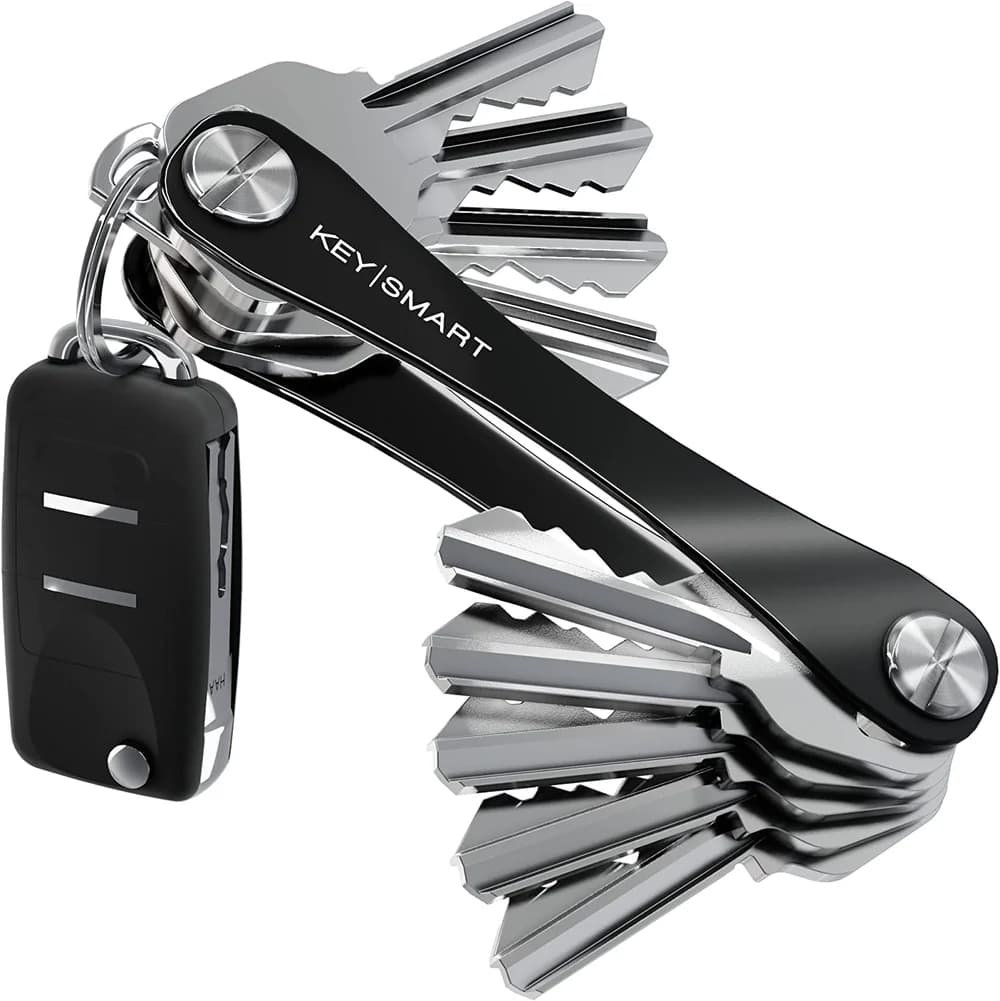
Keys fold into the frame like a pocket knife — flip out the one you need. Photo: KeySmart
Our verdict
Yes — KeySmart fixes a hundred-times-a-day annoyance so cleanly you'll forget keys ever jingled: flat, silent, one-handed, and organized by muscle memory. Five minutes of assembly is the entire cost; two million carriers and a decade of the category it invented say the trade is worth it.
The short version
The keyring hasn't been redesigned since the Victorians: a loose jangle that shreds pocket linings, scratches phones, and announces you down every hallway. KeySmart is the pocket-knife answer — up to ten keys stack between two aluminum plates on adjustable-tension screws, folding away silently and flipping out one-handed like a blade. Add-ons hook onto the frame: a loop for the car fob, a bottle opener, a USB drive. Your pocket gets flatter, quieter, and organized in the exact way the junk-drawer keyring never was.
Pros & cons
Pros
- Silences the jingle completely — keys fold inside the frame
- Flat profile ends pocket bulge and phone scratches
- Flip out the right key one-handed, by position
- Holds 2-10 keys with adjustable screw tension
- Loop attachment carries the car fob outside the stack
- Aircraft aluminum shrugs off years of pocket life
Cons
- Five minutes of screwdriver assembly at setup
- Oversized or thick keys may need the included spacers
- Car fobs ride the loop — they don't fold inside
How it works
Stack your keys
Keys thread onto the two posts between the aluminum plates — order them by how often you use each.
Set the tension
Tighten the screws until keys swing smoothly but hold position; spacers fill leftover width.
Flip like a pocket knife
Thumb out the key you need by feel; everything else stays folded, flat and silent.
Who it's for
- Anyone carrying four-plus keys and a shredded pocket
- People whose keys have scratched a phone or two
- Quiet-pocket professionals: nurses, teachers, realtors
- EDC minimalists who organized everything but the keys
The keyring is a design failure you stopped noticing
Count the daily costs of the loose ring: pockets wear through at the corner where keys grind; phone screens meet key teeth in bags; finding the right key becomes a squint-and-rotate ritual; and the jingle telegraphs every movement. None of these are big problems — which is why nobody fixes them — but all of them are constant.
The folding-frame design deletes them as a category: teeth face inward against each other, the profile flattens to pocket-knife dimensions, and keys live at fixed positions so muscle memory replaces searching. It's the same quality-of-life math as a tidy cable brick — small friction, removed forever.
KeySmart vs the ring, the pouch and the clip
Leather key pouches silence the jingle but keep the fumble — keys still swim in a bag. Belt clips and carabiners relocate the problem to your hip. The folding frame is the only form that fixes retrieval too: each key flips out from a known slot, one-handed, which turns out to be the feature owners rave about most after the silence.
The honest trade-offs: initial assembly takes five minutes and a small screwdriver; unusually thick or head-heavy keys want the included spacers to sit flush; and modern car fobs — too fat to fold — hang from the loop attachment instead, which still beats them swinging loose on a ring.
Setup tricks for a perfect stack
Order matters: put your most-used key at an outside position where your thumb finds it blind, house keys next, rarities in the middle. Tension is right when a key flipped out stays out — too loose and keys fan open in the pocket, too tight and one-handed flip fails. Re-snug the screws once after the first week as things settle; a dab of thread-locker makes it permanent.
The accessory ecosystem is worth a look while you're at it: the loop for the fob is near-mandatory, the bottle opener earns its slot at every barbecue, and a small tile-style tracker sandwiched in the stack solves lost-keys forever. Keep total width within the posts' rating and the frame stays rattle-free for years. Once the keys are silent and organized, the next everyday-carry pain that jumps out is usually the tangled pile of charging cables on the nightstand and desk — a weighted CordBrick 8-in-1 cable organizer is the same species of fix (single object, physics does the work, no adhesive) and pairs naturally with a KeySmart in an EDC upgrade weekend.
Frequently asked questions
How many keys does KeySmart hold?
From 2 up to about 10 standard keys between the plates, with included spacers to fill unused width. Expansion posts exist for bigger stacks, though most pockets are happiest under eight.
What about my car key fob?
Fobs are too thick to fold inside — they attach via the loop accessory so the fob rides flush against the frame instead of swinging on a ring. Slim valet blades often do fold in.
Is it hard to set up?
About five minutes with the included hardware: thread keys onto the posts, add spacers, tighten to taste. Re-snug once after a week of carry.
Will keys swing out in my pocket?
Not with the tension set right — the screws adjust exactly how firmly keys hold position. It should take a deliberate thumb-flip, not pocket friction, to open one.
Does it work with weirdly shaped keys?
Standard house and office keys fit natively; oversized heads and thick security keys usually work with spacers, and truly odd ones can hang from the loop alongside a fob.
Is it TSA-friendly?
It's a key organizer, so the keys themselves fly fine — but if you add the pocket-knife-adjacent accessories (like certain multi-tools), check them like any blade.
When you buy through links on this page, TopCrate may earn an affiliate commission at no extra cost to you. Specifications reflect the manufacturer's listing. Prices accurate as of publish time.