TRENDING ON AMAZON
HOKA Bondi 8 Max Cushion Road Running Shoe Review: Is It Worth It?
HOKA's max-cushion Bondi 8 with a 36mm stack of foam and extended heel geometry — the walker-friendly, plantar-fasciitis-friendly cloud that made HOKA a household name.
Quick answer: Yes — the HOKA Bondi 8 is worth it if 'my feet hurt' or 'my knees hate pavement' is why you're shoe shopping. Max cushion, rocker geometry and a shape that's been refined through eight generations make it the default recommendation for nurses, teachers, walkers, recovery runners and joint-pain sufferers. Order Wide if you're not sure, break them in over a week, and they'll change how the end of your day feels. The comfort shoe with a legit running-shoe pedigree.
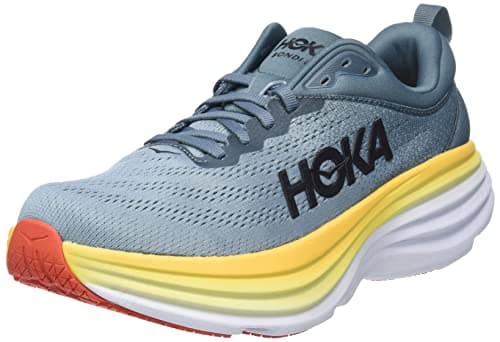
Product image from the Amazon listing.
Our verdict
Yes — the HOKA Bondi 8 is worth it if 'my feet hurt' or 'my knees hate pavement' is why you're shoe shopping. Max cushion, rocker geometry and a shape that's been refined through eight generations make it the default recommendation for nurses, teachers, walkers, recovery runners and joint-pain sufferers. Order Wide if you're not sure, break them in over a week, and they'll change how the end of your day feels. The comfort shoe with a legit running-shoe pedigree.
The short version
HOKA's Bondi line is the shoe that made 'max cushion' mainstream, and the Bondi 8 is the version that most people are still buying today. It's a road running shoe by category, but the reason it's beloved is broader: nurses and teachers on 12-hour shifts, plantar fasciitis and heel spur sufferers, walkers, recovery-day runners, and anyone whose knees don't love hard pavement. The 8 refresh added an extended heel geometry (softer landing), a redesigned EVA midsole, and a more breathable upper — small updates over the Bondi 7 with real comfort payoffs. The 36mm heel / 30mm forefoot stack height feels like walking on air, and the trademark HOKA rocker geometry keeps you moving forward with less push-off effort. It's not a speed shoe, and it's not for narrow feet — but for the specific 'my feet hurt at the end of the day' problem, it's the shoe every physical therapist eventually recommends.
Pros & cons
Pros
- 36mm heel / 30mm forefoot — max cushion in the category
- Extended heel geometry for a softer landing
- Rocker sole reduces push-off effort
- Excellent for walking, standing shifts and recovery running
- Widely recommended for plantar fasciitis and heel pain
- Available in Wide sizing for broad feet
Cons
- Runs narrow in standard width — order Wide if unsure
- Not a speed shoe — too much cushion for sub-5-min miles
- Foam feels firmer than earlier Bondi versions to some users
Why people love it
Match the width to your foot
The standard Bondi 8 fits narrow-to-medium feet; broad or medium-plus feet should order the Wide variant. Getting width right is the single most important sizing decision.
Break in over 3-5 wearings
The rocker geometry and stack height feel unfamiliar for the first few hours of wear. Use them for walking or shorter runs during break-in; by hour 10-15 they feel completely natural.
Rotate for high mileage
Foam midsoles compress fastest at 300-400 miles. For heavy runners, rotate with a second pair to let foam recover between wears — this doubles the useful life of both.
Who it's for
- Nurses, teachers, retail workers on their feet all day
- Plantar fasciitis and heel-pain sufferers
- Recovery-day runners and easy-pace long-distance
- Older runners protecting knees and joints
Why HOKA built the Bondi — and how it changed running shoes forever
When HOKA (originally Hoka One One) launched in 2009, running shoe orthodoxy was minimalism: thinner soles, lower drops, closer-to-the-ground feel. HOKA's founders — two French ultra-runners who wanted a shoe that could survive 100-mile mountain races — went the opposite direction. They stuffed running shoes with unprecedented amounts of foam, creating a 'maximalist' shoe with 30+ mm of cushioning where competitors offered 15-20mm. The initial reaction was ridicule; the shoes looked absurd. Within 5 years they were mainstream, and today max-cushion is a category every major shoe brand competes in.
The Bondi is HOKA's flagship road max-cushion shoe, and the Bondi 8 refined the formula to a mature product. The 36mm heel stack is more than double what a traditional running shoe offers, and the extended heel geometry means the foam extends behind the actual heel to soften landing angles. The rocker sole (upward curve at the toe) means each step glides forward with less push-off effort — walkers describe it as 'feeling propelled.' The result is a shoe that reduces joint impact and effort at the cost of the ground-feel that minimalist runners value. For the millions of people who don't care about ground feel — nurses, walkers, older runners, joint-pain sufferers — it's simply a more comfortable shoe.
HOKA Bondi 8 vs Brooks Ghost Max vs New Balance More v4: the max-cushion race
The max-cushion category has consolidated into three main options at similar price points, and each has legitimate strengths. HOKA Bondi 8 is the standard-bearer — highest stack (36mm), signature rocker geometry, widest availability, best-known name. Brooks Ghost Max is the responsive alternative — 39mm stack but firmer foam, more traditional feel, less rocker, popular with heel-strikers who want protection without floating. New Balance Fresh Foam X More v4 is the plush pick — softest foam of the three, comfortable but slightly less durable at high mileage, wider standard fit for broad feet.
Choose HOKA Bondi 8 for the classic max-cushion + rocker experience, especially if you're primarily walking or doing recovery-pace running. Choose Brooks Ghost Max if you want max stack but a firmer, more responsive ride — better for runners who still want some ground feedback. Choose New Balance More v4 for the softest foam and if you have broader feet that don't fit Bondi's narrow standard width. All three are excellent; the differences matter mostly at the extremes of use case. For daily walking and easy-pace running, Bondi 8 is the safest first pick. Pair with under-desk walking on a walking pad if you're building daily-steps habit alongside outdoor use.
Getting the most out of Bondi 8: fit, break-in, rotation and when to replace
Fit is the single biggest determinant of Bondi satisfaction. The standard width runs narrow — order Wide if you have anything but narrow feet, especially if you plan to use the shoe for standing shifts (feet swell 5-10% by end of day) or hot-weather use. Break-in takes 3-5 wears — the rocker geometry feels unfamiliar at first and the foam softens slightly with initial use. Wear them for walking or shorter runs during break-in, and by hour 10-15 they feel completely natural. If they never feel natural, either the width is wrong or the shape isn't for your foot; return within the retailer's window rather than pushing through discomfort.
For heavy runners, rotate the Bondi 8 with a second pair to extend foam life. Foam midsoles compress temporarily under load, then re-expand over 24-48 hours; rotating pairs means each foam gets full recovery time and lasts 20-30% longer overall. For standing workers, no rotation is necessary — just replace annually or when foam feels notably firmer. Insoles are removable, so pair with a custom orthotic if you have plantar fasciitis or specific arch issues — the removable insole space is generous enough to accommodate most PT-prescribed inserts. When it's time to retire the Bondi 8, don't donate them to walking use; the foam is compressed and provides less joint protection than a fresh shoe. Recycle them and buy new.
See HOKA Bondi 8 on Amazon
Check the latest price, photos and buyer reviews on Amazon.
Check Price on Amazon →Sold and shipped by AmazonFrequently asked questions
Is the HOKA Bondi 8 worth it, and who is it actually for?
Yes — the HOKA Bondi 8 is worth it if 'my feet hurt at the end of the day' or 'my knees don't love pavement anymore' is the sentence you'd use to describe why you're shoe shopping. The 36mm cushion stack and rocker geometry take pounding off the joints in a way that lower-stack shoes can't match. It's the default recommendation for nurses, teachers, retail workers, walkers, plantar fasciitis sufferers, older runners, and anyone doing easy-pace recovery running. Where it's NOT worth it: if you're a fast, competitive runner chasing sub-5-minute miles, the stack height is overkill and slows you down. For speed work, look at HOKA Rocket X or a firmer daily trainer. For walking, standing, easy runs and joint protection, Bondi 8 remains the go-to.
HOKA Bondi 8 vs Bondi 9 vs Clifton 9 — which HOKA should I buy?
Bondi 8 and Bondi 9 are near-siblings — the 9 is HOKA's newest refresh with slightly refined foam and a slightly updated upper, but the differences are small. If Bondi 8 is on sale (it usually is now that the 9 is out), buy the 8; you're getting 95% of the same shoe for less. The HOKA Clifton 9 is a lower, lighter, faster cousin — same rocker geometry and cushion philosophy, but 30mm heel stack instead of 36mm, better for shorter runs and daily wear where max cushion isn't the point. For walking-plus-standing plus recovery running, Bondi 8. For daily runs and shorter walking days, Clifton 9. For a firmer, more responsive feel, look at Mach or Rincon.
Do HOKA Bondi 8 shoes run true to size, and should I get the Wide version?
Length runs true to size — order your standard shoe size. Width runs slightly narrow in the standard variant, especially through the midfoot. Recommendation: if you have narrow-to-medium feet and no history of foot-swelling issues, standard width works. If you have medium-wide-to-wide feet, or if you've ever felt cramped in another running shoe, order the Wide (2E for men, D for women) — HOKA's Wide is properly wide, not just marginally different. Standing shifts, hot-weather use and long runs all cause feet to swell 5-10% by end of day, so err toward the wider option if you're between sizes.
Are HOKA Bondi 8 shoes good for plantar fasciitis?
Yes, they're one of the most commonly recommended shoes for plantar fasciitis by podiatrists and physical therapists. The reason isn't magic; it's the specific combination of high stack height (36mm), soft cushioning, and rocker geometry that reduces the tensile stress on the plantar fascia during heel strike and toe-off — the two movements that trigger fasciitis pain. Combined with a good orthotic (many PT-recommended options fit inside the Bondi's removable insole space), the shoe is often part of a first-line non-surgical treatment plan. It's not a cure — plantar fasciitis needs stretching and often physical therapy — but it dramatically reduces day-to-day pain during recovery. If your feet are actively inflamed, pair the shoe with a RENPHO foot massager at night for the fastest symptom relief.
How long does the HOKA Bondi 8 last, and when should I replace it?
For running: 300-500 miles before the foam compresses meaningfully. For walking and standing use: 400-600 miles or roughly 8-12 months of daily wear. The tell is the foam feeling firmer and less cushiony than it did new — that's compression rather than actual damage, and it means the shoe has lost its shock absorption. Runners often rotate two pairs to extend the foam's useful life. Standing workers can usually just replace annually. Once the foam is dead, the shoe still looks fine visually but stops providing the joint protection you're wearing HOKAs for; that's the moment to buy a fresh pair.
Can I use HOKA Bondi 8 for walking, hiking or the gym?
Excellent for walking and casual gym use; not ideal for hiking or lateral sports. Walking: probably the single best use case for the Bondi 8 — the max cushion is more valuable at walking pace than at running pace, and the rocker sole makes long walks feel effortless. Casual gym: fine for treadmill, stationary bike, easy strength training. Not recommended for: hiking on uneven terrain (the high stack height reduces ankle stability), lateral sports (basketball, tennis, pickleball — the tall midsole increases roll risk), or serious strength training with heavy weights (a flatter, more stable shoe is safer for squats and deadlifts). For those, wear a different shoe and save the Bondis for walking and running.
As an Amazon Associate, TopCrate earns from qualifying purchases at no extra cost to you. HOKA Bondi 8 is a comfort/performance shoe, not a medical device. Persistent foot pain should be evaluated by a podiatrist or physical therapist. Product image, price, availability and ratings are shown on Amazon and are subject to change.