TRENDING ON AMAZON
Hoka Clifton 9 Running Shoes Review: Is It Worth It?
The maximum-cushion daily trainer that made Hoka a household name — soft, light, and rocker-shaped for effortless miles.
Quick answer: The Clifton 9 is the shoe that made Hoka mainstream — massive cushioning at daily-trainer weight, with a rocker geometry that genuinely reduces effort per stride. For anyone with joint pain, all-day-standing jobs, or a beginner running habit, this is one of the highest-leverage shoes you can buy.
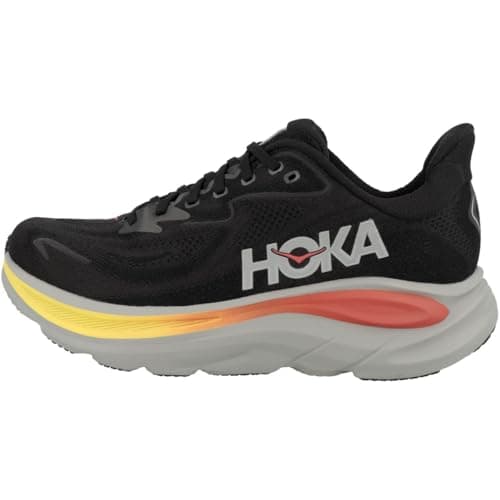
Product image from the Amazon listing.
Our verdict
The Clifton 9 is the shoe that made Hoka mainstream — massive cushioning at daily-trainer weight, with a rocker geometry that genuinely reduces effort per stride. For anyone with joint pain, all-day-standing jobs, or a beginner running habit, this is one of the highest-leverage shoes you can buy.
The short version
The Clifton 9 is Hoka's flagship daily trainer — 32mm of soft EVA foam in the heel, an early-stage MetaRocker sole that literally rolls you forward, and one of the lightest maximum-cushion shoes on the market at about 8.7 oz. It's the shoe that converts runners, walkers, and nurses to the Hoka aesthetic — chunky-looking on the shelf, but genuinely magical to walk or run in. If your knees hurt from thin-soled shoes, this is the fix everyone's been talking about.
Pros & cons
Pros
- Massive cushioning (32mm heel) reduces joint impact
- MetaRocker sole rolls you forward — feels effortless
- Lightweight for a max-cushion shoe (~8.7 oz)
- Comfortable for all-day standing (nurses, teachers)
- Wide toe box in 'Wide' width version
- Great for high-mileage runners and walkers alike
Cons
- Chunky look isn't for everyone
- Softness reduces ground feel — bad for trail
- Sole wears faster than firmer shoes
Why people love it
Massive EVA cushion
32mm of soft compressed EVA foam in the heel and 27mm in the forefoot absorbs impact from footstrike, reducing shock through the knees and hips.
Early-stage MetaRocker sole
The sole is curved upward at both ends — think of a rocking chair — which literally rolls your foot forward through the stride, reducing the effort of push-off.
Extended heel geometry
The heel extends slightly beyond the back of the foot to smooth heel strikes and encourage a rolling transition rather than an abrupt landing.
Who it's for
- Runners with knee or joint pain
- Nurses, teachers, and anyone on their feet all day
- Beginner and casual runners
- Walkers wanting maximum cushioning
Why max-cushion shoes like the Hoka Clifton took over running (and where they don't work)
Ten years ago, the 'barefoot' or minimalist running movement was ascendant — thin-soled shoes were sold as the 'natural' answer to injury prevention, on the theory that we evolved to run without cushioning. Then the pendulum swung completely the other way. Studies started showing that max-cushioned shoes reduced impact forces at footstrike by 15-30% versus traditional shoes, and injury rates for recreational runners dropped meaningfully in max-cushion models. Hoka was the pioneering brand of this shift, and the Clifton (introduced in 2014) was its breakout everyday model — 30mm+ of foam at a lightweight sub-9 oz weight, when the running-shoe industry standard was 20mm at 10 oz.
Where max-cushion shoes don't work: technical trails (too much softness = too little ground feel), sprint work (too soft = too much energy loss), and for a small subset of runners whose specific biomechanics prefer firmer contact. For the vast majority of everyday runners, walkers, and standers, max cushion is unambiguously better for joint health — enough that even 'firm' running shoe brands like Brooks, Asics, and Saucony have all moved toward more foam in the past 5 years. The Clifton is the shoe that mainstreamed this idea, and it remains the reference point for the category.
Hoka Clifton 9 vs Brooks Ghost 15 vs Asics Novablast 4: how the big daily trainers compare
The Clifton 9's main competitors are the Brooks Ghost 15 and the Asics Novablast 4 (or its successor the Novablast 5) — all three are max-cushion neutral daily trainers in the same $130-150 price range. Clifton is the lightest (about 8.7 oz) and has the most aggressive rocker geometry — you feel the forward roll most clearly. Brooks Ghost is slightly firmer with a more traditional running feel — better for runners who want less 'wobble' underfoot. Asics Novablast is bouncier and more energetic — uses FF Blast+ foam that returns more energy per stride, at the cost of slightly less plush comfort.
For strict comfort-first daily running or all-day standing, Clifton wins on cushion. For a more classic running feel with slightly better stability, Brooks Ghost. For a more responsive, bouncy ride that still has plenty of cushion, Asics Novablast. If you can, try all three on at a running store — foot shape and gait preferences matter more than specs. Online, if you can only pick one blind: Clifton is the safest choice for most people, and it's the most consistently praised for comfort by non-runners (nurses, walkers, people with knee pain).
How to run and walk in Hoka Cliftons (and what to expect the first month)
First-time Hoka runners often notice two things immediately: the cushion feels almost surreally soft, and the shoe wants to roll them forward. The MetaRocker sole is designed to encourage a mid-to-forefoot landing pattern rather than a hard heel strike — you don't need to actively change your gait; the shoe does it. Some people also feel slightly unstable in the first few runs because the tall, soft foam allows more ankle wobble than a firm shoe. This adaptation resolves in 3-5 runs as your ankles adjust. If you have a history of ankle instability, get the Arahi (Hoka's stability model) instead.
For walkers and standers, expect immediate benefits — the cushion reduces heel-strike pain, and the rocker reduces calf strain over long standing sessions. For runners transitioning from a traditional shoe, do easy runs for the first week to let your calves adjust to the different push-off angle (some report mild calf tightness the first few runs; it resolves quickly). For high-mileage runners, plan on replacing at ~400 miles — the Hoka softness compresses faster than firmer shoes, and running in dead Hokas is worse than running in fresh traditional shoes. Rotate two pairs if you run 4+ times a week.
See Hoka Clifton 9 on Amazon
Check the latest price, photos and buyer reviews on Amazon.
Check Price on Amazon →Sold and shipped by AmazonFrequently asked questions
Are Hoka Clifton shoes actually good for your knees, or is it hype?
Genuinely good, not hype. The massive EVA foam cushioning reduces impact forces at footstrike by 15-30% compared to typical running shoes (studies vary), and the MetaRocker sole reduces the range of motion demanded from ankles and knees during the gait cycle. For people with meniscus wear, mild arthritis, plantar fasciitis, or IT band issues, the difference is significant and often felt within a week. That said: they don't fix everything, and some knee issues are exacerbated by extremely soft shoes (which can allow foot pronation). For most people with generic knee wear, they help. If you have a specific injury, see a running store or physiotherapist.
Clifton 9 vs Bondi 8 vs Arahi 7 vs Mach 5: which Hoka should I buy?
Clifton 9 is the daily driver — moderate cushion (32mm), moderate weight (8.7 oz), works for running, walking, and standing all day. This is the right first Hoka for most people. Bondi 8 is the max-cushion pillow — 34mm of foam, heavier (10.7 oz), designed for maximum plush comfort at the cost of responsiveness. Get Bondi if you want the softest possible Hoka for standing all day or slow running. Arahi 7 adds a stability post for overpronators (people whose feet roll inward). Mach 5 is the speedier Hoka — lighter, firmer, more responsive — for tempo runs and faster paces. For 80% of buyers, Clifton is the right answer.
Are Hoka Cliftons good for standing all day at work?
Yes — nurses, teachers, retail workers, and hospital staff make up a huge chunk of Hoka's customer base for this exact reason. The cushioning and rocker geometry that reduce impact for runners also reduce fatigue and foot pain for standers. Get the wide version if you have wider feet or plan to be on your feet 12+ hours. Consider a Bondi 8 if you're primarily standing (not running) — it's plusher. Cliftons in white/black are dress-code-friendly for most hospitals. Many nurses report they replace their Cliftons every 6-9 months of daily hospital use and can't imagine going back.
How do Hokas fit? True to size?
Cliftons fit true to size in length for most people, with a slightly narrow-to-medium width in the standard version. If you have wide feet, order the 'Wide' version (marked '2E' for men, 'D' for women). The toe box is more generous than older Hoka models. If you're between sizes, size up half — you want room in the toe box for foot swelling during longer runs or walks. Check Hoka's specific model chart on Amazon before ordering, and consider the specific version (9 vs 8 vs 7 — models change slightly each generation).
How long do Hoka Cliftons last?
Realistically 300-500 miles of running, or 6-9 months of daily standing/walking use. The soft EVA foam that makes them so comfortable also compresses faster than firmer traditional running-shoe foams. You'll notice the shoe getting flatter, less bouncy, and eventually the outsole rubber wearing thin. Signs to replace: cushioning feels dead, sole shows wear-through in the heel or forefoot, or your knees/joints start hurting again. For $130-150, this is 30-50 cents per day of comfort — reasonable for most, expensive if you're on a tight budget.
Are they good for trail running or hiking?
For trails, get Hoka's trail models (Speedgoat, Challenger, or Torrent) rather than the road-focused Clifton. The Clifton's outsole isn't designed for grip on wet rocks, roots, or mud, and the massive cushioning reduces ground feel — which is fine on roads but can cause ankle instability on uneven trails. For light gravel paths or well-groomed trails, Cliftons work; for anything technical, choose a trail-specific Hoka. The Speedgoat is Hoka's most popular trail shoe — same rocker geometry, aggressive lug outsole, and slightly firmer feel.
As an Amazon Associate, TopCrate earns from qualifying purchases at no extra cost to you. Product image, price, availability and ratings are shown on Amazon and are subject to change.