TRENDING ON AMAZON
Hario V60 Ceramic Coffee Dripper Review: Is It Worth It?
The 60-degree conical dripper that turned pour-over into a global standard — clear, sweet single-cup coffee for under $25, and the same tool the pros use.
Quick answer: Yes — the Hario V60 is worth it, and it's the upgrade we'd recommend to almost anyone drinking black coffee at home. The specialty coffee standard, under $25, with a small learning curve that pays back every morning. Pair it with a gooseneck kettle and a burr grinder and you're brewing at cafe quality for pennies a cup.
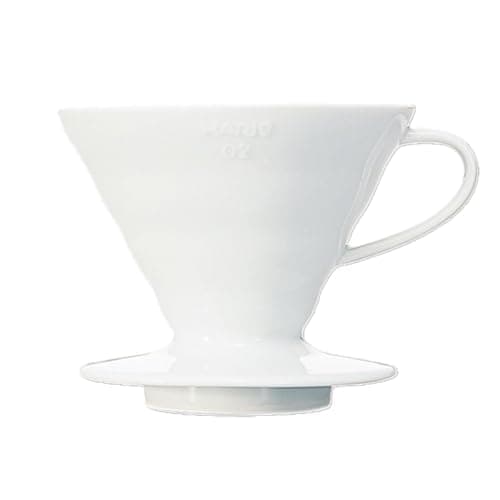
Product image from the Amazon listing.
Our verdict
Yes — the Hario V60 is worth it, and it's the upgrade we'd recommend to almost anyone drinking black coffee at home. The specialty coffee standard, under $25, with a small learning curve that pays back every morning. Pair it with a gooseneck kettle and a burr grinder and you're brewing at cafe quality for pennies a cup.
The short version
The Hario V60 is what modern specialty coffee is built on. A 60-degree conical shape, one big center hole and spiral ridges that let steam escape as water flows down — that geometry produces a cleaner, sweeter, more nuanced cup than any drip machine. The ceramic version is the classic and the one baristas own at home. Pair it with a decent gooseneck kettle, medium-ground coffee and paper filters and you're brewing at the same level as a $6 pour-over at any third-wave cafe, for pennies a cup. It's also stupidly simple: no electronics, no maintenance, nothing to break — a piece of ceramic that will outlast every coffee machine you've ever owned.
Pros & cons
Pros
- Legendary geometry — cleaner, sweeter cups than drip machines
- Ceramic version retains heat well for even extraction
- Simple, no electronics or moving parts
- Fits on nearly any mug or carafe
- Under $25 for the tool the pros use
- Encourages a slow, satisfying morning ritual
Cons
- Requires a gooseneck kettle and paper filters for best results
- Ceramic can crack if dropped
- Learning curve for the pour technique
Why people love it
Rinse the filter, add coffee
Place a V60 paper filter in the dripper, rinse with hot water (kills the paper taste and preheats the ceramic), then add medium-ground coffee — about 15g per 250ml water for a strong single cup.
Bloom the grounds
Pour just enough hot water (~205°F / 96°C) to wet all the grounds. Wait 30-45 seconds — you'll see the coffee 'bloom' as it releases CO2. This is critical for a sweet, non-sour cup.
Pour in slow spirals
After the bloom, pour the rest of the water in slow spirals from center outward, keeping the bed even. Total brew time should be 2:30-3:30 for a balanced cup. Discard filter, drink.
Who it's for
- Anyone graduating from a drip machine or Keurig
- Coffee lovers who want cafe-quality at home
- Small kitchens without space for a big machine
- People who like a slow, tactile morning ritual
Why the V60 became the specialty coffee standard
Pour-over coffee is not new — it dates to the early 1900s. What made the V60 different, when Hario released it in 2004, was that its geometry was designed by baristas for baristas. The 60-degree cone, the single large center hole, and the internal spiral ridges together give the person brewing direct control over the water's flow through the coffee bed. In practice this means small changes in pour technique produce meaningful changes in flavor — which is exactly what a skilled brewer wants.
The V60 arrived at the exact moment third-wave specialty coffee was breaking out of Portland and San Francisco. Cafes needed a repeatable manual method to showcase single-origin beans, and the V60 delivered clarity of flavor that drip machines couldn't. Over the next decade it became the de facto standard at competitive brewing events (World Brewers Cup finals routinely feature V60s), the tool taught in barista training programs, and the pour-over most home coffee enthusiasts start with. Today, if you walk into a specialty cafe anywhere in the world and order pour-over, statistically the barista is using a V60. That's the ultimate credential.
Hario V60 vs an espresso machine vs a French press: which upgrade is right?
Home coffee upgrades come at three price tiers. A French press — or an AeroPress — is the cheapest and produces heavy-bodied, immersion-brewed coffee. A V60 is the mid-tier and produces clean, complex pour-over. An espresso machine like the Breville Barista Express is the biggest jump — hundreds to thousands of dollars for genuine espresso, milk drinks and lattes. Each has a place, and the right upgrade depends on what you actually drink.
If you drink your coffee black, want to taste single-origin bean character, and enjoy a slow morning ritual, the V60 is the right upgrade — it's the tool that most transforms 'okay black coffee' into 'cafe-quality single-origin at home' for the smallest investment. If you drink lattes and cappuccinos daily, no pour-over replaces an espresso machine. If you want cheap, no-fuss, unfussy strong coffee, French press or AeroPress. For most people expanding beyond drip, V60 is the smart first upgrade — cheap, easy to learn, and directly correlated with cafe experience quality.
How to brew a great V60 (and common beginner mistakes)
The recipe is disarmingly simple: 15g medium-fine coffee, 250g water at 205°F (96°C), 30-second bloom with just enough water to wet all grounds, then slow spiral pours from center outward until total brew time hits 2:30-3:30. That's it. What breaks the recipe is technique details: pouring too fast, uneven water distribution, wrong grind size, or forgetting to preheat the dripper and rinse the filter.
The three most common beginner mistakes are: (1) using pre-ground coffee — coffee stales fast, and pre-ground from a week ago tastes flat. Buy whole beans and grind fresh with a burr grinder. (2) Skipping the bloom — pouring all the water at once produces sour, underextracted coffee. The 30-second bloom pre-wets the grounds and releases CO2 so water can penetrate evenly. (3) Wrong water temperature — boiling water burns the coffee (bitter), lukewarm water underextracts (sour). Aim for water off the boil for about 30 seconds, or use a temperature-controlled kettle set to 205°F. Nail these three and your V60 cup will taste like a good cafe's.
See Hario V60 on Amazon
Check the latest price, photos and buyer reviews on Amazon.
Check Price on Amazon →Sold and shipped by AmazonFrequently asked questions
Why is the Hario V60 the standard in specialty coffee?
Three geometric details do all the work. First, the 60-degree cone angle (which the V60 name refers to) directs water flow through the coffee bed at a specific speed. Second, a single large hole at the bottom lets the barista control flow rate through pour speed rather than the dripper — this is what gives skilled brewers control. Third, spiral ridges on the inner wall create channels for CO2 to escape during the bloom and prevent the filter from sticking, which improves extraction evenness. The result is a cup with more clarity, sweetness and defined flavor notes than a flat-bottom dripper or a drip machine can produce.
Do I really need a gooseneck kettle, or can I use a regular one?
You need something that pours in a controlled thin stream — that's the practical requirement, and a gooseneck kettle nails it. A regular kettle dumps water too fast and uneven, which channels through the coffee bed and produces sour, underextracted cups. Any decent gooseneck kettle in the $30-40 range works. If you're serious about coffee, upgrade to a variable-temperature electric gooseneck like the Fellow Stagg EKG — the temperature control alone is worth it, and it doubles as a beautiful piece of desk hardware.
Hario V60 vs Chemex vs Kalita Wave: which pour-over should I buy first?
They're three different brewers with real personality differences. The V60 is the most forgiving learning curve for single cups and produces the brightest, most nuanced flavor. The Chemex is a taller, thicker-filter brewer for making 3-6 cups at once — cleaner, more polished, less nuanced. The Kalita Wave has a flat bottom and three small holes — very forgiving of technique, great for beginners, slightly less flavor complexity than the V60. For single-cup, start with the V60. For batch brewing, start with the Chemex. For maximum forgiveness while learning, the Kalita.
Ceramic, glass, plastic or metal V60 — which is best?
Ceramic is the classic and the barista's home choice. Its main advantages are heat retention (which improves extraction consistency) and a satisfying, permanent feel. Glass is functionally similar to ceramic but heats slightly faster and is more fragile. Plastic is cheap, unbreakable and travel-friendly, but insulates well enough for consistent brewing at home too. Metal (copper or stainless) looks beautiful but requires a hotter pour temperature since it draws heat away from the coffee. For most people, ceramic is the pick — durable, beautiful, and the closest to the barista experience.
What paper filters do I need, and can I use a metal reusable filter?
Use genuine Hario V60 paper filters — the size and shape are matched to the dripper. The white filters are more common and produce a cleaner cup; the natural (brown) filters are unbleached and require extra rinsing to avoid a papery taste. Metal reusable V60 filters exist and produce a heavier-bodied, silt-included cup similar to French press — some people love it, most specialty drinkers prefer paper for the clarity. Paper is cheap enough (~$8 for 100 filters) that reusables aren't a compelling save.
How much coffee and water should I use — and what's the brew time?
The starting recipe: 15g of medium-fine ground coffee to 250g water for a single strong cup, aiming for a total brew time between 2:30 and 3:30. Ratios of 1:15 to 1:17 (coffee to water) are the specialty coffee sweet spot — 1:15 for strong, 1:17 for lighter. If your brew is sour, the extraction was too short (grind finer or pour slower). If it's bitter, extraction was too long (grind coarser or pour faster). A cheap kitchen scale is genuinely the single upgrade that improves consistency more than any other.
As an Amazon Associate, TopCrate earns from qualifying purchases at no extra cost to you. Product image, price, availability and ratings are shown on Amazon and are subject to change.