TRENDING ON AMAZON
AeroPress Original Coffee Press Review: Is It Worth It?
The plastic coffee press that world-class baristas actually use at home — makes a genuinely great cup in about a minute.
Quick answer: The AeroPress is a rare object: cheap, indestructible, and world-class at what it does. Buy one, spend a week finding your recipe, and you'll be drinking better coffee than most cafés for years.
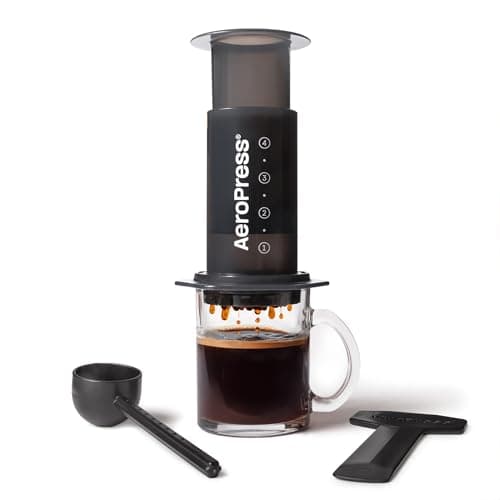
Product image from the Amazon listing.
Our verdict
The AeroPress is a rare object: cheap, indestructible, and world-class at what it does. Buy one, spend a week finding your recipe, and you'll be drinking better coffee than most cafés for years.
The short version
The AeroPress looks like an oversized syringe and makes better coffee than devices costing 20x as much. Ground coffee sits in the chamber, hot water goes in, you plunge — a paper filter catches the grounds and you get a clean, low-acid cup that's somewhere between filter coffee and espresso. It's the reason there's an annual World AeroPress Championship: this $40 tool routinely beats fancy setups in blind tastings.
Pros & cons
Pros
- Genuinely excellent cup in under 2 minutes
- Nearly indestructible — great for travel and camping
- Low-acid, clean-tasting extraction
- Wash in 10 seconds — press the puck into the bin
- Endless recipe variations (inverted, standard, cold brew)
- Metal filter option available for a French-press style cup
Cons
- Makes single cups only — not a pot
- Takes practice to find your favorite recipe
- Paper filters are a small ongoing cost
Why people love it
Ground coffee in the chamber
Put a paper filter in the cap, add your grounds (medium-fine, similar to table salt) and screw the cap onto the chamber.
Water in, quick stir
Pour hot water (~175-205°F) over the grounds, give it a quick stir, and let it steep 30-90 seconds depending on your recipe.
Plunge into your cup
Place the chamber over your mug and press slowly and steadily for 20-30 seconds. Twist off the cap, eject the puck of used grounds, rinse — done.
Who it's for
- Anyone who wants café coffee at home
- Camping, travel and RV coffee
- Small kitchens and dorm rooms
- Coffee nerds who love recipe tinkering
AeroPress vs French press vs pour-over: what's the difference?
These three brew methods dominate home coffee, and they solve different problems. French press is full-immersion with a metal mesh filter — you get a heavy, oily, sedimenty cup with lots of body. It's easy to nail, but you're stuck with a full pot, cleaning is the messiest of the three, and the metal filter lets fine particles into the cup. Pour-over (Chemex, V60, Kalita) drips water through a paper filter for the cleanest, most delicate cup — great for showcasing single-origin beans, but the ritual takes practice and the flow rate matters a lot.
AeroPress lives between them. Paper filter like pour-over (clean, no grit), immersion steeping like French press (more forgiving of grind and timing), plus the plunge that pushes the last of the coffee through evenly. The result is a cup that's noticeably lower-acid than pour-over, cleaner than French press, and much more consistent for beginners. For one to two people making a single mug at a time, AeroPress wins on flavor, ease and cleanup. For a full pot to share, French press is faster. For maximum flavor nuance from a special bean, pour-over rewards the effort.
How to make a great cup with the AeroPress
Start with a basic recipe and iterate: 17 grams of medium-fine coffee, 250 grams of water at 205°F, standard method (not inverted). Pour the water over the grounds, stir gently for 10 seconds, wait 60 seconds, then plunge for 30 seconds. This 1:15 ratio produces a balanced cup that's a good baseline for tasting your beans. If the cup is sour and thin, grind finer or steep longer. If it's bitter and hollow, grind coarser or steep shorter. Change one variable at a time.
Once you're comfortable, try the champion-style recipes: bright, tea-like cups use lighter roasts, shorter steeps and lower water temperature; heavier, chocolatey cups use darker roasts, longer steeps and hotter water. The metal filter option (sold separately) removes the paper filter for a French-press-like body without the sediment. And for cold brew, use room-temperature water and steep for 1-2 minutes — the pressure of the plunge extracts far more from cold water than passive cold brew can. The AeroPress is a platform, not a recipe.
Is the AeroPress worth it? A durable, packable, decade-proof coffee maker
The AeroPress isn't fancy. It's plastic, it makes one cup, and it costs less than dinner. Its real value shows up over years. The classic plastic version routinely lasts a decade of daily use — there's nothing to break, no motor to burn out, no gasket that fails. Owners of 10+ year old AeroPresses are common. Compare that to a mid-range espresso machine that needs a descale every month and often dies at year five, and the cost-per-cup is negligible.
It's also the coffee tool people take on trips. It fits in a backpack, works with any heat source (camp stove, hotel kettle, boiled water on a fire), and doesn't care about power outlets. Coffee nerds who own a $2,000 espresso setup at home still bring an AeroPress on vacation because it's genuinely that good. If you make coffee once a day and want a consistently great cup with minimum fuss, the AeroPress is one of the highest value-per-dollar tools in any kitchen.
See AeroPress on Amazon
Check the latest price, photos and buyer reviews on Amazon.
Check Price on Amazon →Sold and shipped by AmazonFrequently asked questions
How is an AeroPress different from a French press?
Both immerse grounds in water, but the AeroPress uses a paper filter and pressure from the plunge — you get a cleaner, less-sediment cup that's closer to a good drip or pour-over than French press. It also brews faster (a minute or two vs 4+) and makes single servings instead of a full pot.
Is it a real espresso maker?
Not really — actual espresso needs 9 bars of pressure that a manual plunge can't hit. You can make a strong, concentrated 'AeroPress espresso-style' shot that layers well in a latte, but it isn't proper crema espresso. For real espresso, you need a pump machine.
What grind size should I use?
Medium-fine, similar to table salt — finer than drip but coarser than espresso. Too coarse and the coffee tastes weak; too fine and the plunge becomes very hard and the coffee gets bitter. If your grinder has a drip setting, start there and go slightly finer.
Standard method or inverted?
Standard method — plunge over your mug right away — is what the instructions describe and works well. Inverted (flipping the AeroPress upside down first) lets you steep longer without dripping and gives more control over extraction. Most competitive AeroPress recipes are inverted, but standard is where beginners should start.
How do I clean the AeroPress?
After you plunge, unscrew the cap and push the plunger through — the puck of used grounds ejects cleanly into the trash. Rinse the chamber, cap and filter screen. That's it — the whole thing takes about 10 seconds and is the reason people love it.
AeroPress Original vs AeroPress Go vs AeroPress XL — which should I buy?
Original is the classic size (up to 8oz) and the best all-around pick. Go is smaller and packs into its own travel cup — buy it if you'll take it on trips. XL doubles the capacity (up to 20oz) if you want a larger cup or brew for two. All make the same-quality coffee; it's really about size and portability.
As an Amazon Associate, TopCrate earns from qualifying purchases at no extra cost to you. Product image, price, availability and ratings are shown on Amazon and are subject to change.