TRENDING ON AMAZON
GoPro HERO Waterproof Action Camera Review: Is It Worth It?
The pocket-sized, waterproof, throw-it-anywhere action camera that captures buttery-smooth 4K of every adventure your phone shouldn't go on.
Quick answer: The GoPro HERO is the action camera that lets you film all the moments your phone shouldn't be there for. Waterproof, indestructible, smooth, tiny — and the gateway into one of the most useful accessory ecosystems in consumer electronics.
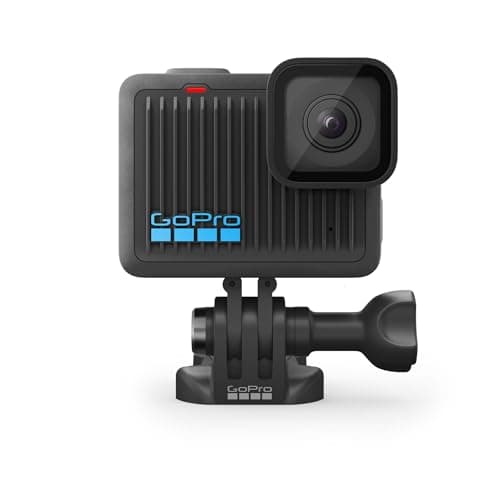
Product image from the Amazon listing.
Our verdict
The GoPro HERO is the action camera that lets you film all the moments your phone shouldn't be there for. Waterproof, indestructible, smooth, tiny — and the gateway into one of the most useful accessory ecosystems in consumer electronics.
The short version
Phones take great photos in good conditions, but a phone is the wrong tool the moment you're underwater, on a mountain bike, in the surf or hanging off a chairlift in the snow. The GoPro HERO is what the rest of your shots want — rugged enough to drop, waterproof to 33 feet without a housing, a wide-angle 4K sensor with the buttery HyperSmooth stabilization that made GoPro famous, and tiny enough to mount on a helmet, a chest strap or a handlebar. Set it and forget it, then pull it out of the bag a week later and the footage looks like it was shot by a drone.
Pros & cons
Pros
- Waterproof out of the box (33ft / 10m) — no housing needed
- HyperSmooth stabilization makes shaky footage cinematic
- 4K video and 12-megapixel photos in a tiny rugged body
- Mount it on helmets, bikes, boards, chest straps
- Voice control — say 'GoPro, start recording' hands-free
- Cloud auto-upload via subscription
Cons
- Battery life is shorter than a phone
- Pricey vs. a smartphone you already own
- GoPro subscription unlocks the cloud features
Why people love it
Pick a mount
Helmet, chest, handlebars, surfboard, dog harness — GoPro has a mount for everywhere a phone shouldn't go.
Hit record
One physical button, or say 'GoPro, start recording.' HyperSmooth handles the shaking for you.
Pull the footage
Through the GoPro Quik app or via cable — auto-upload to the cloud if you subscribe.
Who it's for
- Skiers, surfers, mountain bikers, climbers, divers
- Travel vloggers and adventure parents
- Anyone who's killed a phone trying to film something cool
- First-time GoPro buyers (it's the entry tier)
Is a GoPro worth it when your phone already shoots 4K?
Phones shoot stunning 4K — there's no point pretending otherwise. The honest pitch for owning a GoPro alongside a phone isn't resolution; it's everywhere a phone can't or shouldn't go. The GoPro lives strapped to a chest harness on a ski day, mounted to a kayak in whitewater, clamped to a mountain bike helmet, suctioned to the dashboard during a roadtrip, or following kids into the pool. Putting a $1,200 iPhone into any of those situations is a bet you'll eventually lose; the GoPro was built for them and shrugs off impacts, dust and water that would kill a phone.
The other piece phones still can't match is HyperSmooth stabilization in motion-heavy footage. Modern iPhones are excellent on a walk; GoPros are excellent on a mountain bike singletrack at speed, on a chairlift in a blizzard, or strapped to a kid's chest while they sprint. The footage feels gimballed even though it isn't. For action, sports, water, mounted POV and travel-rough conditions, the GoPro is the right tool — and most owners keep finding new excuses to take it out.
What to mount it on — the part that actually unlocks the camera
A GoPro alone is half the value; the mount ecosystem is the other half. The starter accessories most people end up with are: a chest harness (the most cinematic POV — you see your hands and feet but not your face), a head strap or helmet mount (for skiing, biking, climbing), a handlebar/seatpost clamp (cycling, motorbiking), a 3-way grip (selfie pole + tripod combo that handles ground-up shots and high angles), and a suction cup or magnetic mount (cars, dashboards, smooth surfaces). For the awkward spots the official rigid GoPro mounts can't reach — a tree branch, a car headrest, a shower door, a bike frame at a weird angle — a flexible-arm mount like the Tenikle bendable suction mount is worth throwing in the same bag; the tentacle arms with suction cups either stick or wrap, and the GoPro clip on top mounts directly. For lighting the shot itself when you're indoors or facing away from the sun — vlog talking-heads, kitchen tutorials, front-facing skincare demos where a GoPro's small sensor struggles — a clip-on ring light like the OlumiRing is the ten-dollar accessory that turns muddy indoor footage into daylight-white face light without dragging a full softbox out.
The trick most beginners miss is that the angle matters more than the device. A GoPro held at face height like a phone gives boring shots; mounted low, mounted high, mounted angled — that's where the cinematic feel comes from. A chest harness pointed slightly upward captures sky and motion. A handlebar mount tilted up captures the rider's face mid-action. Spend more time experimenting with angles than buying new accessories — one good mount in the right spot beats a drawer of unused ones. And once footage starts piling up across a phone and a GoPro, a physical archive tool like ThePhotoStick Omni is the low-friction way to consolidate every clip in one place before something gets lost.
GoPro HERO vs HERO12 Black vs Insta360 vs DJI Osmo Action: how to choose
The action-camera market has settled into a clear hierarchy. The base GoPro HERO is the right pick for casual buyers — kids in the pool, family vacations, the occasional bike or ski day. It hits the GoPro essentials (waterproof, HyperSmooth, app integration, mount ecosystem) at the friendliest price. The HERO12 Black steps up to higher frame rates (great for slow-mo), longer battery, HDR video and pro features that serious creators want.
Outside GoPro, two competitors are worth knowing. Insta360 makes 360-degree cameras that capture everything around you, then let you reframe the shot in post — game-changing for solo creators but a learning curve. DJI Osmo Action is the closest direct competitor to GoPro Black, often a bit cheaper and with strong image quality, though the accessory ecosystem isn't as deep. For most buyers asking 'which action camera,' the answer remains GoPro HERO or HERO Black depending on budget. Insta360 makes sense when 'reframe after the fact' is appealing; DJI when you want a GoPro alternative with similar specs at a slightly better price.
See GoPro HERO on Amazon
Check the latest price, photos and buyer reviews on Amazon.
Check Price on Amazon →Sold and shipped by AmazonFrequently asked questions
Do I really need a GoPro if I have a great phone?
For everyday shots? No. For getting wet, getting muddy, getting dropped, being mounted to a handlebar, or capturing a chest-pov of you skiing? Absolutely yes. A GoPro is the second camera you bring out for the situations a phone can't handle — and the stabilization is genuinely a step beyond what phones produce on bumpy surfaces.
How waterproof is it?
33 feet (10 meters) right out of the box — no separate housing needed. That's enough for snorkeling, pool play, kayaking and surf. For deeper diving, GoPro sells a dive housing rated to 196 feet (60 meters).
What is HyperSmooth and is it really that good?
GoPro's in-camera image stabilization, originally introduced on the HERO7 and refined every generation since. It uses gyro data plus image processing to lock the horizon and smooth out shake — the difference between a mountain bike clip that's nauseating and one that looks like it was shot by a drone. It's the single feature that elevated GoPro footage to broadcast-quality.
Do I need the GoPro subscription?
Not to use the camera, but it's a strong yes if you shoot a lot — it adds unlimited cloud backup, no-questions-asked camera replacement, discounts on accessories, and access to the Quik app's editing features. For frequent users it pays for itself the first time a camera gets replaced.
How long does the battery last?
About an hour to 90 minutes of 4K recording per battery, longer at lower resolutions. Every serious user buys at least one spare battery and a dual charger; that gets you a full day of shooting.
GoPro HERO vs HERO12 Black vs Insta360 — which to pick?
The base HERO is the right entry point for casual users — it does everything most people need at a much lower price. The HERO12 Black adds HDR, higher frame rates, longer battery and pro-grade features for serious shooters. Insta360's X-series is the 360-degree alternative if you want to reframe shots after the fact. Start with the HERO unless you already know you need the Black's higher-end specs.
As an Amazon Associate, TopCrate earns from qualifying purchases at no extra cost to you. Product image, price, availability and ratings are shown on Amazon and are subject to change.