HANDS-ON REVIEW
FurZapper Pet Hair Remover (2-Pack) Review: Is It Worth It?
A tacky, reusable silicone disc you toss in the washer and dryer — it pulls pet hair off your laundry so it ends up in the lint trap, not on you.
Quick answer: Yes — FurZapper is the rare as-seen-on-TV product that earns the hype, because it fixes pet hair at the only point where fixing it is free: inside the machine you were already running. Fifteen dollars, no refills, no effort, and your lint trap starts collecting what your clothes used to keep. For any shedding household — labs, shepherds, huskies, or a couple of cats sharing a comforter — it's a permanent laundry-room resident.
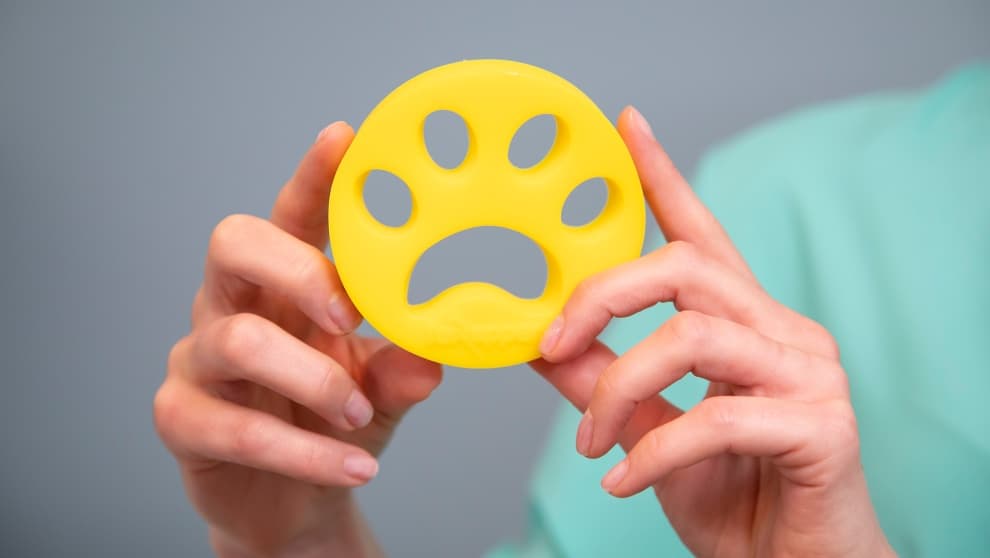
The before: pet hair that survives a normal wash cycle. FurZapper rides along and strips it off in the machine. Photo: FurZapper
Our verdict
Yes — FurZapper is the rare as-seen-on-TV product that earns the hype, because it fixes pet hair at the only point where fixing it is free: inside the machine you were already running. Fifteen dollars, no refills, no effort, and your lint trap starts collecting what your clothes used to keep. For any shedding household — labs, shepherds, huskies, or a couple of cats sharing a comforter — it's a permanent laundry-room resident.
The short version
Washing machines are bad at pet hair — wet fur clings to fabric through the whole cycle, then the dryer bakes it in. FurZapper is a paw-shaped disc of tacky, self-cleaning silicone that tumbles with your laundry: as clothes brush past it, hair sticks to the disc instead of the fabric, then rinses off in the water or blows into the dryer's lint trap. Toss it in, run your normal cycle, done. It's reusable more or less forever — wash it with soap when it dulls — and the 2-pack covers heavy-shedding households one disc per machine.
Pros & cons
Pros
- Pulls pet hair off clothes in the washer AND dryer
- Zero effort — rides along in your normal cycle
- Reusable indefinitely; rinse with soap to re-tack
- Gentle on fabrics — no hooks, spikes or static tricks
- 2-pack: one for the washer, one for the dryer
- Featured on Shark Tank; a longtime pet-owner cult buy
Cons
- Reduces hair dramatically rather than erasing it — husky owners still lint-roll
- Works best with a few discs on very hairy loads
- Tackiness needs an occasional soap-and-water refresh
How it works
Toss it in
Drop a FurZapper in with the laundry — washer, dryer, or both. No settings to change, nothing to attach.
Hair finds the disc
As the load tumbles, the tacky silicone surface grabs fur off passing fabric — gently, without snagging clothes.
Out with the water and lint
In the wash, captured hair rinses away with the drain water; in the dryer, it releases into the airflow and lands in the lint trap.
Who it's for
- Multi-pet households losing the laundry war
- Owners of double-coated shedders (labs, shepherds, huskies)
- Anyone whose 'clean' black clothes still look furry
- People who'd rather fix the wash than lint-roll after
Why pet hair survives a normal wash
Wet pet hair behaves like velcro: water makes fur strands limp and flat, surface tension presses them into the weave, and the spin cycle essentially laminates them on. The dryer then adds static, which re-attracts every loose hair in the drum. This is why clothes can come out of a full wash-dry cycle looking furrier than they went in — the machines were never designed with shedding animals in mind.
FurZapper attacks the physics directly: its silicone surface is tackier than wet fabric, so in the thousands of tumbling contacts per cycle, hair statistically migrates to the disc and off your clothes. In the dryer, heat keeps the silicone grabby while the tumbling airflow strips captured hair off the disc and into the lint screen — which is why the lint trap suddenly fills impressively the first few loads you use one.
Getting the most out of it: load size and disc count
The honest performance curve: on a normal load with moderate shedding, one disc per machine visibly changes what comes out — dark clothes stop needing a lint-roll pass for everyday wear. On a comforter your golden retriever sleeps on, one disc helps and two or three transform it; contact drives capture, so more discs and smaller loads both raise the hit rate. Heavy-shedding households should think of the 2-pack as a starting dose.
Maintenance is a kitchen-sink job: when the surface stops feeling tacky (finger test), wash it with dish soap, rinse, air dry — the tack comes back. Avoid fabric softener and dryer sheets in the same load when you can; the coating they deposit is exactly what dulls the silicone. For the hair that never made it to the laundry — couches, car seats — a ChomChom roller is the companion tool; FurZapper owns the washing machine.
Is FurZapper worth it vs. lint rollers and dryer balls?
Run the math on the status quo: a lint-roller habit for a two-pet household burns through refills monthly, forever, and treats one garment at a time — after the fact. Wool dryer balls soften and fluff but don't capture hair; they just knock some loose. FurZapper is $14.88 once, treats the entire load during the wash, and has no refills — it's the only option in the category that removes hair before you put the clothes on.
It pairs naturally with the rest of the laundry-upgrade stack: detergent sheets fix the jug, FurZapper fixes the fur, and your machine's lint trap does the collecting. The realistic expectation is an 80% solution — dramatically less hair on everything, with a quick roll before a job interview still in the playbook. At this price, with nothing to rebuy, it's the easiest yes in pet-household laundry.
Frequently asked questions
Does FurZapper really work in the washing machine?
Yes — that's its home turf. The tacky silicone grabs wet fur as the load tumbles, and captured hair rinses out with the drain water. Use it in the dryer too and the lint trap catches the rest.
How many should I use?
One per machine for average shedding; two or three per load for double-coated dogs, cat-blanket loads, or comforters. More contact = more capture.
Will it damage my clothes or machine?
No — it's a soft, smooth silicone disc with no hooks or abrasives, safe for washers, dryers and delicate fabrics alike. It tumbles like a sixth sock.
How long does it last?
Effectively indefinitely. When the surface stops feeling sticky, wash it with dish soap and water, air dry, and the tackiness returns. There's nothing to refill or replace.
Why is my lint trap suddenly full of hair?
That's the product receipt: hair that used to stay bonded to your clothes is now being stripped off in the drum and carried to the trap. Clean the screen every load.
Does it replace lint rollers completely?
It replaces the daily lint-roll ritual for most owners — expect dramatically less hair rather than molecularly zero. Extreme shedders may still want a quick pass on interview-day black.
FurZapper vs a dryer sheet vs wool dryer balls — which actually removes pet hair?
Only FurZapper is designed for pet-hair capture. Wool dryer balls are laundry-softening tools; they knock some hair loose but have no tack to hold it, so most of what they dislodge just redeposits on the next garment. Dryer sheets are worse: their fabric-softener coating dulls silicone (including FurZapper's tacky surface) and can slightly increase static, which re-attracts stray fur to clothes. Standard reusable lint rollers work but only after clothes are already out of the machine, which is too late. FurZapper is the only device that captures hair during the wash-and-dry cycle, when hair is wet and mobile — that's why it removes what the other three miss. If you use FurZapper, skip the dryer sheets for that load or the tacky silicone loses its grip.
Why is my FurZapper not working as well as it used to?
Almost always one of three fixable things. (1) The silicone surface has picked up detergent film, dryer-sheet residue or hard-water minerals — dulled tack. Wash with dish soap under warm water, rub the surface with your fingers to lift the film, rinse thoroughly and air dry. Tackiness returns immediately. (2) You added a heavier-shedding pet or switched to a double-coated breed and are trying to run one disc through comforter-sized loads. Add a second or third disc; more contact means more capture. (3) You started using fabric softener or dryer sheets in the same load — stop for that specific load or the silicone re-coats itself. If none of those fixes it after 12+ months of daily use, the silicone has genuinely worn down and it's time to replace the 2-pack.
When you buy through links on this page, TopCrate may earn an affiliate commission at no extra cost to you. Specifications reflect the manufacturer's listing. Prices accurate as of publish time.