HANDS-ON REVIEW
AutoBrush Sonic Pro U-Shaped Toothbrush Review: Is It Worth It?
A U-shaped sonic toothbrush with nylon bristles that cleans every tooth simultaneously — a genuinely thorough brush in 30 seconds, and a game-changer for anyone who struggles with a manual.
Quick answer: Yes, with the right expectations — AutoBrush rebuilt the U-brush with the one ingredient that matters (real bristles) and the result is the fastest legitimate full-mouth clean available. Perfectionist solo brushers may prefer a precision sonic; everyone else — and especially the kids, elders and hands that manual brushing fails — gets more actual cleaning per week from the brush that makes compliance automatic. At $119 it's the rare gadget that's most valuable for the people the market usually ignores.
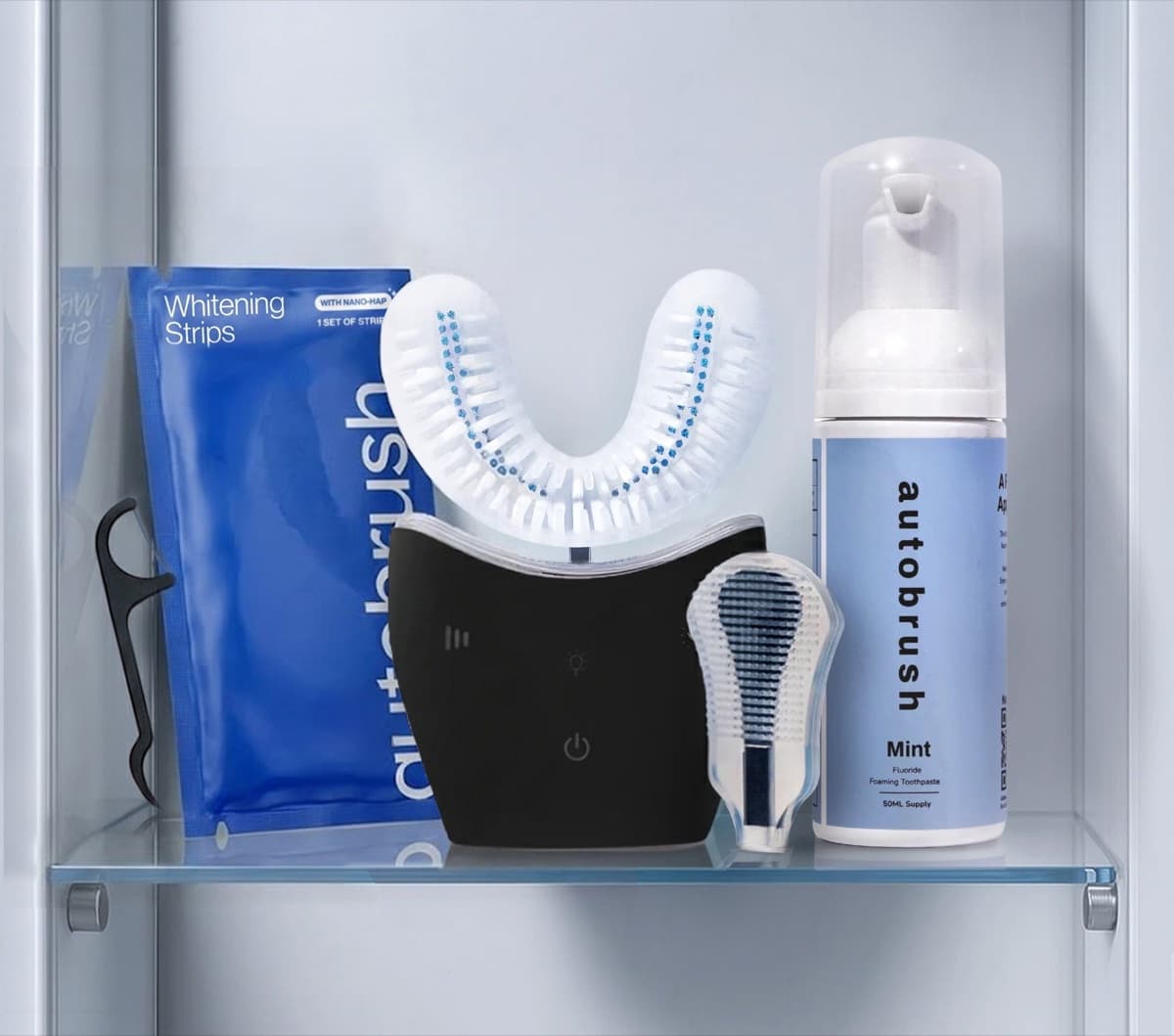
The Sonic Pro kit: U-shaped nylon brush head, foam, and whitening extras. Photo: AutoBrush
Our verdict
Yes, with the right expectations — AutoBrush rebuilt the U-brush with the one ingredient that matters (real bristles) and the result is the fastest legitimate full-mouth clean available. Perfectionist solo brushers may prefer a precision sonic; everyone else — and especially the kids, elders and hands that manual brushing fails — gets more actual cleaning per week from the brush that makes compliance automatic. At $119 it's the rare gadget that's most valuable for the people the market usually ignores.
The short version
The U-shaped toothbrush category earned its scammy reputation: the viral versions used silicone nubs that cleaned nothing, and dentists rightly torched them. AutoBrush is the rehabilitation — actual nylon bristles (the thing that matters) arranged in a U that cups every tooth at 45°, driven by sonic vibration, so a full-mouth clean takes 30 seconds of holding a handle. For most adults it's a speed-and-coverage upgrade; for the populations manual brushing fails — kids who won't, elderly hands that can't, motor and sensory challenges — it's quietly life-changing, which is why occupational therapists keep recommending it.
Pros & cons
Pros
- Real nylon bristles — not the silicone nubs that killed the category's reputation
- Every tooth cleaned simultaneously at the dentist's 45° angle
- 30-second full-mouth cycles — compliance skyrockets
- Transformative for kids, elderly and limited-mobility brushers
- Sonic vibration plus foaming toothpaste covers the gumline
- LED whitening mode built into the Pro
Cons
- Premium price versus a standard electric brush
- Technique still matters: bite gently and let it hum, don't chew it
- Replacement U-heads are proprietary consumables
How it works
Foam, not paste
Pump the foaming toothpaste onto the U-head's bristles — foam distributes through the mouthpiece where paste can't.
Bite and hold 30 seconds
The sonic motor drives thousands of bristle strokes against every tooth simultaneously, upper and lower, inside and out.
Done — actually done
One cycle covers surfaces a rushed manual brush misses. Rinse the head, dock it, repeat twice daily.
Who it's for
- Parents refereeing the nightly toothbrush standoff
- Elderly brushers and arthritic or limited-mobility hands
- Rushed adults whose two minutes is really forty seconds
- Sensory-sensitive kids and adults who hate brushing
Rescuing the U-brush from its own category
When U-shaped brushes went viral, the products were silicone-nub gimmicks — soft nubs can't disrupt plaque, the studies confirmed it, and dental Twitter buried the category. The critique was correct and specific: it was about silicone, not the U shape. Bristle material is the load-bearing variable in all brushing; the U geometry is just a delivery format.
AutoBrush's entire pitch is taking the format seriously: dense nylon bristles set at the 45° gumline angle dentists teach, sonic vibration doing the stroke work, and foam toothpaste engineered to flow through the head. The result behaves like a legitimate electric brush that happens to do all teeth at once. For technique-perfect adults, a premium sonic brush still edges it on single-tooth precision — but almost nobody brushes technique-perfect, and full coverage in 30 guaranteed seconds beats perfect theory practiced badly.
The populations this genuinely changes
The compliance math is the story. Kids: the nightly brushing war ends when the task is 'bite this fun light-up thing for 30 seconds,' and parents get actual coverage instead of the front-teeth-only theater kids perform. Elderly and limited-dexterity brushers: arthritis, tremor, stroke recovery and Parkinson's make precise two-minute manual work impossible — a hold-and-bite format returns independent oral care, which is why OTs and caregivers have adopted it. Sensory-sensitive brushers get a predictable, brief, controllable stimulus instead of two minutes of scraping.
For mainstream adults the honest framing is convenience-plus-coverage: your 'two minutes' is statistically forty seconds of favorite-spots brushing, and a cycle that physically touches every surface beats it. Pair it with the rest of the serious-mouth stack — a water flosser for the gaps the bristles can't enter and a whitening course for the shade — and home dentistry is genuinely covered.
Is the Sonic Pro worth $119?
Against premium electrics ($100–250 for flagship Sonicare/Oral-B), the price is peer-level and the trade is precision-per-tooth versus guaranteed-coverage-per-second — pick by your household's real brushing behavior, not its aspirations. For the assisted-brushing populations there's no real competition at any price: the alternative isn't a better brush, it's a caregiver doing it manually twice a day. The kit format (foam, whitening extras, family packs) prices out sensibly per-user for multi-brusher homes.
Ongoing costs are the honest asterisk: proprietary U-heads replace like any brush head, and the foam toothpaste is part of the system (regular paste doesn't distribute through the mouthpiece properly). Budget those like razor blades. Technique note that decides results: bite gently and let the sonics work for the full cycle — chewing it like a snack is the one way to make it underperform. Used as directed, the twice-daily 30 seconds it asks for is the easiest oral-care habit ever shipped.
Frequently asked questions
Do U-shaped toothbrushes actually work?
The silicone-nub viral ones didn't — that critique was correct. AutoBrush uses dense nylon bristles at a 45° gumline angle with sonic vibration, which is legitimate brushing mechanics delivered in a U format. Bristle material is the whole ballgame.
Is 30 seconds really enough?
The cycle applies simultaneous brushing to every tooth — equivalent contact time to minutes of sequential manual work, and far more coverage than the rushed 40 seconds most people actually brush. Twice daily, as always.
Is it good for kids?
It's the category killer app: the brushing standoff becomes a 30-second bite on a light-up gadget, and parents get real full-mouth coverage. Kids' sizes exist; the habit transfer is the point.
What about elderly or limited-mobility users?
This is where it's genuinely life-changing — hold-and-bite replaces precise manual technique, returning independent brushing to arthritic, tremoring or recovering hands. OTs and caregivers are its biggest advocates.
Why the special foam toothpaste?
Foam flows through the U-head and coats bristles evenly where paste clumps. It's part of the system's consumables — budget for it like brush heads on any electric.
How do I get the best clean from it?
Gentle bite, slight jaw relaxation, let it hum the full cycle — the sonics do the work. Chewing or clenching mutes the bristle action; that's the one user error behind most disappointed reviews.
When you buy through links on this page, TopCrate may earn an affiliate commission at no extra cost to you. Specifications reflect the manufacturer's listing. Prices accurate as of publish time.
More reviews you might like
SKINCARE
Celimax Vita-A Retinal Shot Review: Best K-Beauty Retinal for Sensitive Skin?
SPORTS
Body Glide Original Review: The Anti-Chafe Balm That Actually Works
SKINCARE
Foreo Luna Mini 3 Review: Is the Silicone Cleansing Brush Worth It?
SKINCARE