PERSONAL CARE
How to Whiten Teeth at Home (Without Wrecking Your Enamel)
Strips, kits, pens, powders and snap-on veneers — here's how at-home whitening actually works, and how to brighten your smile without the sensitivity.
A whiter smile is one of the cheapest confidence upgrades there is — and you don't need a dentist's chair for it. But 'whitening' can mean two very different things, and the wrong product can leave your teeth zinging for days.
Here's how to do it right at home: the two kinds of whitening, how to avoid the sensitivity, and which method is fastest, gentlest and cheapest.
Two very different kinds of 'whitening'
The first kind actually lifts stains from your real enamel — that's what strips, LED gel kits, whitening pens and PAP+ powders do. The second kind instantly covers your teeth for a perfect-looking smile — that's removable snap-on veneers. Knowing which you want saves you money and disappointment.
If you want your own teeth a few shades brighter over a couple of weeks, go with the first group. If you want a flawless white smile today — and to hide chips or gaps at the same time — the second is the dramatic option.
Best for whitening your real teeth: a PAP+ powder or kit
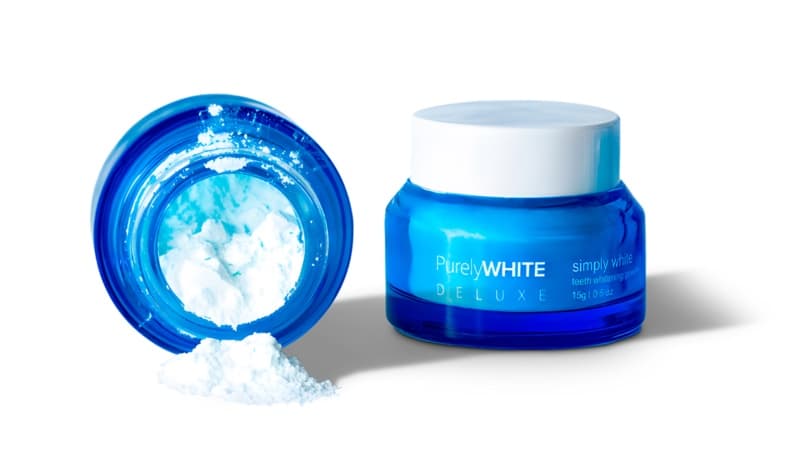
To actually lift coffee, wine and tea stains from your enamel without the sharp zing, a PAP+ formula is the move. Purely White is a brush-on powder built around PAP+ instead of harsh peroxide, so it brightens gradually and folds into the brushing routine you already have — a gentle pick for sensitive teeth.
Prefer something faster? An LED whitening kit pairs gel with an accelerator light and works across all your teeth at once, while classic Crest 3D White Whitestrips remain the proven, no-fuss drugstore option. A whitening pen is the easiest way to touch up before a photo or a night out.
Best for instant results: snap-on veneers
If you want a dramatically whiter, flawless smile right now — not in three weeks — nothing else compares. Shiny Smile makes custom snap-on veneers that clip over your real teeth to instantly hide stains, chips and gaps, for a fraction of what a dentist charges for permanent veneers. You take an impression at home, send it back, and pop in a perfect smile whenever you want one.
How to avoid the sensitivity
The zing people complain about usually comes from peroxide. Newer formulas built around PAP+ are designed to brighten without that sharp sensitivity, which makes them a good pick for sensitive teeth. Whatever you use, follow the timing instructions — leaving a whitener on longer than directed is what irritates gums and enamel, not the product itself.
Keeping it white
Coffee, tea, red wine and smoking are what dull your teeth again. Whitening results from strips, gels and powders typically last a few months — a quick touch-up with a pen keeps them bright. Removable veneers last as long as you wear them, so they're the one option that doesn't fade.
See the best teeth whitening of 2026
We compared veneers, kits, strips and pens — with the right pick for instant results or gentle, gradual whitening.
See the best teeth whitening of 2026 →Frequently asked questions
Will whitening damage my enamel?
Used as directed, modern whiteners are designed to be enamel-safe. PAP+ formulas are made specifically to brighten without the sensitivity peroxide can cause. Don't over-use any whitener.
What's the gentlest option?
PAP+ powders and pens tend to be the most sensitivity-friendly. If peroxide strips make your teeth zing, those are worth a try.
Veneers or whitening — which should I choose?
Choose removable veneers for an instant, flawless smile that also hides chips and gaps; choose a kit, strips or a pen to brighten your own teeth more gradually and cheaply.
How long until I see results?
Strips and gels show results in a couple of weeks of daily use; an LED kit is usually faster; veneers are instant because they cover your teeth.
TopCrate is reader-supported. When you buy through links on our site we may earn an affiliate commission, at no extra cost to you. Content is for general information and isn't a substitute for professional advice.