COFFEE 101
How to Make Coffee: Every Brewing Method Explained (Drip, Keurig, French Press, Pour-Over, Cold Brew)
The four variables that actually control how coffee tastes, quick-start steps for every major brewing method, and the five fixes that improve homemade coffee the most.
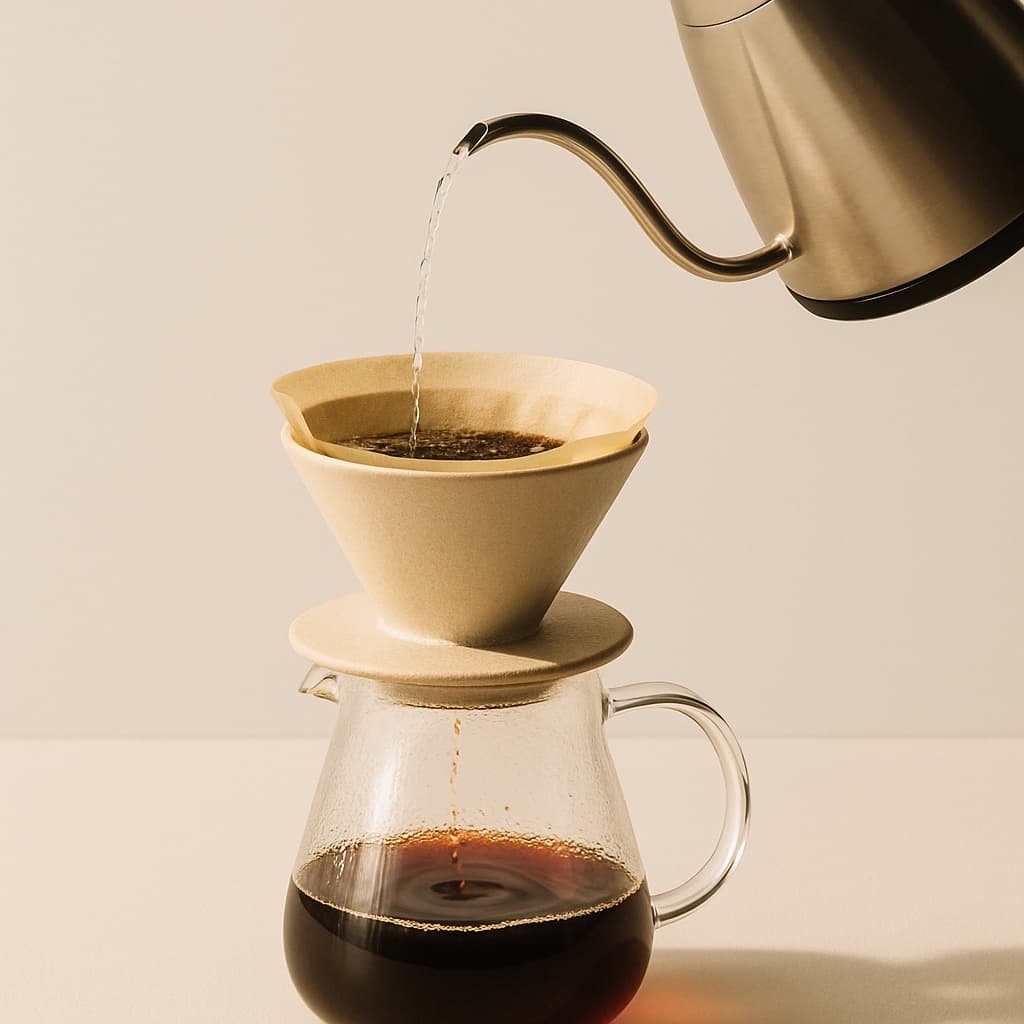
Making genuinely good coffee at home isn't a talent — it's four variables. Fresh beans, the right grind, the right ratio of coffee to water, and water that's actually hot enough. Get those four roughly right and almost any brewing method produces a cup better than most cafes charge five dollars for. Get one badly wrong and no amount of expensive gear will save you.
This guide covers those four variables first, then quick-start steps for every major method — drip machine, pod machine, french press, pour-over, and cold brew — plus which method fits which kind of person, and the five upgrades that make the biggest difference per dollar. No barista jargon, no gatekeeping, just better coffee tomorrow morning.
The Four Variables That Control How Coffee Tastes
First, beans and freshness. Coffee is a perishable food, not a pantry staple: beans peak in the first few weeks after roasting, then slowly go flat as the aromatics escape. Buy whole beans with a roast date printed on the bag (not just a best-by date), keep them sealed away from light and heat, and grind right before brewing. Pre-ground coffee starts losing its best flavors within days of grinding — it's the single biggest reason homemade coffee tastes dull.
Second, grind size. Grind is your extraction dial: coarse grounds give up their flavor slowly (right for french press and cold brew, where coffee and water sit together for minutes or hours), while medium grounds suit drip and pour-over, where water passes through in a few minutes. Too fine for your method and the cup turns bitter; too coarse and it's sour and weak.
Third, the ratio. Coffee is best measured by weight, and the sweet spot for most methods is 1:15 to 1:17 — one gram of coffee for every 15 to 17 grams of water. (The Specialty Coffee Association's Golden Cup standard sits right nearby, at roughly 1:18.) That works out to about 60 grams of coffee per liter of water. Eyeballing scoops is how the same bag of beans tastes different every single day.
Fourth, water temperature. The target is 195 to 205 degrees Fahrenheit — hot enough to extract sweetness and body, below a rolling boil so you don't scorch the grounds. No thermometer needed: bring water to a boil, take it off the heat, and wait about 30 seconds. Since brewed coffee is roughly 98 percent water, water that tastes bad from the tap will taste bad in the cup, too — filtered water is a quiet upgrade.
How to Make Coffee with a Drip Machine or a Keurig
A drip machine automates the pour-over process, and the steps are short: fill the reservoir with fresh, cold water, put a filter in the basket, add medium-ground coffee at about 1:16 (roughly 60 grams per liter — a kitchen scale makes this trivial), and press start. Serve within 30 minutes or move the coffee to a thermal carafe; coffee stewing on a hot plate goes bitter fast. One honest caveat: many budget drip machines never actually reach 195 degrees, which is why identical grounds taste better out of a good brewer.
Pod machines trade some flavor ceiling for near-zero effort: fill the reservoir, drop in a pod, close the lid, pick a cup size, done. Two tricks improve the result immediately — choose the smallest cup size that fills your mug (more water through the same pod just means weaker coffee), and use a refillable filter cup with your own freshly ground beans, which upgrades the taste more than any premium pod. If you want pods for weekday speed and a full carafe for weekends, the Keurig K-Duo does both in one machine.
How to Make French Press Coffee
The french press is the cheapest route to rich, full-bodied coffee: no filters, no electronics, nothing to break. Add coarse-ground coffee to the empty press, pour in water that's about 30 seconds off the boil, give it a gentle stir, set the lid on top with the plunger up, and wait four minutes. Then press the plunger down slowly and steadily, and pour every cup out immediately — coffee left sitting on the grounds keeps extracting and turns bitter.
Weight matters more here than anywhere else, because the coffee and water sit together the whole time. Start at 1:15 — for a standard 34-ounce press, that's about 55 to 60 grams of coffee to a full liter of water — and adjust to taste. Our french press coffee ratio guide breaks down the exact gram measurements for every press size and strength preference.
How to Make Pour-Over Coffee
Pour-over is the same idea as a drip machine with you as the machine — which is exactly why people love it: total control over every variable. Set a cone brewer on your mug, rinse the paper filter with hot water (this kills the papery taste and preheats everything), and add medium-ground coffee at 1:16.
Start with the bloom: pour just enough water to wet all the grounds — about twice the weight of the coffee — and wait 30 to 45 seconds while the coffee puffs up and releases trapped gas. Then pour the rest of the water in slow, steady spirals, keeping the water level consistent. The whole brew should take about three to four minutes. It demands your attention for exactly that long, and rewards it with the cleanest, brightest cup on this list.
How to Make Cold Brew (the Most Forgiving Method)
Cold brew is less a technique than an act of patience: coarse-ground coffee steeped in cold water for hours instead of hot water for minutes. Combine grounds and water at a 1:8 ratio in a jar or pitcher — about 120 grams of coffee to a liter of water — stir so everything is wet, cover, and let it steep for 12 to 24 hours on the counter or in the fridge.
Strain through a fine-mesh sieve lined with a paper filter or cheesecloth, and you have smooth, low-bitterness coffee that keeps in the fridge for about a week. If it's stronger than you like, cut it with water or milk over ice. Because the timing is so forgiving — an hour either way barely matters — cold brew is nearly impossible to ruin, which makes it the best method for people who don't want a morning ritual, just cold coffee waiting for them.
Which Brewing Method Is Right for You — and 5 Fixes That Improve Any of Them
Quick matchmaking: pick a pod machine if speed and zero cleanup beat everything else. Pick a drip machine if you pour multiple cups or brew for a household. Pick a french press if you want rich, heavy-bodied coffee for the least money. Pick pour-over if you enjoy the process and want the most control. Pick cold brew if you drink it iced, want to batch ahead, or find hot coffee too harsh on your stomach.
Whatever you brew with, five fixes deliver most of the improvement: buy fresh whole beans with a roast date; grind them at home with a burr grinder, which crushes beans to a consistent size instead of the random shrapnel a blade grinder produces; use a cheap kitchen scale instead of scoops; hold a 1:15 to 1:17 ratio; and keep your equipment clean, because old coffee oils go rancid and flavor every cup that follows. That last one is the most ignored — if you own a pod brewer, our guide on how to clean a Keurig is the 15-minute version. Do those five and you've fixed 90 percent of what makes homemade coffee disappointing.
Read our Keurig K-Duo review
If pod-speed weekdays and full-carafe weekends both sound like you, the K-Duo covers both without a second machine on the counter.
Read our Keurig K-Duo reviewFrequently asked questions
What is the golden ratio for coffee?
The Specialty Coffee Association's Golden Cup standard is roughly 1:18 — about 55 grams of coffee per liter of water. Most home brewers prefer a slightly stronger 1:15 to 1:17. Start at 1:16 (60 grams per liter) and adjust to taste.
What water temperature is best for coffee?
195 to 205 degrees Fahrenheit. Boiling water scorches grounds and pulls out bitterness; water much cooler under-extracts and tastes sour. No thermometer needed — boil water, remove it from the heat, and wait about 30 seconds before pouring.
How much coffee should I use per cup?
For a standard 12-ounce mug at a 1:16 ratio, use about 22 grams of coffee — roughly four level tablespoons of grounds. A cheap kitchen scale is far more reliable than scoops, since ground coffee's density varies with roast and grind.
Why does my homemade coffee taste bitter?
Bitterness is usually over-extraction: grounds that are too fine for your method, water that's at a full boil, or coffee left steeping too long (especially in a french press after plunging). Dirty equipment coated in old, rancid coffee oils is the other common culprit.
Do I really need a burr grinder?
It's the single highest-impact coffee upgrade. Blade grinders chop beans into wildly uneven pieces, so some over-extract while others under-extract in the same brew. A burr grinder produces uniform particles — even an entry-level one noticeably improves every method.
What is the easiest way to make good coffee at home?
A french press with fresh whole beans, a burr grinder, and a scale: coarse grind, 1:15 ratio, water 30 seconds off the boil, four-minute steep, plunge, pour. Under ten dollars of gear beyond the grinder, and very hard to get wrong.
TopCrate is reader-supported. When you buy through links on our site we may earn an affiliate commission, at no extra cost to you. Content is for general information and isn't a substitute for professional advice.