ORAL CARE 101
How to Clean Your Toothbrush (and When a Toothbrush Sanitizer Is Worth It)
The ten-second routine that keeps a toothbrush genuinely clean, the deep-clean soaks that work, the methods that melt bristles — and an honest look at UV sanitizers.
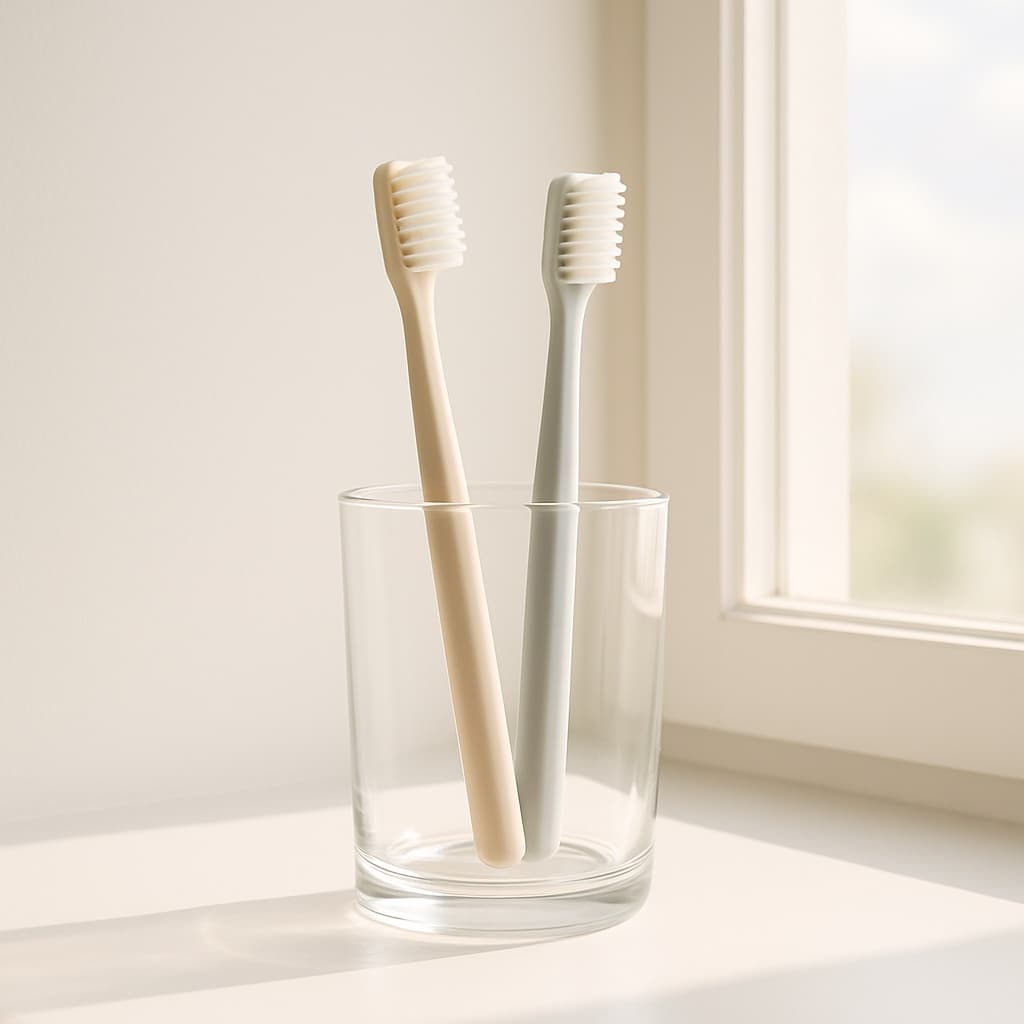
Your toothbrush cleans your teeth twice a day, and almost nobody ever cleans the toothbrush. The good news: keeping it genuinely clean takes about ten seconds. The catch is that most people spend those ten seconds doing the wrong things — like snapping a wet brush into a sealed travel cap, which is worse than doing nothing at all.
This guide covers the simple routine that handles 95% of toothbrush hygiene, the honest truth about bathroom germs, the deep-clean soaks that actually work, whether a toothbrush sanitizer earns its spot on the counter, and when to just replace the thing.
How to clean your toothbrush: the ten-second routine
After every brush, rinse the head thoroughly under running tap water until all the toothpaste and debris is gone, give it a hard flick to shake off the excess water, and stand it upright somewhere it can air dry — exposed to the open air, not sealed inside anything. That's the whole routine, and it's also the American Dental Association's actual recommendation. Microbes need moisture to multiply, and a brush that dries out between uses doesn't give them much to work with.
The one habit to break: storing a damp brush in a closed container. A wet brush sealed in a travel cap or drawer is the real hygiene problem here — the ADA notes that a moist, covered brush grows more microbes than one left out in the open. Travel caps are fine for travel; just let the brush dry first, and choose a vented cap if you can.
About the toilet: the honest version
Yes, toilet plume is real — flushing launches a fine aerosol into the bathroom air, and closing the lid before you flush is a reasonable habit. But before you relocate your toothbrush to another room, here's the part the scary headlines skip: research on toothbrush contamination consistently finds that most of the microbes on your brush came from your own mouth, and there's no good evidence that the germs on a normally-maintained toothbrush make healthy people sick.
That's why the ADA's position is refreshingly boring: for a healthy person, rinsing well and air drying is adequate toothbrush care. Everything beyond that — soaks, sanitizers, elaborate storage — is optional. Some of it is genuinely worthwhile, but none of it is required. Keep that framing in mind as we go through the upgrades.
Deep-clean soaks that work (and three methods that ruin the brush)
Want to go beyond the rinse? Three soaks have real evidence behind them. An antibacterial mouthwash soak is the easiest: stand the head in a small cup of it for a few minutes, then rinse. A 3% hydrogen peroxide soak is the cheapest and performed among the best in disinfection studies — if you keep the brush standing in a cup of it, change the solution daily, because spent peroxide stops working. And a denture-cleansing tablet dissolved in a cup of warm water gives a fizzy deep clean for pennies. Plain white vinegar works in a pinch, too. Whatever you soak in, rinse the brush before it goes back in your mouth.
Now the don'ts: no dishwasher, no microwave, no boiling water. Toothbrush bristles are nylon, and high heat warps, splays, and melts them — you don't end up with a sterile brush, you end up with a ruined one. If a brush feels grimy enough that you're eyeing the dishwasher, the correct appliance is the trash can.
Do you need a toothbrush sanitizer?
A toothbrush sanitizer — usually a small UV-C case like Bril that fits over the brush head — does what it claims at the microbe level: UV light genuinely reduces the bacteria living on the bristles between uses. Here's the honest caveat, straight from the ADA: there's no clinical evidence that sanitizing a toothbrush prevents illness or improves your oral health. Your immune system was already handling the normal load.
So think of a toothbrush sanitizer as a peace-of-mind and freshness upgrade, not a medical device — and in that role, it's genuinely useful. It's a case that actively cleans instead of trapping moisture the way a sealed cap does, which makes it a smart pick for shared family bathrooms where brushes touch in one cup, for travel, and for anyone who read the toilet plume section and can't unread it. Just buy it for the right reasons.
When to replace it: every 3 to 4 months, and the after-illness question
The ADA says to replace your toothbrush every three to four months, or sooner if the bristles look frayed — and frayed bristles are the real reason, because a splayed brush simply cleans your teeth worse no matter how sanitary it is. No soak or sanitizer resets that clock.
Do you need a new brush after being sick? For most healthy people, honestly, no — you're not likely to reinfect yourself with the cold you just built antibodies against, and the small amount of research here (including swabs of strep patients' brushes) found surprisingly little lurking in the bristles. That said, a toothbrush costs a couple of dollars, so replacing it after a nasty illness is cheap peace of mind — and after strep throat or a cold sore, most dentists say just swap it. Two rules with no exceptions: never share a toothbrush with anyone, and don't let stored brushes touch each other in the cup.
Electric toothbrush heads play by the same rules
Everything above applies to electric brush heads: rinse thoroughly, flick dry, store upright and uncovered, and replace every three months. Pop the head off the handle now and then to rinse and dry the connection point, where water and toothpaste sludge like to collect.
If anything, the replacement rule matters more here — a worn electric head quietly undoes the premium you paid for the motor. The Philips Sonicare C2 heads we review even build the schedule in: blue reminder bristles fade to white as the head wears out, which takes the guesswork out of the three-month rule.
Read our Bril review
The clip-on UV-C case that sanitizes and stores your brush head — we cover what it does well and what it honestly can't.
Read our Bril reviewFrequently asked questions
Do toothbrush sanitizers really work?
UV sanitizers do reduce the microbes on a brush head — that part is real. What's missing is clinical evidence that it prevents illness; the ADA says normal rinsing and air drying is adequate for healthy people. Buy one for freshness and peace of mind — great for shared bathrooms and travel — not as health insurance.
How do I clean my toothbrush with hydrogen peroxide?
Stand the brush head in a small cup of 3% hydrogen peroxide, then rinse before use. It performed among the best in toothbrush disinfection studies and costs almost nothing. If you keep a standing cup, change the solution every day — spent peroxide stops working.
Should I replace my toothbrush after being sick?
For most healthy people it's not strictly necessary — you won't reinfect yourself with a cold you've built antibodies against. But brushes are cheap, so it's easy peace of mind, and after strep throat or a cold sore the common dental advice is to replace it.
Can I clean my toothbrush in the dishwasher or microwave?
No. Toothbrush bristles are nylon, and high heat warps and melts them — boiling included. You'll ruin the brush, not sterilize it. Stick to rinsing, air drying, and the occasional mouthwash, peroxide, or denture-tablet soak.
Should I cover my toothbrush?
Not while it's wet. A damp brush sealed in a cap or closed container grows more microbes than one left in the open air — the ADA specifically warns against it. Store it upright and exposed at home; for travel, let it dry first and use a vented cap or a UV case.
How often should you replace a toothbrush?
Every three to four months, per the ADA — or as soon as the bristles look frayed, whichever comes first. Frayed bristles clean worse, and no amount of sanitizing fixes that.
TopCrate is reader-supported. When you buy through links on our site we may earn an affiliate commission, at no extra cost to you. Content is for general information and isn't a substitute for professional advice.