EYEWEAR CARE
How to Clean Eyeglasses Without Streaks (Without Trashing the Coating)
Your shirt hem is scratching them, spray cleaners are dissolving the coating, and the free microfiber cloth you've used for two years is basically an oil transfer pad — here's what actually works.
If you wear glasses, you clean them ten to fifteen times a day, and roughly none of those cleanings are done the way opticians want them done. The two everyday habits that feel most efficient — a quick fog-and-wipe on your shirt hem, or a spritz of Windex-style spray and a paper towel — are the same two habits that grind grit into anti-reflective coatings and streak the lenses within minutes.
This guide is the short version of what optical labs and eye-care associations agree on: the wet-and-mild-soap method that safely handles day-to-day cleaning, the tools worth keeping in your pocket, the products that quietly ruin coatings if you use them long enough, and the fix for the smudge that just won't come off. It's boring, and it works.
Why your shirt and a paper towel keep leaving streaks
Modern glasses lenses aren't just plastic — they're a stack. Underneath the surface you see are anti-reflective, hydrophobic (water-shedding), oleophobic (oil-shedding), and often scratch-resistant coatings, applied in ultra-thin layers. Those coatings are what make premium lenses feel effortless: light reflections vanish, water beads and runs off, fingerprints wipe away with less pressure. They're also what makes lens cleaning finicky, because most household tools are abrasive or chemically aggressive enough to slowly erode them.
A shirt hem carries microscopic grit — the same grit that would scratch a phone screen — plus fabric softener residue and skin oil. Rubbing that across a lens dry drags the grit in circles, and the visible result over months is what opticians call 'micro-scratches' that hazes the coating and, ironically, holds streaks worse. Paper towels and tissues are made of wood fibers stiff enough to scratch soft coatings; napkins are the same story with added lotion. And the smear you're chasing with the shirt hem is skin oil, which needs an emulsifier (soap) to actually lift, not friction to spread.
The two-minute wash-and-microfiber method that opticians teach
The single method every major eye-care organization recommends looks like this: rinse the lenses under lukewarm running water to float off dust and grit; put a drop of gentle dish soap on each lens face and gently rub with your (clean) fingertips — no scrubbing, no swirling, just a light spread; rinse thoroughly under lukewarm water until the water sheets off cleanly; shake off the excess and dry with a clean microfiber cloth using straight strokes, not circles. Total time: under 30 seconds. Total damage to coatings: none. Total streaks: usually none.
The details that matter: use lukewarm water (hot water can soften coatings and warp frames over time); pick a lotion-free hand soap or plain dish soap (avoid anything labeled 'moisturizing' — the added lotions leave a film); dry with a genuinely clean microfiber cloth, and rotate two or three so you're not just re-depositing oil from yesterday's session. Machine-wash microfibers in a small mesh bag, no fabric softener, no dryer sheets — softener coats the fibers and ruins their pickup, which is the reason the free cloth from the optical shop is worse than useless after a month.
What to keep in your bag or pocket for cleanings away from the sink
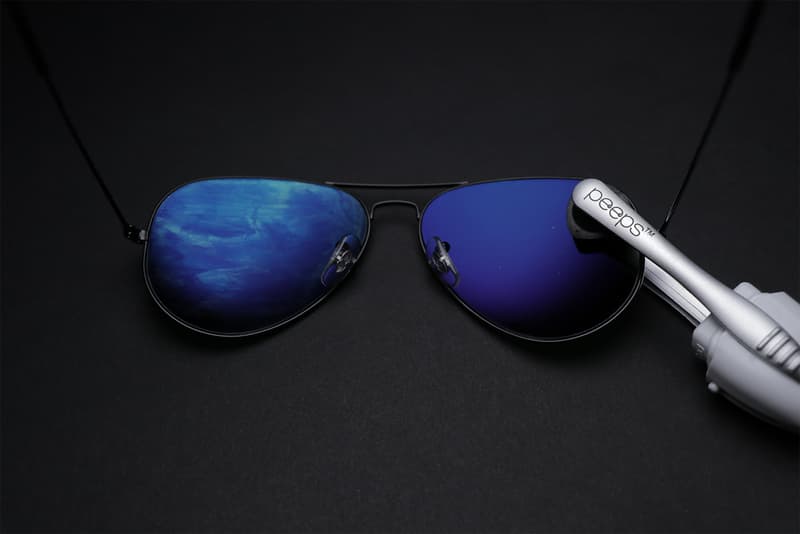
The wash-with-soap method wins at the sink, but you can't do it in a meeting or a car. For on-the-go cleaning, the good pocketable options — in rough order of how well they do the actual job — are: a coating-safe pre-moistened lens wipe (individually wrapped, single-use); a dedicated purpose-built cleaner like the Peeps carbon lens cleaner whose scissor-style pads clamp both lens faces at once and use an invisible carbon compound to lift skin oil in a single wipe; or, at minimum, a spray-and-microfiber kit designed for coated lenses. The pattern to notice: all three of these avoid rubbing a dry cloth across a dirty lens, because that's where scratches come from.
One tool that specifically punches above its weight is the retractable dust brush most eyewear-cleaning kits — including Peeps — include on one end. It looks trivial, but flicking dust off a lens before any wiping is the single biggest step you can take to prevent micro-scratches, because it removes the grit that would otherwise be dragged across the surface. If you already have prescription frames plus a pair of readers, a dedicated eyewear kit lives happily in a bag; if the readers you keep at your desk are frameless titanium like the Hilipert Titanium Reading Glasses, the coating-safe protocol matters even more, because rimless lenses flex slightly under pressure and dry-wiping can propagate tiny stress marks along the edge.
The everyday products that quietly ruin lens coatings
Windex, Glass Plus, and other household glass cleaners are formulated for uncoated glass — meaning the ammonia and denatured alcohol they contain dissolve the very AR coatings that make your lenses feel premium. It doesn't happen in one cleaning; it happens over a few hundred, which is a matter of a few months. The visible signs of coating damage are a permanent haze that no cleaning removes, a crazed 'crackle' pattern that shows up in bright light, and lenses that seem to attract fingerprints far more than they did when new. Once the coating is compromised, no product on Earth restores it — you replace the lenses.
The other coating-killer is heat. Leaving glasses on a dashboard in summer sun, on top of a car engine, or in a hot car in general can hit temperatures that soften or delaminate the coating in a single afternoon. Store lenses in a hard case when they're not on your face, and never park them face-down on any surface. And finally: acetone (nail polish remover), rubbing alcohol above 70%, hydrogen peroxide, and vinegar are all common home-remedy recommendations that will strip coatings if used often enough. If the manufacturer's cleaning card doesn't list it, don't use it.
The streak that won't come off — a short diagnostic
If you've done the wash-and-microfiber routine and a stubborn streak or smudge remains in the same spot, one of three things is going on. The most common is soap residue — you didn't rinse long enough — and running the lens under water for another ten seconds usually solves it. Second: eyelash oil transferred from your lashes to the back of the lens; give the inner face the same soap-and-rinse treatment (people tend to skip it). Third, and this is the one nobody wants to hear: the coating is starting to break down in that spot, and the smudge is actually microscopic pitting that catches light like a fingerprint. If a stubborn 'smudge' appears in the same location day after day and rotates with the frame — not the environment — the lens is telling you it's near the end of its life.
One last note on frequency and habits. Cleaning your glasses too often — every 20 minutes because you can see a speck — wears coatings faster than cleaning them properly a couple of times a day. Adopt a routine: a proper wash in the morning, a proper wash before bed, a Peeps-style or wipe-based touch-up if something visible lands on the lens during the day, and otherwise leave them alone. Combined with a hard case at night and no shirt-hem shortcuts, a well-treated pair of coated lenses easily hits three to four years of clear, streak-free service — which is roughly what the coating is designed for and what your prescription budget is planning around.
Read our Peeps review
The pocket-sized carbon-based lens cleaner whose scissor pads clean both faces of a lens in one pass — up to 500 cleanings from a single $20 capsule, and much friendlier to coatings than a shirt hem.
Read our Peeps reviewFrequently asked questions
How do you clean eyeglasses without streaks?
Rinse the lenses under lukewarm running water, apply a small drop of lotion-free dish soap to each face and spread it with clean fingertips (no scrubbing), rinse thoroughly until the water sheets off, then dry with a clean microfiber cloth using straight strokes. Streaks are almost always soap residue from an incomplete rinse or a dirty microfiber cloth — both easy fixes.
Can I use Windex or glass cleaner on my glasses?
No. Household glass cleaners contain ammonia and/or denatured alcohol, which are formulated to strip residues from uncoated glass. On modern lenses they'll gradually dissolve anti-reflective and hydrophobic coatings, showing up over a few months as permanent haze, a crazed 'crackle' pattern, and lenses that suddenly seem to attract fingerprints. Water with a drop of dish soap does the same job and is coating-safe.
Are lens wipes safe for anti-reflective coatings?
Only if they're specifically labeled coating-safe / AR-safe. Standard alcohol wipes and electronics wipes often contain isopropyl alcohol at concentrations that dissolve AR coatings over time. Look for pre-moistened lens wipes designed for eyewear (many are ammonia- and alcohol-free); individually wrapped is best because a single wipe stays clean until you open it.
Why does the microfiber cloth from the optical shop stop working?
Two reasons: it accumulates skin oil that it then re-deposits onto the lens, and if it's been washed with fabric softener or dried with a dryer sheet, the softener coats the fibers and destroys their static pick-up. Machine-wash microfibers on cold in a mesh bag with regular detergent — no softener, no dryer sheets, air-dry — and rotate two or three cloths. Replace them once they no longer feel grippy on a clean, dry lens.
Does cleaning your glasses too often damage them?
Yes, especially if you're using dry wipes. Every cleaning drags a small amount of grit across the coating, and doing it 30 times a day accelerates micro-scratching. Aim for a proper wet cleaning morning and night, a wipe or Peeps-style touch-up if something visible lands on the lens, and otherwise leave them alone — coatings do best when they're used, not polished.
Is Peeps lens cleaner actually different from a microfiber cloth?
The mechanism is different. A microfiber cloth relies on tiny fibers to physically lift oil and dust; the Peeps carbon lens cleaner uses soft pads infused with an invisible carbon compound that chemically lifts skin oil (the smudge you can't wipe away). The scissor design also cleans both faces of the lens simultaneously, which cuts cleaning time roughly in half. It's not a replacement for a proper soap-and-water wash at the sink, but for on-the-go touch-ups it does the job in one pass, and each capsule is rated for around 500 cleanings before the carbon exhausts.
How do I get rid of a smudge that won't come off my glasses?
Do a full wash-and-rinse cycle first — most stubborn smudges are eyelash oil on the inner face or soap residue that wasn't rinsed off. If it's in the same spot after two thorough washes and doesn't move when you change lighting angle, the coating is likely breaking down in that area (micro-pitting looks like a permanent smudge). That's an end-of-life sign, not something a product can fix — talk to your optician about re-coating (rarely available) or replacing the lenses.
TopCrate is reader-supported. When you buy through links on our site we may earn an affiliate commission, at no extra cost to you. Content is for general information and isn't a substitute for professional advice.