CLEANING 101
How to Clean a Water Bottle (and Make It Stop Smelling)
The daily rinse that actually matters, the gasket where the funk really hides, soak fixes for smells and tastes, dishwasher rules by material — and what self-cleaning bottles honestly do.
Run a finger around the inside of the water bottle you've been refilling all week. That faint slippery film is biofilm — a living layer of microbes that builds anywhere water sits — and it's why a bottle that only ever holds water can still end up smelling like a locker room. It's just water, and no, it isn't.
Here's the whole playbook: the ten-second daily habit, the weekly deep clean, the lid parts everyone misses, the soak fixes for smells and funky tastes, which bottles can go in the dishwasher, and the honest word on self-cleaning UV bottles.
Why water bottles get gross so fast
A water bottle is a nearly perfect microbial habitat: damp all day, warm from your car or gym bag, sealed off from drying air by its own lid, and fed a steady trickle of nutrients — every sip sends a little backwash of saliva, and anything beyond plain water (electrolyte mix, juice, that one smoothie) is a full buffet. Given a day or two of that, microbes organize into biofilm, the slippery coating that shrugs off a casual rinse.
This is why 'I only put water in it' doesn't exempt anyone, and why the fix is less about heroic scrubbing and more about routine: clean it a little every day, properly once a week, and never let it sit wet and sealed. Here's what that looks like.
The daily habit vs. the weekly deep clean
Daily: at the end of the day, wash the bottle and lid with hot water and a drop of dish soap, rinse, and — this is the step that actually matters — let everything air dry completely, upside down over a drying rack or on a clean towel, with the lid off. A bottle that goes to bed wet with its lid on is a bottle that wakes up smelling.
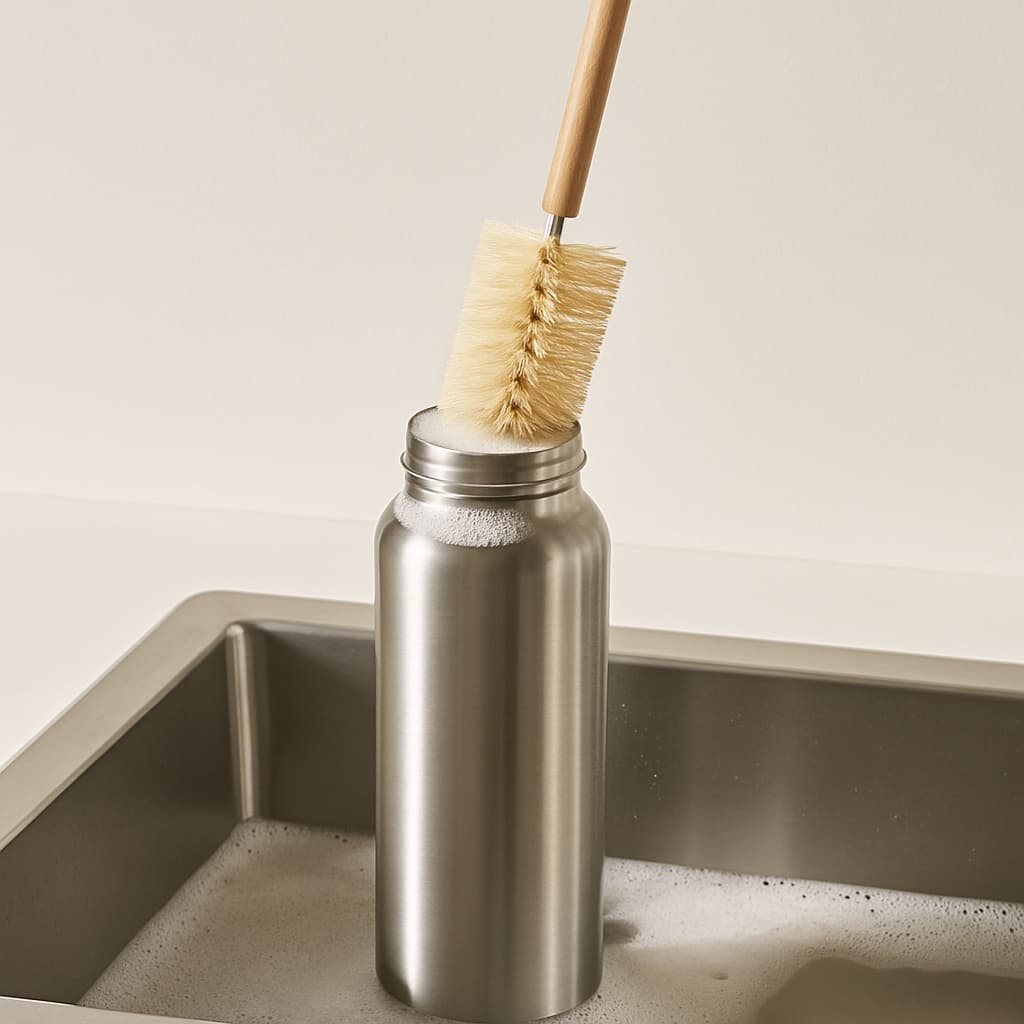
Weekly: give it two minutes with a bottle brush. Soap only cleans what it touches, and a long-handled brush is the only thing that touches the bottom of a tall bottle or the shoulder under the neck where film builds. Scrub the interior, scrub the lid inside and out, rinse hot, dry fully. That's the entire maintenance program for a bottle that never gets gross in the first place.
The parts everyone misses: straws, threads, and gaskets
When a well-washed bottle still smells, the bottle usually isn't the problem — the lid is. Three hiding spots: the straw, which needs its own skinny straw brush run through it a couple of times a week; the lid threads, where grime collects in the grooves; and the big one, the silicone gasket or O-ring sealing the lid. Pop it out with a fingernail or the tip of a butter knife — mold hides underneath it, in the channel the seal presses into, where no sponge ever reaches. Wash the gasket and its channel, dry both, and reseat it.
First time popping a gasket after months of use? Brace yourself, and then be practical about what you find. Pink or brown slime scrubs off with hot soapy water. But visible black spots embedded in the silicone that won't scrub away mean the gasket is done — replace it (most brands sell cheap multipacks) or, if the mold has spread somewhere you can't reach, replace the bottle. Silicone is a wear item, not an heirloom.
How to fix a water bottle that smells
For a musty or sour smell, baking soda is the first move: a tablespoon in the bottle, fill with warm water, shake, and let it sit overnight before scrubbing and rinsing. It neutralizes odors instead of perfuming over them. For mineral film, cloudy stainless interiors, or a metallic taste, use a 1:1 mix of white vinegar and warm water — soak 30 minutes or so, scrub, and rinse thoroughly.
One genuine safety warning: never combine bleach and vinegar, in a bottle or anywhere else — the mixture releases chlorine gas, which is exactly as bad as it sounds. Pick one cleaner per session and rinse completely before trying another. And if a smell survives baking soda, vinegar, and a brush, go back to the gasket section — the odor is almost certainly living in a part you haven't popped out yet.
Can it go in the dishwasher? Depends on the bottle
Plastic bottles are usually top-rack dishwasher safe — check for the symbol, and keep them away from the heating element. Insulated stainless bottles are a different story: many brands say hand-wash only, because dishwasher heat and harsh detergent can dull the powder-coated finish and, on some bottles, compromise the vacuum insulation. Iron Flask, for example, officially recommends hand-washing — the full care rules are in our review — and that's typical of the category. Thirty seconds on your brand's care page beats a ruined finish.
Lids, straws, and gaskets are the near-universal exception: hand-wash them regardless of what the bottle body can handle. Dishwasher heat ages silicone seals fast, and a warped gasket turns a leakproof lid into a slow drip in your bag.
Self-cleaning bottles, and the boring fix that beats everything
Self-cleaning bottles like the UVBrite put a UV-C LED in the cap that zaps the water and the bottle's inner surfaces at the press of a button, plus automatic cycles between uses. Honest framing: UV light really does reduce microbes, but it treats water and the surfaces it reaches — it does not scrub away established biofilm, and it never touches the underside of a gasket. You still wash the bottle. What it genuinely does is hold the line between washes, which makes it a legitimately useful upgrade for travel, the gym bag, and anyone whose bottle routinely sits in a hot car for a week.
And the cheapest prevention of all is air. A bottle that dries out completely between uses barely develops smell, because microbes can't build biofilm without standing moisture — it's the same principle behind how to clean a coffee maker, where drying does half the work. Wash it, dry it upside down with the lid off, and the deep cleans in this guide become something you do out of diligence rather than desperation.
Read our UVBrite review
The insulated bottle with a UV-C cap that sanitizes its own water between washes — we cover exactly what it does and doesn't replace.
Read our UVBrite reviewFrequently asked questions
Why does my water bottle smell even after washing?
Because the smell usually isn't in the bottle — it's in the parts washing doesn't reach: under the silicone gasket, inside the straw, or in the lid threads. Pop the gasket out and wash beneath it, run a straw brush through the straw, then do an overnight baking soda soak. And always dry the bottle fully, lid off — a bottle stored wet and sealed will smell again by morning.
How often should you wash a reusable water bottle?
A hot, soapy wash and full air-dry daily, plus a bottle-brush deep clean of the bottle, lid, straw, and gasket weekly. More often if you put anything other than plain water in it — sports mix and smoothies feed buildup fast.
How do you clean a water bottle straw?
With a skinny straw brush and hot soapy water, run through a few times a couple of times a week. For a funky-tasting straw, soak it in 1:1 vinegar and warm water for 30 minutes first. Detachable straws should come fully apart for cleaning and drying.
Can you put a stainless steel water bottle in the dishwasher?
Often not — many insulated bottles, Iron Flask included, officially recommend hand-washing to protect the finish and insulation. Check your brand's care instructions. Lids, straws, and gaskets should be hand-washed regardless, since dishwasher heat degrades silicone seals.
Do self-cleaning water bottles actually work?
For what they claim, yes — UV-C in the cap reduces microbes in the water and on the inner surfaces between washes, which keeps smells from starting. What they can't do is scrub existing biofilm or clean under the gasket, so they supplement washing rather than replace it. Best for travel, the gym, and forgetful owners.
Is mold in my water bottle dangerous?
Be practical about it: pink or brown slime scrubs away with hot soapy water and a brush. Visible black spots embedded in a gasket that won't scrub off mean the gasket gets replaced — they're cheap — or the bottle does if mold has spread beyond reach. Don't keep drinking from a moldy bottle, but don't panic over one bad gasket either.
TopCrate is reader-supported. When you buy through links on our site we may earn an affiliate commission, at no extra cost to you. Content is for general information and isn't a substitute for professional advice.