COFFEE 101
How to Clean a Coffee Maker: The Vinegar Deep Clean, Carafe Stain Tricks, and How Often to Do It All
The monthly vinegar cycle that fixes bitter coffee and slow brewing, the denture-tab trick for stained carafes, and a realistic schedule for every machine in your kitchen.
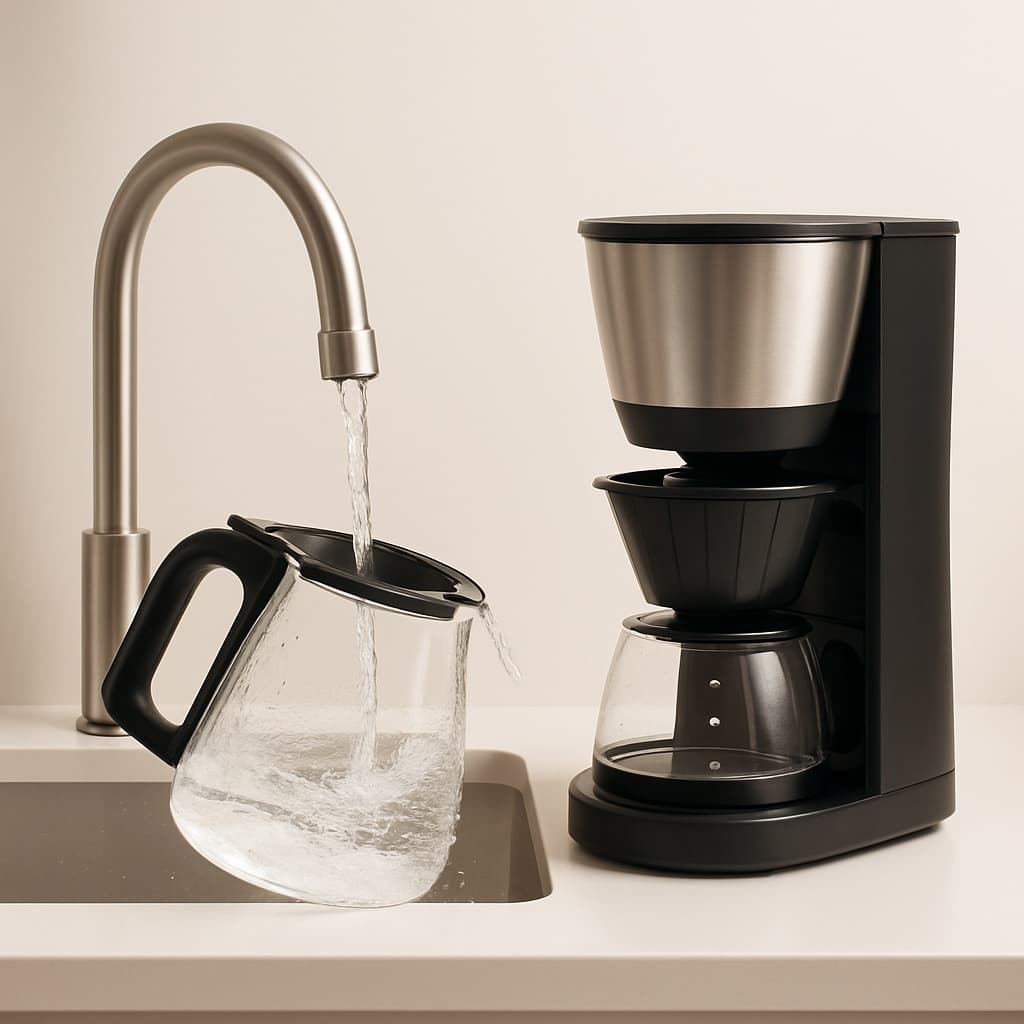
The machine that makes the thing you drink every single morning is, in most kitchens, the appliance that gets cleaned the least — and it shows up in the cup. Coffee oils coat every surface the brew touches and go rancid within days. Mineral scale slowly chokes the water line until brewing turns into a wheeze. And the reservoir stays damp around the clock: household germ studies have found that about half of tested coffee reservoirs were growing yeast or mold, and that the average reservoir carried more germs than a bathroom door handle. If your coffee has drifted from good to fine to weirdly bitter, the machine is the suspect.
The fix costs about a dollar and mostly runs itself. This guide covers the monthly vinegar deep clean for drip machines, the baking soda and denture-tab tricks for a stained carafe, the two-minute weekly wash, honest grinder and french press maintenance, where pod machines fit in, and a cleaning schedule you can actually keep.
Why coffee makers get gross (and how it ruins the cup)
Three separate things go wrong inside a neglected coffee maker, and each has its own flavor signature. First, oils: coffee is full of them, they cling to the basket, carafe, and every internal surface, and within days they oxidize and go rancid. That stale-diner-coffee bitterness people blame on cheap beans is very often just old oil re-flavoring a fresh brew.
Second, scale. The calcium and magnesium dissolved in tap water get left behind every time water is heated, hardening into a chalky crust on the heating element and inside the lines. A scaled machine runs cooler and slower, which under-extracts your grounds — so the coffee turns weak and sour while the brew cycle stretches from minutes into a sputtering ordeal.
Third, the damp spots. The reservoir, the underside of its lid, and the brew basket are wet essentially all the time, which is exactly the environment yeast and mold like. And no, the brew cycle doesn't sterilize anything on the way through — hot water passing by for a few minutes is not a substitute for actually washing the machine.
How to clean a coffee maker with vinegar: the monthly deep clean
Fill the reservoir with a 1:1 mix of white vinegar and water, put a paper filter in the empty brew basket, and start a normal brew cycle with no coffee. When about half the solution has dripped into the carafe, switch the machine off and walk away for 30 minutes — that soak is where the vinegar actually dissolves the scale and dried-on oils, so don't skip it. Then turn the machine back on, let the cycle finish, and dump the carafe.
Now rinse like you mean it: run two to three full cycles of fresh plain water, emptying the carafe each time, until there's no vinegar smell. Do this monthly — every two to three weeks if your water is hard — and it doubles as descaling, so a drip machine needs no separate descaling product. Two cautions: don't bother with full-strength vinegar, which gains you nothing and is hard on rubber gaskets, and never run bleach or dish soap through the machine's internals. Anything that goes through the water line should be vinegar, a descaling solution, or plain water.
The weekly wash: brew basket, carafe, and the stain tricks
Once a week, wash everything removable in warm, soapy water: the brew basket, the carafe, and the carafe lid — that lid is the most-skipped part of the whole machine and it touches every drop you pour. Most are top-rack dishwasher safe, but a sink wash is faster. Rinse well, and leave the reservoir lid and basket compartment open afterward so everything dries out instead of staying damp until morning.
For the brown film that soap won't touch, baking soda is the cheap fix: a spoonful in the carafe with warm water, swirl, and scrub with a soft sponge — it's abrasive enough to lift coffee stains without scratching glass. For baked-on stains in a thermal carafe you can't get a hand into, use the denture tablet trick: fill the carafe with warm water, drop in one or two tablets, let it fizz for 20 to 30 minutes, then rinse. Denture tablets are the same oxygen-based cleaner sold in fancier packaging as coffee equipment cleaner, at a fraction of the price.
Grinders and french presses: the five-minute jobs nobody does
Grinders collect the same rancid oils plus a layer of stale grounds, and water is not the answer — never wash burrs, since damp burrs rust. The internet's favorite fix, grinding a handful of raw rice, is a myth worth retiring: rice is harder than roasted coffee, it strains the motor, it can gum onto warm burrs, and several manufacturers say it voids the warranty. Purpose-made grinder cleaning tablets are safe and work well, but for most home grinders they're overkill. The honest routine: unplug it, empty the hopper, brush the burrs and grounds chute with a stiff brush, and wipe everything down with a dry cloth every few weeks.
French presses have their own hiding spot: the mesh. The filter screen traps oils and fine grounds in layers you can't see, and rancid buildup there flavors every future brew — a dirty press is one of the classic reasons a dialed-in french press coffee ratio still tastes off. Once a week, unscrew the plunger, separate the mesh screen from its plates, wash every layer in warm soapy water, and let it dry before reassembling. It takes three minutes and the difference is immediate.
Pod machines: Keurigs have their own routine
A Keurig or other pod brewer skips the carafe but adds parts drip machines don't have: puncture needles that clog with grounds, a pod holder that collects sticky residue, and the same perpetually damp reservoir. The short version is a weekly wash of the reservoir, drip tray, and pod holder, a straightened paperclip to clear the needles, and water-only brew cycles to flush the path — our full guide on how to clean a Keurig walks through every step, including the needle trick.
And when a pod machine brews slowly, sputters, or short-pours even after a good cleaning, the problem isn't dirt — it's mineral scale, which no amount of scrubbing reaches. That's a separate quarterly process with an acidic solution run through the machine; our walkthrough on how to descale a Keurig covers it, including the honest vinegar-versus-solution comparison.
The coffee maker cleaning schedule (steal this)
Daily: dump the grounds, rinse the basket and carafe, start each morning with fresh reservoir water instead of topping off yesterday's, and leave lids open so the wet spots dry. Weekly: warm soapy wash for every removable part — basket, carafe, carafe lid, and on pod machines the reservoir, drip tray, and pod holder — plus the french press mesh teardown.
Monthly: the 1:1 vinegar cycle with the 30-minute pause for drip machines, and a needle check on pod brewers. Quarterly: descale pod machines, and replace the water filter cartridge if your machine uses one (most are rated for about two months). Total hands-on time is maybe fifteen minutes a month, and the payoff is the same beans suddenly tasting the way they did the week you bought the machine.
Read our Keurig K-Duo review
If the deep clean didn't save your old machine, the pod-plus-carafe K-Duo is the replacement we'd put on the counter.
Read our Keurig K-Duo reviewFrequently asked questions
How do you clean a Keurig coffee maker?
Weekly, wash the removable parts — reservoir, drip tray, and pod holder — in warm soapy water, clear the puncture needles with a straightened paperclip, and run a water-only brew cycle to flush the path. Descale every three months. Our dedicated how to clean a Keurig guide covers the full 15-minute routine step by step.
How do you clean a coffee maker with vinegar?
Fill the reservoir with equal parts white vinegar and water, run a brew cycle with a paper filter and no coffee, pause the machine for 30 minutes when the carafe is half full, then finish the cycle. Rinse with two to three full cycles of plain water. Do it monthly.
How often should you clean a coffee maker?
Rinse the basket and carafe daily, wash all removable parts weekly, run the vinegar deep clean monthly, and descale pod machines quarterly. Hard water shortens every interval — if you see white crust or brewing slows, clean sooner.
Can I use something other than white vinegar to clean my coffee maker?
Yes — citric acid or a commercial descaling solution works and rinses with less lingering smell. Apple cider vinegar cleans too but costs more and takes extra rinse cycles. Never run bleach or dish soap through the machine's internals.
How do I get coffee stains out of a carafe?
Swirl a spoonful of baking soda with warm water and scrub with a soft sponge. For thermal carafes you can't reach into, fill with warm water, drop in one or two denture cleaning tablets, let it fizz for 20 to 30 minutes, and rinse.
Can a dirty coffee maker make you sick?
For most people the main casualty is flavor, but the risk isn't zero: household germ studies found yeast or mold in about half of tested reservoirs, and a brew cycle doesn't sterilize the machine. Given the fix is vinegar and fifteen minutes, it's not a gamble worth taking.
TopCrate is reader-supported. When you buy through links on our site we may earn an affiliate commission, at no extra cost to you. Content is for general information and isn't a substitute for professional advice.