TRENDING ON AMAZON
Wet Brush Original Detangler Hair Brush Review: Is It Worth It?
The under-$10 detangling brush that glides through wet or dry hair with 55% less breakage — the specific brush colorists and stylists reach for after wash day.
Quick answer: Yes — the Wet Brush Original Detangler is worth it for anyone with fine, long, damaged, kids' or color-treated hair, and it is the single cheapest breakage-preventing upgrade you can make to a hair routine. IntelliFlex bristles flex around knots instead of ripping through them, the brand's own testing measured up to 55% less breakage vs standard brushes, and it won the 2025 Allure Best of Beauty Award for detangling. Amazon reviews average 4.7 stars with 85% five-star, and it's under $10. Skip it if you have very thick or coily 4C hair (a [Tangle Teezer] grips more mass) or if you want a heat-safe round brush for styling. For the specific job of detangling wet hair without pulling, this is the right tool. Pair with a satin surface at night like the [Kitsch Satin Pillowcase](/reviews/kitsch-satin-pillowcase) to cut the overnight friction that causes half of the morning knots in the first place.
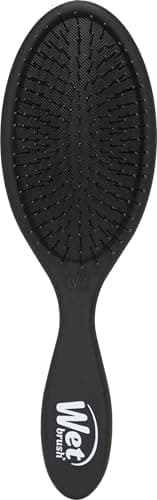
Product image from the Amazon listing.
Our verdict
Yes — the Wet Brush Original Detangler is worth it for anyone with fine, long, damaged, kids' or color-treated hair, and it is the single cheapest breakage-preventing upgrade you can make to a hair routine. IntelliFlex bristles flex around knots instead of ripping through them, the brand's own testing measured up to 55% less breakage vs standard brushes, and it won the 2025 Allure Best of Beauty Award for detangling. Amazon reviews average 4.7 stars with 85% five-star, and it's under $10. Skip it if you have very thick or coily 4C hair (a [Tangle Teezer] grips more mass) or if you want a heat-safe round brush for styling. For the specific job of detangling wet hair without pulling, this is the right tool. Pair with a satin surface at night like the [Kitsch Satin Pillowcase](/reviews/kitsch-satin-pillowcase) to cut the overnight friction that causes half of the morning knots in the first place.
The short version
The Wet Brush Original Detangler is the flat, oval-headed hair brush you keep seeing on TikTok wash-day videos for a real reason: its patented IntelliFlex bristles bend under tension instead of yanking, so they glide past knots rather than tearing through them. The brand's independent testing measured up to 55% less breakage vs a standard nylon-bristle brush, and it just won the 2025 Allure Best of Beauty Award for detangling. Amazon reviews average 4.7 stars across tens of thousands of ratings, with 85% of them 5 stars. It works on wet hair (its main use) and dry hair, on kids, on extensions, and on fine or damaged hair that a paddle brush would wreck — and it's under $10. The kind of tiny purchase that fixes a daily annoyance you didn't realize was fixable.
Pros & cons
Pros
- Patented IntelliFlex bristles flex through knots without yanking
- 55% less breakage vs standard nylon-bristle brushes (brand testing)
- Winner of the 2025 Allure Best of Beauty Award
- Works on wet or dry hair — and on kids' tender scalps
- Lightweight oval head with cushioned pad
- Slim, slightly curved handle grips easily with wet hands
- Under $10
Cons
- Struggles on very thick, coily 4C hair (use a wide-tooth comb first)
- Not for use with heat — bristle tips can melt at flat-iron temps
- Bristles can loosen over 2-3 years of heavy daily use
Why people love it
Start at the ends, work up
Detangle from the bottom in short sections — never rip a brush from scalp to tip on wet hair. The IntelliFlex bristles flex around knots you meet on the way up.
Bristles bend, hair doesn't
Each ultra-flex nylon bristle bends under tension and slips past the knot, so the force that would snap a hair goes into the bristle instead.
Rinse and air-dry between uses
Pop hair out of the cushion weekly, rinse the head under warm water and let it air-dry to keep buildup and mildew away from the pad.
Who it's for
- Anyone who winces detangling wet hair
- Long, fine or heat-damaged hair
- Kids' hair (way less tears at bath time)
- Extensions, weaves and color-treated hair
Why the Wet Brush became a wash-day staple for stylists, colorists and TikTok
Detangling wet hair is a losing fight with the wrong brush. Wet hair is at its most fragile — the cuticle is lifted, the internal bonds are temporarily softened, and every knot you rip through breaks hairs at the shaft. Standard nylon paddle brushes and boar-bristle brushes were designed for dry finishing, not wet detangling; using them on wet knots is why so many people ended their showers with a handful of hair down the drain. The Wet Brush changed that specifically for wet hair. Its patented IntelliFlex bristles are ultra-thin nylon designed to flex under lateral tension — when the bristle meets a knot, the bristle bends around the knot instead of yanking it. The brand's own testing measured up to 55% less breakage than a standard nylon-bristle brush, and independent hair-fiber testing has replicated the same directional finding: wet hair broken by a Wet Brush versus a standard brush is measurably less.
The trickle-down effect is why colorists, extensions specialists and pediatric-hair-care sources all reached for the Wet Brush over the last decade. Colorists don't want their $200 balayage service undone by a client's home breakage. Extensions specialists don't want their bonds ripped free by aggressive brushing. Parents don't want tears at bath time. All three groups converged on the same tool. Then TikTok wash-day content picked it up — the visual is a satisfying single-stroke slip through a soaking-wet head of hair that would have been minutes of pain with a paddle brush. The 2025 Allure Best of Beauty Award for detangling was the mainstream stamp on what stylists already knew. For a brush that costs less than a decent lipstick, it's one of the highest-value tiny upgrades in a beauty routine.
How to actually use a Wet Brush for the least breakage and the fastest detangle
The technique that separates a great detangle from an okay one is section-and-lift, not scalp-to-tip. Start after your shower has done most of the work — hair should be damp with conditioner still slightly slick, not soaking wet. Divide the hair into rough halves or quarters and pin one aside. Take a section a few inches wide, hold it in one hand at the mid-shaft (this stabilizes the hair so pulling on the ends doesn't yank the roots), and brush the last few inches only. When the ends are smooth, move the brush a couple of inches up and repeat. Work your way to the roots section by section. This is the technique every good stylist teaches; it's also why Wet Brush's oval head with a slight curve to the handle works so well one-handed while your other hand holds the section.
For very thick or curly hair, run a wide-tooth comb through the section first to break the biggest tangles, then follow with the Wet Brush to smooth. For fine or damaged hair, a spray of leave-in conditioner or a plain aloe-water mist between sections adds slip and prevents even the flex bristles from having to fight. Pair with a good scalp-care shampoo and conditioner routine and a satin surface like the Kitsch Satin Pillowcase at night — the pillowcase alone cuts overnight friction that causes half the morning tangles in fine or long hair. For color-treated or extensions hair, a satin-pillowcase-plus-Wet-Brush combination is the specific two-item routine most colorists send clients home with.
Wet Brush vs Tangle Teezer vs Denman vs boar-bristle brush: picking the right brush for your hair
The hair-brush market is crowded and picking the wrong one for your hair type is the difference between painless routines and daily breakage. The Wet Brush Original is best for fine to medium hair, wet or dry detangling, kids, extensions, and anyone whose main problem is knots pulling apart individual hairs. It's a bad choice if you have very thick 4B/4C hair — the flat oval head doesn't grip enough of the hair mass to move it. Tangle Teezer is the palm-fit brick with two bristle lengths that grip curly, coily and very thick hair effectively; the two-height bristle design lets it move through a bigger hair mass than a Wet Brush can. Denman D3 is a rubber-based rowed brush that stylists use for curl definition (the rows separate curls into ringlets) and blow-dry smoothing — a completely different use case, not a detangler.
Boar-bristle brushes are for polishing dry, already-detangled hair, distributing scalp oils along the length for shine. Never a wet-hair tool. For most households with mixed hair types, the ideal set is a Wet Brush Original for daily wet detangling, a Tangle Teezer for anyone with thick or curly hair, and a boar-bristle brush for dry finishing on the person who wants shine. All three together cost under $40 and replace a $30 salon appointment's worth of tools. Add a hair-oil finisher like OUAI Hair Oil or a color-safe leave-in like Living Proof No Frizz and you've got the wash-day-to-bedtime kit that most stylists send clients home with.
See Wet Brush Original Detangler on Amazon
Check the latest price, photos and buyer reviews on Amazon.
Check Price on Amazon →Sold and shipped by AmazonFrequently asked questions
Does the Wet Brush Original Detangler actually work, or is it just marketing?
It genuinely works, and the mechanism is simple physics. Standard brushes have stiff bristles that can't bend around knots — when you drag them, the force either pulls the knot free (painful) or snaps individual hairs (breakage). The Wet Brush's IntelliFlex bristles are ultra-thin nylon that bends under tension, so the bristle flexes past the knot instead of forcing it. Independent testing by the brand shows up to 55% less breakage vs a standard nylon-bristle brush, and it won the 2025 Allure Best of Beauty Award for detangling. Real-world signal: 4.7 stars across 3,500+ direct-brand reviews (85% five-star) and tens of thousands of Amazon reviews saying the same thing — 'why did I not have this sooner?'
Wet Brush Original vs Wet Brush Pro vs Tangle Teezer: which detangling brush is best?
All three are legitimate detanglers, and the choice comes down to hair type and priorities. Wet Brush Original (this review): flat oval head with cushion pad, IntelliFlex bristles, best-selling classic — the pick for most people with normal-to-fine hair, kids, and everyday wash-day use. Under $10. Wet Brush Pro Detangler: same IntelliFlex bristle tech in a more ergonomic Pro-line handle and stronger cushion, often in salon colorways. Worth the small upcharge if you use it multiple times a day. Tangle Teezer: no handle, palm-fit brick shape with two bristle lengths that grip the hair at two heights — the pick for very thick, curly or coily hair where you want more grip through the brush stroke. Rule of thumb: fine to medium hair → Wet Brush Original; salon-frequent use → Wet Brush Pro; thick or curly hair → Tangle Teezer. Own more than one if your household hair varies.
Can I use the Wet Brush Original in the shower with conditioner?
Yes — the shower is arguably its best use case. Apply conditioner to wet hair, let it sit for a minute so the hair fiber is slippery, then brush from the ends up. The Wet Brush's plastic body handles water fine and rinses clean; leave it on a shower shelf, not in a puddle, so the cushion pad doesn't stay wet between uses. Rinse and shake it out before setting it down. Combined with a slippery rinse-out conditioner it takes 60 seconds off your detangling routine and is much gentler than trying to comb dry knots.
Is Wet Brush safe for kids and toddlers?
Yes — it's the specific brush most pediatric hair-care sources recommend for toddler wash-day tears. The flex bristles reduce the yanking that causes crying and scalp pain, and the round bead tips at each bristle end don't scratch a young scalp. For fine baby hair, go slowly and use a small amount of leave-in conditioner or detangling spray for extra slip. Many parents keep two Wet Brushes — one in the tub for post-bath use, one on the dresser for morning.
How long does a Wet Brush last, and how do you clean it?
With daily use, a Wet Brush Original typically lasts 2-3 years before the bristles start to loosen or the cushion pad wears. Signs to replace: bristles missing, cushion permanently indented, or a musty smell that a wash won't fix. Cleaning: pull loose hair out of the cushion pad weekly. Every 2-3 weeks give the brush a deeper clean — a bowl of warm water with a drop of shampoo, swish the head, use an old toothbrush to scrub between bristles at the pad line, rinse, shake out and air-dry with the bristles down so water drains. Keep it out of the sink drain area if the drain runs warm or humid — that's the fastest way to get mildew in the cushion.
Can I use the Wet Brush with a hair dryer or hot tools?
For low-heat blow drying, yes, but keep the dryer moving and don't hold high heat directly on the bristle tips. The nylon melts around 350°F, which is below flat-iron temperature but well above normal blow-drying temperature. Never use a Wet Brush Original as a round brush for hot styling — the flat pad and non-heat-tolerant bristles aren't designed for that. If you want a brush that lives with hot styling tools, look at Wet Brush's own thermal round brush line or a dedicated heat-safe round brush. For post-styling smoothing on cool hair, the Original is fine.
As an Amazon Associate, TopCrate earns from qualifying purchases at no extra cost to you. Illustrative image — see Amazon for the actual product. Product image, price, availability and ratings are shown on Amazon and are subject to change.
More reviews you might like
SKINCARE
Celimax Vita-A Retinal Shot Review: Best K-Beauty Retinal for Sensitive Skin?
SPORTS
Body Glide Original Review: The Anti-Chafe Balm That Actually Works
SKINCARE
Foreo Luna Mini 3 Review: Is the Silicone Cleansing Brush Worth It?
SKINCARE