TRENDING ON AMAZON
Vitruvi Stone Ultrasonic Essential Oil Diffuser Review: Is It Worth It?
The white ceramic essential oil diffuser that's been on every 'design-conscious home' Pinterest board of the last five years — Vitruvi's Stone is a real ultrasonic diffuser dressed up as a piece of ceramic sculpture, and it's the one people put on the credenza.
Quick answer: Yes — the Vitruvi Stone Diffuser is worth $124 for the specific customer it's designed for: people who care about how their home looks and want their wellness objects to double as design objects. The ceramic construction, minimalist aesthetic, and 500-square-foot coverage make it the diffuser you'll actually leave on the credenza rather than hide in a cabinet. It's not the highest-performance diffuser at the price (cheap plastic alternatives have stronger scent throw), but it's the one that looks intentional in a designed space. For anyone who's tired of plastic diffusers that clash with their interior, the Vitruvi Stone is genuinely the pick.
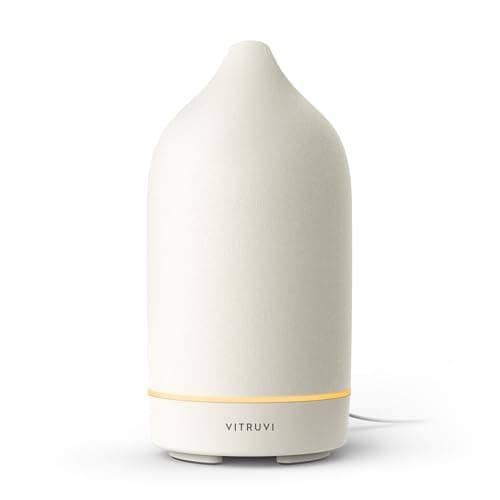
Product image from the Amazon listing.
Our verdict
Yes — the Vitruvi Stone Diffuser is worth $124 for the specific customer it's designed for: people who care about how their home looks and want their wellness objects to double as design objects. The ceramic construction, minimalist aesthetic, and 500-square-foot coverage make it the diffuser you'll actually leave on the credenza rather than hide in a cabinet. It's not the highest-performance diffuser at the price (cheap plastic alternatives have stronger scent throw), but it's the one that looks intentional in a designed space. For anyone who's tired of plastic diffusers that clash with their interior, the Vitruvi Stone is genuinely the pick.
The short version
The Vitruvi Stone is the specific essential oil diffuser that made 'design-forward wellness objects' a real product category. Instead of the plastic ultrasonic diffusers that dominate Amazon (often shaped like fake wood grain or pastel eggs), Vitruvi sells a genuine ceramic dome — porcelain-white, matte, with a single small opening at the top and a subtle light around the base. It scents a 500-square-foot room, runs 4 hours continuous or 8 hours intermittent, and looks like an object you'd buy from a design store rather than a wellness gadget. The trade-off is real: it's expensive at $124, the scent throw is subtler than cheap plastic diffusers with more powerful atomizers, and it holds only 90ml of water so needs refilling often. But for anyone who cares that a wellness product looks like it belongs in their house rather than a discount pharmacy, the Vitruvi Stone is genuinely the pick.
Pros & cons
Pros
- Real ceramic construction (not plastic pretending)
- Elegant minimalist design that suits any interior
- 4-hour continuous or 8-hour intermittent runtime
- Subtle base light for evening ambient use
- Automatic shut-off when water runs out
- Works with all standard essential oils
Cons
- Expensive at $124 vs $25-40 plastic alternatives
- Scent throw is subtler than more aggressive plastic diffusers
- Only 90ml water capacity — needs refilling twice per day
Why people love it
Fill and drop essential oil
Remove the ceramic top, fill the water reservoir to the marked line (about 90ml), add 4-8 drops of essential oil directly to the water.
Choose continuous or intermittent
Press the button once for 4-hour continuous mist, twice for 8-hour intermittent (30-second on, 30-second off cycle), or long-press for the ambient light without mist.
Ultrasonic vibration disperses
An ultrasonic plate vibrates at 2.4MHz, breaking the water and oil into an ultra-fine mist that disperses evenly through the room via the single top opening.
Who it's for
- Design-conscious homes where wellness objects need to look intentional
- Small offices and living rooms (up to 500 sq ft)
- Gift-shoppers looking for a housewarming or hostess gift
- Anyone tired of plastic diffusers that look like party favors
Why the Vitruvi Stone Diffuser became the design world's favorite wellness object
Before Vitruvi launched in 2013, the essential oil diffuser market was almost entirely plastic — inexpensive Chinese-manufactured units with colorful LED lights, plastic 'wood grain' textures and shapes that ranged from vaguely spa-like to cartoonish. Vitruvi's founders came from design backgrounds and recognized a specific market gap: aromatherapy was becoming mainstream through wellness culture, but the physical objects doing the diffusing didn't fit into the aesthetically-considered homes that mainstream wellness customers were building. Their solution was to design a diffuser first as a piece of ceramic sculpture — matte white porcelain, minimalist proportions, a single top opening — and second as a functional aromatherapy device. The Stone launched in 2016 and became one of the most-Pinterested wellness objects of the following decade.
The design decisions that made it iconic: opaque ceramic instead of translucent plastic (no LED colors visible through the material), single unobtrusive top opening for the mist (no complex vents or grilles), matte finish instead of glossy (matches modern interior trends), subtle base light instead of top-mounted (adds ambient warmth without being a lamp), and the specific proportions of a tea kettle shrunk down. The design intentionally references domestic tabletop objects — a decorative bowl, a small sculpture — rather than tech gadgets. That framing is why customers put the Stone on their credenza, dining table, or bedside — locations where a plastic diffuser would look out of place. Vitruvi has since expanded into other design-forward wellness objects, but the Stone remains the flagship product and the reason to know the brand. For a similar 'wellness object that looks like design' vibe on the plate, the Fellow Stagg EKG kettle is the coffee-side equivalent.
Building a home aromatherapy routine that actually enhances daily life (rather than being aspirational shelf decor)
Most essential oil diffusers get bought with enthusiasm and used for two weeks, then sit as decorative shelf objects. The specific reason: no routine. To make a diffuser actually improve daily life, tie it to specific times and specific scent-to-mood associations. Morning routine (7-9am): peppermint or lemon oil for energy and focus — run in the kitchen or home office during your first coffee. Midday reset (12-2pm): eucalyptus or tea tree oil for a mental reset — brief 30-minute run during lunch break. Evening wind-down (7-9pm): lavender or chamomile oil for relaxation — start when dinner ends and let it run through your evening routine. Nighttime (bedroom, 9-11pm): lavender only, run intermittent for 8 hours during sleep — helps sleep-onset and provides consistent olfactory cue that it's rest time.
Beyond the daily routine, tie specific scents to specific occasions to build ritual associations. Weekend morning: bergamot + orange for weekend mood. Cleaning day: lemon + tea tree for that 'clean home' scent memory. Cozy evening in fall/winter: cedarwood + cinnamon for warmth. Studying/deep work: rosemary + peppermint for focus (research-supported for concentration). The specific scents matter less than consistency — pick 4-5 oils, use them at consistent times, and your brain builds strong scent-mood associations within 3-4 weeks. Pair the diffuser with a Yogasleep Dohm white noise machine for the ultimate nighttime sensory setup — scent + sound working together for sleep quality that no single object delivers.
Vitruvi Stone vs cheaper alternatives: what you actually pay for at the $124 price point
At $124, the Vitruvi Stone costs 3-5× what a functional plastic ultrasonic diffuser from Amazon costs (typically $25-40 for a 300ml plastic model). Three specific things justify the price differential for the right customer. First, materials: the ceramic body is genuinely nicer to look at and touch than any plastic, doesn't yellow with age, doesn't crack from thermal cycling, and doesn't absorb oil residue that stains cheaper diffusers permanently after 6-12 months. If you keep objects in your home for 5+ years, this material advantage compounds. Second, design longevity: minimalist matte-white ceramic sculpture will look intentional in 2035; a plastic 'faux wood grain' diffuser will look dated in 2027. If the diffuser is visible in a designed room, longevity of aesthetic matters. Third, brand-and-support: Vitruvi has customer service, replacement parts, and clear warranty — cheap diffusers from unknown Amazon brands are typically unsupported and hard to repair.
Where the Vitruvi Stone loses to cheaper alternatives: raw functional performance. A $40 plastic 300ml diffuser typically has a more powerful ultrasonic plate, larger water capacity for longer runtime, and stronger mist output for larger rooms. If your priority is 'maximum aromatherapy dispersion for lowest cost,' the plastic wins. If you'd never leave the diffuser in visible sight because it's ugly, buy the plastic one and hide it. If you want the diffuser to be genuinely visible in a designed room and represent a small piece of the room's aesthetic, buy the Vitruvi. The two are optimizing for different things and both are legitimate choices for different customers.
See Vitruvi Stone Diffuser on Amazon
Check the latest price, photos and buyer reviews on Amazon.
Check Price on Amazon →Sold and shipped by AmazonFrequently asked questions
Is the Vitruvi Stone Diffuser worth $124?
For people who care about how their home looks and would consider a diffuser as much furniture as function — yes, the Vitruvi Stone earns its price. The ceramic construction is genuine (not plastic pretending), the design is timeless enough to still look good in 5 years, and it works as an actual diffuser without being an eyesore. For people who just want essential oil dispersion and don't care about aesthetics — no, spend $25-40 on a plastic ultrasonic diffuser that has more powerful atomization and better scent throw. The Vitruvi is genuinely a design object first, functional diffuser second. If either of those descriptions doesn't sound like you, save the money.
Vitruvi Stone vs cheap Amazon ultrasonic diffusers: what's actually different?
Three material differences and one performance trade-off. Materials: Vitruvi uses real ceramic (heavier, more premium feel, doesn't yellow or crack over years); cheap Amazon diffusers use plastic that can discolor, absorb oil residue, and looks less premium after 6-12 months. Design: Vitruvi has a minimalist single-opening dome that suits modern interiors; cheap diffusers often have visible LED strips, plastic 'wood grain' textures, or colorful cycling lights that look juvenile. Performance: cheap diffusers usually have more powerful atomizers that produce visible mist plumes and stronger scent throw over larger areas, but they're louder and use more water; Vitruvi's mist is subtle and the scent throw is gentler. For pure functional dispersion, cheap wins. For an object that looks intentional in a designed space, Vitruvi wins. Choose based on your priority.
How much water and how many drops of essential oil does the Vitruvi Stone use?
90ml water reservoir (about 3 fl oz, filling to the line inside), with 4-8 drops of essential oil per fill depending on how strong you want the scent. Start with 4 drops and increase if the scent is too subtle. Common oils that work well: lavender for bedrooms, peppermint for offices, eucalyptus for congestion, lemon or bergamot for kitchens. Avoid citrus oils on the ceramic surface (they can leave slight discoloration over years — clean immediately if any drops spill on the outside). One fill lasts 4 hours continuous or 8 hours intermittent. For an all-day scent, plan to refill twice per day; for evening use, one fill in the late afternoon is plenty. Water-and-oil mix should be replaced daily rather than left for multiple days to prevent oil residue buildup.
Which essential oils work best in the Vitruvi Stone Diffuser?
Pure single-note essential oils diffuse most reliably. Best beginners: lavender (calming, universally-liked), peppermint (energizing), eucalyptus (respiratory), lemon (fresh and clean), tea tree (antimicrobial). Blend options that work well: 'Cozy Home' (cedarwood + orange + cinnamon), 'Sleep' (lavender + chamomile + bergamot), 'Focus' (rosemary + peppermint + lemon), 'Fresh' (eucalyptus + lemon + tea tree). Vitruvi sells their own blends but any good-quality essential oil brand works — Plant Therapy, Now Essential Oils, and Aura Cacia are widely-available and reasonably priced. Avoid fragrance oils (synthetic scents made for candles) and 'aromatherapy oils' that are diluted with carrier oils — both leave residue in the diffuser and don't disperse well. Pure therapeutic-grade essential oils are the right input.
How do I clean the Vitruvi Stone Diffuser and prevent buildup?
Clean weekly with the manufacturer-recommended routine: empty any remaining water, wipe the water reservoir with a soft cloth dampened with white vinegar (removes mineral buildup and oil residue), rinse with clean water, and dry with a soft cloth. Never submerge the entire diffuser in water — the ultrasonic components are near the base. For deeper cleaning every 2-3 weeks, fill the reservoir with water and 2-3 drops of dish soap, run the diffuser for 5 minutes, then empty and rinse. This removes accumulated oil residue on the ultrasonic plate that causes reduced mist output over time. If you notice reduced mist output or clicking sounds, it's usually mineral buildup — a vinegar cleaning restores full function. Don't use bleach, harsh chemicals, or abrasive scrubbers on either the ceramic exterior or the reservoir interior.
Vitruvi Stone vs Vitruvi Cloud vs Vitruvi Glow: which Vitruvi diffuser should I buy?
Vitruvi's product line has three main diffusers with meaningfully different use cases. Stone is the flagship ceramic dome — best for 500 sq ft rooms, 4-hour runtime, most iconic aesthetic. Cloud is larger (200ml reservoir vs 90ml) with 7-hour runtime — best for open-plan living areas and larger rooms, still ceramic but slightly less minimal design. Glow is a smaller portable version — 100ml reservoir, USB rechargeable for cordless use, best for moving between rooms or travel. For most people, Stone is the pick — it's the design object worth having. Cloud is worth the upgrade if you have a large open-plan main living space (kitchen-dining-living combined) where Stone's coverage is inadequate. Glow is worth adding as a second diffuser for the bedroom if Stone is in the main room.
As an Amazon Associate, TopCrate earns from qualifying purchases at no extra cost to you. Product image, price, availability and ratings are shown on Amazon and are subject to change.