HANDS-ON REVIEW
PMD Personal Microderm Device Review: Is It Worth It?
The Personal Microderm wand from PMD — spinning exfoliation discs plus calibrated suction — that swaps $150 spa microderm visits for a weekly 5-minute treatment at home.
Quick answer: Yes — the PMD Personal Microderm (the microderm MD wand you've seen everywhere) is worth it for anyone paying for exfoliation facials or fighting dull texture with products alone: it's the real spa mechanism in a weekly 5-minute pass that pays for itself in about two skipped appointments. Respect the technique rules and it's the rare beauty device with same-month, visible receipts.
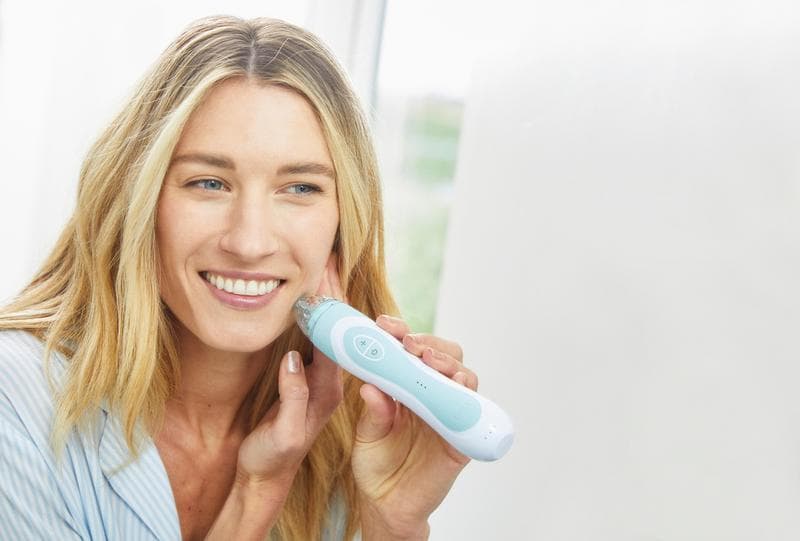
PMD combines crystal exfoliation discs with vacuum suction in one pass. Photo: PMD Beauty
Our verdict
Yes — the PMD Personal Microderm (the microderm MD wand you've seen everywhere) is worth it for anyone paying for exfoliation facials or fighting dull texture with products alone: it's the real spa mechanism in a weekly 5-minute pass that pays for itself in about two skipped appointments. Respect the technique rules and it's the rare beauty device with same-month, visible receipts.
The short version
Microdermabrasion is the spa treatment with the least mystique and the most receipts: physically lift the dead outer layer of skin and the fresh layer beneath looks brighter, smoother, and drinks in skincare properly. Spas charge $100-200 a session. The PMD Personal Microderm does the same mechanics at home — aluminum-oxide crystal discs spin while calibrated vacuum suction lifts the skin to meet them, exfoliating and boosting circulation in one pass. Color-coded disc intensities let you start ultra-gentle and work up; face and body caps come in the kit.
Pros & cons
Pros
- Real microdermabrasion mechanics: spinning crystals + suction
- One weekly 5-minute pass replaces $100+ spa sessions
- Color-coded discs from ultra-sensitive to intense
- Face, body and blackhead caps in the kit
- Smoother texture and brighter tone most users see in weeks
- Serums and moisturizers absorb visibly better after
Cons
- Technique matters — quick passes, never hover
- Skin looks flushed for a few hours after treatment
- Not for active acne, rosacea flares or irritated skin
How it works
Prep and pick a disc
Start with the white ultra-sensitive disc on clean, dry, taut skin — graduate intensities only over weeks.
Quick, even passes
Glide the spinning disc across each zone in single fluid strokes while the vacuum lifts skin to the crystals — never pause in place.
Once a week, then hydrate
One weekly session, then moisturizer and daily SPF — fresh skin needs sun protection.
Who it's for
- Dull, rough or uneven texture that makeup exaggerates
- People spending spa money on exfoliation facials
- Skincare devotees whose products sit on dead skin
- Body-care needs too: arms, legs, décolleté
Why exfoliation is the treatment with receipts
Skin naturally sheds its outer layer on a roughly monthly cycle — and that cycle slows with age, letting dead cells pile up into the dullness, rough patches and clogged pores everyone fights with products. Microdermabrasion doesn't persuade skin chemically; it removes the pileup mechanically, which is why results are visible the same week rather than promised for month three.
The suction is the underrated half: it lifts skin taut against the disc for even exfoliation while stimulating blood flow — the post-treatment glow — and it's what separates true microdermabrasion from a fancy scrub. That's the mechanism spas bill three figures for, and it's the same one in the wand.
PMD vs spa treatments vs chemical exfoliants
Against the spa: the mechanics match, the crystals are the same aluminum oxide, and the device pays for itself in about one-and-a-half skipped appointments; you trade the aesthetician's hand for a short learning curve. Against acids (AHAs/BHAs): chemistry dissolves bonds between dead cells, physical removal lifts them — many routines use both, on different days, never the same night.
Where PMD specifically earns its spot in a crowded device market: it's the category's original, with a decade of iterations, replaceable disc supplies that are cheap and easy to get, and a kit that covers face and body instead of face-only.
Technique and safety: how not to overdo it
Every microdermabrasion mistake is the same mistake: too much. Use the lightest disc for the first month even if it feels mild, keep the wand moving in quick single passes per area, and hold skin taut with your free hand. Flushing for a few hours after is normal; soreness the next day means you lingered or jumped intensity too fast.
Skip treatment over active breakouts, rosacea flares, sunburn or broken skin — exfoliating inflammation makes it worse. Afterward, hydrate and wear SPF religiously: you've just removed skin's dead-cell sun buffer. Once weekly is the ceiling; more isn't deeper results, it's a compromised barrier.
How PMD layers with retinol, bakuchiol and chemical exfoliants — the weekly schedule that works
Microdermabrasion and topical actives both accelerate cell turnover — combined carelessly they'll strip your skin barrier in a week. The pattern dermatologists teach is 'stagger, don't stack.' If your routine already includes retinol (or the gentler bakuchiol alternative), the safe schedule is: PMD on Sunday morning, then no actives for 48 hours (Sunday and Monday nights), then resume your normal Tuesday-through-Saturday retinol nights. Chemical exfoliants (glycolic, lactic, salicylic acid) get the same treatment — never on the same day as PMD, and give at least one buffer night between. Vitamin C and hyaluronic acid are fine to keep using — they're antioxidant and hydrator rather than exfoliant, and they play well with a freshly-microdermed face.
The layering payoff is real when you stagger it right: mechanical exfoliation (PMD) removes the built-up dead layer that blocks product penetration, and the next morning your serums and moisturizers absorb visibly better, giving your actives (retinol, peptides, vitamin C) more direct access to living skin. Prescription tretinoin users need extra caution — talk to your dermatologist before adding PMD to a tretinoin routine, since the combination can be too aggressive. For pregnant users on gentler routines built around bakuchiol and peptides (the Fiera Skin Renewal System is the canonical example), PMD once every 10-14 days rather than weekly avoids over-processing skin that's already reacting to hormonal changes.
Try PMD Personal Microderm for Yourself
Available now for $159.00.
Check Availability & Price →Ships to your doorFrequently asked questions
Is the PMD Personal Microderm worth it?
Yes — if you already spend on exfoliation facials or your products keep sitting on top of dull skin. The PMD is the original at-home microdermabrasion device and uses the same mechanics as the spa version: spinning aluminum-oxide crystal discs plus real vacuum suction. It pays for itself in roughly two skipped spa sessions, comes with color-coded intensity discs (start on the white ultra-sensitive), and includes body caps for arms, legs and décolleté. Real weekly consistency beats stronger settings — most users see smoother texture and brighter tone within a few sessions.
Does at-home microdermabrasion really work?
Yes — it's the same mechanics as the spa version: aluminum-oxide crystals exfoliate while vacuum suction lifts skin and boosts circulation. Texture and brightness improvements typically show within the first few weekly sessions.
How often should I use it?
Once a week, maximum. The results come from consistent weekly cycles, not intensity — overuse compromises the skin barrier instead of improving it.
Does it hurt?
It feels like a scratchy vacuum gliding across the skin — odd, not painful, on the correct disc. Post-treatment flushing for a few hours is normal and settles.
Which disc do I start with?
The white ultra-sensitive disc, for at least the first month, regardless of how tough your skin feels. Graduate one intensity at a time; discs are color-coded and replaceable.
Who shouldn't use it?
Skip active acne, rosacea flares, sunburn, and broken or irritated skin — and if you're on prescription retinoids or recent professional peels, ask your derm first.
Can I use it on my body?
Yes — the kit includes a larger body cap for arms, legs, chest and hands, where rough texture and dullness respond just like facial skin.
Microderm MD review — is PMD the same as the microderm MD you see on TikTok?
Yes — 'microderm MD' is the informal name most social videos and reviews use for the PMD Personal Microderm device. 'PMD' originally stood for Personal Microderm Device (later rebranded as PMD Beauty), and the current lineup runs from the Personal Microderm Classic (this page) up to the Personal Microderm Pro (higher-torque motor, slightly more expensive). If you're seeing microderm reviews online, they're almost certainly reviewing this PMD device — it's the category's original at-home microdermabrasion wand with over a decade of iterations and the deepest review history in the space. Compare against a chemical exfoliation option like The Ordinary Niacinamide paired with an acid serum, or against the LED-and-microcurrent SolaWave Wand for a completely different mechanism. For actual dead-skin removal via the spa-microdermabrasion mechanism, PMD is the specific product these reviews are pointing to.
When you buy through links on this page, TopCrate may earn an affiliate commission at no extra cost to you. Follow the included guidance; avoid use over active breakouts or irritated skin, and consult a dermatologist about prescription-strength routines. Prices accurate as of publish time.
More reviews you might like
SKINCARE
Celimax Vita-A Retinal Shot Review: Best K-Beauty Retinal for Sensitive Skin?
SPORTS
Body Glide Original Review: The Anti-Chafe Balm That Actually Works
SKINCARE
Foreo Luna Mini 3 Review: Is the Silicone Cleansing Brush Worth It?
SKINCARE