TRENDING ON AMAZON
Oura Ring Gen 3 Horizon Review: Is It Worth It?
The smart ring that tracks sleep, recovery and readiness without wearing a watch — the wearable elite athletes and biohackers actually use.
Quick answer: For the people who care about sleep and recovery data — and will actually act on it — the Oura Ring is the best-designed wearable you can buy. Comfortable enough to wear 24/7, accurate enough to trust, and simple enough that you'll check it every morning.
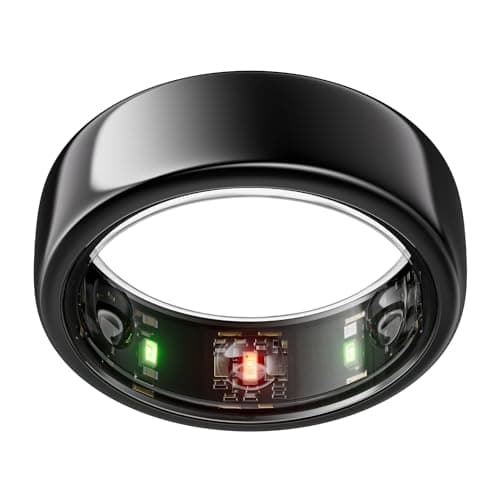
Product image from the Amazon listing.
Our verdict
For the people who care about sleep and recovery data — and will actually act on it — the Oura Ring is the best-designed wearable you can buy. Comfortable enough to wear 24/7, accurate enough to trust, and simple enough that you'll check it every morning.
The short version
The Oura Ring Gen 3 is a titanium smart ring that measures your sleep stages, heart-rate variability, resting heart rate, body temperature and daytime activity — then boils it into a Sleep, Readiness and Activity score you check each morning. Because it's a ring, you actually wear it 24/7, so the sleep and recovery data is far more consistent than a watch you take off to charge. It's the smart wearable that finally gets people to change behavior.
Pros & cons
Pros
- Genuinely comfortable to wear all day and night
- Best-in-class sleep and HRV tracking on a ring
- Simple daily Readiness score you'll actually act on
- Battery lasts 4-7 days between charges
- No screen means no notifications distracting you
- Titanium build shrugs off gym, shower and dishes
Cons
- Requires an ongoing membership subscription
- No live display — you check data in the app
- Fingers can swell, so proper sizing matters
Why people love it
Sensors on the inside of the ring
Optical heart-rate sensors, an infrared PPG sensor, a temperature sensor and an accelerometer sit against your finger — a spot with better signal than a wrist.
Sleep, HRV and temperature at night
While you sleep it tracks stages, resting heart rate, HRV, respiratory rate and body-temperature deviation from your baseline.
Three scores every morning
The app synthesizes everything into Sleep, Readiness and Activity scores — and tells you whether to push hard or take it easy today.
Who it's for
- Sleep and recovery nerds
- Athletes tracking training load
- People who don't want to wear a smartwatch
- Anyone tracking cycles, illness or stress
Is the Oura Ring worth it, or should you just wear a smartwatch?
The honest cut: if you already wear an Apple Watch, Garmin or Fitbit and love it, the Oura Ring is a duplicate — you already have heart-rate and sleep tracking on your wrist. Where Oura genuinely shines is for people who don't want a smartwatch. There are no notifications, no screen, no charging every night. You wear it in the shower, at the gym, to sleep, to bed with a partner who hates the glow of a wrist screen at 2am — and it just quietly collects data. The daily Readiness score is the interface, not the ring itself.
The other case for Oura is passive sleep and recovery data. Because you never take it off — a watch you charge nightly can miss whole nights of sleep — you get a continuous baseline of temperature, HRV and resting heart rate. That baseline is what makes Oura useful: it tells you when you're getting sick before you feel symptoms, when a big training week is catching up with you, and when travel or alcohol has genuinely blown out your recovery. If that data would change what you do the next day, it's worth it. If you'd ignore the score and push through anyway, it isn't.
Oura Ring vs Whoop vs Apple Watch: which recovery tracker fits you?
The three main serious recovery trackers each pick a different lane. Whoop is a wrist-worn strap with no screen, focused hard on athletes and training load — it has the best guidance for exercise strain and recovery, but the mandatory subscription is expensive and the strap-only design means no timekeeping or notifications. Apple Watch is the opposite: a full smartwatch with tracking as a feature, not the point. It's the right pick if you want messages, workouts, Apple Pay and health tracking in one device, but sleep and HRV data suffer because you charge it nightly.
Oura sits between them. Better sleep data than Whoop for most people (finger PPG signal is cleaner during rest), simpler daily coaching than a smartwatch, and the comfortable 24/7 wear that both wrist devices struggle with. Trade-offs: no live screen for time or notifications, no on-device workout logging as sophisticated as a Garmin or Apple Watch, and you're paying for a ring plus a subscription rather than getting apps and calls on your wrist. Pick Whoop if you're a serious athlete, Apple Watch if you want one device that does everything, Oura if sleep and recovery are what you actually care about.
How to size and get the most from your Oura Ring
Sizing is the single most important thing to get right. Order the free sizing kit that Oura sends before the real ring, and actually wear the plastic sample size for 24 full hours, including through a night of sleep. Fingers swell in heat and after salty meals, and shrink in cold and dehydration — the size you like at 3pm may cut off circulation at 6am. The right size feels snug but slides on and off with a little effort. If between sizes, size up: too-tight causes bad signal and discomfort; slightly loose still tracks well.
Once you have it, the payoff is behavioral. Check your Readiness score first thing in the morning before you decide whether to train hard. Watch the resting heart rate and body-temperature trends over a week, not day to day. Log alcohol, late meals, poor sleep or big workouts so Oura learns your patterns. And ignore any single-day score — the value is in trends. Two weeks in, you'll start noticing which habits actually break your recovery, and that's the whole point of wearing it.
See Oura Ring on Amazon
Check the latest price, photos and buyer reviews on Amazon.
Check Price on Amazon →Sold and shipped by AmazonFrequently asked questions
How is the Oura Ring different from a Fitbit or Apple Watch?
It's designed for passive 24/7 tracking rather than notifications or apps. The ring form means better sleep and heart-rate signal, no distracting screen, and comfortable all-night wear — you get sleep, HRV, temperature and readiness data a watch misses because you take a watch off to charge.
Does it need a subscription?
Yes — Oura charges a monthly membership for the full app experience (insights, trends, guided programs). Basic ring data is limited without it. Factor the subscription into the true cost of ownership.
How long does the battery last?
Typically 4-7 days per charge depending on features used. A full charge takes 20-80 minutes on the included dock. Most people top it up while showering.
How accurate is Oura's sleep tracking?
Independent research has repeatedly rated Oura among the most accurate consumer sleep trackers for total sleep time and stages, especially versus wrist-worn devices — though no consumer wearable matches a clinical sleep study.
Do I need to size the ring before buying?
Yes. Oura sends a free sizing kit before shipping the real ring — you wear the plastic sizer for 24 hours, since fingers swell and shrink through the day. Skipping this and guessing your ring size is the #1 cause of returns.
Is the Oura Ring waterproof?
It's rated for water resistance to 100 meters, so showers, swimming and dishwashing are fine. Avoid hot tubs and saunas above the temperature rating and long submersion, since heat can affect the seals over time.
As an Amazon Associate, TopCrate earns from qualifying purchases at no extra cost to you. Product image, price, availability and ratings are shown on Amazon and are subject to change.