TRENDING ON AMAZON
Neutrogena Ultra Sheer Dry-Touch Sunscreen Lotion SPF 70 Review: Is It Worth It?
The high-SPF drugstore workhorse with Helioplex broad-spectrum and a genuinely matte dry-touch finish — the specific daily sunscreen dermatologists actually keep in their own bathrooms.
Quick answer: Yes — Neutrogena Ultra Sheer Dry-Touch SPF 70 is the specific daily sunscreen to buy for the vast majority of adults. Broad-spectrum UVA/UVB at SPF 70 gives real-world margin for typical under-application, the Helioplex technology delivers stable and effective UV protection, the dry-touch matte finish absorbs in 60 seconds without shine or greasiness, non-comedogenic formulation is safe for acne-prone skin, and it layers cleanly under makeup. At $10-13 for a 3oz tube from any drugstore, it's the highest-value daily sunscreen on the market. Not appropriate for reef-zone travel (contains oxybenzone), and sensitive skin may react to chemical filters, but for standard daily wear on normal-to-oily skin it's the specific product dermatologists actually keep in their own bathrooms.
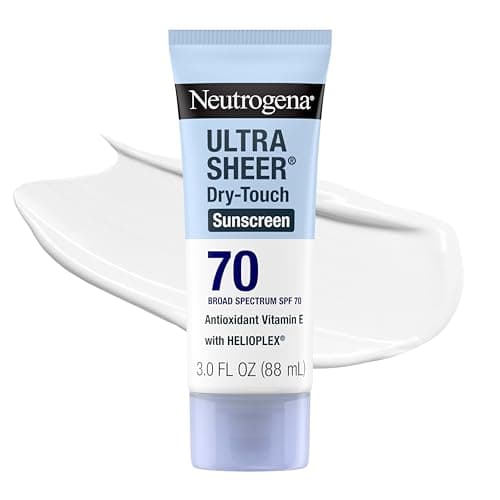
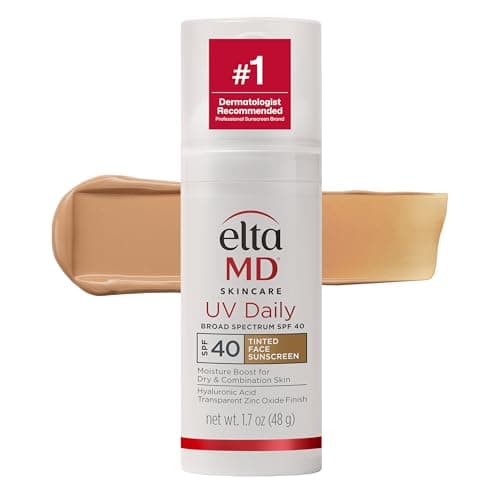
Product image from the Amazon listing.
Our verdict
Yes — Neutrogena Ultra Sheer Dry-Touch SPF 70 is the specific daily sunscreen to buy for the vast majority of adults. Broad-spectrum UVA/UVB at SPF 70 gives real-world margin for typical under-application, the Helioplex technology delivers stable and effective UV protection, the dry-touch matte finish absorbs in 60 seconds without shine or greasiness, non-comedogenic formulation is safe for acne-prone skin, and it layers cleanly under makeup. At $10-13 for a 3oz tube from any drugstore, it's the highest-value daily sunscreen on the market. Not appropriate for reef-zone travel (contains oxybenzone), and sensitive skin may react to chemical filters, but for standard daily wear on normal-to-oily skin it's the specific product dermatologists actually keep in their own bathrooms.
The short version
Neutrogena Ultra Sheer Dry-Touch SPF 70 is the daily sunscreen dermatologists reach for when they need a high-SPF option that doesn't feel like sunscreen. The Helioplex technology (avobenzone + oxybenzone + homosalate + octisalate + octocrylene at balanced concentrations) delivers broad-spectrum UVA/UVB protection at SPF 70 — enough margin for real-world under-application (most people use half the recommended dose). The dry-touch formula absorbs to a matte finish in about 60 seconds (not shiny, not greasy, no white cast on most skin tones), is oil-free and non-comedogenic (won't clog pores), water-resistant for 80 minutes (the FDA maximum), and layers cleanly under makeup without pilling. At $10-13 for a 3oz tube, it's one of the highest-value everyday sunscreens on the market — and consistently ranks in Wirecutter, Consumer Reports, Rtings and dermatology-recommendation lists for daily use.
Pros & cons
Pros
- Broad-spectrum UVA/UVB SPF 70 — high margin for under-application
- Helioplex technology delivers stable, effective chemical filter combination
- Dry-touch matte finish — no shine, no grease, minimal white cast
- Non-comedogenic, oil-free — safe for acne-prone skin
- Water-resistant 80 minutes (FDA maximum)
- Layers cleanly under makeup — no pilling
- Under $15 for a 3oz tube — high-value daily use
Cons
- Contains oxybenzone — not reef-safe for Hawaii/Key West travel
- Chemical filters can irritate very sensitive or rosacea-prone skin
- Matte finish can look flat on very dry skin — pair with a moisturizer first
Why people love it
Helioplex broad-spectrum filter blend
Neutrogena's proprietary Helioplex technology stabilizes avobenzone (the primary UVA filter) with oxybenzone, homosalate, octisalate and octocrylene (UVB filters). This blend is stable in sunlight (unlike unstabilized avobenzone which degrades within 30 minutes of UV exposure) and delivers full-spectrum UVA + UVB protection.
Dry-touch matte finish absorbs in 60 seconds
Silicone-based emollients allow rapid absorption without leaving a greasy or shiny residue. Within a minute of application, the skin has a soft matte finish that's ready for makeup or general daily wear — a genuine improvement over older-generation sunscreens that stayed tacky for 15+ minutes.
Water-resistant 80 minutes
The formula holds SPF integrity through swimming, sweating and light water exposure for up to 80 minutes (the FDA-maximum water resistance claim). Reapplication is still recommended after towel-drying or extended water exposure, but this rating covers most everyday and casual beach/pool use.
Who it's for
- Anyone wanting a real high-SPF daily sunscreen
- Oily and combination skin types who hate greasy sunscreens
- Acne-prone skin needing non-comedogenic protection
- Makeup wearers needing a base that layers cleanly
Why Neutrogena Ultra Sheer became the daily-sunscreen benchmark
The daily-sunscreen category has one specific technical challenge: delivering SPF 30+ broad-spectrum protection in a formulation people actually want to apply every single day. Historically this was hard because chemical UV filters like avobenzone (the primary UVA-blocking ingredient) are unstable in sunlight — they degrade within 30 minutes of UV exposure and become inactive. This is why older-generation sunscreens required frequent reapplication and often felt greasy, shiny or slow-absorbing. Neutrogena's Helioplex technology, launched in 2005 and refined through several generations, specifically addresses this: the formulation photostabilizes avobenzone with octocrylene and diethylhexyl 2,6-naphthalate at specific ratios that maintain UVA-blocking activity for 4+ hours in sunlight. Add oxybenzone, homosalate and octisalate for UVB coverage, and the result is a broad-spectrum daily sunscreen that remains effective through a normal day of activity.
The dry-touch finish (silicone emollient base) came in later generations and is what made this the specific mainstream recommendation. For people to actually wear sunscreen daily, it can't feel like sunscreen — no shine, no greasiness, no white cast, no pilling under makeup, no interference with primer. Ultra Sheer's dry-touch matte finish absorbs within 60 seconds and leaves a clean, makeup-ready surface. Combined with the high SPF (70 gives real-world margin for under-application), non-comedogenic formulation (safe for acne-prone skin), and $10-13 drugstore pricing, this became the specific SPF that dermatologists began keeping in their own bathrooms. It's now the default recommendation across Wirecutter, Consumer Reports, Rtings, PCMag skincare, and most dermatology practices for daily sunscreen use for adults with normal-to-oily skin.
How to actually apply sunscreen for real SPF protection (and why most people fail)
The single biggest gap in real-world sun protection isn't which sunscreen you buy — it's how you apply it. FDA-labeled SPF is measured at 2mg per square centimeter of skin, which translates to about 1/4 teaspoon for the face and neck alone, and roughly a shot glass full for the whole body. Most people apply about half of that in real use, which cuts real-world SPF roughly in half. Someone using SPF 30 at 50% application gets SPF 15 real protection. Someone using SPF 70 (this sunscreen) at 50% application still gets SPF 35 protection — enough margin for real-world use. Application technique: apply at least 15-20 minutes before sun exposure (chemical filters need time to bind to skin), reapply every 2 hours in sun, immediately after swimming/sweating/toweling off, and don't skip the ears, back of neck, chest, or backs of hands (the most commonly missed high-cancer-risk areas).
For daily face use specifically: apply after moisturizer and before makeup, dose about 1/4 teaspoon for face + neck, and reapply midday if you're outside a lot (a mineral SPF setting powder or spray works over makeup). Reapplication is the specific step 90% of people skip. Setting sunscreen powders like Colorescience Sunforgettable or Supergoop's Reapplication Powder let you refresh SPF over makeup without removing your face. For everyday indoor + short outdoor time (office worker with commute), single morning application of Ultra Sheer SPF 70 is usually enough. For outdoor days, hiking, poolside, or extended sun exposure, reapply every 2 hours. Combine this application discipline with SPF 70 formula and you get real-world sun protection that meaningfully reduces skin cancer risk, photoaging (fine lines, sun spots, sagging), and daily UV damage. Pair with a barrier-repair moisturizer like La Roche-Posay Toleriane or a serum like The Ordinary Niacinamide for the underneath layer, and you have the daily anti-aging routine most dermatologists actually use themselves.
When to pick Neutrogena Ultra Sheer vs alternatives (a practical decision guide)
Pick Neutrogena Ultra Sheer SPF 70 as your daily driver when: you have normal, oily, or combination skin; you want the highest-SPF drugstore option with a matte finish; you wear makeup and need something that layers cleanly; you're not traveling to a reef zone; and you want the best price-to-performance ratio for daily use. This covers roughly 70% of adult sunscreen users, which is why this specific product has such a large market share. Pick a mineral zinc-oxide alternative (Blue Lizard, Neutrogena Pure & Free Baby, EltaMD UV Clear) when: you're pregnant or breastfeeding and want to avoid chemical UV filters; you have rosacea or highly reactive skin that reacts to chemical filters; you're traveling to Hawaii, Key West, Aruba, Bonaire or Palau (reef bans); you want the safest possible option for children under 6 months; or you have specific chemical sensitivities.
Pick a premium chemical alternative like La Roche-Posay Anthelios or Bioré UV Aqua Rich when: you have sensitive or reactive skin that irritates from Neutrogena's more aggressive formula; you're willing to pay 2-3x more for a gentler experience; you want French or Japanese sunscreen formulations that use next-generation chemical filters (Tinosorb S/M, Uvinul A Plus) not yet FDA-approved for domestic sale; or you specifically prefer premium skincare product experiences. For makeup-focused days or as a makeup primer, pick Supergoop Unseen Sunscreen SPF 40 as the invisible layer under foundation. Most people who take skincare seriously end up owning 2-3 sunscreens for different use cases. Ultra Sheer SPF 70 is the specific one that belongs in every rotation as the workhorse daily driver.
See Neutrogena Ultra Sheer SPF 70 on Amazon
Check the latest price, photos and buyer reviews on Amazon.
Check Price on Amazon →Sold and shipped by AmazonFrequently asked questions
Is SPF 70 actually meaningfully better than SPF 30 or SPF 50?
Yes, but the difference is smaller than the numbers suggest — and the practical benefit is real for a specific reason. SPF 15 blocks 93% of UVB. SPF 30 blocks 97%. SPF 50 blocks 98%. SPF 70 blocks 98.6%. On paper the incremental blocking above SPF 30 looks small. In practice, though, most people apply about half the recommended sunscreen dose — the amount required to actually achieve the labeled SPF in FDA testing is 2mg per square centimeter (about a shot glass full for a full body, or 1/4 teaspoon for the face and neck). Real-world users typically apply about 50-70% of that dose, which cuts real-world SPF roughly in half. Starting with SPF 70 means even at 50% under-application, you're still getting SPF 30-35 real-world protection. Starting with SPF 30 means you're getting SPF 15 real-world protection. The higher SPF is functional margin for real-world use, not a marketing gimmick.
Neutrogena Ultra Sheer vs [La Roche-Posay Anthelios](/reviews/la-roche-posay-anthelios) vs [Supergoop Unseen](/reviews/supergoop-sunscreen) — which sunscreen should I buy?
All three are legitimate top-tier daily sunscreens with different specific strengths. Neutrogena Ultra Sheer SPF 70 is the value-and-availability pick — $10-13 at any drugstore, high SPF, matte finish, non-comedogenic. The default drugstore recommendation for daily use. La Roche-Posay Anthelios Melt-In Milk SPF 60 is the sensitive-skin premium pick — pharmacy-grade formulation, gentler chemical filters, French dermatology heritage, $35-40 for a similar-sized tube. Best for sensitive or rosacea-prone skin that reacts to Neutrogena's more aggressive formula. Supergoop Unseen Sunscreen SPF 40 is the invisible-primer pick — gel-cream texture, completely clear, works as a makeup primer, but SPF 40 (lower margin) and $38 for smaller tube. Best for makeup-heavy days where you need the sunscreen to disappear under foundation. Most people should own two: Neutrogena Ultra Sheer as the daily workhorse, plus either La Roche-Posay for sensitive-skin backup or Supergoop for makeup days.
Is Neutrogena Ultra Sheer reef-safe? Can I take it to Hawaii?
No — Neutrogena Ultra Sheer contains oxybenzone, which is one of the ingredients Hawaii banned in 2021 due to coral reef damage evidence. Key West, Aruba, Bonaire and Palau have similar bans. For reef-zone travel, switch to a mineral sunscreen like Blue Lizard Sensitive Mineral SPF 50+ or Neutrogena's own Pure & Free Baby (zinc oxide only) formulations. For everyday non-reef use — commutes, city walks, gym, general outdoor time in non-marine environments — the Ultra Sheer's chemical filters are safe and effective. This is the specific limitation that makes many people own two sunscreens: Neutrogena Ultra Sheer for daily use, and a mineral-only sunscreen packed for Hawaii or Caribbean travel. Sun Bum's Mineral SPF 30 and Blue Lizard's Baby line are both good reef-safe travel picks. Reef-safe formulations exist that work well; the specific chemical filters in Ultra Sheer are what make it inappropriate for reef zones.
Does it actually not leave a white cast or shine?
For most skin tones, yes — the dry-touch technology is the specific reason this sunscreen has dominated the drugstore SPF 70 category. On light and medium skin tones, the finish is genuinely matte and invisible after 60 seconds of absorption. On darker skin tones (Type V-VI on the Fitzpatrick scale), some users report a subtle white cast at high application rates — this is less pronounced than mineral zinc-oxide sunscreens but not completely absent. For dark skin tones specifically, alternatives worth considering: Black Girl Sunscreen SPF 30 (formulated specifically for darker skin), Beauty of Joseon Relief Sun (Korean brand, chemical filters, no white cast), or CeraVe AM Facial Moisturizing Lotion with SPF 30 (which uses zinc oxide and titanium dioxide but at very low concentrations for minimal white cast). For light-to-medium skin, Neutrogena Ultra Sheer's dry-touch finish is what makes it stand out among high-SPF drugstore options — most people who tried it and hated older Neutrogena sunscreens are surprised at the improvement.
Can I use it under makeup? Does it pill?
Yes — this is one of the specific strengths of Ultra Sheer. Apply after moisturizer, wait 60 seconds for full absorption, then apply primer and makeup normally. The silicone-based dry-touch base is chemically compatible with silicone-based primers (Smashbox Photo Finish, Elf Poreless Putty, Maybelline Baby Skin) and most makeup formulations. Pilling — the specific problem where sunscreen and makeup ball up into visible crumbs on the skin — is minimal to non-existent with Ultra Sheer when applied and given time to dry. Where pilling can happen: if you apply Ultra Sheer over a heavily emollient hyaluronic acid or oil-based moisturizer without waiting for full absorption. The fix: give Ultra Sheer 60-90 seconds to fully dry before applying anything on top, use silicone-based primers rather than oil-based, and don't rub or over-apply makeup on top. For daily makeup wearers, this is the specific SPF that layers cleanly with virtually every foundation, primer and setting spray on the market.
Does the SPF 70 version have more chemicals than SPF 30 versions? Is it safe?
The SPF 70 formula does contain slightly higher concentrations of the same chemical filters (avobenzone, oxybenzone, homosalate, octisalate, octocrylene) than lower-SPF versions, but well within FDA-approved concentrations for daily use. The FDA has extensively tested these five chemical filters for skin absorption and systemic safety at labeled concentrations, and the current consensus (2024-2026 review) is that they're safe for daily topical use. That said, oxybenzone specifically has been the target of increasing scrutiny for potential endocrine-disruption at high absorption levels — which is why it's banned in Hawaii for reef reasons and why some pregnancy-conscious dermatologists recommend switching to mineral-only sunscreens (zinc oxide, titanium dioxide) during pregnancy. For non-pregnant daily use in non-reef environments, Ultra Sheer SPF 70 is safe and effective. For pregnancy or reef-safe requirements, switch to a zinc-based sunscreen like Blue Lizard Sensitive Mineral SPF 50+. Everyday adult use: this is one of the most-tested and most-trusted daily sunscreens on the market with a strong safety profile.
As an Amazon Associate, TopCrate earns from qualifying purchases at no extra cost to you. Not reef-safe (contains oxybenzone) — use mineral sunscreens in Hawaii, Key West and other reef-protected zones. Consult a dermatologist for specific skin conditions. Product image, price, availability and ratings are shown on Amazon and are subject to change.
More reviews you might like
SKINCARE
Celimax Vita-A Retinal Shot Review: Best K-Beauty Retinal for Sensitive Skin?
SPORTS
Body Glide Original Review: The Anti-Chafe Balm That Actually Works
SKINCARE
Foreo Luna Mini 3 Review: Is the Silicone Cleansing Brush Worth It?
SKINCARE