HANDS-ON REVIEW
Mindinsole Knit Compression Socks Review: Is It Worth It?
Snug knit compression sleeves that give tired feet and ankles a gentle, supportive squeeze through long shifts, flights and everything-hurts evenings.
Quick answer: Worth it? As a comfort purchase, modestly yes — a snug knit compression sleeve genuinely takes the edge off long-shift, long-flight leg fatigue, and Mindinsole's is a comfortable, wearable example of the breed. Just buy it as what it is: a $19.99 support garment with no medical superpowers, an unspecified compression rating, one-size sizing, and $10–15 generic twins all over the internet. If the convenience is worth a few extra dollars to you, enjoy; if you're comparison-shopping, the multi-pack generics win on math.
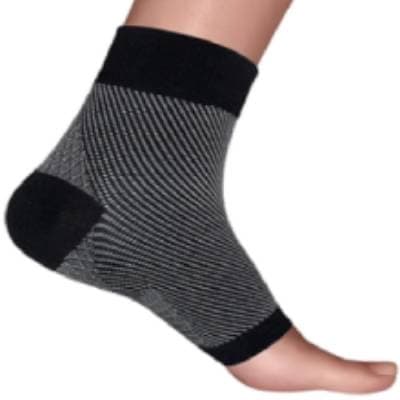
The open-toe knit sleeve hugs the arch and ankle. Photo: Mindinsole
Our verdict
Worth it? As a comfort purchase, modestly yes — a snug knit compression sleeve genuinely takes the edge off long-shift, long-flight leg fatigue, and Mindinsole's is a comfortable, wearable example of the breed. Just buy it as what it is: a $19.99 support garment with no medical superpowers, an unspecified compression rating, one-size sizing, and $10–15 generic twins all over the internet. If the convenience is worth a few extra dollars to you, enjoy; if you're comparison-shopping, the multi-pack generics win on math.
The short version
Mindinsole Compression Socks are knit, open-toe compression sleeves — a snug cotton-nylon-spandex weave that hugs the arch and ankle to give tired, achy feet and legs that supported, "held together" feeling through long shifts, flights and everything-hurts evenings. As everyday comfort compression they do what the category does: a gentle graduated squeeze, less end-of-day heaviness, and they disappear under regular socks. What they are not is medicine — there's no published mmHg rating, the fit is one-size-fits-most, and no treatment claim on the sales page deserves your trust. And since near-identical sleeves sell for $10–15, the $19.99 price buys convenience, not secret technology.
Pros & cons
Pros
- Gentle graduated squeeze takes the edge off tired, heavy end-of-day legs
- Soft breathable knit (cotton, polyester, nylon, spandex) stays comfortable for hours
- Open-toe sleeve design vents heat and slips invisibly under regular socks and shoes
- Drug-free comfort for standing jobs, long flights and road trips
- Featherweight pair (~60–70g) — easy to pack, easy to forget you're wearing
- Low-stakes $19.99 experiment if standing all day wrecks your legs
Cons
- One-size-fits-all — proper compression gear is sized by ankle and calf measurements, and fit is the whole game
- No published mmHg rating, and they're ankle-length sleeves — they don't compress the calf like the knee-high travel socks most people picture
- Near-identical generic compression sleeves sell for $10–15, often in multi-packs — you're paying up for the brand
How it works
Pull them on
Work the knit sleeve over your foot like a sock — snuggest through the arch and ankle, open at the toes. It should feel firmly hugged, never pinched or numb.
Wear through the day
Keep them on under your normal socks and shoes during the shift, flight or long drive — compression works while you're up and moving (or stuck in seat 34B).
Off at night, wash, rotate
Take them off in the evening like any compression garment, launder them like regular socks, and rotate the pair through your week.
Who it's for
- Nurses, teachers, retail and warehouse workers on their feet 8+ hours
- Frequent flyers and road-trippers with puffy-ankle travel days
- Desk workers whose feet and ankles feel heavy by evening
- Anyone building a simple, drug-free daily support kit
Do compression socks really work for tired legs and standing all day?
The honest science: graduated compression — firmest at the ankle, easing as it moves up — gives your veins a mechanical assist pushing blood back uphill, which is why the category has been standard issue for nurses, flight crews and runners for decades. For people who stand all day, snug compression garments reliably reduce that heavy, achy, end-of-shift leg feeling, and they help keep ankles from puffing up on long flights. What they don't do is anything dramatic: the benefit is comfort-scale, felt mostly in what doesn't happen by 6 p.m.
Mindinsole's version is a knit, open-toe sleeve in a cotton-polyester-nylon-spandex blend, sold as a pair, covering the foot arch and ankle. That shape matters: it's closer to the 'foot sleeve' style runners wear than the knee-high stockings the phrase 'compression socks' usually conjures, so the squeeze concentrates on arch and ankle rather than the calf. The upside of that build is comfort — it's thin, breathable, and vanishes under regular socks, which is why people actually wear them daily instead of retiring them to a drawer.
A support garment, not a treatment — read this part
Compression socks are clothing that squeezes, and it's worth saying plainly: these are for comfort, not cure. Mindinsole's marketing gestures at varicose veins and leg swelling; a $19.99 one-size knit sleeve is not how you treat either. There's no published mmHg rating here, so treat these as light, everyday comfort compression in the spirit of entry-level 15–20 mmHg gear — not the fitted, prescribed medical-grade stockings a clinician measures you for. Same honest lane as a Wellnee knee brace: support you feel, not therapy you're owed.
Two safety notes that generic sock ads skip. First, fit: compression should feel snug, never painful — numbness, tingling, or deep grooves in your skin mean too tight, take them off. Second, if you have diabetes, peripheral neuropathy, peripheral artery disease or any diagnosed circulation condition, ask your doctor before wearing any compression garment; the wrong pressure on compromised circulation can do harm rather than good. For everyone else — the standing-all-day, flying-on-Thursday crowd — they're about as low-risk as comfort purchases get.
Are Mindinsole compression socks worth $19.99?
Time for the rebrand reality check. Ankle-length knit compression sleeves in this exact style — same open toe, same gray-and-black weave, same blend — are an established generic category, selling on Amazon and in pharmacies for $10–15, frequently in two- and three-pair packs. Mindinsole's $19.99 buys one pair plus a brand name, and the brand's own track record adds friction: reviews of Mindinsole (mostly for its acupressure insoles) repeatedly flag slow shipping, unanswered support emails and sluggish refunds. Mechanically, though, the sleeve itself is the proven generic article, and it does its modest job.
So the buy/skip line: if you're already ordering through a deal you like and want one decent pair delivered without comparison-shopping, $19.99 is a defensible convenience price for a thing you'll wear weekly. If you're price-sensitive or want backups for a work week, the generic multi-pack is the smarter cart. Either way, think of compression as one piece of the on-your-feet survival kit — squeeze during the day, then recovery after: a pair of Happy Feet toe-alignment socks for the couch hours is the natural second half of the routine.
Try Mindinsole Compression Socks for Yourself
Available now for $19.99.
Check Availability & Price →Ships to your doorFrequently asked questions
Do compression socks really work?
For their actual job, yes. Graduated compression gives veins a mechanical assist moving blood back up the leg, which reliably reduces that heavy, achy feeling from standing all day and helps limit ankle puffiness on long flights. The effect is comfort-scale support, not treatment — anyone promising more than that is selling.
How tight should compression socks be?
Snug and firmly hugged — firmest at the ankle — but never painful. If you get numbness, tingling, cold toes or deep marks in your skin, they're too tight; take them off. A good pair feels like steady pressure you stop noticing, not a tourniquet.
How long can you wear compression socks each day?
Most people wear them through the active day — a work shift, a flight, a long drive — and take them off in the evening. They're not meant for sleeping unless a doctor specifically tells you otherwise.
Can I wear Mindinsole socks under regular socks and shoes?
Yes — that's the point of the thin, open-toe sleeve design. They layer under normal socks invisibly, which makes them practical for work dress codes and everyday shoes.
Who should not wear compression socks?
If you have diabetes, peripheral neuropathy, peripheral artery disease or any diagnosed circulation condition, check with your doctor before wearing any compression garment. These are a comfort accessory, and the wrong pressure on compromised circulation can cause problems instead of preventing them.
Are Mindinsole compression socks different from cheap generic ones?
Functionally, not really. This style of knit open-toe compression sleeve is a well-established generic product that sells for $10–15, often in multi-packs. Mindinsole's version is a fair example of the type at $19.99 a pair — you're paying a premium for the brand and one-click ordering, not different technology.
When you buy through links on this page, TopCrate may earn an affiliate commission at no extra cost to you. Compression socks are a comfort and support garment, not a medical treatment — if you have a circulation condition or diabetes, talk to your doctor first. Prices accurate as of publish time.