TRENDING ON AMAZON
LEVOIT Vital 200S Smart True HEPA Air Purifier Review: Is It Worth It?
The Wi-Fi smart air purifier that covers rooms up to 1875 sq ft in one hour — H13 True HEPA plus activated carbon, VeSync app control, auto mode with real air-quality sensing, and 24 dB sleep mode quiet enough for a bedroom.
Quick answer: Yes — the LEVOIT Vital 200S is the specific large-room air purifier to buy in 2026 for most buyers with a bedroom, living room or home office over 400 sq ft that needs continuous air filtration. H13 True HEPA plus activated carbon delivers verified 99.97% particulate capture down to 0.3 microns, which covers pollen, pet dander, wildfire smoke, mold spores and dust mite allergens. The built-in Wi-Fi plus VeSync app plus Alexa/Google Assistant integration adds meaningful smart-home convenience without gating basic operation behind an app. The real PM2.5 sensor drives an auto mode that actually adjusts fan speed based on measured air quality, versus running full-speed continuously and wasting energy. 24 dB sleep mode is quiet enough for bedrooms without compromise. Not the pick for very small bedrooms under 250 sq ft (the [Core 300](/reviews/levoit-core-300) is smaller and cheaper for that specific job), and the replacement filter cost is a real ongoing expense at $40-50 every 6-8 months. But for the specific job of continuous large-room air filtration with smart features at a mainstream price, the Vital 200S is the current-generation right answer. Buyers in wildfire-zone or high-pollen regions, households with pets, or anyone who wants smart-home integration on their air purifier should specifically consider this over the older Core 400S or Core 300S alternatives.
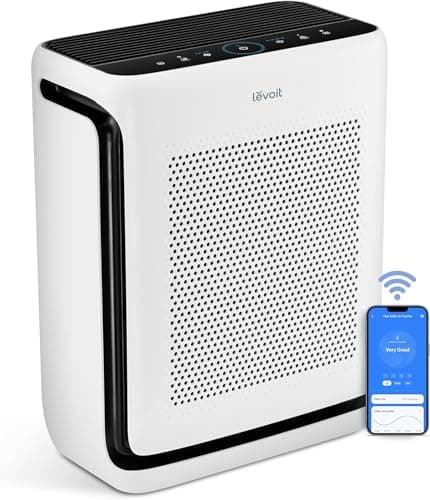
Product image from the Amazon listing.
Our verdict
Yes — the LEVOIT Vital 200S is the specific large-room air purifier to buy in 2026 for most buyers with a bedroom, living room or home office over 400 sq ft that needs continuous air filtration. H13 True HEPA plus activated carbon delivers verified 99.97% particulate capture down to 0.3 microns, which covers pollen, pet dander, wildfire smoke, mold spores and dust mite allergens. The built-in Wi-Fi plus VeSync app plus Alexa/Google Assistant integration adds meaningful smart-home convenience without gating basic operation behind an app. The real PM2.5 sensor drives an auto mode that actually adjusts fan speed based on measured air quality, versus running full-speed continuously and wasting energy. 24 dB sleep mode is quiet enough for bedrooms without compromise. Not the pick for very small bedrooms under 250 sq ft (the [Core 300](/reviews/levoit-core-300) is smaller and cheaper for that specific job), and the replacement filter cost is a real ongoing expense at $40-50 every 6-8 months. But for the specific job of continuous large-room air filtration with smart features at a mainstream price, the Vital 200S is the current-generation right answer. Buyers in wildfire-zone or high-pollen regions, households with pets, or anyone who wants smart-home integration on their air purifier should specifically consider this over the older Core 400S or Core 300S alternatives.
The short version
The LEVOIT Vital 200S is what a modern large-room air purifier should look like in 2026: it covers spaces up to 1875 sq ft in 60 minutes (or 380 sq ft in 12 minutes for near-real-time cleaning of a bedroom), uses a genuine H13 True HEPA filter that captures 99.97% of particles down to 0.3 microns, adds an activated carbon layer for odors and VOCs, and includes a washable pre-filter that catches large debris and extends the HEPA filter's life. Where it differs from LEVOIT's cheaper Core 300 is the smart features and the coverage area: built-in Wi-Fi lets you control it from the VeSync app or ask Alexa or Google Assistant to run it, the real air-quality sensor drives an auto mode that ramps fan speed based on measured PM2.5 pollution (rather than running full-blast constantly), and the fan is powerful enough for genuine large-room use rather than just bedroom coverage. Sleep mode drops noise to 24 dB — quieter than a whisper — while still filtering. For master bedrooms, open-plan living rooms, home offices with high ceilings, or anywhere the smaller Core 300 is undersized, this is the specific right pick.
Pros & cons
Pros
- H13 True HEPA — 99.97% capture at 0.3 microns
- Covers up to 1875 sq ft (larger than Core 300's 219 sq ft)
- Built-in Wi-Fi with VeSync app and Alexa/Google Assistant
- Auto mode with real PM2.5 sensor
- Washable pre-filter extends HEPA lifespan
- 24 dB sleep mode for bedrooms
- Timer, schedules and child lock via app
Cons
- Larger footprint than Core 300 — needs floor space
- Replacement HEPA + carbon filter is a real ongoing cost
- App account required for smart features
Why people love it
Three-stage filtration
Air enters through the washable pre-filter (traps hair, large dust and lint), passes through the H13 True HEPA filter (captures 99.97% of particles down to 0.3 microns, including pollen, dust mites, mold spores, pet dander and smoke particles), and then through activated carbon (adsorbs odors, cooking smells, off-gassing VOCs and cigarette smoke). Filtered air returns to the room from the top.
Auto mode reads real air quality
An onboard PM2.5 laser sensor continuously measures fine particulate pollution in the room. In auto mode, the purifier ramps fan speed up when air quality drops (cooking, someone entering with pollen on clothes, wildfire smoke infiltration) and drops fan speed to sleep-mode quiet when air is clean. Manual mode lets you set fan speed 1-4.
Wi-Fi + VeSync app + voice assistants
Connect the purifier to your Wi-Fi via the VeSync app for remote control from your phone, schedule automatic on/off times, monitor real-time air quality history, and get filter-replacement reminders. Alexa and Google Assistant integration lets you say 'Alexa, turn on the air purifier' from across the room.
Who it's for
- Master bedrooms and large primary bedrooms
- Open-plan living rooms and kitchen-living combos
- Home offices with high ceilings
- Homes in wildfire, allergen or pollution zones
How LEVOIT became the mainstream air-purifier brand (and what makes the Vital 200S the current sweet-spot pick)
The residential air-purifier category grew rapidly from a niche health product to a mainstream household appliance over the last 5-10 years, driven by three converging factors: wildfire smoke seasons becoming annual in the western US, awareness of indoor air quality's role in respiratory health and sleep quality, and the COVID-19 pandemic normalizing air-filtration devices in homes and workplaces. LEVOIT emerged as one of the mainstream winners in this expanded market — specifically because they hit an affordable price point ($100-200 range) with legitimate H13 True HEPA filtration performance, and built a brand identity around simple usability and iterative product refinement rather than premium branding.
The Vital 200S is LEVOIT's current large-room flagship, and it represents a specific evolution beyond their bedroom-focused Core 300 (which we cover here) and the older Core 400S. What differentiates the Vital 200S: (1) Larger coverage area (up to 1875 sq ft vs Core 300's 219 sq ft) makes it appropriate for the larger rooms most homes actually have — master bedrooms, open living areas, kitchen-living combos. (2) Built-in Wi-Fi and the VeSync app add smart-home integration that was previously LEVOIT's premium-tier feature. (3) Real PM2.5 sensor drives an actual auto mode that ramps fan speed based on measured air quality (versus static-speed operation that either wastes energy or under-filters). (4) The washable pre-filter is a small but meaningful engineering detail that extends the main HEPA's lifespan by capturing large debris before it hits the expensive filter. For most buyers upgrading from a smaller bedroom purifier, or buying their first purifier for a larger primary living space, the Vital 200S is the specific current-generation pick that hits the value-features-performance sweet spot better than the alternatives.
Do air purifiers actually improve health, sleep, and allergy symptoms?
The evidence for air purifier benefits is real but nuanced. What air purifiers reliably do: reduce indoor concentrations of the specific particulates their filters are designed to capture. H13 True HEPA filtration verifiably captures 99.97% of particles down to 0.3 microns, which covers pollen, dust mite allergens, pet dander, mold spores, wildfire smoke, and various pollution particulates. Studies consistently show that HEPA purifiers meaningfully reduce indoor PM2.5 concentrations during high-pollution events (wildfire smoke, urban pollution episodes) and reduce allergen exposure in homes with pets or high pollen infiltration. For people with documented allergies or asthma, this particulate reduction correlates with reduced symptom frequency and severity in multiple clinical studies.
What air purifiers don't reliably do (despite marketing claims): eliminate viruses (HEPA filters do capture virus-carrying particles, but ventilation and vaccination are more evidence-supported interventions for airborne disease transmission), improve sleep in non-allergic users (the sound of a fan can be pleasant white noise, but the air quality improvement alone isn't reliably tied to sleep quality in healthy sleepers), or serve as a substitute for medical asthma management. Where the Vital 200S specifically delivers meaningful health value: (1) Allergy sufferers in high-pollen areas or with pet allergens see measurable symptom reduction when the purifier runs consistently in the bedroom during allergy season. (2) Wildfire-smoke-zone residents (western US, Australia, increasingly the northeast US) see meaningful indoor PM2.5 reduction during smoke events, which correlates with reduced respiratory symptoms and better sleep during smoke episodes. (3) Households with pets see reduced pet dander and hair infiltration into bedrooms and living spaces. (4) Cooking-heavy households see faster clearing of cooking odors and cooking-generated particulates (VOCs, browning particulates) via the activated carbon layer. For these specific use cases, the Vital 200S is a real intervention that delivers what it promises. For general 'my air feels cleaner' claims, the psychological benefit is real but hard to distinguish from placebo — buy for the specific health issue it addresses rather than as generic wellness equipment.
Choosing the right air purifier for your specific room and situation
Matching a purifier to a room is a specific size-based calculation, and buying too small a unit for a large room is the most common mistake. The relevant spec is CADR (Clean Air Delivery Rate) — measured in cubic feet per minute of clean air the unit delivers for specific particulate types (smoke, pollen, dust). Higher CADR = more air cleaned per minute. Room-size guidelines: for a small bedroom (under 200 sq ft), a Core 300 (219 sq ft coverage) is appropriate. For a standard bedroom (200-400 sq ft), a Core 400S or the Vital 200S. For a large bedroom or medium living room (400-900 sq ft), the Vital 200S in continuous auto mode. For an open-plan living/kitchen area (900-1500 sq ft), the Vital 200S on speed 3-4 continuously, or two smaller units in separate zones. For a very large open space (1500+ sq ft), a larger purifier or multiple units. LEVOIT's stated 1875 sq ft coverage for the Vital 200S is the maximum room size where the unit provides one complete air change per hour — for rooms at that size, expect the unit to run on higher speeds most of the time. Smaller rooms allow the unit to run in sleep mode most of the time while still providing adequate filtration.
Beyond room size, consider: (1) Ceiling height — high ceilings (10+ feet) increase the room volume by 25-50% compared to standard 8-foot ceilings. Increase the coverage calculation accordingly. (2) Room use pattern — a bedroom used 8-10 hours per night needs continuous filtration during those hours; a living room used 2-3 hours per evening may only need auto-mode filtration during those windows. (3) Air-quality issue you're addressing — wildfire smoke and heavy allergens need higher CADR for effective filtration; general dust and odor control needs less. (4) Placement — put the purifier in the room where you spend the most time, not in a rarely-used space, and keep it at least 2-3 feet from walls to allow air circulation around the intake and output. Combining the right unit for the right room with proper placement and continuous operation during the relevant hours delivers meaningful air quality improvement — the specific outcome most buyers are looking for. Pair the purifier with basic complementary measures: close windows during high-pollen or high-smoke times, regular vacuuming with a HEPA vacuum, and washing bedding weekly in hot water for allergen reduction.
See LEVOIT Vital 200S on Amazon
Check the latest price, photos and buyer reviews on Amazon.
Check Price on Amazon →Sold and shipped by AmazonFrequently asked questions
Is the LEVOIT Vital 200S actually worth the upgrade over the cheaper Core 300?
Yes for larger rooms, no for small bedrooms — the two units are designed for different room sizes and use cases. LEVOIT Core 300 (~$100): covers up to 219 sq ft (a small-to-medium bedroom), 24 dB sleep mode, no Wi-Fi, no air-quality sensor, no auto mode. Best for a standard bedroom, home office cube, or dorm room. LEVOIT Vital 200S (~$150-180): covers up to 1875 sq ft (a large primary bedroom, open-plan living room, or medium home office), 24 dB sleep mode, built-in Wi-Fi + VeSync app + Alexa/Google integration, real PM2.5 sensor with auto mode, washable pre-filter. Best for large rooms, smart-home integration, or anyone who wants auto-mode ramping based on actual air quality. If your target room is under 250 sq ft and you don't care about smart features, buy the Core 300. If your target room is 400+ sq ft or you want smart control and auto mode, the Vital 200S is the right pick. Different products for different situations — pick based on room size.
How does the LEVOIT Vital 200S compare to the Coway Airmega 200M and BlueAir Blue Pure 411?
Three legitimate large-room-purifier options at different price and feature tiers. LEVOIT Vital 200S (~$150-180): H13 True HEPA plus carbon, up to 1875 sq ft, built-in Wi-Fi + app + voice assistants, real PM2.5 sensor with auto mode. Best combined value + smart features. Coway Airmega 200M (~$220-260): H13 HEPA plus carbon, up to 361 sq ft (smaller than LEVOIT despite similar unit size), 4-color air-quality indicator (visual only, no app connectivity on this model), no smart features. Best for pure-mechanical simplicity from a premium brand. BlueAir 411 (~$120-140): Different filtration approach (HEPASilent tech combining electrostatic charge with a physical filter), covers up to 175 sq ft (much smaller than Vital 200S), whisper-quiet, no smart features. Best for very small quiet spaces. For most large-room applications, the Vital 200S wins on the combination of coverage area, filtration performance and smart features per dollar. For premium mechanical simplicity, Coway. For small quiet spaces, BlueAir. Match the unit to your specific room size and feature preferences.
How often do I need to replace the filters, and what's the ongoing cost?
LEVOIT recommends replacing the combined HEPA + activated carbon filter every 6-8 months for standard residential use — sooner if you're in a heavy-pollution area (wildfire smoke, urban traffic, pet-heavy household). The washable pre-filter catches large debris and extends the HEPA's life, but doesn't replace the need for periodic HEPA replacement. The app tracks filter usage and sends a replacement reminder when it's time. Ongoing cost: LEVOIT-brand replacement filters run $40-50 each on Amazon, so annual filter cost is roughly $50-80 depending on replacement frequency. Third-party compatible filters exist for $20-30 each — they typically work but may not meet the H13 True HEPA spec claimed by LEVOIT-brand filters. For allergy or asthma users, stick with LEVOIT-brand filters to ensure the certified filtration performance. For general dust reduction and odor control, third-party filters are usually adequate. Compare to Coway Airmega 200M replacement filters at $60-90 per filter, or BlueAir 411 at $30-40 — LEVOIT's filter cost is competitive across the category.
Is the sleep mode really quiet enough to sleep next to?
Yes — sleep mode measures at 24 dB, which is quieter than a whisper (30-40 dB) and generally below the ambient noise level of a typical bedroom. Most users can't hear it running unless they specifically listen for it. The other fan speeds are progressively louder: speed 1 (about 30 dB, barely audible), speed 2 (about 40 dB, similar to a quiet library), speed 3 (about 50 dB, similar to normal room conversation), speed 4 (about 55 dB, similar to a running dishwasher). For bedroom use, run in auto mode with the sleep-mode setting activated — the purifier stays at 24 dB unless air quality drops (which briefly ramps the fan up), then returns to sleep mode when air is clean again. For living room and office use, auto mode without sleep mode is typically appropriate — the fan noise is unobtrusive during daytime activities and drops down when air quality is good.
Do I have to use the VeSync app, or does the purifier work as a standalone unit without Wi-Fi?
The purifier works as a standalone unit without Wi-Fi or the app — you can control fan speed, activate sleep mode, set the child lock, and use the auto mode via the physical buttons on the top of the unit. Wi-Fi and the VeSync app add remote control (turn it on from your phone before you arrive home), scheduling (auto on/off at specific times, or based on days of the week), real-time air quality history graphs (see how PM2.5 has changed over hours or days), filter replacement reminders, and integration with Alexa/Google Assistant/IFTTT. For users who want a purely offline device without an app account, you can skip the Wi-Fi setup entirely — the purifier operates fully via physical controls. For users who value smart home integration, the app adds meaningful convenience. Neither is required for the core air-purification function to work.
Will the Vital 200S handle wildfire smoke infiltration and heavy allergen loads?
Yes — the H13 True HEPA rating captures 99.97% of particles down to 0.3 microns, which covers wildfire smoke particulates (typically 0.4-2.5 microns), pollen (10-100 microns), pet dander (2.5-10 microns), dust mite allergens (0.1-30 microns), and mold spores (2-30 microns). For active wildfire smoke infiltration (during a smoke event when outdoor PM2.5 is elevated), run the purifier on speed 3 or 4 continuously — the higher CADR (clean air delivery rate) at higher fan speeds delivers meaningful filtration of even heavily contaminated indoor air. Close windows and doors, seal any obvious infiltration points (weatherstripping under doors), and consider adding a second purifier in a different room for whole-house coverage. For seasonal allergies (spring/fall pollen), run in auto mode continuously — the sensor will ramp fan speed up when pollen infiltration is detected. Combined with regular vacuuming with a HEPA vacuum, washing bedding weekly in hot water, and keeping windows closed during peak pollen times, the Vital 200S significantly reduces indoor allergen exposure. Not a medical treatment for asthma or allergies — see a doctor for that — but a meaningful environmental intervention that reduces the trigger load.
As an Amazon Associate, TopCrate earns from qualifying purchases at no extra cost to you. Air purifiers reduce particulate exposure but are not medical treatments. For diagnosed asthma or allergic conditions, follow your physician's guidance and use air purifiers as one component of a broader environmental management plan. Product image, price, availability and ratings are shown on Amazon and are subject to change.