TRENDING ON AMAZON
LEVOIT Core 300 True HEPA Air Purifier Review: Is It Worth It?
The compact air purifier with a real H13 HEPA filter that captures 99.97% of particles down to 0.3 microns — quiet enough to sleep next to, small enough for any bedroom, and priced for anyone.
Quick answer: The LEVOIT Core 300 is the entry-level air purifier that outperforms devices costing three times as much. Real H13 True HEPA filtration, CARB-certified safe (no ozone), quiet enough for a bedroom, and $100 with $25 filter replacements twice a year. For a bedroom, nursery or small office in an allergy-prone or wildfire-affected home, it's the right first purchase. If you need larger room coverage or smart features, step up to the Core 400S or 300S respectively — same excellent brand.
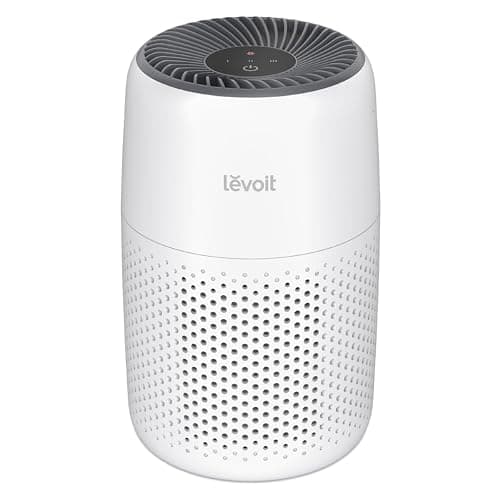
Product image from the Amazon listing.
Our verdict
The LEVOIT Core 300 is the entry-level air purifier that outperforms devices costing three times as much. Real H13 True HEPA filtration, CARB-certified safe (no ozone), quiet enough for a bedroom, and $100 with $25 filter replacements twice a year. For a bedroom, nursery or small office in an allergy-prone or wildfire-affected home, it's the right first purchase. If you need larger room coverage or smart features, step up to the Core 400S or 300S respectively — same excellent brand.
The short version
The LEVOIT Core 300 is the air purifier most dermatologists, allergists and Reddit-tested-everything reviewers point to when someone asks 'what's the best cheap air purifier?' It uses a genuine H13 True HEPA filter — the same particle-capture standard used in hospitals — packaged into a 14-inch-tall cylinder that fits on any nightstand or side table, runs at 24 dB in sleep mode (quieter than a whisper), and covers rooms up to 219 square feet. For allergies, wildfire smoke, dust, pet dander, cooking smoke and general urban air, it's the entry-level purifier that outperforms devices costing three times as much. What it lacks: smart-home features (app control, auto-mode based on air quality sensors) — those live in the Core 300S or 400S. What it delivers: exceptional value and genuine air-quality improvement.
Pros & cons
Pros
- Genuine H13 True HEPA (99.97% at 0.3 microns)
- Quiet 24 dB sleep mode — sleeps in the same room
- Compact 14" tall — fits on any nightstand
- Covers up to 219 sq ft (most bedrooms)
- 3-in-1 filter (pre + HEPA + activated carbon for odors)
- Filter replacement is easy and cheap (~$25 every 6-8 months)
Cons
- No app control (get the Core 300S for that)
- No air-quality sensor / auto mode
- Only 3 speed settings
Why people love it
3-stage filtration
Air enters through the 360° perforated shell, passes through a nylon pre-filter (large dust, hair, pet fur), a H13 True HEPA filter (99.97% of particles down to 0.3 microns — pollen, dust mites, smoke, pet dander), and an activated carbon layer (odors, VOCs, cooking smells).
3 fan speeds + sleep mode
Low, medium and high speed cover most rooms; sleep mode is a dedicated low speed with the display dimmed and fan at 24 dB (barely audible). All controlled from a single button on top.
Filter replacement every 6-8 months
An indicator light tells you when to replace. LEVOIT sells the replacement filters at $22-28 — pop the bottom off, swap the filter, done in 60 seconds.
Who it's for
- Anyone with seasonal allergies
- Households with pets (dander, litter dust)
- Wildfire-smoke regions (California, Colorado, Northwest)
- Small-to-medium bedrooms and offices
Why the LEVOIT Core 300 became the best-selling air purifier on Amazon
Air purifiers have exploded in popularity since 2020 for three reasons: pandemic-era airborne concerns, wildfire smoke becoming an annual event in the Western US, and Reddit/YouTube reviewers systematically testing which purifiers deliver on their HEPA claims. Most cheap purifiers ($30-80 on Amazon) don't — they use looser 'HEPA-type' filters or, worse, ionizers that produce ozone. The Core 300 broke through because at $100, it uses a genuine H13 True HEPA filter (the medical-grade standard) with a real-brand CARB certification. When independent reviewers (Wirecutter, Rtings, Consumer Reports, Reddit's r/HomeImprovement) tested particle-capture performance, the Core 300 hit or exceeded its published specifications — rare in the sub-$150 category.
This is what pushed it to 100,000+ Amazon reviews with a stable 4.7-star average — it's the rare Amazon product where the reviews accurately reflect real-world performance. LEVOIT (owned by Vesync, a legitimate air-quality manufacturer, not a random Amazon seller) has since expanded to a full lineup (Core 200, 300, 400S, 600S, plus specialty models), but the Core 300 remains the sweet spot for cost/performance. It's the air purifier most product recommenders default to when asked 'what should I buy?' — and it's usually the right answer.
When to upgrade from the Core 300 to a Core 400S, Molekule, or Dyson
The Core 300 has one clear limitation: room size coverage of 219 sq ft. For most bedrooms (~150-200 sq ft), that's plenty. But living rooms (250-400 sq ft), open-plan condos, and larger master bedrooms exceed the Core 300's capacity. The direct LEVOIT upgrade is the Core 400S ($220) — same excellent HEPA filtration, same brand quality, 403 sq ft coverage. That's the right upgrade for most people who outgrew the Core 300. Skip: putting two Core 300s in one large room — one Core 400S delivers cleaner air more efficiently.
When to consider premium ($400+) purifiers like Dyson Purifier Cool or Molekule Air Pro Air: honestly, rarely. Both are excellent but the premium is mostly for design (Dyson) or novel technology (Molekule uses photocatalytic oxidation, which is a legitimate technology but not clearly better than HEPA in independent tests). Molekule is worth considering for VOCs and chemical smells (new furniture, mold VOCs) where HEPA doesn't help — its PECO technology can break down molecules HEPA just filters. But for pollen, smoke, pet dander, and dust — the vast majority of allergen concerns — the LEVOIT lineup (Core 300 or 400S) delivers the same real-world performance at 1/4 to 1/2 the price. Don't upgrade to Dyson or Molekule just for prestige; upgrade only if you have a specific issue LEVOIT doesn't solve.
How to actually use the Core 300 for maximum effect
Placement matters more than most owners realize. The Core 300 draws air in through the 360° perforated shell, so it works best with 12+ inches of clearance on all sides — don't shove it into a corner. Place it 6-10 feet from your bed for bedroom use, ideally between the door (where air enters the room) and your bed (where you spend hours), so filtered air flows over you. In living rooms, place it centrally rather than against a wall. Don't put it directly on carpet — the pre-filter clogs faster; use a hard floor or a low table.
For usage patterns: run it 24/7 in allergy seasons (spring pollen, fall ragweed) and during wildfire smoke events (which can persist for days or weeks in Western US). For year-round use in a bedroom, sleep mode when sleeping (24 dB, plus dim display), medium when the room is unoccupied during the day, high after activities that generate particles (vacuuming, cooking with lots of oil, pets shedding heavily). Set a phone reminder every 6 months for filter replacement — the indicator light is easy to miss. Keep spare filters at home so you're not without filtration during a delivery delay. Combine with a bedside Hatch Restore for full sleep-environment optimization: filtered air, sunrise wake-up, sound machine — a complete calm sleep space.
See LEVOIT Core 300 on Amazon
Check the latest price, photos and buyer reviews on Amazon.
Check Price on Amazon →Sold and shipped by AmazonFrequently asked questions
Is the LEVOIT Core 300 the best air purifier for allergies?
For a bedroom-sized space (up to 219 sq ft), yes — it's the pragmatic best-buy. The H13 True HEPA filter captures 99.97% of particles at 0.3 microns, which is the size range that includes pollen (5-100 microns), dust mites (10-40 microns), pet dander (2-10 microns), and mold spores (2-30 microns) — everything that causes typical seasonal or pet-triggered allergies. The activated carbon layer additionally captures VOCs and cooking odors. For larger spaces (living rooms, open-plan homes), upgrade to the Core 400S. For asthma or severe allergies, still buy the LEVOIT but also consider running it 24/7 with the filter replaced every 6 months (not 8) for maximum performance. It's not medical-grade for HEPA-mandated environments (hospitals, cleanrooms), but for home use, it delivers real allergy relief.
Core 300 vs Core 300S vs Core 400S: which LEVOIT should I buy?
Depends on room size and smart-home needs. Core 300 ($100) is the manual base model — perfect for a bedroom, nursery, or small office. 219 sq ft coverage, no app. Core 300S ($130-150) adds Wi-Fi + app control + air-quality sensor + auto mode — worth it if you want to schedule the purifier or see indoor air quality on your phone. Same physical performance as Core 300. Core 400S ($220) is the upgrade for larger rooms — 403 sq ft coverage (nearly double the Core 300), plus app + auto mode + air-quality sensor. For most bedroom-sized spaces, Core 300 is the smart-money buy. Add $30-50 for smart features (Core 300S) if you actually want them. Only upgrade to Core 400S if your room is 250+ sq ft.
How often do I need to replace the filter, and how much does it cost?
Every 6-8 months of continuous use, faster if you're in a wildfire-smoke region or have multiple pets. Replacement filters are ~$22-28 on Amazon or LEVOIT's website. LEVOIT also sells specialty filter variants: the Pet Allergy filter (extra activated carbon for pet odors), the Toxin Absorber (extra chemical/VOC filtration for new furniture / paint smell / off-gassing), and the Smoke Remover (extra carbon for wildfire regions). The default filter is fine for most households; the specialty filters are worth it in specific situations (multi-cat households, wildfire smoke regions). Never wash and reuse a HEPA filter — HEPA fibers can't be washed without degrading performance.
Is the LEVOIT Core 300 quiet enough for a bedroom?
Yes — sleep mode is 24 dB, which is quieter than a whisper (30 dB) and quieter than most refrigerators (40 dB). At sleep mode's low speed, the fan is barely audible even 3 feet from the bed. Medium speed (~40 dB) is comparable to a quiet library. High speed (~50 dB) is comparable to light rain — noticeable but not disruptive during the day. For sleep, always use sleep mode; even light sleepers report the Core 300 doesn't disturb them. Some people specifically use the low-mode fan noise as a light white-noise sleep aid, which is a bonus feature LEVOIT didn't intend but works well.
Does the LEVOIT Core 300 produce ozone or use UV-C light?
No — this is important. The Core 300 uses pure HEPA + activated carbon filtration only. No ionizer, no UV-C light, no ozone generator. Some cheaper air purifiers (especially older or off-brand models) use ionizers or UV-C that generate ozone as a byproduct, and ozone at indoor concentrations is a respiratory irritant that can worsen asthma and allergies — the opposite of what you want. LEVOIT products are CARB-certified (California Air Resources Board approved), which means they've been tested to not produce harmful ozone. This is why LEVOIT is on 'safe air purifier' lists from Consumer Reports and EPA-adjacent organizations.
How long will the LEVOIT Core 300 last?
Realistically 5-7 years with proper filter changes and no motor abuse. The motor is the failure point (most Core 300 units die from motor failure or bearing wear, not electronics), and it's rated for around 20,000-30,000 hours of operation. That's about 3-5 years of 24/7 use, or 8-10 years of nightly bedroom use. LEVOIT offers a 2-year warranty on the unit, which many owners have had honored for manufacturing defects. Replacement filters at $25 twice a year mean the ongoing cost is $50-75/year — dramatically cheaper than the $250+ Molekule or Dyson competitors.
As an Amazon Associate, TopCrate earns from qualifying purchases at no extra cost to you. Product image, price, availability and ratings are shown on Amazon and are subject to change.