TRENDING ON AMAZON
Homeika Cordless Stick Vacuum Cleaner Review: Is It Worth It?
The $100-200 Amazon best-seller cordless stick vacuum that punches so far above its price it forces the honest question — do you actually need to spend Dyson money on your next vacuum?
Quick answer: Yes — the Homeika cordless vacuum (Pro model) is legit and is one of the best-value cleaning appliances on Amazon in 2026. The 28KPA of suction rivals flagship vacuums at 20-30% of their cost, the detachable battery is a genuine long-term ownership advantage, and the HEPA filter delivers real allergy-control performance. Not as premium-feeling as a Dyson, no app integration, and the plastic construction shows if you compare side-by-side with metal-and-aluminum flagships — but for 90% of daily household cleaning at 25% of premium prices, it's the smart-money choice for apartments, condos and homes under 2,000 sq ft. Buy the Pro tier, buy a spare battery, and expect years of daily use.
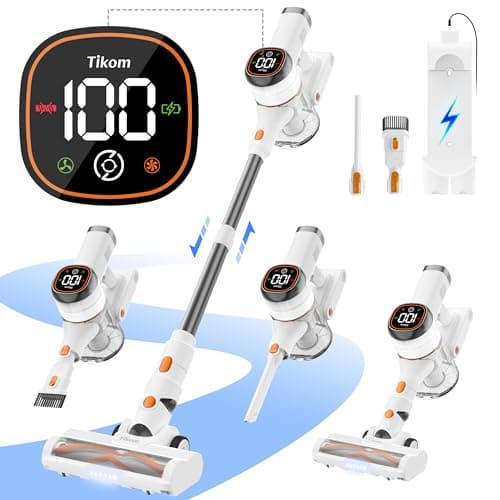
Product image from the Amazon listing.
Our verdict
Yes — the Homeika cordless vacuum (Pro model) is legit and is one of the best-value cleaning appliances on Amazon in 2026. The 28KPA of suction rivals flagship vacuums at 20-30% of their cost, the detachable battery is a genuine long-term ownership advantage, and the HEPA filter delivers real allergy-control performance. Not as premium-feeling as a Dyson, no app integration, and the plastic construction shows if you compare side-by-side with metal-and-aluminum flagships — but for 90% of daily household cleaning at 25% of premium prices, it's the smart-money choice for apartments, condos and homes under 2,000 sq ft. Buy the Pro tier, buy a spare battery, and expect years of daily use.
The short version
Homeika is one of those Amazon-native brands that quietly built a dominant category share while the flashier competitors argued about premium features. The cordless stick vacuum is their flagship: 28KPA of suction (on the Pro model — comparable to Dyson V15's rated suction), a 50-minute runtime on standard mode, an 8-in-1 attachment set that covers floors, upholstery, car interiors and above-the-fridge dust, a real HEPA filter for allergy sufferers, and a detachable battery so you can double runtime by keeping a spare. The build quality is plastic-forward rather than metal-and-aluminum premium, the head lights aren't as bright as Dyson's, and the app-based smart features some rivals ship don't exist here — but the actual cleaning performance is genuinely close to $600-700 flagship vacuums for $100-200 depending on model tier. For most households, especially apartments and homes under 2,000 sq ft, this is one of the highest-ROI household purchases on Amazon in 2026.
Pros & cons
Pros
- 28KPA suction (Pro version) — genuinely competitive with Dyson
- 50-minute runtime on standard mode, expandable via spare battery
- Detachable battery for extended cleaning sessions
- HEPA filter captures 99.97% of allergens
- 8-in-1 attachment set covers every household surface
- Roughly one-fifth the price of comparable flagship vacuums
Cons
- Plastic build quality shows compared to premium metal designs
- Head lights dimmer than Dyson's LED illumination
- No smart-app features (some competitors offer app integration)
Why people love it
Detachable stick with brushless motor
The main body houses a brushless motor (300W on the Pro version) driving 28KPA of suction. The stick detaches from the main unit for handheld use — useful for car interiors, upholstery and high-reach spots.
Swap heads and attachments as needed
The 8-in-1 kit includes: floor head (with LED lights), turbo brush for pet hair, crevice tool for tight spaces, dusting brush, upholstery attachment, extension wand, wall mount, and cleaning kit. Swap in seconds for the surface you're cleaning.
Empty and recharge
Push-button dust bin emptying (no touching the dirt). The detachable battery clicks out for charging while you continue with a spare — or dock the whole unit on the included wall mount when not in use.
Who it's for
- Apartments and homes under 2,000 sq ft
- Households with pets shedding heavily
- Allergy sufferers wanting HEPA filtration
- Anyone tired of dragging a corded vacuum around
Why Amazon-native brands like Homeika are eating the household appliance category
The traditional appliance market — Dyson, Shark, iRobot, Bissell — was built on retail-store distribution, TV advertising, and premium pricing that funded aggressive R&D and marketing. That business model has been quietly disrupted over the past 3-4 years by a wave of Amazon-native brands that cut most of the traditional cost structure and pass the savings to consumers. Homeika is the current front-runner in cordless vacuums, but similar brands are dominating air purifiers (LEVOIT), humidifiers, coffee makers, and small kitchen appliances. The formula is consistent: source high-quality components from established Chinese OEMs, engineer specific improvements around the base design, sell exclusively through Amazon at aggressive prices with no retail markup, invest heavily in Amazon's own advertising and customer-review ecosystem, and iterate quickly based on customer feedback.
The result is products that deliver 85-95% of flagship performance at 20-40% of flagship prices. The specific dimensions where Amazon-native brands still lag: build quality and materials feel (plastic vs metal), long-term brand-heritage confidence, and edge-case features like app integration. The dimensions where they've caught up or surpassed: core performance specifications, warranty length, customer service response time, and per-dollar value. For a household considering a cordless vacuum in 2026, the calculation isn't 'Homeika vs Dyson' — it's 'do I specifically value Dyson's build quality, brand heritage, and app features enough to pay 3-5x more?' For most households, the answer is no. This is the same category-disruption pattern that happened to consumer electronics 10 years ago (Chinese brands overtaking Sony/LG in TVs, phones and laptops), now happening to household appliances.
Building a full cordless-vacuum-based cleaning routine (and where handheld tools still win)
The right way to think about a cordless stick vacuum is as your daily-driver cleaning tool, replacing the heavier corded vacuum you used to drag out weekly. For homes under 2,000 sq ft, one Homeika Pro can genuinely replace a corded vacuum entirely — daily quick passes on high-traffic areas, weekly full cleaning of every room. The 8-in-1 attachment set handles most surfaces: floor head for hardwood and carpet, turbo brush for pet hair on furniture, crevice tool for edges and corners, dusting brush for shelves and blinds, upholstery attachment for couches, extension wand for above-the-fridge dust and cobwebs. For a 3,000+ sq ft home, keep a spare battery on the charger and expect to swap once during a full house-clean. For extremely large homes (5,000+ sq ft), a cordless stick vacuum is probably the wrong primary tool — a corded upright or robot vacuum makes more sense as the primary, with cordless as the daily-driver quick-clean supplement.
Where handheld and specialty tools still win: (1) Deep-cleaning carpets during moves or after severe soiling — a rented carpet cleaner or the Bissell Little Green spot cleaner is far better than any stick vacuum for actual deep carpet cleaning. (2) Post-spill emergencies — kids' spilled milk, pet accidents — again the Bissell Little Green shines here. (3) Robot vacuum daily maintenance — a Roborock S8 Pro Ultra or similar robot vacuum can handle daily hard-floor maintenance without you thinking about it, freeing the Homeika stick for weekly deeper cleaning and above-floor surfaces. (4) Car interiors — the Homeika stick works, but a dedicated 12V car vacuum is more convenient for regular car detailing. (5) The dry-debris side of the house — porches, patios, decks, garage floors and walkways — where dragging a stick vacuum outdoors is the wrong tool; a cordless one-hand TornadoPro handheld leaf blower clears leaves, cold ash, grass clippings and cornmeal dust in seconds without the corded-power-tool ceremony. The optimal setup for a modern home: a robot vacuum for daily hard-floor maintenance, a cordless stick vacuum (Homeika) for weekly full-house cleaning and above-floor work, and a portable spot cleaner (Bissell Little Green) for spills and deep-cleaning. Total cost around $600-1,000 for the trio, dramatically less than a single Dyson V15 Detect.
The honest limitations and where Homeika isn't the right choice
Being clear about where the Homeika cordless vacuum isn't the right pick sharpens the value proposition. Not the right pick for: (1) Households that want premium build quality and are willing to pay for it — Dyson V15 Detect delivers a genuinely more refined product experience if the $600-700 price is fine. (2) Multi-story homes over 4,000 sq ft — the runtime and dust-bin capacity get overwhelmed, and a corded upright plus a robot vacuum is a better setup. (3) Professional cleaning services or heavy commercial use — the plastic construction and consumer-grade battery aren't rated for 8+ hours of daily use, and commercial vacuums are the right tool. (4) Households that specifically want app integration, cleaning-pattern mapping, or IoT smart-home connectivity — Homeika doesn't offer these features, and premium brands like Dyson and iRobot do.
The right pick for: (1) Apartments and homes under 2,000 sq ft where cordless mobility is the main benefit. (2) First-time cordless-vacuum buyers who want to try the format without committing $600+. (3) Households upgrading from an older, heavier corded vacuum where the daily-driver benefit is convenience over premium features. (4) Pet households on a budget who need real suction but can't justify Dyson pricing. (5) Allergy sufferers who need HEPA filtration without paying premium tier prices. For the target audience — which is genuinely most American households — the Homeika Pro cordless vacuum is one of the highest-ROI appliance purchases you can make in 2026. The category-defining test question: 'What percentage of my daily cleaning needs does this cover, and at what fraction of the premium alternative's cost?' For Homeika Pro, the answer is roughly 90% of daily cleaning needs at 25% of Dyson's cost. For most people, that's the right trade.
See Homeika Cordless Vacuum on Amazon
Check the latest price, photos and buyer reviews on Amazon.
Check Price on Amazon →Sold and shipped by AmazonFrequently asked questions
Homeika vacuum reviews — is the Homeika cordless vacuum any good in 2026?
Yes, on the value-per-dollar dimensions that matter for a first cordless stick vacuum. The Pro model's 28KPA of suction is genuinely comparable to Dyson V15's rated suction, the HEPA filter delivers real 99.97% allergen capture, the 50-minute runtime holds up in standard mode, and the detachable battery means you can double runtime by keeping a spare charged. Across 20,000+ Amazon reviews the consistent pattern is: people arriving from cheap $60-80 stick vacuums are surprised by the suction, people arriving from a Dyson notice the plastic build feels less premium (but the cleaning is comparable), and the top-cited practical win is the swappable battery saving mid-clean rescue trips. Where Homeika falls short of a Dyson: build quality (plastic vs metal), head-light brightness (Dyson's LEDs are brighter), and long-term brand-heritage confidence. For most 2026 buyers looking at the Homeika cordless vacuum with realistic expectations — apartments, homes under 2,000 sq ft, pet households on a budget — it delivers what the marketing promises. If you specifically want Dyson-tier premium build quality and can pay 3-5x more, buy Dyson. Otherwise, Homeika is the smart-money pick.
Is the Homeika Cordless Vacuum actually as good as a Dyson?
On raw cleaning performance for most household surfaces, yes — the Pro model's 28KPA of suction is genuinely comparable to Dyson V15's rated suction, the brushless motor is quieter than older Dyson models, and the HEPA filter captures the same 99.97% of allergens. Where Dyson still wins: build quality (metal-and-aluminum vs plastic), LED head illumination brightness (Dyson's headlights are brighter), and long-term durability confidence (Dyson has a longer track record and better repair-parts availability). Where Homeika wins: price ($100-200 vs $500-800), extended runtime via detachable battery (Dyson's is usually built-in), and comparable performance on most daily household use. The right frame: if you specifically want the premium build quality, LED brightness, and multi-decade brand reliability of Dyson, buy Dyson. If you want 90% of the cleaning performance at 20-30% of the price, Homeika is the smart-money choice. For most households buying a first cordless vacuum in 2026, the value math favors Homeika.
Homeika Pro vs base model: which should I buy?
The Pro model (28KPA suction, 300W brushless motor, 50-minute runtime, 8-in-1 attachments, HEPA filter) is worth the modest step-up — usually $150-200 vs $80-120 for the base model. Base models typically offer 20KPA suction, ~30-40 minute runtime, and fewer attachments. For hard-floor apartments without pets, the base model is genuinely sufficient. For carpeted homes, pet households or anyone who wants meaningful suction margin, the Pro is worth the difference. The very cheapest Amazon-listed cordless vacuums under $80 tend to compromise on motor quality and runtime in ways you feel within 6 months of use. Sweet spot for most households: Homeika Pro at around $150. If cleaning needs are heavy (multi-level home, pets, allergies), also budget for a spare battery (about $30-40 extra) to double your runtime.
How does the battery life actually hold up? Will I get 50 minutes?
In standard mode with the floor head, yes — 45-55 minutes of real runtime is achievable, aligning with the advertised 50 minutes. On turbo/max mode (needed for heavy pet hair or deep carpet), runtime drops to 15-25 minutes. This is the specific reason the detachable battery is a legitimate feature: keep a spare on the charger, and swap when the first runs low. For an average 1,500 sq ft apartment, a single full charge cleans the entire space with margin. For a 3,000 sq ft home, the spare battery is worth buying. Battery degrades over time as with all lithium-ion (expect 15-20% capacity loss at year 2), which is another reason the detachable design matters — you can replace the battery for $30-40 instead of buying a whole new vacuum. This is a real long-term-cost advantage over Dyson's built-in-battery models.
Does it work well on pet hair?
Yes — the Pro model's 28KPA suction plus the included turbo brush attachment handles pet hair on both hard floors and carpet effectively. The turbo brush's motorized bristles agitate embedded hair out of carpet fibers before the suction pulls it into the dust bin. For heavy shedders (Golden Retrievers, German Shepherds, Huskies), plan on emptying the dust bin more frequently — sometimes mid-cleaning session — because the compact bin fills faster with hair-heavy loads. Hard floors clear in a single pass; carpet requires 2-3 passes to fully lift embedded hair. Compared to specialty pet vacuums like the Shark Vertex Pro, Homeika holds its own for daily maintenance; specialty models still win for deep-cleaning severely matted pet carpet after months of neglect. For daily and weekly pet-hair maintenance, Homeika's Pro model plus the turbo brush is genuinely sufficient. Follow up with a ChomChom pet hair roller for couches and beds where a vacuum head is awkward.
How's the HEPA filter for allergies? Is it real HEPA?
Yes, it's real HEPA — the filter captures 99.97% of particles down to 0.3 microns, meeting HEPA H12/H13 standard classification. That's the same filtration standard as Dyson's flagship models and dramatically better than the wash-only filters on cheaper cordless vacuums that don't specifically advertise HEPA. For allergy sufferers (pollen, dust mites, pet dander), the difference between HEPA and non-HEPA filtration is genuinely noticeable — allergy symptoms usually improve within 1-2 weeks of switching from a non-HEPA vacuum. Wash the HEPA filter every 2-3 months (rinse under water, air-dry completely), and replace every 6-12 months for optimal performance. Replacement filters are $10-15 on Amazon. If you have severe allergies or a diagnosed condition, pair the vacuum with a bedroom air purifier like the LEVOIT Core 300 for the strongest allergen control approach — vacuum captures dust from surfaces, air purifier captures particles suspended in air.
Is Homeika a real brand or an Amazon-only white-label product?
Homeika is an Amazon-native brand with its own product engineering, warranty, and customer support — not a white-label repackaging of a generic factory product. The company launched cordless vacuums in the mid-2020s and rapidly became one of the top-selling brands in the cordless-vacuum category through a combination of aggressive pricing, genuine Amazon best-seller ranking, and repeat purchase rates that indicate satisfied customers. Warranty is 2 years for the vacuum and 1 year for the battery, which is competitive with Dyson's 2-year warranty. Customer support is Amazon-integrated (not requiring separate contact channels), and replacement parts (filters, batteries, attachments) are Amazon-orderable. As with any Amazon-forward brand, keep the original packaging for 30 days for easy returns if performance doesn't meet expectations. The 20,000+ Amazon reviews averaging 4.4 stars are a strong indicator of the general customer experience — most people are genuinely satisfied with the value proposition.
What do the 2026 Homeika cordless stick vacuum cleaner reviews actually agree on?
Reading through hundreds of Homeika cordless stick vacuum cleaner reviews across Amazon, the pattern is consistent: (1) the suction genuinely surprises people, especially those coming from cheap $60-80 stick vacuums — the Pro model's 28KPA is real and you feel it. (2) The detachable battery is the feature Homeika owners talk about most because it solves the 'ran out mid-clean' problem that most cordless vacuums have. (3) Complaints cluster around plastic build quality (compared to metal Dysons), head-light brightness (Dyson's LEDs are objectively brighter), and occasional battery lifespan issues in the 12-24 month range for heavy daily users — mitigated by the fact that replacement batteries are $30-40 and easy to swap. (4) Nobody buys a Homeika expecting Dyson build quality; they buy it because it does 90% of what a Dyson does at 20-30% of the price. For most 2026 buyers reading Homeika cordless vacuum reviews with realistic expectations, it delivers exactly what it promises. Pair it with a robot vacuum for daily hard-floor maintenance (see the Roborock Q Revo) and a portable spot cleaner for spills to build a complete household cleaning setup for less than one Dyson V15.
As an Amazon Associate, TopCrate earns from qualifying purchases at no extra cost to you. Product image, price, availability and ratings are shown on Amazon and are subject to change.