TRENDING ON AMAZON
Brita Standard Everyday Water Filter Pitcher Review: Is It Worth It?
The 10-cup BPA-free pitcher that's been ending the bottled-water habit for decades — fits in your fridge door and pays for itself in weeks.
Quick answer: The Brita Everyday Pitcher is the simplest, cheapest, longest-tenured way to drink better-tasting water and stop the bottled-water habit. For most households on city water, it's a category default for good reason.
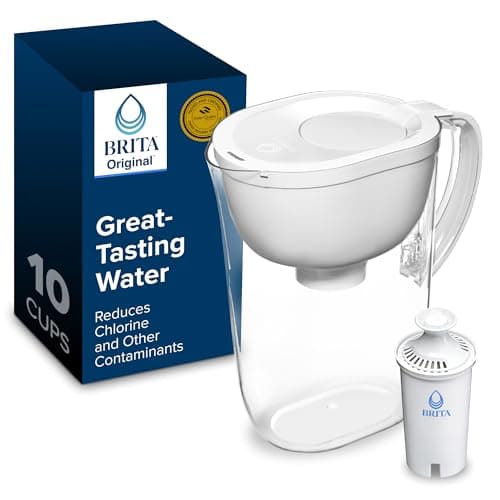
Product image from the Amazon listing.
Our verdict
The Brita Everyday Pitcher is the simplest, cheapest, longest-tenured way to drink better-tasting water and stop the bottled-water habit. For most households on city water, it's a category default for good reason.
The short version
The Brita Everyday Pitcher is the simplest, cheapest way to stop buying bottled water. Pour tap water in the top, the standard activated-carbon filter reduces chlorine taste and odor (plus mercury, copper, zinc and cadmium), and the 10-cup BPA-free pitcher fits inside a fridge door. It's a category that hasn't needed reinventing in 30 years — the Brita just works, replacement filters are everywhere, and the math is overwhelming versus single-use bottles.
Pros & cons
Pros
- Reduces chlorine taste, odor, mercury, copper, zinc and cadmium
- BPA-free 10-cup pitcher fits standard fridge doors
- Replaceable filter lasts roughly 40 gallons (~2 months)
- Pays for itself in weeks vs bottled water
- SmartLight filter indicator on the lid
- Massive replacement-filter ecosystem on Amazon
Cons
- Standard filter doesn't remove fluoride or lead (need Elite/Longlast+ for lead)
- Filter needs replacing every ~2 months
- Slow gravity-fed filtration vs faucet-mount
Why people love it
Fill the top reservoir
Pour cold tap water into the top half of the pitcher — no plumbing or installation required.
Activated carbon filters as it drains
Water passes through the activated-carbon-and-ion-exchange filter into the lower reservoir, reducing chlorine taste and odor and select metals.
Pour and refill
The lid's SmartLight tells you when it's time to swap the filter (about every 40 gallons or 2 months).
Who it's for
- Anyone tired of buying bottled water
- Households on city water with chlorine taste
- Apartment renters who can't install under-sink filters
- Coffee, tea and ice-maker quality upgrade
Is the Brita pitcher worth it, and does it actually filter water?
Yes — the Standard Brita filter is NSF-certified to reduce chlorine taste and odor, mercury, copper, zinc and cadmium, and the taste improvement on most city tap water is immediate and obvious. If you've ever filled a glass straight from the tap and gotten that swimming-pool chlorine note, a single pass through a Brita removes it. For most households on municipal water, that's the everyday win — better-tasting drinking water, coffee, tea and ice cubes, all from a $30 pitcher.
Where Brita doesn't help — and this is the honest caveat — is lead, fluoride and dissolved solids. The Standard filter isn't built for lead removal (use the Elite filter for that), it doesn't remove fluoride at all, and it's not the right tool for well water with biological or heavy-metal issues. For the vast majority of city-water users who just want better-tasting water and to stop buying bottled, the Brita is the most cost-effective decision in the kitchen. The bottled-water math (about 4–5 cents per gallon with Brita vs roughly $1.50 per gallon for bottled) pays for the pitcher in a couple of weeks.
Brita Standard vs Brita Elite (Longlast+): which filter to buy
Brita sells two main filters that fit the same Everyday Pitcher. The Standard filter (white) is the cheapest, lasts about 40 gallons or 2 months, and reduces chlorine taste, mercury, copper, zinc and cadmium. The Elite filter (blue, formerly called Longlast+) lasts 3x longer (about 120 gallons / 6 months), and crucially is certified for 99% lead reduction plus benzene, asbestos, mercury and chlorine. The Elite filter costs roughly 3x more per filter than the Standard.
The choice is essentially: if you have any concern about lead in your water (older homes with lead service lines, schools, areas with confirmed lead issues), pay for the Elite filter — it's the same cost per gallon over time as the Standard. If you're on confirmed lead-free city water and just want better taste, the Standard filter is the value pick. Many households who started on the Standard upgrade to Elite once they realize they only change it twice a year — the convenience alone is worth the upgrade.
How to set up and maintain a Brita pitcher for the best water
First-time setup: rinse the new filter under cold water for 15 seconds, then soak the pitcher in clean water for a few cycles — discard the first two pitchers' worth of filtered water, then start drinking from the third. This removes loose carbon dust from manufacturing and primes the filter for normal use. Always use cold tap water; hot water damages the filter media and is the most common rookie mistake.
Keep the pitcher in the fridge for the best taste and to keep filtered water cold. Hand-wash the pitcher and lid every couple of weeks with mild soap to prevent any film buildup; never put the filter in the dishwasher. Track filter life by the SmartLight indicator on the lid, not by guesswork — a filter past its rated life loses effectiveness and starts to slow down. Recycle used Brita filters via TerraCycle's free Brita recycling program rather than throwing them in the trash.
See Brita Pitcher on Amazon
Check the latest price, photos and buyer reviews on Amazon.
Check Price on Amazon →Sold and shipped by AmazonFrequently asked questions
Does the Brita filter remove lead?
The standard Brita filter does not remove lead. For lead removal you need the Brita Elite filter (formerly Longlast+), which is rated by NSF/ANSI Standard 53 to reduce 99% of lead and lasts up to 6 months. Elite filters fit the same Everyday Pitcher, so you can upgrade just the filter without buying a new pitcher.
Does Brita remove fluoride?
No. Neither the Standard nor the Elite Brita filter is designed to remove fluoride. For fluoride removal you need a different technology — typically reverse osmosis or activated alumina. If fluoride removal is the goal, look at countertop RO systems instead of a pitcher.
How often do I need to change the Brita filter?
The Standard filter is rated for about 40 gallons or 2 months of normal use, whichever comes first. The newer Elite/Longlast+ filter is rated for about 120 gallons or 6 months. The lid's SmartLight indicator on most current Brita pitchers tracks usage and changes color when replacement is due — it's the easiest way not to forget.
How is Brita different from PUR or ZeroWater?
Brita is the most popular and has the widest filter availability. PUR is comparable and certified to remove more contaminants on its base filter (including lead and some pharmaceuticals). ZeroWater uses a five-stage filter that strips dissolved solids more aggressively for the lowest TDS reading, but the filters cost more and need replacing more often. For most households on city water, Brita strikes the best balance of cost, performance and convenience — which is why it's the bestseller.
Can I put the Brita pitcher in the dishwasher?
The pitcher and lid are top-rack dishwasher safe, but the filter itself should never go in the dishwasher — remove it first and hand-wash the reservoir if you want to be safe. Most owners just hand-wash with soap and water every couple of weeks to prevent any film buildup.
Does the Brita pitcher work with well water?
Brita is designed for treated municipal tap water. Well water can contain contaminants (bacteria, nitrates, iron, hydrogen sulfide) that a Brita filter is not designed to address. For well water, get your supply tested and use the recommended treatment system; a Brita pitcher on its own is not enough.
As an Amazon Associate, TopCrate earns from qualifying purchases at no extra cost to you. Product image, price, availability and ratings are shown on Amazon and are subject to change.