TRENDING ON AMAZON
Anua Azelaic Acid 10 Hyaluron Redness Soothing Serum Review: Is It Worth It?
The K-beauty serum with the maximum over-the-counter dose of azelaic acid (10%) — fades post-acne marks, evens tone and calms redness without a prescription.
Quick answer: Yes — Anua Azelaic Acid 10 Hyaluron Redness Soothing Serum is one of the best OTC azelaic acid options on Amazon and the correct starting point for anyone with post-acne marks, uneven tone, or mild-to-moderate redness. The maximum 10% OTC dose alongside three types of hyaluronic acid, cica and niacinamide makes it gentler than The Ordinary's version while delivering the same active. Results on PIH and texture are reliable within 4-6 weeks; results on redness specifically are more variable. Non-comedogenic, fragrance-free, safe for sensitive skin. If you've tried niacinamide without much success on dark spots, this is the correct next step before spending on prescription azelaic acid.
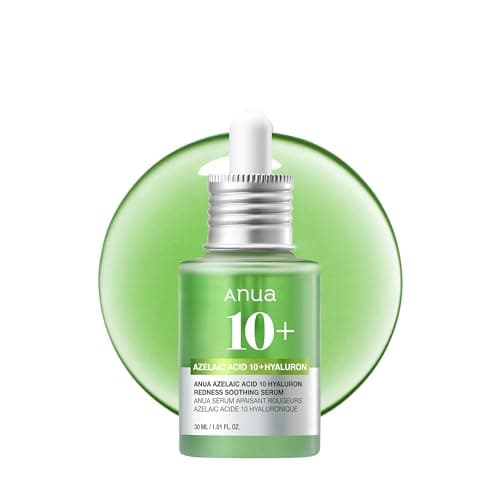
Product image from the Amazon listing.
Our verdict
Yes — Anua Azelaic Acid 10 Hyaluron Redness Soothing Serum is one of the best OTC azelaic acid options on Amazon and the correct starting point for anyone with post-acne marks, uneven tone, or mild-to-moderate redness. The maximum 10% OTC dose alongside three types of hyaluronic acid, cica and niacinamide makes it gentler than The Ordinary's version while delivering the same active. Results on PIH and texture are reliable within 4-6 weeks; results on redness specifically are more variable. Non-comedogenic, fragrance-free, safe for sensitive skin. If you've tried niacinamide without much success on dark spots, this is the correct next step before spending on prescription azelaic acid.
The short version
Azelaic acid is one of dermatology's best-kept secrets for fading post-acne marks, calming redness, and evening skin tone — but prescription versions run $80+ and OTC versions are often underdosed. Anua's Azelaic Acid 10 Hyaluron Redness Soothing Serum delivers the maximum OTC concentration (10%) alongside three types of hyaluronic acid, panthenol, seven types of centella asiatica (cica), niacinamide, green tea and aloe. The lightweight watery texture (with a natural green tint from the botanicals) layers well under moisturizer and sunscreen. Most users see fading of post-acne marks and evened skin tone within 4-6 weeks; results on redness specifically are more variable. Non-comedogenic, fragrance-free.
Pros & cons
Pros
- 10% azelaic acid — the maximum OTC concentration (prescription is 15-20%)
- Fades post-acne marks and dark spots noticeably in 4-6 weeks
- Three types of hyaluronic acid for hydration alongside the actives
- 7 types of centella asiatica + niacinamide + panthenol for calming
- Lightweight, layers well under moisturizer and sunscreen
- Non-comedogenic — safe for acne-prone skin
- Fragrance-free — safer for sensitive skin than most K-beauty serums
Cons
- Effects on redness specifically are variable
- Can cause mild tingling or irritation in the first 1-2 weeks
- 30ml bottle is smaller than many US serums at this price
Why people love it
Apply to clean, damp skin
After cleansing and toning (or straight after cleansing), dispense 3-4 drops onto your fingertips and pat into damp skin.
Layer moisturizer over it
Wait 30-60 seconds, then apply your moisturizer to seal it in. In the morning, always follow with SPF 30+.
Consistency, not frequency
Once daily is enough — the improvements come from consistent use over weeks, not aggressive application. Skip if skin is very irritated.
Who it's for
- Anyone with post-acne dark marks (PIH) fading slowly
- Skin that gets red and blotchy from active use
- People wanting a gentler alternative to hydroquinone
- Rosacea-adjacent skin looking for OTC calming actives
- Post-[Ordinary Niacinamide](/reviews/the-ordinary-niacinamide) users wanting to level up
Why azelaic acid is one of dermatology's best-kept secrets (and why 10% is the OTC sweet spot)
Azelaic acid is a naturally occurring dicarboxylic acid that's been used in dermatology for decades — mostly as a prescription treatment for rosacea (Finacea 15%) and acne (Azelex 20%). It works through multiple mechanisms simultaneously: it inhibits tyrosinase (the enzyme that produces melanin, so it fades pigmentation), it has direct anti-inflammatory effects (which calms redness), it's mildly antibacterial against acne-causing P. acnes bacteria, and it normalizes cell turnover in the pore lining (which prevents new pimples from forming). No other single ingredient hits this combination of targets — which is why dermatologists prescribe it for rosacea, PIH, melasma and acne, sometimes as a single-agent treatment.
The reason it's not more famous is that until recently, effective concentrations were prescription-only in most markets. OTC azelaic acid used to be limited to underdosed formulations (1-5%) that didn't produce meaningful results — hence the reputation as a 'weak' ingredient. Anua's 10% (matched by The Ordinary and a few Korean brands) is the sweet spot: high enough to produce real fading of PIH and calming of redness within weeks, low enough to be tolerated by sensitive skin without prescription-level irritation. If you've tried niacinamide for PIH without much success, azelaic acid at 10% is the correct next step, and it's the one dermatologists recommend before escalating to prescription strengths or hydroquinone.
Anua Azelaic Acid 10 vs The Ordinary vs prescription azelaic acid: how to choose
Three tiers, three price points, three different use cases. Anua Azelaic Acid 10 Hyaluron Redness Soothing Serum: $16-20 for 30ml, lightweight serum texture, 10% azelaic acid alongside HA, panthenol, cica, niacinamide. Best for: sensitive skin, K-beauty routine builders, people who want a comfortable serum texture with additional soothing support. The Ordinary Azelaic Acid 10% Suspension: $10-12 for 30ml, cream texture that whitens visibly for a few minutes on application, 10% azelaic acid without significant added supporting ingredients. Best for: budget shoppers, people who don't mind the texture, and those who like their actives 'no-frills.' Prescription azelaic acid (Finacea 15% or Azelex 20%): $80-150 without insurance, cream texture, higher percentages of azelaic acid. Best for: severe rosacea, stubborn PIH that hasn't responded to OTC, or dermatologist-recommended cases.
For someone deciding today: if this is your first time trying azelaic acid or you have sensitive skin, start with Anua — its supporting formulation is more comfortable and the added cica meaningfully calms the initial adjustment period. If you're a skincare veteran on a budget and comfortable with a cream texture, The Ordinary is the same active for less money. Escalate to prescription only if 8-12 weeks of consistent OTC 10% use doesn't produce results, or if you have moderate-to-severe rosacea that a dermatologist has confirmed. For 90% of people with PIH, mild redness, or general 'my skin tone isn't even,' the OTC 10% is the correct answer.
Building an azelaic acid routine that actually works (and the mistakes that undo it)
The routine matters as much as the product. Start with a gentle cleanser (a hydrating cleanser like CeraVe Hydrating Cleanser for dry/sensitive, a foaming cleanser for oily). Pat skin damp. Apply 3-4 drops of Anua Azelaic Acid 10 to fingertips and press into skin evenly across the face, avoiding the eye area. Wait 30-60 seconds. Follow with a good moisturizer — the Anua serum is not enough hydration on its own. In the morning, always follow with SPF 30+ or higher. Azelaic acid doesn't make you more sun-sensitive the way retinoids do, but you're actively treating hyperpigmentation, and any new sun exposure will create new pigment that undoes your work.
Common mistakes: (1) Using it inconsistently. Azelaic acid takes 4-6 weeks to show meaningful results. Skipping days or weeks resets the clock. Take once daily, every day. (2) Layering too many actives. Don't start azelaic acid the same week you introduce retinol, vitamin C or benzoyl peroxide. Space new actives 2-3 weeks apart so you can tell what's working and what's causing irritation. (3) Skipping moisturizer 'because my skin is oily.' Azelaic acid can be mildly dehydrating in the first weeks; always follow with a moisturizer, even for oily skin. (4) Skipping SPF. This is the single biggest mistake. You cannot fade PIH while creating new sun-induced pigmentation. Sunscreen is non-negotiable when using any pigmentation treatment. Get these fundamentals right, and Anua Azelaic Acid 10 will deliver noticeable results within 4-6 weeks.
See Anua Azelaic Acid 10 on Amazon
Check the latest price, photos and buyer reviews on Amazon.
Check Price on Amazon →Sold and shipped by AmazonFrequently asked questions
Does Anua Azelaic Acid 10 actually work for redness and dark spots?
For dark spots and post-acne marks (PIH — post-inflammatory hyperpigmentation), yes — most users see fading within 4-6 weeks of consistent daily use, and the mechanism (azelaic acid inhibits tyrosinase, the enzyme that produces melanin) is well-established in dermatology. For redness specifically, results are more variable: some users report significant reduction in blotchy redness within 8-12 weeks, others don't see much change. If persistent redness is your main concern and this doesn't help, the next step is a prescription azelaic acid (Finacea 15%) or metronidazole from a dermatologist. But for PIH and texture, Anua's 10% is very effective and much gentler than prescription strength.
Is 10% actually the maximum OTC concentration? What's the difference vs prescription 15-20%?
Yes — 10% is the maximum azelaic acid concentration you can buy without a prescription in the US and most countries. Prescription versions are Finacea (15%) and Azelex (20%). The prescription strengths are more effective for severe rosacea and stubborn PIH, but they also cause more irritation and cost significantly more (Finacea can run $80-150 per tube without insurance). For most people with mild-to-moderate PIH, redness or texture issues, the OTC 10% is the correct starting point — it works, it's much cheaper (Anua's serum is around $16-20), and if it doesn't produce results after 8-12 weeks of consistent use, that's when to talk to a dermatologist about prescription.
Can I use Anua Azelaic Acid with retinol, niacinamide, vitamin C or benzoyl peroxide?
Yes to niacinamide (Anua's serum actually contains niacinamide already — they're complementary). Yes to vitamin C, but use them on different times of day (vitamin C in the morning, azelaic acid at night) to avoid layering too many actives at once. Yes to retinol, but introduce one at a time and space them (retinol at night, azelaic acid in the morning, or on alternate nights) — using both simultaneously in the first weeks can overwhelm the barrier. Yes to benzoyl peroxide, again on different times of day. Avoid stacking with strong AHA/BHA acids or professional-grade retinoids without a dermatologist's guidance.
How long until I see results, and what should I expect?
Weeks 1-2: mild tingling on application (normal), possibly slight purging (a temporary uptick in breakouts as the actives push existing congestion to the surface — this settles). Weeks 3-4: skin texture starts to smooth, less new PIH forming. Weeks 4-6: existing dark marks begin visibly fading, skin tone looks more even. Weeks 8-12: significant improvement in PIH and texture, moderate improvement in redness. If you're not seeing changes after 12 weeks of consistent daily use, escalate to a dermatologist for prescription azelaic acid or a different active.
Anua Azelaic Acid 10 vs The Ordinary Azelaic Acid 10% Suspension: which is better?
The Ordinary's version is a cream formulation with 10% azelaic acid — thicker, whitens visibly on the skin for a few minutes (some people don't like the feel), and delivers the same 10% active. Anua's version is a lightweight serum with 10% azelaic acid alongside three types of hyaluronic acid, panthenol and centella asiatica extracts — richer supporting formulation, more comfortable under makeup, but slightly more expensive per ml. Both are legitimate. For someone who wants a cleaner texture and additional soothing/hydrating support, Anua wins. For someone on the tightest budget who just wants the active, The Ordinary is cheaper. For sensitive skin specifically, Anua's added cica and hyaluronic acid make it noticeably gentler.
Is Anua Azelaic Acid 10 safe during pregnancy or breastfeeding?
Azelaic acid is generally considered one of the safer active skincare ingredients during pregnancy — even prescription 15-20% versions are often prescribed by dermatologists to pregnant patients as a safer alternative to retinoids or hydroquinone (which are contraindicated). That said, always confirm with your OB or dermatologist before starting any new active during pregnancy or breastfeeding. Anua's 10% is well within the range that's typically considered pregnancy-safe, but individual guidance from your doctor is the correct final answer.
Will it help with acne, or just post-acne marks?
Both, but expect different timelines. Azelaic acid has direct anti-inflammatory and mild antibacterial effects that can help reduce active acne over 8-12 weeks — it's not as fast-acting as benzoyl peroxide for existing pimples, but it works alongside without the same drying effects. For post-acne marks (the dark or red spots left behind after a pimple heals), azelaic acid is genuinely one of the best OTC options. Most Anua users report that new breakouts fade faster than they used to (leaving less lasting mark) and that existing dark spots visibly lighten over 4-6 weeks. For severe active acne, pair with a targeted spot treatment like a Mighty Patch hydrocolloid patch overnight and a benzoyl peroxide wash — azelaic acid handles the mark-fading long game while faster actives handle the flare-ups.
As an Amazon Associate, TopCrate earns from qualifying purchases at no extra cost to you. Skincare results vary; patch-test on the inner arm before facial use if you have sensitive or reactive skin. See a dermatologist for persistent skin issues. Product image, price, availability and ratings are shown on Amazon and are subject to change.
More reviews you might like
SKINCARE
Celimax Vita-A Retinal Shot Review: Best K-Beauty Retinal for Sensitive Skin?
SPORTS
Body Glide Original Review: The Anti-Chafe Balm That Actually Works
SKINCARE
Foreo Luna Mini 3 Review: Is the Silicone Cleansing Brush Worth It?
SKINCARE