HANDS-ON REVIEW
Akka Akkermansia Superbiotic Liver Formula Review: Is It Worth It?
A next-generation probiotic built around Akkermansia muciniphila — the gut-lining bacterium researchers can't stop studying — aimed at liver and metabolic support.
Quick answer: Yes — Akka is worth trying if you're already following the Akkermansia research and pairing it with a fiber-rich diet. It's the rare supplement built on genuinely interesting science — Akkermansia muciniphila is the microbiome field's most-watched organism, and the gut-liver framing is mechanistically honest. Buy it as an enthusiast's daily bet, never as liver medicine, and it's one of the more defensible formulas in a category full of cleanse-kit nonsense.
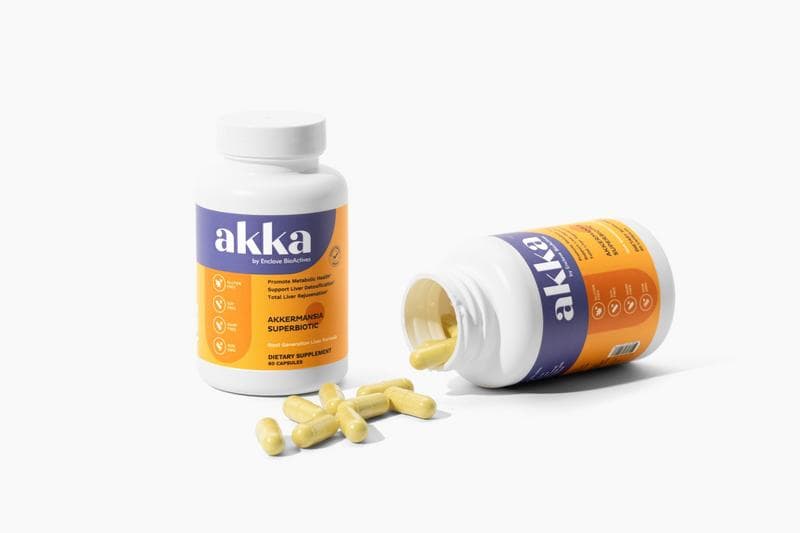
Akka by Enclave BioActives: 60 capsules of the Akkermansia superbiotic formula. Photo: Enclave BioActives
Our verdict
Yes — Akka is worth trying if you're already following the Akkermansia research and pairing it with a fiber-rich diet. It's the rare supplement built on genuinely interesting science — Akkermansia muciniphila is the microbiome field's most-watched organism, and the gut-liver framing is mechanistically honest. Buy it as an enthusiast's daily bet, never as liver medicine, and it's one of the more defensible formulas in a category full of cleanse-kit nonsense.
The short version
Most probiotics are the same handful of yogurt bugs in a new label. Akka, by Enclave BioActives, is built around something genuinely newer: Akkermansia muciniphila, the mucin-loving gut bacterium that lives in the intestinal lining and has become one of the most-studied organisms in the microbiome field — particularly around metabolic health and the gut-liver axis. Akka packages it as a 'superbiotic' liver formula: 60 capsules, gluten/soy/dairy-free, non-GMO, marketed to support liver detoxification and metabolic health. Supplement rules apply, and we spell them out.
Pros & cons
Pros
- Built on Akkermansia — the microbiome field's most-watched bacterium
- Targets the gut-liver axis rather than generic digestion
- Gluten-free, soy-free, dairy-free and non-GMO
- Simple daily capsule protocol, 60 per bottle
- A genuinely differentiated formula in a copycat category
- No refrigeration needed
Cons
- It's a supplement — supportive, never a liver treatment
- Microbiome shifts are gradual; give it weeks, not days
- Newer-science ingredients carry premium pricing
How it works
Take it daily
Capsules with water, same time each day — consistency is what lets a probiotic population establish.
Feed the gut lining
Akkermansia lives in the gut's mucin layer, the interface where gut health and metabolic signaling meet — the formula supports that ecosystem.
Support the gut-liver axis
Everything absorbed in the gut passes to the liver first. A healthier gut barrier is the mechanism behind the formula's liver-support positioning.
Who it's for
- People whose 'liver support' plan is currently a juice cleanse
- Anyone following the Akkermansia research with interest
- Metabolic-health optimizers already managing diet and exercise
- Probiotic users bored of the same lactobacillus blends
Why Akkermansia is the most interesting name in probiotics
Akkermansia muciniphila isn't marketing fiction — it's a real bacterium discovered in 2004 that colonizes the gut's mucus layer, and its abundance has been repeatedly associated in research with healthier metabolic profiles. It became famous because it's hard to grow and wasn't available in supplements at all until recently; the brands bottling it now are selling access to the microbiome field's current favorite organism.
The gut-liver connection is the logic behind Akka's positioning: everything your gut absorbs drains through the portal vein to the liver first, so the integrity of the gut barrier — exactly where Akkermansia lives — shapes the liver's daily workload. 'Support the lining, support the liver' is a coherent mechanism, stated as support rather than treatment.
Superbiotic vs regular probiotics vs 'liver detox' pills
Regular probiotics ship transient passenger strains — helpful while you take them, gone shortly after. Akka's bet is different: a keystone resident species tied to the gut barrier itself, which is why the category earned the 'next-generation probiotic' label in research circles. Against classic 'liver detox' products — milk thistle blends and cleanse kits — Akka is at least mechanistically fresher; your liver detoxifies itself, and no pill does that job for it.
The honest read: this is early-days science commercialized quickly. The research on Akkermansia is genuinely exciting and largely preclinical or early-human; buying it today is a reasonable enthusiast's bet, not a proven therapy. Nobody should expect lab-value changes on a bottle's promise.
How to actually use it — and the guardrails
Give it a consistent 4-8 weeks; microbiome composition changes on the timescale of weeks of daily exposure plus the diet that feeds it. Fiber is Akkermansia's food supply — pairing the capsule with vegetables, oats and polyphenol-rich foods (berries, green tea) is the difference between planting seeds and planting seeds in good soil.
Guardrails, plainly: liver symptoms — jaundice, pain, fatigue, abnormal labs — are doctor territory, immediately and not negotiably. Skip unsupervised probiotics if you're immunocompromised, and clear it with your doctor if you're pregnant, nursing or on significant medication. Akka is a supportive bet on good science; it is not hepatology.
Frequently asked questions
What exactly is Akkermansia muciniphila?
A bacterium that lives in the gut's mucus lining, discovered in 2004 and heavily studied since for its associations with metabolic health. It's called a 'next-generation probiotic' because it's a resident keystone species rather than a transient yogurt-style strain.
What is Akka marketed to do?
Support liver detoxification pathways, metabolic health, and the gut barrier — the gut-liver axis. These are supplement-support claims with the FDA asterisk, not treatment claims.
Will it fix a fatty liver or high enzymes?
No — and any symptom or abnormal lab belongs with your doctor, not a supplement. Akka is supportive nutrition for generally healthy people interested in the research; it treats nothing.
How long before I notice anything?
Microbiome effects build over weeks. Commit to a consistent 4-8 weeks alongside a fiber-rich diet — Akkermansia feeds on what you eat — before judging.
Is it safe with medications or conditions?
Check with your doctor if you're immunocompromised, pregnant, nursing, or on significant medication — standard probiotic guidance. It's gluten/soy/dairy-free and non-GMO.
How is this different from my regular probiotic?
Typical probiotics are lactobacillus/bifidobacterium passengers. Akka centers a resident gut-lining species with a specific research story around metabolic and gut-barrier health — a genuinely different bet, priced accordingly.
Akka vs Pendulum Akkermansia vs milk-thistle 'liver detox' pills — which is a smarter buy?
Pendulum Akkermansia was the first mainstream Akkermansia-only capsule and is the strain-purist pick if you only want the single organism at a premium price. Akka pairs Akkermansia with complementary actives around the gut-liver axis, so it reads more like a stack than a solo strain — useful if you also want the broader angle, less useful if you're specifically after high-dose isolated Akkermansia. Both blow past classic milk-thistle 'detox' kits mechanistically: the liver detoxifies itself; the honest lever a supplement can pull is supporting the barrier that feeds it, which is exactly what Akkermansia targets. If you want the newest science plus fiber-rich food, Akka; if you want the isolated strain and don't mind paying more, Pendulum; if you were about to buy a cleanse kit, buy neither and see a doctor about any real symptom.
When you buy through links on this page, TopCrate may earn an affiliate commission at no extra cost to you. Akka is a dietary supplement; statements about it have not been evaluated by the FDA, and it is not intended to diagnose, treat, cure or prevent any disease. Liver symptoms require a doctor. Prices accurate as of publish time.