SLEEP 101
Wedge Pillow Guide: What Sleeping on an Incline Actually Helps
How a foam wedge helps nighttime reflux, snoring, and post-surgery recovery — plus the right height, the right positions, and what it honestly won't fix.
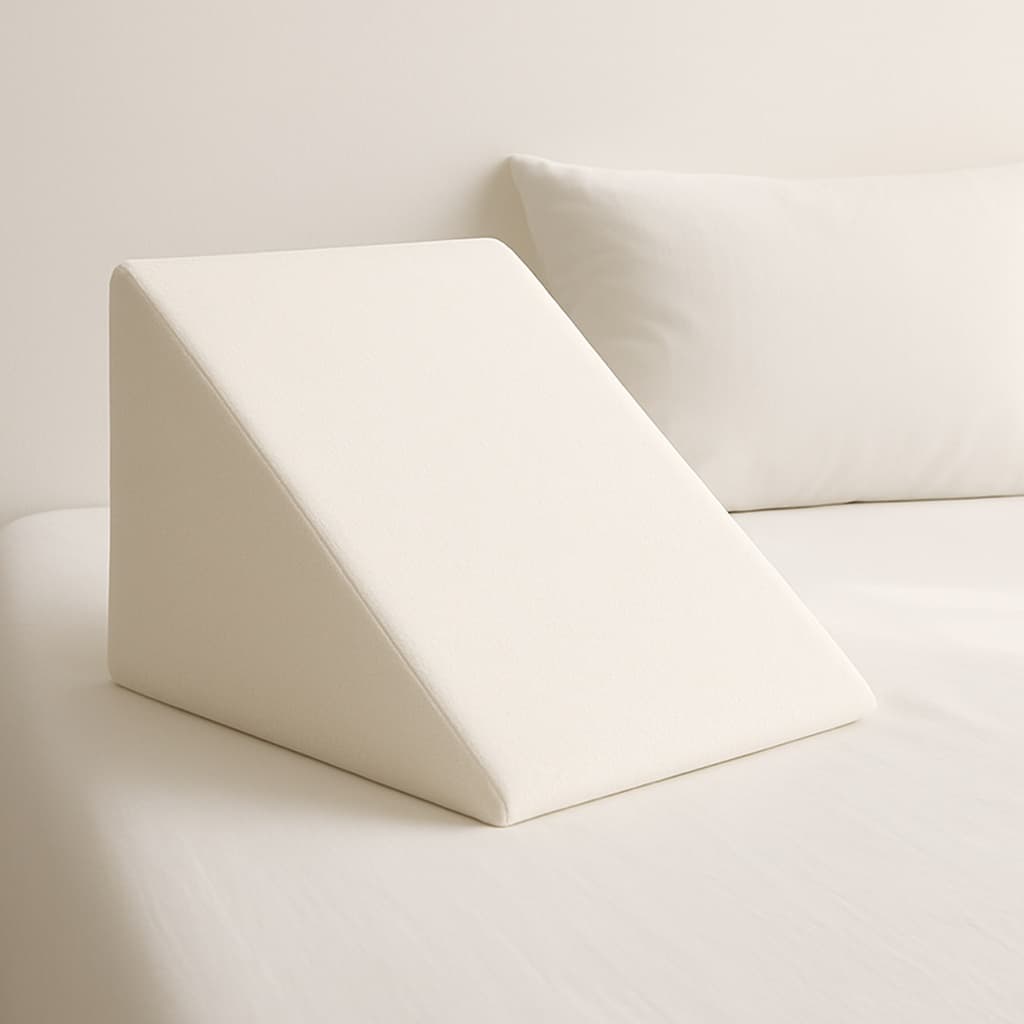
A wedge pillow is the rare sleep product whose entire pitch is physics: it's a solid foam triangle that tilts your upper body a gentle 30 to 45 degrees, and gravity does the rest. That one trick turns out to be genuinely useful for a specific list of problems — nighttime acid reflux above all — and genuinely useless for others, no matter what the listing photos imply.
This guide covers what a wedge pillow actually does, why elevation helps reflux, congestion, snoring, and post-surgery recovery, how high yours should be, the right and wrong ways to sleep on one, and the limits worth knowing before you buy. A wedge is a positioning tool, not a medical device — it can make nights noticeably better, but it doesn't treat the condition underneath.
What a Wedge Pillow Actually Is
A wedge pillow is a triangular block of foam — usually a firm supportive base, sometimes topped with a softer memory foam layer — that raises your head and torso on a steady incline, typically somewhere between 30 and 45 degrees and 6 to 12 inches tall at the high end. Unlike a stack of regular pillows, it can't collapse, shift, or slowly eject you at 2 a.m., and it elevates your whole upper body rather than just cranking your neck forward.
That last part is the point. Propping yourself on three stacked pillows mostly folds you at the neck, which strains it and does little for your torso. A wedge starts the incline at your mid-back, so your chest and stomach come up with your head — which is exactly what the reflux and congestion benefits depend on.
Acid Reflux and GERD: The Best Case for a Wedge
Nighttime heartburn is largely a geometry problem. When you lie flat, your stomach and esophagus sit level with each other, so stomach acid can drift up past a weakened lower esophageal sphincter and sit there — which is why reflux that's tolerable all day turns miserable at bedtime. Elevate your torso and acid has to travel uphill; gravity quietly holds it where it belongs. This is why doctors have recommended raising the head of the bed for nighttime reflux for decades, and a wedge is the practical way to do it without putting your bed frame on blocks.
Many people with reflux also do better sleeping on their left side, which positions the stomach below the esophagus — a wedge and left-side sleeping stack nicely. The honest caveat: a wedge manages symptoms, it doesn't treat the cause. If you're getting heartburn more than a couple of times a week, that's GERD territory and worth an actual conversation with a doctor, wedge or no wedge.
How High Should a Wedge Pillow Be?
For reflux, the useful range is about 7 to 12 inches of elevation. A 7-inch wedge is the comfortable starting point and enough for most people; 10 to 12 inches puts gravity more firmly on your side for stubborn nighttime reflux, at the cost of a steeper surface that takes longer to get used to. If you're between sizes, start lower — a wedge you actually sleep on beats a taller one you abandon.
Length matters too. A longer wedge (24 inches or more) spreads the incline across your whole back, while a stubby one props only your head and shoulders — recreating the pillow-stack neck-fold you were trying to escape. Bigger footprint, better mechanics.
How to Sleep on One: Back Yes, Side Fine, Stomach No
Back sleeping is the wedge's home position: torso centered on the incline, head near the top. Side sleeping works well too — left side if reflux is your reason — though some people find they want a slightly gentler angle on their side. Stomach sleeping on a wedge is a hard no; it hyperextends your neck and back and helps nothing.
Two practical notes. First, most people still want a thin regular pillow on top of the wedge for the head — a wedge positions your torso, but it isn't shaped to support your neck, and it doesn't replace a proper head pillow. If your neck is part of why you're shopping, our guide to the best pillow for neck pain covers that side of the equation. Second, expect an adjustment period: nearly everyone slides down the incline a bit the first few nights. It fades as you learn the position — a wedge with a grippy cover, pushed flush against the headboard, speeds that up.
Snoring, Congestion, Surgery Recovery, and Tired Legs
Elevation earns its keep beyond reflux. For snoring, raising the head and torso keeps the tongue and soft palate from slumping backward into the airway, which can quiet positional snorers — the people who mostly snore on their back. It's a modest mechanical assist rather than a fix, and it pairs sensibly with the mouthpieces and other options in our anti-snoring devices guide. For congestion, sleeping with your head above your heart helps sinuses drain instead of pool, which is why a wedge is a favorite tool during colds and allergy season.
Post-surgery, elevation is often literally doctor's orders — surgeons frequently instruct patients to sleep inclined after shoulder, abdominal, and cosmetic procedures to manage swelling and protect the surgical site. Follow your surgeon's specific angle and duration guidance; the wedge is just the comfortable way to comply. And don't overlook the flip trick: turned around under your knees, a wedge elevates tired, swollen legs and takes pressure off the lower back — the reason plenty of owners end up wanting two.
The Limits — and a Word on Foam Quality
Now the honest fine print. A wedge pillow does not treat sleep apnea. If your snoring comes with gasping, choking, witnessed pauses in breathing, or you're exhausted every day despite a full night in bed, that's a see-a-doctor situation — apnea is a medical condition with real treatments, and an incline is not one of them. A wedge can sit alongside treatment for comfort, but it should never stand in for a diagnosis.
On quality: the foam is the product, so it's worth being picky. A dense, firm base foam holds its angle for years; bargain wedges use soft, airy foam that compresses into a sad ramp within months, taking your elevation with it. A memory foam top layer adds comfort without giving up support, and a removable, washable cover is non-negotiable for something you'll sweat on nightly. Expect a faint new-foam smell out of the box — a day or two of airing out clears it.
See our Best Pillows of 2026 guide
The head pillow still matters on a wedge — these are the picks we'd pair with one.
See our Best Pillows of 2026 guideFrequently asked questions
Do wedge pillows help acid reflux?
Yes — this is the wedge pillow's strongest use case. Elevating your torso 30 to 45 degrees means stomach acid has to travel uphill to reach your esophagus, which is why doctors have long recommended sleeping inclined for nighttime reflux. It manages symptoms rather than treating the cause, so frequent heartburn still warrants a doctor visit.
How high should a wedge pillow be?
For reflux, 7 to 12 inches at the tall end. Seven inches is the comfortable starting point that works for most people; 10 to 12 inches gives gravity more leverage for stubborn nighttime reflux but takes longer to get used to. Longer wedges (24 inches or more) are better, since they incline your whole torso instead of folding your neck.
Can you sleep on your side on a wedge pillow?
Yes, side sleeping on a wedge works fine — and the left side is often the better choice for reflux, since it keeps the stomach below the esophagus. Back sleeping is the classic wedge position. The only real no is stomach sleeping, which hyperextends your neck and back on an incline.
Do wedge pillows help with snoring or sleep apnea?
They can reduce positional snoring by keeping the tongue and soft palate from slumping into the airway, especially for people who snore on their backs. They do not treat sleep apnea. Snoring with gasping, breathing pauses, or constant daytime exhaustion should be evaluated by a doctor.
Can you use a wedge pillow under your legs?
Yes — flipped so the incline supports your knees and calves, a wedge elevates the legs to help with swelling and takes pressure off the lower back. It's the same pillow doing a second job, which is why some people keep one at each end of the bed.
How long does it take to get used to a wedge pillow?
Usually a few nights to a couple of weeks. Sliding down the incline is the most common early complaint; it fades as your body learns the position. A grippy cover, placing the wedge flush against the headboard, and starting with a lower wedge all shorten the adjustment period.
TopCrate is reader-supported. When you buy through links on our site we may earn an affiliate commission, at no extra cost to you. Content is for general information and isn't a substitute for professional advice.