SLEEP 101
Pregnancy Pillow Guide: C-Shape vs. U-Shape vs. Wedge, and When to Start Using One
An honest comparison of pregnancy pillow shapes, what the side-sleeping guidance actually says, and the bed-space reality nobody mentions.
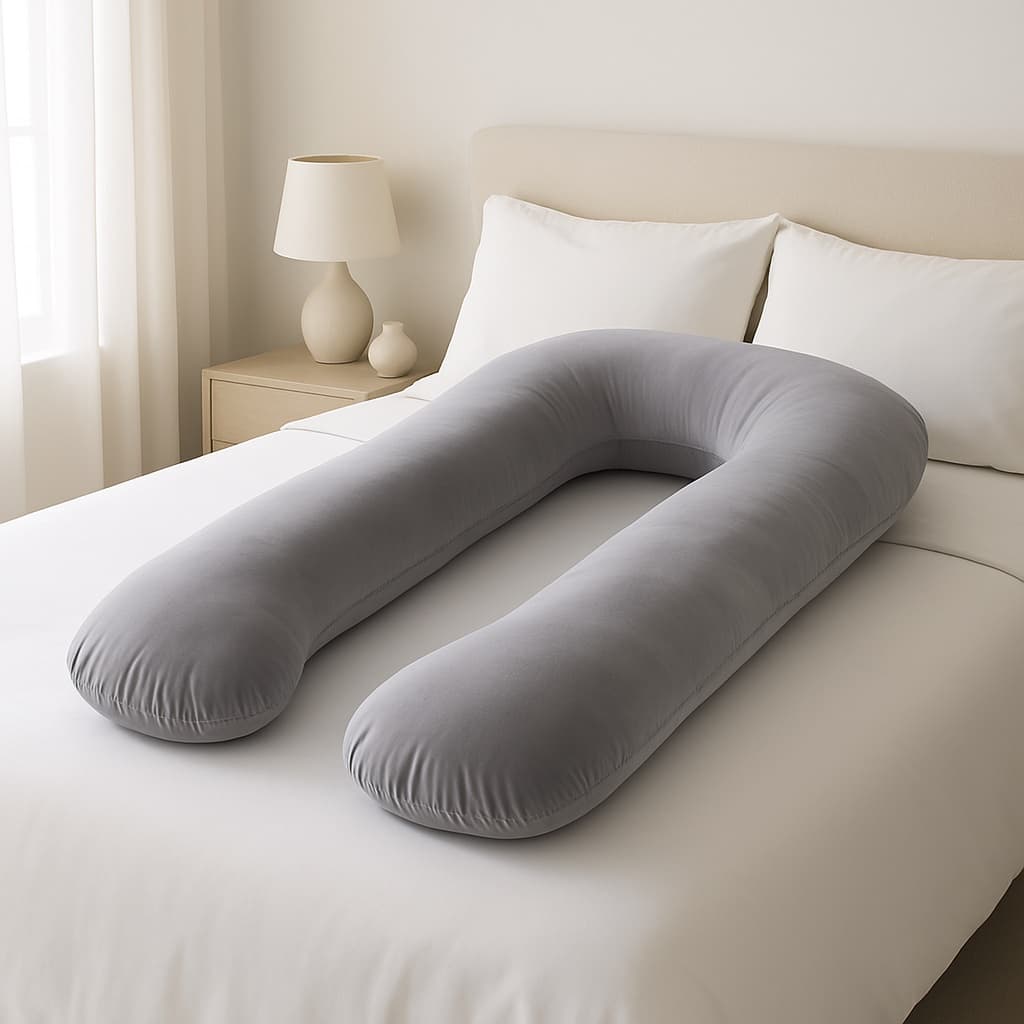
Pregnancy takes your two most comfortable sleeping positions off the table right when you need sleep most. Somewhere around the halfway mark, back sleeping and stomach sleeping both stop working — one on medical guidance, one on geometry — and you're left holding a growing bump on your side for months. A pregnancy pillow can't fix hormones or 3 a.m. bathroom trips, but it can fix the mechanics: supporting the bump, cushioning your hips, and making mandatory side sleeping genuinely comfortable.
The idea builds on the classic body pillow — a straight cushion side sleepers hug for alignment — with shapes designed around a bump. This guide compares C-shapes, U-shapes, and wedges honestly, explains what the left-side-sleeping guidance actually says (and when to ask your OB), covers when most people start using one, and gets into the practical stuff: bed space, partners, washable covers, and what the pillow is good for after the baby arrives.
Why pregnancy makes sleep so hard
Three things stack up. First, the position mandate: from around 20 weeks, general guidance steers pregnant sleepers away from lying flat on their back, because the weight of the uterus can press on the large vein that returns blood to your heart. So side sleeping becomes the position, whether you've ever liked it or not. Second, the bump itself: as it grows, it pulls forward when you lie on your side, twisting your lower back unless something supports its weight. Third, pressure: pregnancy hormones loosen the pelvic joints, and months of side sleeping concentrates weight on your hips and can leave them aching by morning.
A pregnancy pillow addresses all three mechanically — a panel or wedge under the bump takes its weight, length between the knees keeps your hips stacked, and support behind your back makes side sleeping feel secure enough to actually stay asleep in. None of this is a cure for pregnancy insomnia, and we won't pretend otherwise. It's a comfort tool that removes the physical reasons you wake up, which for many people is most of the battle.
U-shape vs. C-shape vs. wedge: the honest comparison
The U-shape is the full-service option: it surrounds you on both sides, so your bump is supported in front, your back is supported behind, and — the killer feature — when you switch sides at night, the support is already there. No dragging a pillow over your body at 2 a.m. The honest downside is that a U-shape is enormous. It can take up close to half a queen bed, it's warm, it's awkward to store, and your partner will have opinions. If you sleep alone or have a king bed, it's the easy recommendation.
The C-shape gives you most of the benefit at a fraction of the footprint and usually a lower price. The curve supports front or back — bump and knees, or back and head — but not both at once, so switching sides means repositioning. It's the better call for shared beds and for anyone who found the U-shape claustrophobic. The wedge is the minimalist answer: a small foam triangle that slides under the bump or behind your back for targeted support. It's cheap, it packs in a suitcase, and it works alongside pillows you already own — a wedge under the bump plus a regular pillow between the knees is a legitimately good budget setup. What a wedge alone can't do is knee separation or hug support, which is why many people end up with a wedge for travel and something bigger for home.
Left side, right side: what the guidance actually says
You'll hear that the left side is the ideal pregnancy sleeping position, and there's a reason behind it: the major vein that returns blood to your heart runs slightly to the right of your spine, so lying on your left is thought to keep circulation to you and the baby at its best. That said, the practical guidance most clinicians give is less strict — the side is what matters. UK research found that going to sleep on your side in the third trimester was associated with a lower risk of stillbirth compared with going to sleep on your back, which is why guidance there recommends settling to sleep on your side from 28 weeks, left or right.
Two reassurances that come straight from that same guidance. The position you fall asleep in is the one you hold longest, so it's what counts most — and if you wake up on your back, don't panic; just roll back onto your side and carry on. This is general information, not medical advice for your pregnancy: your OB or midwife knows your situation, so bring sleep-position questions to them, especially if anything about your pregnancy is complicated.
When to start using a pregnancy pillow
Most people buy one early in the second trimester, and that timing makes sense: it's when the bump starts to show, back sleeping ends, and hips begin to complain. Starting earlier is fine — there's no rule against it, and side sleepers with hip discomfort benefit at any stage, pregnant or not. If you're a lifelong back or stomach sleeper, there's an argument for starting before you strictly need to, using the pillow to train the side-sleeping habit while it's still optional.
The third trimester is where the bigger pillows earn their keep. The bump is heaviest, hip and pelvic pressure peaks, and the difference between supported and unsupported side sleeping stops being subtle. If you're deciding between buying now or waiting, the second-trimester purchase gets you the most nights per dollar.
The bed-space reality: partners, mattress size, and washable covers
Nobody puts this on the box, so we will: a U-shaped pregnancy pillow on a queen mattress leaves your partner a lane. On a full or double, it leaves them a suggestion. Before buying, be honest about your bed size and how your partner sleeps — a C-shape hugging your front, or a wedge-plus-knee-pillow setup, keeps the peace on smaller mattresses. Some couples genuinely don't mind the foam wall down the middle; some resent it by night three. Measure first.
Whatever shape you choose, treat a removable, machine-washable cover as non-negotiable. Pregnancy tends to run warm and night sweats are common, and this pillow will be pressed against you for months — you want to be able to strip and wash the cover as often as your sheets. Check that the zipper runs far enough to actually get the cover off easily; wrestling a U-shape out of a tight cover at nine months pregnant is nobody's idea of nesting.
After the baby: what the pillow is still good for
A pregnancy pillow doesn't retire on delivery day. Curled into your lap, a C-shape makes a solid nursing and bottle-feeding support, propping the baby at chest height and saving your arms and shoulders through long feeds. The full-length side of a U or C keeps working as a regular hugging-and-knee pillow for anyone in the house who sleeps on their side. Plenty of parents report the pregnancy pillow simply migrated to a new job rather than the closet.
One safety line we won't blur: pregnancy pillows are for adults. Never put one in a crib or bassinet, and don't use it to prop a sleeping baby — infant sleep spaces should be flat and bare, per every major safe-sleep guideline. And once your sleep is your own again, it may be time to look at the rest of the bed: our roundup of the best pillows we've tested is a good place to start rebuilding a sleep setup around your preferences instead of your bump.
See our Best Pillows of 2026 guide
For the head-pillow half of the equation — during pregnancy and long after — these are the picks we actually recommend.
See our Best Pillows of 2026 guideFrequently asked questions
When should I start using a pregnancy pillow?
Most people start early in the second trimester, when the bump shows, back sleeping ends, and hip pressure begins. There's no harm in starting earlier, and the third trimester is when the larger pillows help most.
Is a C-shaped or U-shaped pregnancy pillow better?
U-shapes support front and back at once and don't need repositioning when you switch sides, but they consume close to half a smaller bed. C-shapes are lighter, cheaper, and kinder to a shared mattress, at the cost of repositioning when you flip. Solo or king-bed sleepers: U. Shared queen or smaller: C.
Why is left side sleeping recommended during pregnancy?
The large vein returning blood to your heart sits slightly right of your spine, so the left side is thought to optimize circulation. In practice, guidance emphasizes sleeping on either side rather than your back — especially settling to sleep on your side from 28 weeks. Ask your OB or midwife what's right for your pregnancy.
Can I just use a regular body pillow instead of a pregnancy pillow?
Often, yes. A straight body pillow hugged along your front handles knee separation and some bump support, especially with a small wedge added underneath the bump. Dedicated pregnancy shapes mainly add back support and the no-repositioning convenience of the U.
Do pregnancy pillows actually help you sleep?
They fix the mechanical problems — unsupported bump weight, twisted hips, aching pressure points — that wake many pregnant sleepers. They don't fix hormones, heartburn, or bathroom trips, so think of them as removing the physical obstacles rather than guaranteeing a full night.
Can I use my pregnancy pillow after the baby is born?
Yes — as a nursing support in your lap, and as a regular side-sleeper pillow. The one rule: it's an adult pillow only. Never place it in a crib or use it to prop a sleeping infant.
TopCrate is reader-supported. When you buy through links on our site we may earn an affiliate commission, at no extra cost to you. Content is for general information and isn't a substitute for professional advice.