SLEEP 101
Mouth Taping: What It Actually Does, What the Studies Show, and Who Should Never Try It
The honest guide to the internet's favorite sleep hack — the legitimate physiology behind nasal breathing, the surprisingly thin evidence, the safety rules that aren't optional, and the better-tested fixes for snoring.
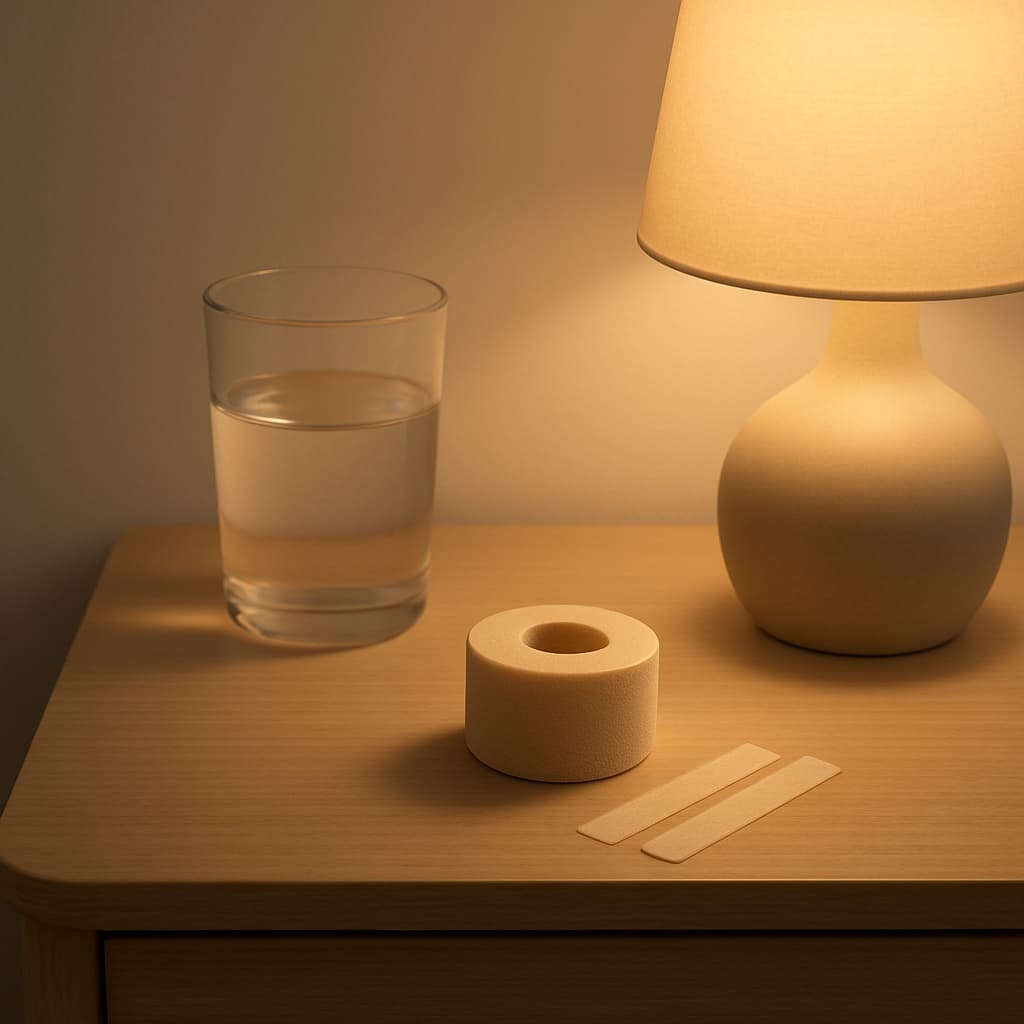
Mouth taping is exactly what it sounds like: placing a strip of tape over your lips before bed so you're forced to breathe through your nose all night. It may be the most virally successful sleep trend of the decade, and it's also the rare wellness fad with a genuine safety catch — which is why it deserves a guide that separates the real physiology from the claims stacked on top of it.
Here's what mouth taping actually does, why the nasal-breathing argument is partly legitimate, what the small pile of studies really shows, who should never tape under any circumstances, and the alternatives with better evidence if the thing you're actually trying to fix is snoring.
What mouth taping is, and why it went viral
The practice is simple: a strip of porous, skin-safe tape across or over the lips at bedtime, keeping the mouth closed so all breathing routes through the nose. The pitch behind it starts from real ground. Sleeping with your mouth open has genuine downsides — dry mouth, morning breath, a scratchy throat — and it's associated with snoring, because air moving through a slack, open mouth makes relaxed throat tissue vibrate more. Nasal breathing is what the airway is built for: the nose filters, warms, and humidifies air before it reaches your lungs. None of that physiology is controversial.
The leap is everything stacked on top of it. The trend credits taping with deeper sleep, more energy, sharper focus, even a better jawline — claims extrapolated from the general benefits of nasal breathing, not demonstrated by taping studies. Selling real physiology as if it proved the product is the oldest move in wellness, and mouth taping runs it nightly.
Does mouth taping work? What the evidence actually says
The research base is small, and honest coverage says so. The most-cited supportive result is a 2022 study of 20 mouth-breathers with mild sleep apnea: after a week of sleeping with hypoallergenic tape, snoring and apnea measurements roughly halved for most participants. Encouraging — and it was 20 people, one week, no control group, described by its own authors as a preliminary study.
Zoom out and the picture thins further. A 2025 systematic review in PLOS One found only ten studies worth pooling — 233 people in total across all of them — and concluded the current evidence does not support mouth taping as a safe or effective treatment for sleep-disordered breathing. Two of the ten suggested a possible benefit, both in mild sleep apnea; four flagged a potentially serious asphyxiation risk when the mouth is sealed over a blocked nose. The fair summary: possibly a mild snoring reduction for a narrow group of healthy people who can breathe freely through their nose, and no solid evidence for anything else on the trend's benefit list.
Is mouth taping safe? Who should never do it
This section matters more than the rest of the article. Never tape with untreated or suspected sleep apnea. If you snore loudly and anyone has heard you gasp, choke, or pause breathing in your sleep — or you wake exhausted despite full nights — that pattern needs a doctor before any tape goes near your face. Sleep apnea means the airway repeatedly collapses during sleep, and an open mouth can be part of how a struggling body compensates; taping it shut can mask the warning signs or make the condition worse. The cruel irony is that apnea sounds like heroic snoring from the outside, which makes the people who most need a sleep study the ones most likely to reach for tape.
The rest of the never list: never tape with nasal congestion or obstruction of any kind — a cold, allergy season, a deviated septum — because sealing your backup airway over a blocked primary one is exactly how taping turns dangerous, and it's the scenario those studies flagged. Never after drinking alcohol, which relaxes airway muscles, worsens congestion, and blunts the reflexes that would otherwise wake you. Never with reflux, since a sealed mouth and rising stomach contents are a combination you do not want to test. And never for children, full stop. If you're a healthy adult cleared of all of the above and still curious, use only purpose-made porous, skin-safe tape — never duct, packing, or athletic tape — and clear it with your doctor first. That's not boilerplate; it's the actual protocol the evidence supports.
For snoring, better-evidenced fixes exist
If the reason you're tape-curious is snoring, start with the options that have stronger track records. Position change is free: back-sleeping lets the jaw and tongue fall backward into the airway, and moving to your side quiets many snorers by itself. Nasal strips physically hold the nostrils open and help when the problem lives in the nose. And mandibular advancement devices — mouthpieces that hold the lower jaw slightly forward so the airway can't collapse — have the best evidence of any over-the-counter approach, because they address the narrowing mechanically instead of hoping sealed lips will.
Our reviewed pick in that category is SnoreRX, a boil-and-bite mouthpiece: you warm it, mold it to your teeth, and then adjust how far it advances your jaw in precise 1mm steps until snoring quiets at the gentlest setting that works. It isn't for everyone — crowns, bridges, dentures, loose teeth, and TMJ issues can rule it out, and a conversation with your dentist or doctor before buying is genuinely worth having. It reduces snoring; it cures nothing, and no honest product claims otherwise. For the full landscape, our guide on how to stop snoring matches fixes to causes, and our roundup of the best anti-snoring devices ranks the mouthpieces, pillows, sprays, and strips head to head.
The bottom line
Nasal breathing is real physiology; mouth taping is an unproven shortcut to it with a short but serious safety rulebook. If a doctor has ruled out sleep apnea, your nose is reliably clear, and you're using proper porous tape, it's a cheap experiment that may take the edge off mild snoring. Everyone else — which covers most of the audience the trend is marketed to — has better options, from a free position change to a fitted mouthpiece. The tape was never the interesting part; the airway behind it is.
Read our SnoreRX review
The adjustable boil-and-bite mouthpiece with better snoring evidence than any roll of tape.
Read our SnoreRX reviewFrequently asked questions
Does mouth taping work?
For a narrow group — healthy adults who mouth-breathe but have clear nasal airways — small studies suggest a modest snoring reduction. A 2025 systematic review of all ten existing studies concluded the evidence doesn't support it as a safe or effective treatment for sleep-disordered breathing, and the energy, focus, and jawline claims are extrapolation, not findings.
Is mouth taping safe?
Only conditionally: for healthy adults with no sleep apnea, fully clear nasal breathing, no alcohol that evening, no reflux, using porous skin-safe tape, and ideally with a doctor's okay. It is unsafe with untreated or suspected sleep apnea, any nasal congestion or obstruction, after drinking, with reflux, and always for children.
What tape do you use for mouth taping?
Only purpose-made mouth strips: porous, hypoallergenic, designed for skin, and easy to peel off — some are vented to let a little air pass, which is a feature, not a flaw. Never duct tape, packing tape, or athletic tape; strong adhesives and non-breathable materials on your lips are how a fad becomes an ER story.
Can you mouth tape with a beard?
Usually not well — tape needs skin contact to seal, and facial hair breaks the adhesion. Some brands sell wider strips for facial hair, but on a full beard the seal is unreliable, and pressing harder isn't the answer. Take the hint and use nasal strips or a mouthpiece instead.
Can mouth taping stop snoring?
It may reduce snoring in mouth-breathing snorers whose noses are clear — that's the one claim with some study support, and even there the studies are small. For loud, every-night snoring, a mandibular advancement mouthpiece has better evidence, and snoring with gasping or breathing pauses needs a doctor, not tape.
Should you mouth tape if you have sleep apnea?
No. With untreated or suspected sleep apnea, taping can mask symptoms or make the condition worse. Get a sleep study first — and if you're treated with CPAP, involve your sleep specialist before adding tape to anything.
TopCrate is reader-supported. When you buy through links on our site we may earn an affiliate commission, at no extra cost to you. Content is for general information and isn't a substitute for professional advice.