BUYER'S GUIDE
Is Moksha Beam Legit? Reviews, Price, the 30-Day Guarantee and What to Know (2026)
Yes, the Moksha Beam is a real product from a real startup, and it's a breathing pendant, not a medical device. Reviews are mixed, the landing page doesn't list a price, and the money-back terms are thinner than you'd like. Here's what we could verify and what we couldn't.
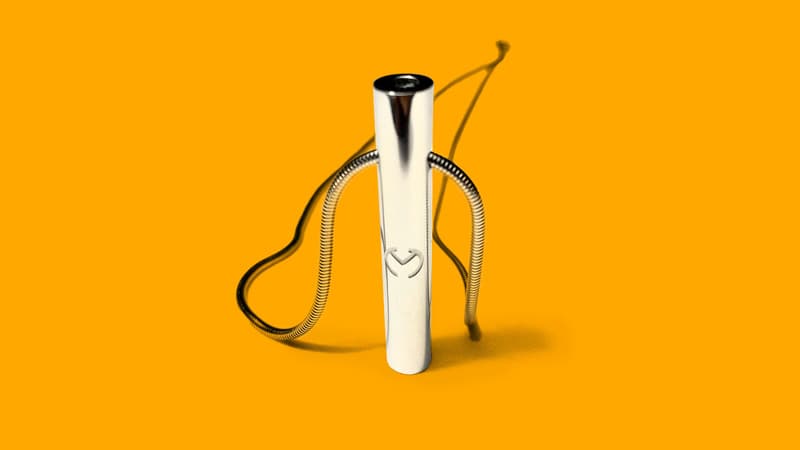
Moksha Beam is legit in the ways you can check: it's a real stainless-steel breathing pendant, made by a company with a public track record that includes a Kickstarter launch, press coverage and a free companion app. It is not a scam. What it is, is a simple wellness accessory that is marketed with big promises, and the honest picture sits somewhere between the ads and the angriest reviews.
This guide pulls together what the Moksha Beam's own sales page says, what independent coverage and customer reviews say, and where the gaps are. We tell you plainly where we couldn't verify something, because a lot of "is it legit" pages simply repeat the sales copy.
What the Moksha Beam actually is
The Moksha Beam is a pendant on a chain that you breathe through. Per the sales page, you inhale through your nose, exhale slowly from your belly into the Beam, and repeat. The idea is the oldest one in breathwork: a long, slow exhale is a simple way to signal your body to settle, and a pendant with a narrow airway makes the long exhale automatic instead of something you have to count.
The sales page describes it as 316-grade stainless steel, lead- and nickel-free, in Polished Silver, Space Grey and Rose Gold, and says it doesn't tarnish. A breathing app is included with purchase, with, in the page's words, "100's of on-demand breathing exercises." Our Moksha Beam review goes deeper on the design and who it suits.
Who is behind Moksha Beam?
The sales page names two founders, Yash and Jaymin, who say they started developing the product after a 2019 trip. That matches TechCrunch's September 2024 coverage of Moksha, a gamified meditation and breathwork company, which names its founders as Yash Ghanekar and Jaymin Shah and says one of them was inspired by his brother, a doctor, talking about breathwork.
TechCrunch also reported that the company launched on Kickstarter the year before with over 400 preorders, that it claimed over $1 million in lifetime sales, and that it had raised a little under $200,000 from Republic and angel investors. Those are the company's own numbers as reported by a news outlet, not an audit, but they describe a real small business rather than an anonymous drop-shipper.
The landing page we send readers to is a promotional page, and it says the offer is sold through GiddyUp, a product curator. TopCrate earns a commission when readers buy through our links. That doesn't change the verdict below, and it applies only to this offer.
What do Moksha Beam reviews say?
Independent reviews are mixed, and small in number. On Trustpilot, the Moksha site shows a 3.6 TrustScore from 11 reviews at the time we checked, with about 55 percent of them five-star and about 9 percent each at three, two and one star. That's too few reviews to call a verdict, but the themes are consistent.
The praise is for the build quality ("high quality, reliable" and "super innovative" are the kinds of phrases used), for customer service that replaced an order, and for people who say it helps them calm down, focus or wind down before sleep. The complaints are that the pendant itself feels hollow, one reviewer comparing it to blowing through a straw, that one buyer thought $48 was too much, and that a few reviewers say calls and emails went unanswered. The page also notes the company hasn't replied to the negative reviews.
Read that fairly: the product is a simple tube, so people who expect something dramatic are disappointed, and people who use it as a breathing prompt tend to like it. Some of the most positive comments seem to be about the app rather than the necklace, which is worth knowing if you're deciding whether the app is a big part of the value.
How much does the Moksha Beam cost?
This is where we have to be careful. The sales page lists no prices at all, only "Order Now" buttons, so you'll see the real number only at checkout. Other sources give different figures: TechCrunch cited a $43 necklace in 2024, and a Trustpilot reviewer mentions paying $48. Our review lists $49.99, and prices on a promotional funnel can change with bundles and offers.
Our advice is simple: don't buy on the first number you see. Open the checkout, look for upsells and add-ons you didn't ask for, and confirm the total, including shipping, before you enter payment details. The sales page says shipping is free on "qualifying offers only," without saying which offers qualify.
What the 30-day guarantee covers (and what it doesn't say)
The sales page promises a "30-day money back warranty" and says that if you're not 100 percent satisfied you can return it "hassle-free." That's a real promise worth having, and it's the main reason trying the Beam is a low-risk purchase.
What the page does not spell out is the fine print: whether you pay return shipping, how long a refund takes, how the refund is issued, or whether the pendant has to be unused. We couldn't find those terms stated, so read the full policy at checkout and save the order confirmation. If it matters to you, ask support in writing before you buy. Given the Trustpilot complaints about slow replies, keep a record of every message.
Moksha Beam vs Moksha's other devices and look-alike names
The name causes real confusion, so here's the short version. The Beam is the breathing pendant, a simple precision tube with a free app. Moksha also sells a much more expensive electronic device, which TechCrunch described as a $150 smart breathing device with air-pressure sensors, haptic feedback and Bluetooth tracking. That's a different product with a different price, and nothing in this guide is a review of it.
There's also a separate Beam app by Moksha in the App Store, and "Moksha" is a common word used by unrelated businesses, from yoga studios to other wellness products. If you're searching for reviews, make sure what you're reading is about the pendant. For a quick sense of how the Beam compares with other calming tools, our guide on whether Dodow is legit covers a bedside alternative, and the Chill Pill palm device is a quieter fidget-style option.
What Moksha Beam can and can't do
The sales page claims the Beam reduces tension, stress and anxiety within seconds and lists benefits for focus, energy, sleep, blood pressure and immune response. It calls the product "science-backed" and "Dr. recommended," but it names no studies or doctors, and its footnotes don't show sources on the page. Treat those as marketing claims.
What's reasonable to say is narrower: slow breathing is a widely used technique for relaxation, and a pendant that lengthens the exhale can make it easier to remember and do. Some people find that supportive during stressful moments. It's a tool for habit and relaxation, not a medical device, and it is not a replacement for care if you live with anxiety, panic, or a breathing condition. Talk to a healthcare professional about those.
Who should buy it, and who should skip it
Buy it if (as in our Moksha Beam review verdict) you like the idea of a discreet reminder to breathe slowly, you'd rather not stare at a phone screen, and you're comfortable with a thin refund policy because you'll read it first. It's also an easy gift for a stressed friend.
Skip it if you want proof of clinical results, if you hate gadgets that depend on a habit, or if a hollow, simple tube for roughly the price of a nice dinner feels like too much. A free breathing exercise costs nothing, and the Beam's only edge is that it makes the exhale feel deliberate.
Read our full Moksha Beam review
Design, how it works, who it suits and our verdict on the breathing pendant.
Read our full Moksha Beam review →Frequently asked questions
Is Moksha Beam legit or a scam?
It's legit in that it's a real, shipped product from a real startup with press coverage and a Kickstarter history. It isn't a scam, but it's marketed with strong claims that the sales page doesn't back with named studies. Treat it as a breathing accessory, not a medical device.
Does the Moksha Beam really work?
It works as a prompt to exhale slowly, which many people find relaxing. Independent reviews are mixed: some people say it helps them calm down, while others call it a hollow tube. We can't promise results for any individual.
How much does the Moksha Beam cost?
The sales page doesn't list a price. TechCrunch cited $43 in 2024 and one reviewer reports $48; our review lists $49.99. Confirm the total, including shipping and any upsells, at checkout.
What is the Moksha Beam return policy?
The sales page offers a 30-day money-back warranty and says returns are hassle-free. It doesn't state who pays return shipping or how long refunds take, so read the policy at checkout and keep your order confirmation.
Is the Moksha Beam the same as the Moksha O1 or Moksha's smart device?
No. The Beam is the pendant breathing necklace. Moksha also sells a pricier electronic breathing device, which TechCrunch described at $150 with sensors and haptic feedback. They're different products.
Can I get the Moksha Beam on Amazon?
One Trustpilot reviewer says they bought a Moksha necklace on Amazon, but we haven't verified current listings. Buying through the official sales page gets you the stated 30-day guarantee, so check any other seller's return policy first.
TopCrate is reader-supported. When you buy through links on our site we may earn an affiliate commission, at no extra cost to you. Content is for general information and isn't a substitute for professional advice.