OUTDOOR
How to Store a Garden Hose Without Kinks, Cracks or Frozen Blowouts
Coiling a hose wrong is why it kinks; leaving it full over winter is why it splits; parking it in direct sun is why the rubber goes brittle in a season. Here's the correct storage routine — and the hose that actually forgives all three mistakes.
The garden hose in most driveways is quietly murdered by the way it's stored. It gets wound in tight ovals against its natural coil direction, which locks kinks into the wall of the hose that can never fully be worked out. It's left full of water on a freezing night, which expands into micro-cracks that turn into pinhole leaks by spring. And it sits coiled on hot concrete or a sun-baked deck all summer, which UV-degrades the outer layer until the whole hose gets stiff and starts to split at the fittings. Most hoses last two or three seasons not because they're cheap but because they're stored badly.
The good news is that proper hose storage is a five-minute end-of-use habit and a five-minute end-of-season routine. This guide covers the coil method that doesn't lock in kinks, the winter-blowout step that saves a hose from freezing splits, the reels and hangers actually worth buying, the sun-and-heat problems most people don't realize are killing their hose, and — for the honest majority who won't do all of this every time — the specific type of hose that forgives most of the storage mistakes on its own.
Why hoses kink, split and go brittle — the three failure modes
Almost every dead hose died from one of three storage failures. The first is mechanical: repeated tight coiling against the hose's natural direction of curl creates permanent flat spots and kinks in the rubber or vinyl wall, and once a kink is set into the wall it becomes a permanent weak point that kinks in the same spot every time water runs through it. Cheap coiled 'garden hose caddies' that force the hose into tight ovals are among the worst offenders, as is winding a hose into a figure-eight on a hook without letting the coils rotate freely.
The second failure is freeze damage. Water expands about 9% when it freezes, and a hose left full of water on a night that drops below 32°F expands from the inside — usually not enough to burst the whole hose but plenty to create micro-cracks in the inner wall that later become pinhole leaks or ruptures at connection points. This is why most hoses fail in spring rather than winter — the damage was done in December, and the pressure test in April finds it. The third failure is UV degradation: sunlight breaks down the polymers in vinyl and rubber hose walls, causing them to stiffen, crack, and lose flexibility over a single hot summer if the hose sits fully in the sun. A hose stored in shade lasts three times as long as an identical hose stored on a sun-baked concrete pad.
The correct end-of-use coil that doesn't lock in kinks
The five-second habit that prevents most hose damage: after each use, turn off the water at the spigot, disconnect the sprayer or nozzle, and hold the hose vertically for 15-30 seconds to let gravity drain the water out of it. Draining first is the difference between coiling a light flexible hose and wrestling a stiff water-filled cylinder, and it eliminates most of the effort of coiling correctly.
Then coil in the direction the hose naturally wants to curl (every hose has a preferred curl direction from how it was manufactured — you can feel this by holding a section straight and letting it relax) using large loops, roughly two to three feet across for a standard hose. Loop diameter matters — small tight coils fight the hose's natural elasticity and set in kinks; large loose loops let the hose relax into a coil that comes back out kink-free next time. Rotate the hose slightly with each loop so no single spot takes all the twist; this is what professional gardeners are doing when they seem to coil a hose almost effortlessly. Hang the finished coil on a wide-bracket hose hanger (the kind with a broad U-shape at least 8 inches wide) or set it flat on a shelf in the shed — never fold it in half over a narrow nail or a small hook, which flattens the top loops and creates weak spots.
The winter drain-and-store routine (the single most important five minutes of the season)
Before the first hard freeze, do this once and the hose survives the winter: turn off the water at the spigot, open the spigot briefly to release pressure in the line, disconnect the hose from the spigot, and hold one end elevated while walking the water out of the hose — 'walking' means starting at the elevated end and hand-over-hand feeding the hose over a raised object (a fence rail, a deck edge, a rake handle across two chair backs) so gravity pushes water out the other end. This takes about 3 minutes for a 50-foot hose and forces out virtually all of the standing water inside.
Then coil the empty hose loosely and store it inside — a garage, a shed, a covered porch, anywhere it's not exposed to freeze cycles. If you have no indoor storage at all and must leave the hose outside, at least keep it disconnected, drained, and stored coiled and elevated off the ground (a hook, a hanger, or a coil on a shelf) so it isn't sitting in ice-and-thaw puddles. Also disconnect and drain any splitters, timers, or sprinklers — these fail from freeze damage even faster than hoses do, and a burst spigot splitter can be a $300 plumber visit when the pipe wall behind it cracks. The final indoor-vs-outdoor rule of thumb: a hose stored indoors for winter lasts 5-7+ years; one left outside connected and full lasts about 2.
Reels, hangers and hooks worth buying (and the ones that damage your hose)
The right storage hardware makes the good habits above easy; the wrong hardware punishes you for using it. Worth buying: a wall-mounted wide-bracket hose hanger with a broad U-shape (8+ inches across) so coils sit relaxed rather than crimped; a hose reel with a hand-cranked drum where the hose winds onto a wide cylinder that respects its natural curl; a decorative hose pot or basket that lets the hose lie in loose coils rather than forcing a shape. All of these work with the hose's structure rather than against it.
Avoid: narrow nails or single small hooks driven into siding, which flatten and crimp the top loops; auto-retracting reels with strong springs, which can whip the hose into tight coils faster than it should be coiled and are notorious for kinking exactly the section that lives inside the reel; and any 'caddy' or bucket that forces the hose into tight ovals or S-curves against its natural direction. The classic cheap wall-mount plastic bucket-style hose caddies are the specific product responsible for most 'why does my hose always kink in the same spot' complaints.
Sun, heat and the storage locations that quietly destroy your hose
The two worst places to leave a hose in summer: coiled on sun-baked concrete or asphalt (radiates heat, direct UV, no ventilation), and coiled inside a black rubber hose reel case (traps heat like an oven, especially in the afternoon sun). Both dramatically shorten hose life through UV degradation of the outer wall and heat aging of the rubber compounds. A hose that would last five years stored in shade often fails within two seasons on a sunny pool deck.
The better options: hanging in shade against a north-facing wall (indirect light only, air circulation around the coils), inside a covered outdoor storage box, or in the garage if it's convenient to route the hose in and out. If your only spigot is on a sun-blasted side of the house, at minimum coil the hose behind a bush, tree, or piece of furniture so it isn't in direct sunlight for hours a day. Some people also cover the coiled hose with a light-colored breathable cloth or an old sheet in peak summer — cheap, ugly, effective. Whatever you do, don't leave the hose lying stretched out across the lawn in full sun for weeks between uses; that's the fastest way to age a hose in summer.
When the hose itself is the problem — and the specific type worth switching to
There's an honest limit to how much correct storage can save a fundamentally flawed hose. Traditional vinyl and rubber garden hoses are heavy (a 50-foot rubber hose weighs 10-15 pounds when empty and closer to 25 when full), stiff enough that coiling them properly is a chore most people avoid, and prone to kinking regardless of storage technique because their walls have memory. Every one of the fixes above helps them last longer, but they were engineered in the 1950s and their failure modes are baked into the design.
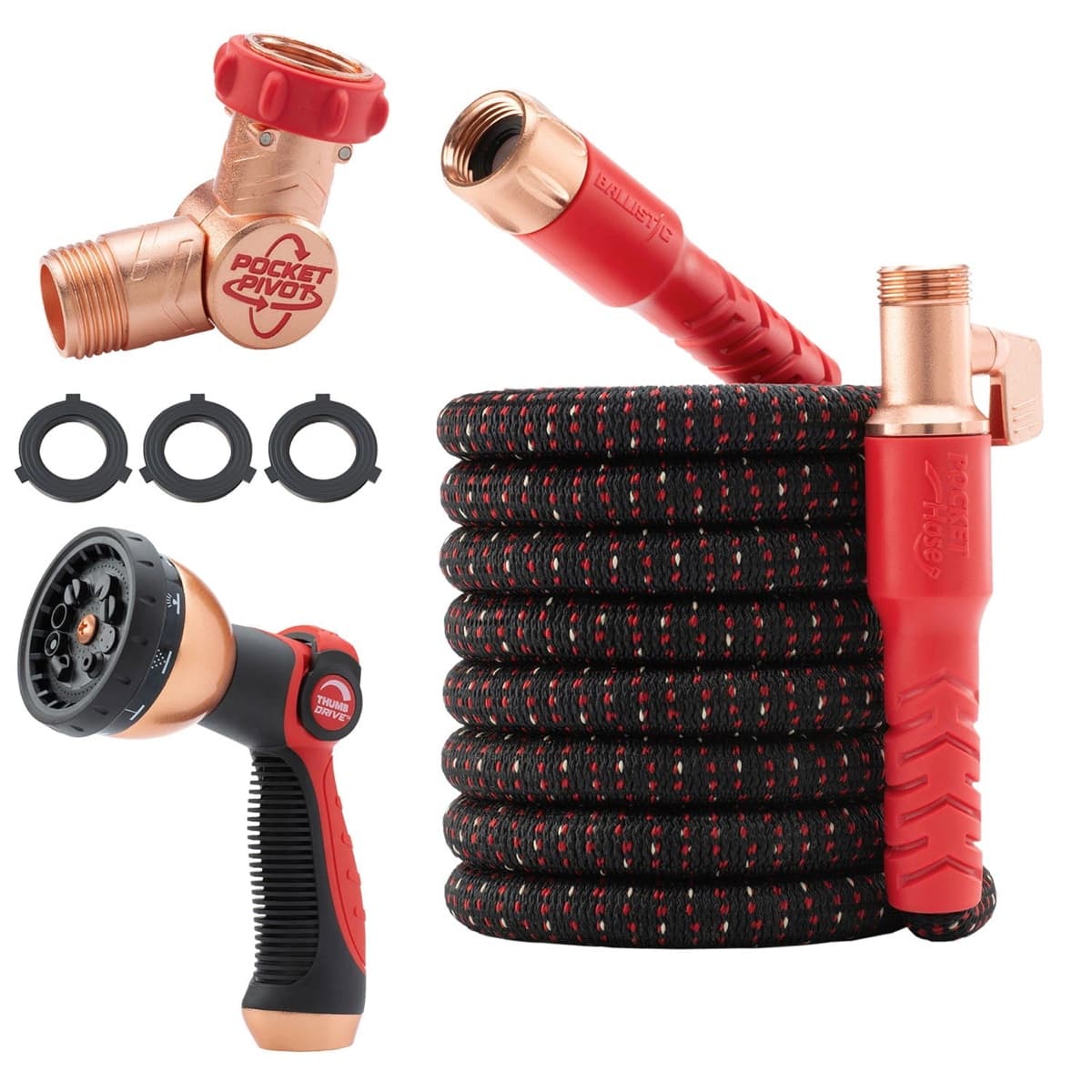
The category that solved most of these problems is the modern expandable hose — a lightweight inner tube protected by a strong outer fabric shell that lengthens under water pressure and retracts to a fraction of its full length when the water shuts off, making 'storage' a matter of tossing a two-foot bundle into a bucket. Early generations (2015-2020) had a bad reputation for bursting after a season because the outer fabrics couldn't handle sustained UV or thorn punctures, but the current generation has largely solved this. The Pocket Hose Ballistic expandable garden hose uses a ballistic-weave nylon shell that resists tears and UV, and has real copper fittings that don't corrode at the connection point — the specific spot where cheap expandables fail first. It self-drains as it retracts (so the freezing-water problem largely goes away), stores in a bucket or a small hook (so the kink-inducing tight coiling problem goes away), and weighs a fraction of a rubber hose (so 'I'll do it properly this time' is actually achievable). For most homeowners who won't do the perfect five-minute drain-and-coil after every use, switching hose type solves more of the problem than any storage upgrade can.
What to do with a hose that's already kinked, leaking or half-dead
For a hose with a persistent kink in one spot: gently work the kink out under warm water pressure, then run the hose out straight in the sun for an hour to let the wall relax — this fixes shallow kinks. For deep permanent kinks that always re-form: cut out the kinked section entirely and rejoin the two ends with an inexpensive brass or plastic hose mender coupling ($3-6 at any hardware store). Your hose is now three feet shorter and kink-free, which is a much better outcome than a full-length hose that fights you every time.
For a hose leaking at the spigot fitting: replace the washer inside the female end (a $2 pack of rubber washers) before assuming the hose or spigot is bad — worn washers cause 80% of hose-connection leaks. For a hose with pinhole leaks along its length: patch small ones with hose repair tape (the stretchy silicone kind that fuses to itself) for a temporary fix, but plan on replacement — pinholes rarely stay small, and once a hose starts failing, more leaks appear quickly. For a hose that's cracked at the ends but otherwise intact: cut off the bad section and add new fittings using a screw-together hose end kit (universal, works with any diameter). This can extend the life of a good-quality hose by years. For a hose that's fundamentally brittle, stiff, and cracking along its length: it's done; recycle it and buy a hose type suited to the storage habits you'll actually keep. Round out the outdoor toolkit with a light expandable garden hose for daily watering, a one-hand TornadoPro cordless leaf blower for the driveway and patio (way easier than pulling the hose out to rinse leaves), and keep the old heavy rubber hose for driveway rinsing where its length matters more than its weight.
Read our Pocket Hose Ballistic review
The armored expandable garden hose with a ballistic-weave nylon shell and real copper fittings — self-drains as it retracts, weighs a fraction of rubber, and stores in a bucket or on a small hook without the kink-inducing tight coiling that kills traditional hoses.
Read our Pocket Hose Ballistic reviewFrequently asked questions
What's the correct way to store a garden hose?
Drain the hose after each use by disconnecting and holding it vertically for 15-30 seconds so gravity empties the water. Then coil it in the direction it naturally wants to curl using large loops (2-3 feet across for a standard hose), rotating slightly with each loop so no single spot takes all the twist. Hang the coil on a wide-bracket hose hanger (U-shape at least 8 inches across) or set it flat on a shelf, in shade if possible. Before winter, disconnect from the spigot, walk the water out of the hose completely, and store indoors — a garage, shed, or covered porch. A hose stored properly indoors for winter lasts 5-7+ years; one left full and outside lasts about 2.
How do you store a garden hose so it doesn't kink?
The key is coil size and direction. Use large loose loops (2-3 feet across) in the direction the hose naturally wants to curl — every hose has a preferred curl direction from manufacturing, and you can feel it by letting a section relax. Tight small coils against the natural direction fight the hose's elasticity and set in permanent kinks. Avoid narrow nails, small hooks, and cheap plastic 'caddies' that force the hose into tight ovals — these are the top cause of hoses that always kink in the same spot. A wide-bracket wall hanger, a hose reel with a wide drum, or a decorative hose pot all work with the hose's structure. For homeowners who never coil carefully, an expandable hose like the Pocket Hose Ballistic solves the problem structurally — it retracts to a small bundle when the water shuts off, so there's nothing to coil at all.
Should I drain my garden hose before winter?
Yes, and it's the single most important winterization step. Water expands about 9% when it freezes, and a hose left full of water on a night that drops below 32°F develops micro-cracks in the inner wall that turn into leaks by spring — this is why most hoses fail in April, not December. The routine: turn off the water at the spigot, disconnect the hose, hold one end elevated and walk the water out by feeding the hose over a raised object (a fence rail, a deck edge). This takes 3 minutes for a 50-foot hose and forces virtually all standing water out. Also disconnect and drain any splitters, timers, or sprinklers — these fail from freeze damage even faster than hoses. Then store the empty hose indoors, or at minimum coiled, disconnected and elevated off the ground.
Can I leave my garden hose outside in the summer?
You can, but hose life shortens dramatically if it's in direct sun. UV degradation breaks down the polymers in vinyl and rubber walls, causing them to stiffen and crack over a single hot season if left fully exposed. A hose that would last five years stored in shade often fails within two seasons on a sunny pool deck. Best summer storage: hang in shade against a north-facing wall, inside a covered outdoor box, or in the garage. If your spigot is on a sun-blasted side of the house, at minimum coil the hose behind a bush, tree or piece of furniture so it isn't in direct sunlight for hours a day. Never leave a hose stretched out on hot concrete or coiled in a black rubber reel case — both are the fastest way to age a hose.
What's the best way to hang a garden hose on a wall?
A wall-mounted wide-bracket hose hanger with a U-shape at least 8 inches across, so the hose sits in relaxed coils rather than crimped over a narrow nail. Mount it in shade if possible, at a height you can reach comfortably. Avoid narrow single hooks, small nails driven into siding, and auto-retracting spring-loaded reels — all three flatten or kink the top of the hose. A hose reel with a hand-cranked wide drum is a good alternative if you have space, especially for longer hoses that would be awkward to hand-coil each time. For the aesthetics-conscious, a decorative ceramic or metal hose pot lets the hose lie in loose coils, respects its curl direction and hides it from casual view.
How do I fix a kinked garden hose?
For a shallow persistent kink: work it out under warm water pressure, then run the hose out straight in the sun for an hour to let the wall relax. This resets shallow kinks. For a deep permanent kink that always re-forms in the same spot: cut out the kinked section entirely and rejoin the two ends with an inexpensive brass or plastic hose mender coupling ($3-6 at any hardware store). Your hose is now shorter but kink-free — a much better outcome than a full-length hose that fights you every use. For a hose that kinks in multiple spots along its length regardless of coiling, the hose wall has hardened from age or storage and it's honestly time to replace it. Look for an expandable design that doesn't kink structurally rather than another traditional hose that will develop the same problem.
How long should a garden hose last?
5-10 years for a good-quality hose stored correctly (drained after use, coiled in large loops, hung in shade, brought indoors for winter). 2-3 years for the same hose left out year-round, exposed to freeze cycles, and coiled tightly on hot concrete. And 1-2 seasons for cheap hoses regardless of storage. The specific things that dramatically extend hose life: winter indoor storage, shade for summer storage, replacing worn washers before they leak, and using an expandable design like the Pocket Hose Ballistic that self-drains and stores small. If your hose is failing sooner than 5 years, storage is almost always the cause — not the hose itself.
TopCrate is reader-supported. When you buy through links on our site we may earn an affiliate commission, at no extra cost to you. Content is for general information and isn't a substitute for professional advice.